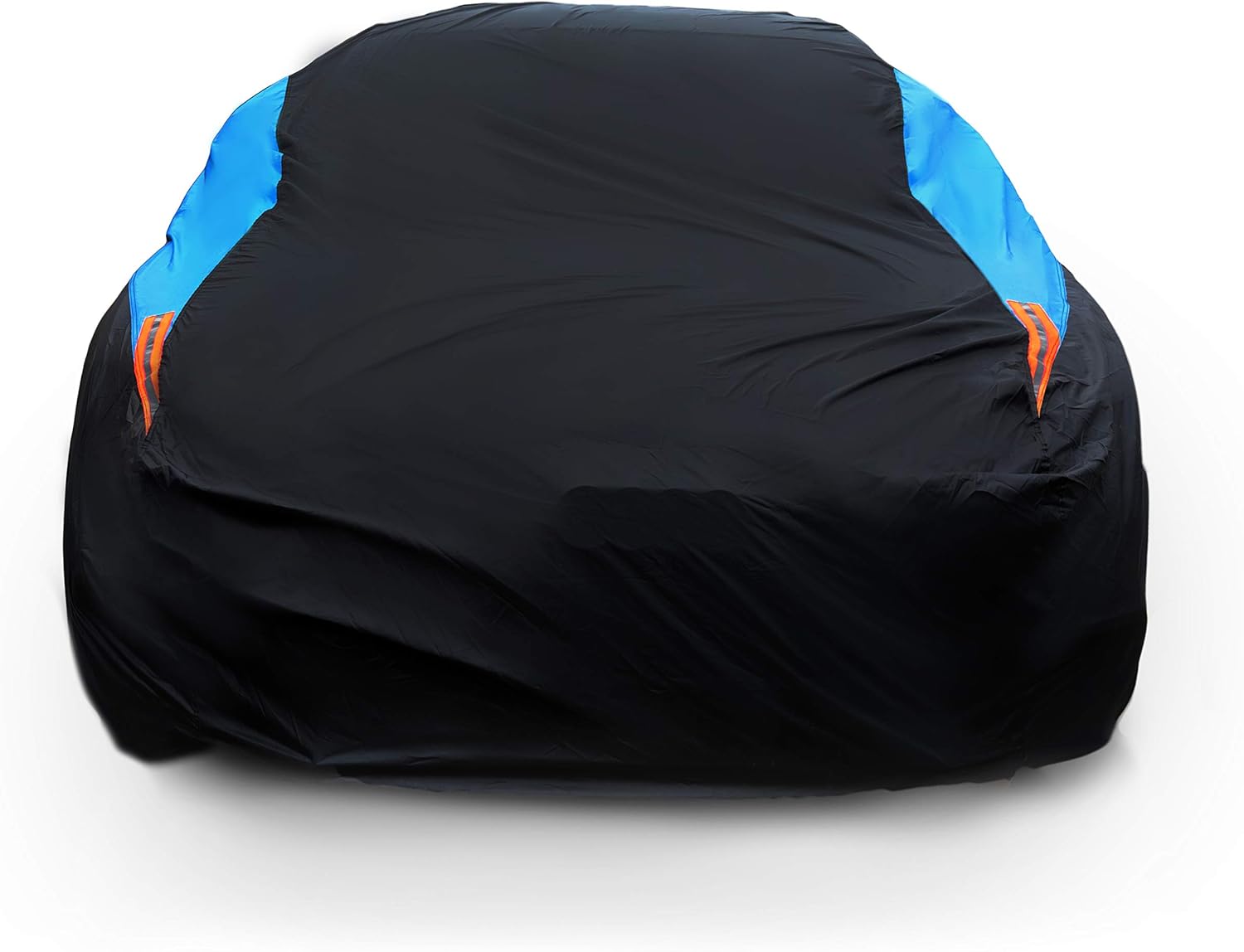
How to Keep Dust Out From Under a Car Cover (6 Fixes)
⚡ Quick Answer
To keep dust out from under a car cover, you need a snug-fitting cover with an elastic hem that seals tight around the bottom. Use a tightly woven, multi-layer fabric — not thin flannel. Secure the hem with grommets or a cable lock, and keep the floor around your car clean.
How to stop dust from getting under your car cover:
-
1
Choose a tightly woven, multi-layer fabric cover — not thin flannel. -
2
Pull the elastic hem tight under all four bumpers, no gaps. -
3
Use a cover lock cable through the grommets to prevent wind gaps. -
4
Sweep or clean the garage floor before covering to cut dust at the source.
Mistakes that let dust in:
-
✓
Using thin single-layer flannel that dust passes straight through -
✓
Leaving the hem loose or not tucking behind the valances -
✓
Covering a car on a dirty, dusty concrete floor
How to Keep Dust Out From Under a Car Cover: The Complete Guide
You pull off the car cover and a fine grey film covers the hood. Sound familiar? Dust under a car cover is one of the most frustrating problems for any car owner — classic car or daily driver. I’m Daniel Brooks, and after years of covering stored vehicles, I’ve learned exactly why dust gets under covers and how to stop it for good. This guide covers everything: the right cover fabric, the correct fitting technique, and the garage habits that make the real difference.
📌 Key Takeaways
-
→
Flannel car covers let dust pass straight through their weave — they need a tightly woven outer layer to block fine particles. -
→
A loose hem is the #1 reason dust gets under a car cover — the hem must seal tightly under all 4 bumpers without any gap. -
→
Multi-layer covers with a tightly woven outer shell — like Noah or Evolution fabric — block dust far better than budget single-layer options. -
→
Garage floor dust is a major source — sweeping before covering cuts how much particles can migrate up under the hem.
Why Does Dust Still Get Under a Car Cover?
Dust gets under a car cover through 3 entry points: the fabric weave itself, gaps at the hem, and rising particles from the floor. Most people blame their cover brand — but the real problem is usually one of these 3 things. Understanding them changes everything about how you cover your car.
The biggest surprise: most budget flannel covers do almost nothing to block dust. Car cover experts on Garage Journal forums found that flannel lets dust pass right through the material. You need a cover with a tightly woven outer layer that physically blocks fine particles from penetrating the fabric.
But here’s the thing. Even a great cover fails if the hem isn’t sealed. Every loose gap under a bumper is an open door for airborne particles. When a breeze flows under the garage door or from an AC unit, it pushes dust straight up under the cover hem and across your paint.
⚠️ Warning
Thin single-layer covers with an open weave — especially cheap generic flannel covers — will not keep dust off your paint. Dust particles are microscopic. They pass through open fabric the same way air does. Don’t trust the cover material unless the weave is tight enough that you can’t see daylight through it clearly.
The third entry point is often ignored: the floor. Concrete garage floors hold fine dust that gets stirred up by foot traffic, opening doors, and air movement. Once airborne, those particles migrate under the cover hem. Parking on a dusty gravel or dirt floor makes this 10 times worse.
What Type of Car Cover Actually Keeps Dust Out?
The right fabric is the foundation of dust protection. Not all car cover materials block dust equally — and the difference between a cheap single-layer cover and a proper dust-blocking fabric is enormous. The cover fabric determines how much dust penetrates before you even think about fit or hem sealing.
Here’s how the main fabric types compare for dust protection:
This table shows how common car cover fabrics perform against dust penetration — the most important factor for storage protection.
Noah and Evolution fabrics from CoverCraft are the industry standard for dust blocking with breathability. Multi-layer polypropylene covers like the Budge Lite are an excellent budget option for indoor storage.
You might be thinking: “Won’t a tighter weave trap moisture?” Here’s why that’s not an issue with quality covers. Noah and Evolution fabrics are engineered to block dust particles while still letting water vapor pass through. They block solid particles — not air molecules.
The mistake most people make is confusing “breathable” with “open weave.” A cover can be fully breathable and still block 99% of dust — they aren’t the same thing. So what does this mean for you? If your current cover has a loose, open weave that you can almost see through — it won’t stop dust no matter how well you fit it. The fabric comes first.
✅ Tip
Before buying, hold the cover material up to a light. If you can clearly see light through the weave, dust will pass through it too. A proper dust-blocking cover should have a noticeably tight, dense outer layer.
How to Fit a Car Cover to Stop Dust From Getting Under It
Even the best cover fabric fails if the fit is wrong. Proper fitting technique is the single most effective way to block dust entry from under the hem. This is the step most car owners rush — and it’s why they still find dust under their cover the next morning.
Think of it like this: a car cover that “drapes” over the car like a tablecloth will trap air pockets and leave gaps at every curve and bumper edge. The goal is a Spanx-like fit — snug against every surface, with the hem tucked tight and low.
🔢 Step-by-Step: How to Fit a Car Cover for Maximum Dust Protection
-
1
Start from the center, work outward
Lay the cover over the roof first, then pull it evenly to each end — this stops bunching at one side.
-
2
Pull the hem down and tuck behind valances
At all 4 corners, pull the hem up at the wheel arches and tuck it behind the front and rear valances — this closes the biggest gap points.
-
3
Check all 4 bumper edges for gaps
Walk around the car and press the hem snug against the bumper surfaces — any lifted section is a dust entry point.
-
4
Thread a cable lock through the hem grommets
Run a cable lock under the car through both grommet holes — this prevents the hem from lifting in a breeze, which is when most dust sneaks in.
-
✓
Check the mirror pockets and antenna patch
Any raised protrusion creates a gap — use mirror pockets on covers that have them to keep those sections snug and sealed.
The cable lock step is more important than most people realize. Even in a closed garage with no obvious wind, temperature changes create air pressure shifts. These micro-breezes push dust under a loose hem over hours and days. The cable eliminates that movement entirely.
Now let’s look at the cover fit itself — because even perfect technique won’t save you if the cover is the wrong size.
Does Cover Fit Matter for Dust Protection?
Cover fit matters enormously — and it’s one of the most overlooked factors in dust protection. A cover that’s even 10% too large will sag, pool at the bumpers, and leave constant hem gaps that dust can enter through. A cover that’s too tight won’t reach all the way under the bumpers.
The best fit is described by experienced car cover users as “mummification” — the cover hugs the car body at every curve, leaving no air pockets or sag points. This level of fit requires either a custom-sized cover or a universal cover that has strong elastic throughout the hem.
Custom-Fit vs Universal Cover for Dust Control
A custom-fit cover is made for your exact vehicle dimensions. It wraps the car like a second skin with almost zero hem gap. For classic car storage or high-value vehicles, a custom cover from a manufacturer like CoverCraft is worth the investment — custom covers eliminate most hem gaps by default.
A universal cover can work well too — but only if it has a strong full-elastic hem that pulls snug. Look for covers with elasticized hems at both ends, not just a simple drawstring or loose tuck at the front and rear. The elastic must create tension that holds the hem against the body panel at every point.
💡 Key Insight
A snug custom-fit cover with an average fabric will outperform a loose-fitting premium cover every time when it comes to dust. Fit seals the bottom — fabric blocks the top. You need both, but fit is the harder problem to fix with tape or tricks.
How to Control Garage Dust So Less Gets Under Your Cover
Your garage is a dust factory. Concrete floors release fine silica particles constantly. Opening and closing the garage door stirs those particles into the air and drives them across the floor toward your covered car. Reducing garage dust levels is just as important as cover choice and fit — especially for long-term storage.
The good news is that a few simple habits cut garage dust dramatically.
📋 Garage dust control habits that protect your car cover:
-
Sweep before covering: Sweep the floor around the car before putting the cover on — this removes loose particles that would otherwise migrate up under the hem overnight. -
Seal concrete floors: Apply a concrete floor sealer or epoxy paint — sealed concrete releases far less dust than bare concrete and is one of the best long-term upgrades for a storage garage. -
Park away from the door: The first 6 feet inside a garage door get the most dust from outside air blowing in. Parking further back reduces exposure to wind-driven particles. -
Stop grinding near covered cars: Grinding and sanding generate particles so fine they pass through almost any cover material. Do all workshop work before covering, or throw a plastic sheet over the cover temporarily. -
Use desiccant buckets: Desiccant absorbs moisture that allows dust to stick and clump — especially useful in humid garages where condensation makes dust particles cling to paint.
That said, there’s one technique that works particularly well for workshop garages where dust work happens regularly: the double-cover method.
The Double-Cover Method for Dusty Workshop Garages
If you do grinding, sanding, or dusty work in the same garage as your stored car, no single cover will fully protect the paint. The solution is to use a soft flannel cover directly on the car, then lay a plastic drop cloth over the top of the flannel when workshop work starts.
The plastic sheet stops grinding dust from penetrating. The flannel underneath protects the paint from the plastic. Once work is done, remove the plastic and let the breathable flannel continue to protect the car without trapping moisture. This is the most practical method for active workshop garages.
✅ Tip
Only use the plastic sheet temporarily during active dusty work. Never leave plastic directly on a covered car for more than a few hours — without airflow, condensation builds under the plastic and can cause paint discoloration and moisture damage.
Should You Use an Indoor or Outdoor Car Cover for Dust Protection?
For dust protection specifically, an indoor cover is the right choice in almost every case. Indoor covers are designed with softer inner linings that won’t scratch paint and tighter outer weaves that block fine particles. Outdoor covers prioritize water resistance over dust blocking — and many outdoor covers have looser weaves that allow moisture to pass through, which also lets dust through.
The main difference is this: indoor covers fit more snugly, have gentler inner materials, and are optimized for keeping a car clean in storage. Outdoor covers sacrifice some dust protection to add weatherproofing and UV resistance.
If your car is stored in a garage but the garage is connected to a workshop or has gaps that let in outside air, an outdoor-rated cover with a tight weave (like Evolution fabric) gives you the best of both worlds.
📋 Quick Summary
For dust protection in a standard garage: use a multi-layer indoor cover with a tight outer weave, secure the elastic hem under all bumpers, and run a cable lock through the grommets. For workshop garages: add a temporary plastic drop cloth over the cover during active work. Both setups outperform a single-layer flannel cover by a wide margin.
How Often Should You Wash a Car Cover?
A car cover that never gets washed becomes a dust delivery system. Dust accumulates in the outer fabric, and every time you pull the cover on or off, those particles rub directly against your paint. Most car care experts recommend washing your cover every 2 to 3 months under normal storage conditions, or any time you notice heavy dust accumulation on the outside.
For washing, check the manufacturer instructions first. Most fabric covers can be washed in a large commercial washing machine on a gentle cycle with mild soap — not a home machine, which is too small and can damage the seams. Let the cover air-dry completely before putting it back on the car. A damp cover over a warm car creates the ideal environment for moisture damage.
Here’s why this matters more than people think: a dusty cover used day after day acts like sandpaper on your paint every time you fit it or remove it. Scratches from cover fabric are one of the most common causes of micro-swirls on stored vehicles. Keeping the cover clean protects both the paint and the cover itself.
Recommended Product for Indoor Dust Protection
Recommended Product
Budge Lite Car Cover, Indoor Protection, Breathable Dustproof Cover, Fits Mid-Size Sedans up to 200 Inches, Gray
★★★★☆ Highly rated on Amazon
A trusted budget-friendly indoor cover with a full elastic hem, breathable polypropylene fabric, and double-stitched seams — ideal for anyone who wants solid dust protection in a garage without paying for a custom cover.
As an Amazon Associate, we earn from qualifying purchases.
What Most People Get Wrong About Car Covers and Dust
Most car cover problems come from 3 widely believed myths. Getting these wrong costs people money on covers that don’t work — and paint damage they didn’t expect.
Myth 1: A more expensive cover automatically means better dust protection. Price doesn’t guarantee tight weave. Some premium outdoor covers use looser weaves to maximize breathability for all-weather use — which means they’re actually worse at blocking fine dust than a mid-range indoor cover with a tight outer layer. Always check the fabric specs, not just the price tag.
Myth 2: Plastic covers are the best dust protection. Plastic blocks 100% of dust — but it also blocks 100% of airflow. Moisture from temperature swings condenses under plastic and can cause paint discoloration, rust spots, and mildew. Experienced collectors at Hagerty Media found that aluminum surfaces under plastic covers show oxidation first, which means trapped moisture is attacking the metal. Breathable fabric is always safer for long-term storage.
Myth 3: If I have a garage, I don’t need a cover. Garages are far from dust-free. Even a climate-controlled garage with a sealed floor accumulates fine particles from clothing, foot traffic, and air movement. Car cover experts consistently report that even a well-maintained indoor garage needs a quality cover for any vehicle stored more than a week at a time.
Conclusion
Keeping dust out from under a car cover comes down to 3 things: the right fabric, a snug sealed hem, and a clean garage floor. None of them work alone — you need all 3 working together. The good news is that once you have the right cover and fitting habit in place, it takes less than 2 minutes to put the cover on correctly every time.
The single most important upgrade most car owners can make right now is simple: check your current cover hem and make sure it’s actually sealed under all 4 bumpers. Start there — then buy the cable lock if you don’t have one.
Frequently Asked Questions
Why does dust still get under my car cover?
Dust gets under a car cover through 3 routes: the fabric weave itself (if it’s too loose), gaps at the hem where the cover doesn’t seal tightly, and particles rising from the garage floor. The most common cause is a loose hem that lifts slightly in air currents, creating an open path for airborne dust to enter.
What type of car cover keeps dust out best?
Multi-layer covers with a tightly woven outer layer — such as Noah fabric, Evolution fabric, or multi-layer polypropylene — block dust far better than single-layer flannel. Flannel is too open-weave to stop fine particles. For indoor storage, look for a cover where you can’t clearly see light through the outer fabric layer.
How do I keep my car cover from blowing off and letting dust in?
Thread a cable lock through the grommet holes sewn into the hem and run it under the car — this holds the hem down firmly even in strong air currents. Many quality covers include grommets specifically for this purpose. Without a lock, temperature-driven air pressure changes will lift the hem repeatedly throughout the night, pulling in dust each time.
Can I use a car cover indoors to keep dust off?
Yes — indoor use is actually the ideal application for a car cover. Garages accumulate dust from concrete floors, foot traffic, and outside air. Even a well-maintained enclosed garage needs a cover for any vehicle stored more than a few days. Indoor covers use softer inner linings to protect paint and tighter weaves to block fine particles without needing full weatherproofing.
How often should I wash my car cover?
Wash your car cover every 2 to 3 months under normal storage conditions. A dirty cover carries the dust it’s collected back to your paint every time it’s fitted or removed. Use a large commercial washing machine on a gentle cycle with mild detergent, and air-dry the cover completely before putting it back on the car.
Is it safe to use plastic sheeting over a car cover for dust from grinding?
Yes, but only temporarily during active dusty work. Lay a plastic drop cloth over the top of a breathable fabric cover while grinding or sanding — the plastic blocks fine abrasive particles that would otherwise penetrate the cover fabric. Remove the plastic immediately once work is done. Leaving plastic on for more than a few hours traps moisture and risks paint damage and condensation buildup.
Does waxing or ceramic coating help before putting on a car cover?
Waxing or applying a ceramic coating before covering helps reduce the adhesion of any dust particles that do get through. A slick, sealed paint surface means dust particles sit on top rather than bonding to the paint — making them easier to remove without scratching when you next clean the car. It’s a good practice before any extended storage period, though it doesn’t replace a quality dust-blocking cover.

Daniel Brooks is an automotive writer and product researcher focused on car accessories, car tech, maintenance, and practical driving guides. At Plug-in Car World, he helps drivers make smarter automotive decisions through honest reviews and research-driven content.