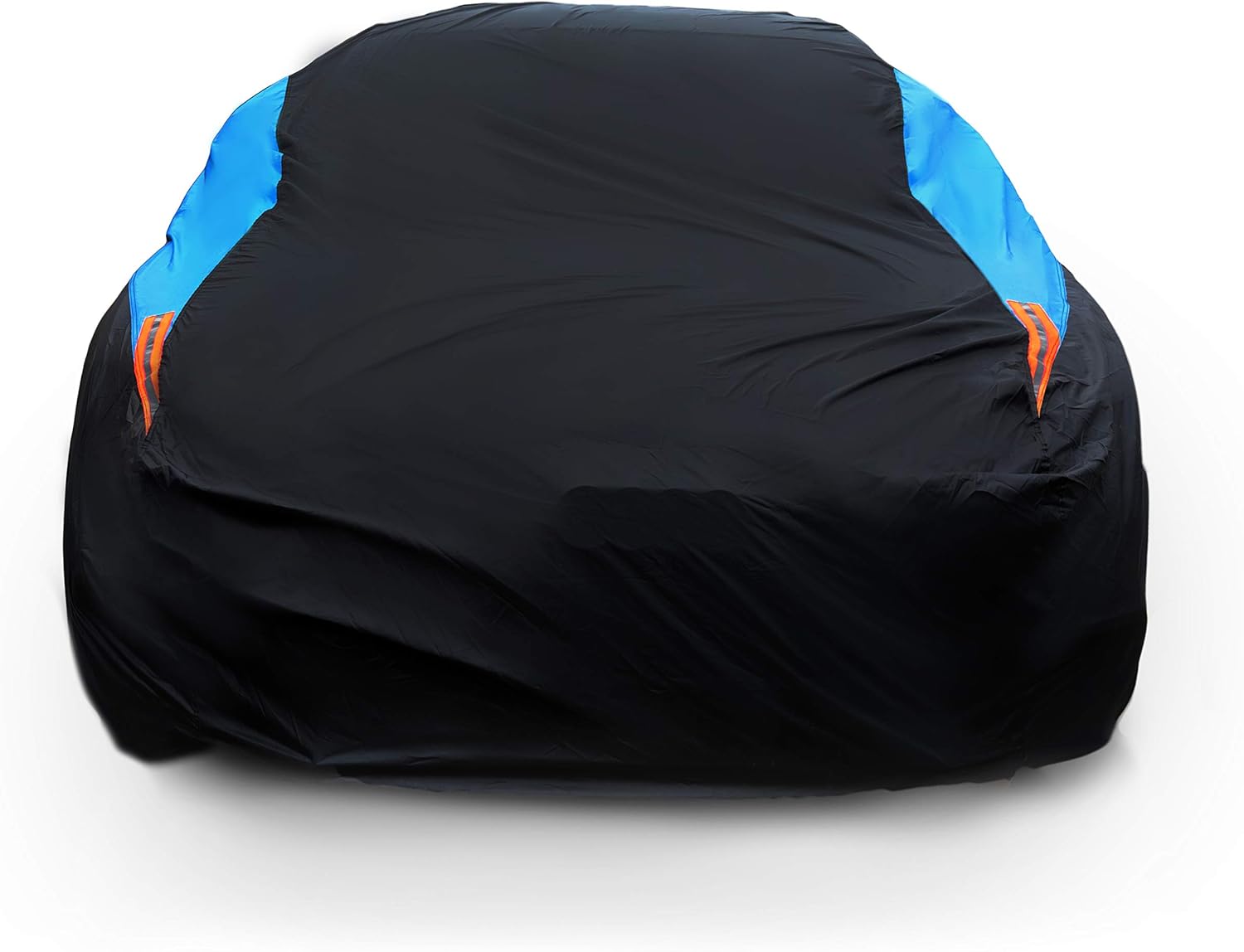
Problems Caused by Using an Old Car Cover (And How to Spot Them)
⚡ Quick Answer
An old car cover causes more harm than good once its lining wears thin or its waterproofing fails. Trapped dust turns into sandpaper, trapped moisture feeds mold, and a loose fit lets wind flap the fabric against your paint all night long.
Main problems an old cover creates
- Swirl marks: worn inner fabric grinds dust into the clear coat.
- Mold and odor: a failed waterproof layer traps moisture underneath.
- Loose fit damage: stretched elastic lets the cover flap and rub.
What to do about it
-
✓
Check the elastic hem and lining for stiffness or holes. -
✓
Wash the cover, then check if it still beads water. -
✓
Replace it once any one of these signs shows up.
Picture this: you pull off your car cover on a Saturday morning, ready to head out, and there it is. A dull, hazy swirl pattern across the hood that wasn’t there last month. The cover that was supposed to protect your paint just scratched it instead.
I’m Daniel Brooks, and I’ve heard this complaint more times than I can count. An old car cover doesn’t fail all at once. It fails quietly, one wash cycle and one windy night at a time, until the fabric that used to shield your paint starts working against it.
Below, you’ll find every problem an aging cover can cause, how to spot the warning signs early, and exactly when it’s time to swap it for a new one.
📌 Key Takeaways
-
→
Worn inner lining is the single biggest cause of cover-related paint scratches. -
→
Failed waterproofing traps moisture and can lead to mold, rust, and water spots. -
→
Stretched elastic hems let wind get under the cover and flap it against the paint. -
→
Most outdoor covers need replacing within one to two years if they aren’t UV-treated.
Why Does an Old Car Cover Scratch My Paint?
A worn cover scratches paint because the inner lining stops doing its job. New covers have soft, flat-lying fibers that glide over the surface. Old covers lose that softness.
Over time, fibers stiffen, mat down, or pick up trapped grit that never washes out. Every time wind moves the fabric, that grit grinds tiny scratches into your clear coat.
The friction from putting on, removing, and shifting a cover rubs dust into the paint, creating the micro-scratches and swirl marks owners notice later. A fresh cover with intact lining keeps that friction to a minimum. An old one amplifies it.
Can a Worn Cover Cause Mold or Rust Under the Hood?
Yes, and it’s one of the most damaging problems an old cover causes. Once the waterproof layer wears out, water starts seeping through, leaving the car damp underneath, and that trapped moisture can lead to mold, rust, and water spots on the paint.
You’ll usually smell it before you see it. A musty odor coming from a folded cover is a clear sign moisture got trapped and stayed there.
⚠️ Warning
Never cover a car that’s still wet underneath. Sealing in moisture overnight is one of the fastest ways to grow mold on both the paint and the cover itself.
Mold isn’t just a cosmetic problem, either. Mold exposure can irritate the eyes, skin, nose, throat, and lungs, and it can trigger allergic reactions or asthma attacks in sensitive people, so a moldy cover sitting in your garage is worth taking seriously, not just wiping off.
How to Check If Your Cover Still Repels Water
Pour a small cup of water onto a clean section of the cover. If it beads up and rolls off, the waterproof coating is still working. If it soaks in within a few seconds, the coating has broken down.
Why Does My Cover Keep Flapping or Blowing Loose?
A loose, flapping cover usually means the elastic hem has lost its stretch. When the elastic hem on a cover no longer holds it tightly around your car, it’s time to invest in a new one, since a loose cover does more damage than no cover at all in windy conditions.
Here’s why that matters so much. Every gust of wind lifts the loose fabric and slaps it back down against the paint. That repeated impact creates the same sandpaper effect as a dusty, worn lining, just from a different cause.
How Often Should You Replace a Car Cover?
Sunlight and UV rays can break down materials that aren’t UV-resistant within just one to two years, even with a high-quality cover. A breathable, UV-treated cover stored properly can last several years longer.
📋 Factors That Shorten Cover Lifespan
-
Full sun exposure: daily UV exposure degrades fabric fastest of any factor. -
Covering a dirty car: trapped grit shortens both the cover’s life and the paint’s finish. -
Careless storage: crumpling a damp cover into a bag encourages mold before the next use. -
Wrong-size fit: a cover that’s too loose wears out its elastic far sooner.
What Most People Get Wrong About Old Car Covers
“A cover can’t damage my car, it’s just fabric.” Not true. When not used properly, a cover can scratch your car’s paint, no matter what material it’s made of, and an aging cover makes improper use almost unavoidable.
“If it still covers the car, it’s still doing its job.” Coverage isn’t protection. A cover can look intact while its lining, elastic, and waterproofing have all quietly failed underneath.
“I’ll just wash it and it’ll be fine.” Washing helps, but it can’t restore lining that’s gone stiff or a waterproof coating that’s worn through. At that point, only replacement fixes the problem.
💡 Key Insight
An old car cover doesn’t stop protecting your car. It switches sides and starts working against the paint instead.
Recommended Product
EzyShade 10-Layer Car Cover, Waterproof All Weather, Full Exterior Cover
★★★★☆ 4.3 stars on Amazon, sized by vehicle chart
A multi-layer, breathable replacement with a proper elastic hem and a printed size chart, so you avoid the loose-fit problem that wears out cheaper covers early.
As an Amazon Associate, we earn from qualifying purchases.
Frequently Asked Questions
Do car covers scratch paint?
Yes, if used improperly or once the cover is worn out. The cover itself isn’t abrasive; the dust and grit it traps against the paint is what causes the scratching.
How do I know if my car cover is worn out?
Look for stiff or matted inner lining, a musty smell, loose elastic hems, faded fabric, or water soaking in instead of beading on the surface. Any one of these means it’s time to replace it.
Can a car cover cause rust?
It can, indirectly. Once the waterproof coating fails, moisture gets trapped between the cover and the body, which can lead to rust forming on exposed metal and trim over time.
Should I wash my car before covering it?
Yes, almost always. Dirt and dust left on the paint get ground into the surface every time wind moves the cover, so a clean car under a clean cover stays scratch-free far longer.
How long does a car cover usually last?
Cheaper, non-UV-treated covers often break down within one to two years outdoors. Higher-quality, breathable covers stored properly can last several years longer with regular care.
Is mold on a car cover dangerous?
It can irritate the eyes, nose, throat, and lungs, and trigger allergic reactions in sensitive people. It’s also likely to transfer mold spores onto your car’s surface and interior.
Can I repair a worn car cover instead of replacing it?
Small rips or loose stitching can be patched. But a failed waterproof coating or a flattened inner lining can’t be restored, so replacement is the only real fix at that point.
Bottom Line
An old car cover stops being a safety net the moment its lining, waterproofing, or elastic gives out. From there, it actively works against your paint instead of protecting it.
The fix is simple: inspect your cover a few times a year, watch for the signs above, and replace it as soon as one shows up. One thing to do right now: go check your cover’s elastic hem and inner lining for stiffness. If either feels off, it’s time for a new one.
For more on indoor moisture and mold prevention, see the EPA’s guide to mold and moisture control.

Daniel Brooks is an automotive writer and product researcher focused on car accessories, car tech, maintenance, and practical driving guides. At Plug-in Car World, he helps drivers make smarter automotive decisions through honest reviews and research-driven content.