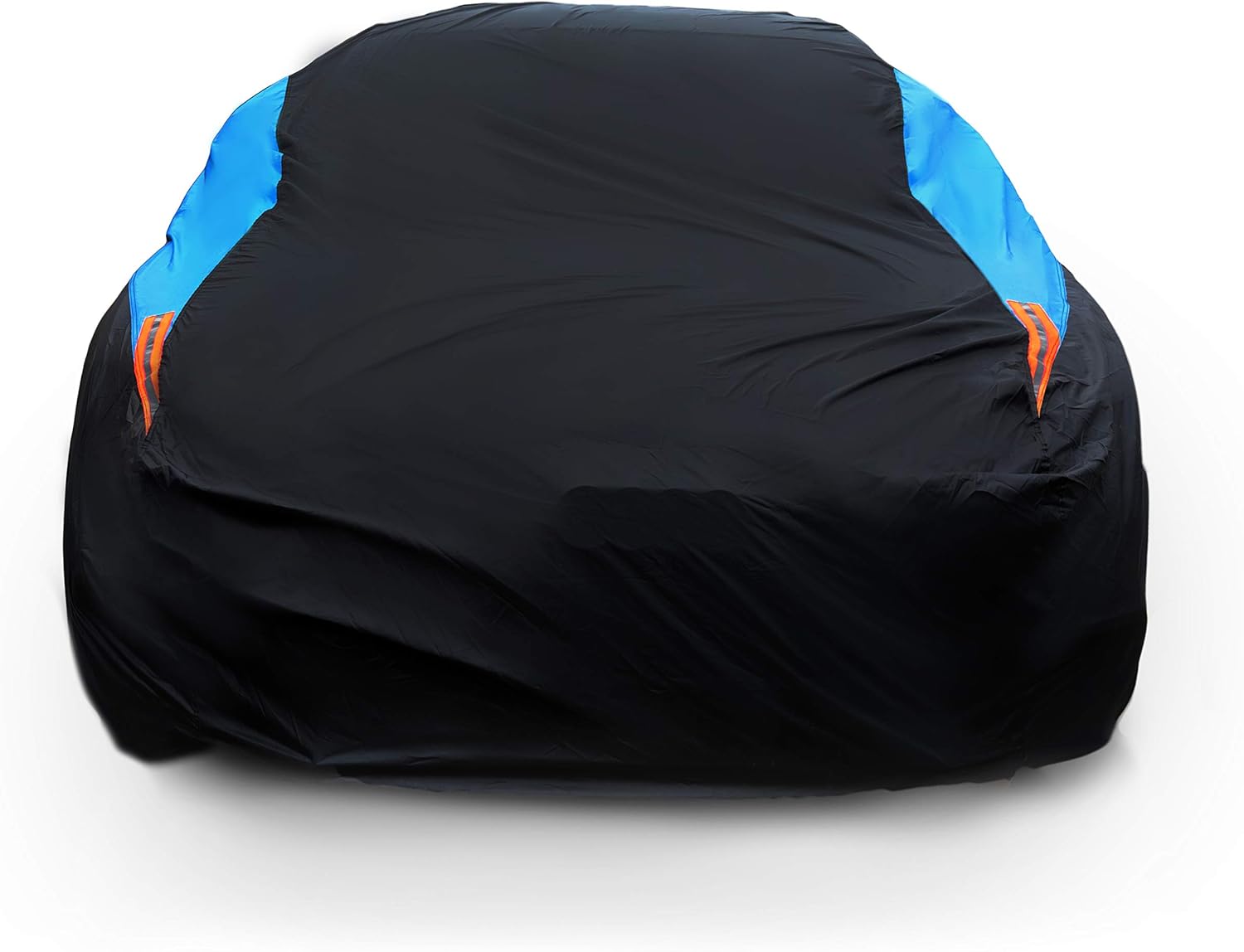
Did You Buy the Wrong Car Cover? Here’s How to Tell
⚡ Quick Answer
You bought the wrong car cover if it leaves your paint scratched, lets water pool underneath, fits too loosely or too tightly, or was designed for indoor use but you park outside. A bad cover can cause more damage — rust, mold, and paint swirl marks — than no cover at all.
5 warning signs you have the wrong cover:
-
1
Your car has new micro-scratches or swirl marks after using the cover -
2
The car is wet or damp underneath after rain -
3
The cover flaps, sags, or blows off in wind -
4
You smell mildew or see moisture spots forming on the paint -
5
The cover doesn’t cover the bumpers fully or bunches at the hood
What to check right now:
-
✓
Check the cover label — does it say “indoor” or “outdoor”? -
✓
Run your hand inside — is the lining soft or rough? -
✓
Hold the cover up to light — can you see through it? That means no UV protection.
You pull off the car cover and notice something wrong — a fresh scratch on the hood, a damp roof, or that musty smell. Daniel Brooks here, and after years of covering everything from daily drivers to weekend classics, I can tell you: the wrong car cover is worse than no cover at all. Let’s find out exactly what’s happening with yours.
📌 Key Takeaways
-
→
Using an indoor cover outdoors traps moisture, which leads to rust, mold, and clear coat damage over time. -
→
A cover that fits too loosely flaps in the wind and acts like sandpaper on your paint finish. -
→
A 100% waterproof plastic cover has no breathability and traps condensation under the car — a known rust risk. -
→
The right outdoor cover must be both water-resistant and breathable — waterproof alone is not enough.
The 5 Clear Signs You Bought the Wrong Car Cover
A wrong car cover gives you signals fast. Most car owners just don’t know what to look for. Here are the 5 signs that tell you immediately your cover isn’t right for your vehicle or your parking situation.
🔢 Diagnose Your Car Cover: 5 Warning Signs
-
1
New scratches or swirl marks appeared after use
If your paint had no swirl marks before, your cover’s inner lining is too rough. Cheap covers use raw nylon or synthetic plastic with no soft inner layer. When wind moves the cover even slightly, that rough surface grinds against your clear coat like fine sandpaper. The fix is a cover with a soft fleece or microfiber lining — not bare fabric.
-
2
Your car is damp or wet underneath after rain
Water under the cover means either the cover isn’t waterproof enough for your climate, or it’s so waterproof that it traps condensation with no way out. A quality outdoor cover must be water-resistant AND breathable. If it’s 100% plastic or vinyl with no breathable vents, moisture condenses inside and sits against your paint.
-
3
The cover flaps, shifts, or blows off in wind
A cover that moves in the wind is doing two things wrong: scratching your paint and leaving parts of your car exposed. This happens with universal-fit covers that are too large, or any cover without proper tie-down straps, buckles, or an elastic hem. A cover should sit snug — with zero slack on the sides.
-
4
You smell mildew or notice a musty odor under the cover
Mildew smell means moisture is getting trapped and can’t escape. This happens most often when an indoor-rated cover is used outdoors, or when any non-breathable cover is used in a humid climate. Mold and mildew don’t just smell bad — they damage paint, rubber seals, and trim over time.
-
5
The cover doesn’t reach the bumpers or bunches on the roof
A cover too small exposes your bumpers and lower panels to rain, UV rays, and road debris. A cover too large bunches and pools water in folds — especially on the roof and trunk. Either way, poor sizing means parts of your car get zero protection while other areas get compressed fabric sitting against the paint.
-
✓
Found 2 or more of these signs?
Your cover isn’t protecting your vehicle — it’s working against it. The next sections will help you identify the exact problem and what to replace it with.
You might be thinking: “My car looks fine — maybe the cover is okay.” But here’s why that’s dangerous. Paint damage from a bad car cover is gradual. Swirl marks build up over weeks, not hours. Moisture causes rust in seams and under trim over months. By the time you notice the damage clearly, it’s already expensive to fix.
Keep reading. The next section identifies the most common — and most costly — mistake car cover buyers make.
Is Your Cover Made for Indoors or Outdoors? This Is the #1 Mistake
Using an indoor car cover outside is the single most common car cover mistake — and it causes real damage fast. Indoor and outdoor covers are engineered for completely different jobs. Putting an indoor cover on a car that lives in a driveway is like wearing a cotton T-shirt in a rainstorm and expecting to stay dry.
Here’s what separates them:
This table shows the key differences between indoor and outdoor car covers — use it to check which type you actually have.
If your cover matches the “Indoor” column but you park outside — replace it. The damage it’s doing is real, even if you can’t see it yet.
⚠️ Warning
Don’t use a heavy outdoor cover inside a garage long-term either. Outdoor covers are built for rugged conditions — not breathability. Used indoors, their dense fabric can trap condensation against the paint, especially in humid garages, leading to corrosion and mildew growth.
For a deeper breakdown of cover types and how to match one to your storage situation, the car cover buying guide from The Cover Blog covers indoor and outdoor differences in detail.
So now you know the type mismatch. But even if you have the right type — a bad fit will still cause damage. That’s next.
Why Does Fit Matter So Much? How to Tell If Your Cover Is the Wrong Size
A bad-fitting car cover is a paint problem waiting to happen. The cover’s job is to sit still, sealed around your car. When it moves — even a centimeter in the wind — it drags trapped dust particles across your clear coat like fine-grit sandpaper.
There are 3 fit problems. Each causes a different type of damage:
📋 Car Cover Fit Problems and What Each One Causes
-
Cover too large: Excess fabric sags, pools water, and flaps in wind. The constant movement creates paint abrasion and swirl marks all over the car’s surface. -
Cover too small: It won’t reach the bumpers or lower panels. Those exposed areas get full UV rays, rain, and road debris — with zero protection. Gaps also let dust creep under the cover. -
Cover too tight: Pulling a cover tightly across mirrors, spoilers, or bumpers puts pressure on those areas. Over time it causes wear, tears, and in worst cases, leaves pressure marks on soft panels.
Custom Fit vs Universal Fit — Which Did You Buy?
Custom-fit covers are tailored to your exact make, model, and year. They hug every curve — mirrors, spoilers, antenna — with precise cutouts. They don’t shift in wind and they don’t leave gaps.
Universal-fit covers come in size ranges — small sedan, mid sedan, large SUV. They’ll cover your car, but with extra fabric on the sides. That slack is what flaps in the wind and rubs. If your cover came with just a size label like “Sedan 187–198 inches” rather than your exact vehicle name, it’s universal fit.
You might be thinking: “Universal is fine, I got one with tie-down straps.” The straps help — but they don’t eliminate all movement. A custom-fit cover for your specific vehicle model is still the safer long-term choice for paint protection.
What Your Cover’s Material Is Actually Telling You
The fabric your car cover is made from determines whether it protects your car or silently damages it. Most buyers focus on price and size — material is the factor that does the real work. Here’s how each common material performs and where it belongs.
Match your cover’s material to its proper use — using the wrong material in the wrong environment is where most damage starts.
A cover’s inner lining matters as much as the outer material. Any outdoor cover without a soft cotton, fleece, or microfiber inner layer will scratch your paint over time, regardless of what the outer shell is made from.
For a full breakdown of cover materials and how to match them to your climate, The Engine Block’s guide to car cover materials is a practical resource worth reading before you buy your next cover.
✅ Tip
Hold your cover up and look through it. If you can see light passing through easily, the fabric has very little UV-blocking ability. A good outdoor cover should block most light — you should only see faint shapes through it at most.
You now know how to read your cover’s material. But one question comes up constantly: “Why is my car still wet under the cover even after I bought an outdoor one?” That answer is in the next section — and it surprises most people.
Why Is My Car Still Wet Under the Cover?
This is one of the most confusing problems car cover owners face. You bought what looked like a solid outdoor cover — and the car still gets wet underneath. There are 3 reasons this happens, and understanding which one applies to you tells you exactly what to do.
Reason 1: Your Cover Is 100% Waterproof With No Breathability
This sounds like a feature. It isn’t. A fully sealed, 100% waterproof cover blocks rain from getting in — but it also blocks moisture from getting out. When temperatures drop at night, condensation forms under the cover and has nowhere to go. It pools against your paint, your rubber seals, and your underbody. That trapped moisture causes rust, mold, and clear coat breakdown over time.
The right outdoor cover is water-resistant with breathable vents. Rain runs off the outer layer. Condensation evaporates through the breathable inner structure. Your car stays dry on both sides.
Reason 2: The Cover Doesn’t Fit Well Enough to Seal the Edges
A cover that’s too large will have gaps at the bottom edge. In a heavy rainstorm with wind, water gets driven under the loose edges and pools in the folds. The cover actually funnels rain toward the car instead of away from it.
Reason 3: You Covered a Wet Car
Covering a car that’s already wet — or covering it immediately after washing — traps existing moisture inside. Even a quality breathable cover needs time to let that moisture escape. The car and the cover both need to be dry before you put the cover on. If you must cover a wet car in an emergency, remove the cover as soon as conditions allow and let both dry fully.
✓ Moisture Check: 3 Things to Verify Right Now
-
✓
Does your cover label say “breathable” or show ventilation vents? If not, moisture has no escape route. -
✓
Lift the cover at one corner after rain — is the gap between the cover hem and your car less than 2 inches? If not, rain is getting in at the edges. -
✓
Was the car dry before you put the cover on last time? Covering a damp car traps moisture no matter how good your cover is.
Now you know the 3 causes of a wet car under a cover. Next — let’s clear up the biggest myths people believe about car covers, because they lead to the wrong purchase decision every time.
What Most People Get Wrong About Car Covers
The car cover market is full of claims that sound right but lead buyers to the wrong product. Here are the 3 most common beliefs that cost people money and damage their cars.
💡 Key Insight
“Waterproof” does not mean “better.” The best outdoor covers are water-resistant AND breathable. A fully sealed waterproof cover without ventilation traps condensation against your car — and that trapped moisture is a direct path to rust and mold.
Myth 1: “Any cover is better than no cover.” This isn’t true. A cover with a rough inner lining, no breathability, and a loose fit does active damage. It scratches the paint, traps moisture, and funnels wind-driven rain underneath. A bad cover accelerates deterioration faster than parking with no cover at all.
Myth 2: “A thicker cover means more protection.” Layer count doesn’t automatically mean quality. What matters is the material of each layer, whether the inner lining is soft, and whether the structure is breathable. A 3-layer cover with a soft fleece inner lining protects paint better than a 10-layer cover with a rough synthetic inner lining.
Myth 3: “If my car looks okay, the cover is working fine.” Most car cover damage is invisible until it’s serious. Micro-scratches on clear coat only appear as a dull, hazy finish in certain light. Early rust forms under trim and at seam edges — areas you don’t check regularly. A cover can be doing damage for months before it shows on the surface.
Which Cover Should You Switch To?
Once you’ve identified the problem with your current cover, the fix is straightforward. The right cover depends on 3 things: where you park, your local climate, and how often you drive. Use this decision guide to pick the right replacement.
🎯 Which Cover Is Right For You?
If you park…
In a garage or carport, rarely exposed to sun or rain
→ Indoor cover (soft cotton or microfiber lining)
If you park…
Outside year-round with moderate rain and sun
→ Multi-layer outdoor cover (water-resistant + breathable + UV-rated)
If you park…
Outside in harsh weather — snow, hail, coastal salt air
→ Heavy-duty all-weather cover (marine-grade or 10+ layer with breathable vents)
If you park outside in all conditions and need a reliable everyday upgrade, the GUNHYI 16-layer cover is a well-rated option with a soft cotton inner lining, breathable vents, mirror pockets, and windproof straps.
Recommended Product
GUNHYI 16 Layers Car Cover Waterproof All Weather, Heavy Duty Outdoor Car Cover Universal Fit Sedan Toyota Camry, Tesla Model 3, Honda Accord, Nissan Altima, Kia K5/Stinger, Hyundai Sonata
★★★★☆ Highly rated on Amazon
A practical everyday outdoor upgrade with a soft cotton inner lining, breathable vents, 3 windproof straps, and mirror pockets — the features that the wrong car covers commonly lack.
As an Amazon Associate, we earn from qualifying purchases.
Conclusion
The wrong car cover doesn’t just fail to protect — it actively damages your car’s paint, promotes rust, and wastes your money. The 5 signs are clear: scratches, dampness under the cover, wind movement, mildew odor, and poor fit. Each one points to a specific fix.
Check two things right now: does your cover say “indoor” or “outdoor,” and does the inner lining feel soft against your hand? Those two checks alone will tell you 80% of what you need to know.
One thing to do right now: Lift your car cover and feel the inside lining with your palm. If it feels rough, scratchy, or stiff — remove it from the car today. A rough inner lining is already causing micro-scratches every time you put it on or take it off.
Frequently Asked Questions
Can a car cover damage your paint?
Yes — a wrong car cover can absolutely damage paint. A cover with a rough inner lining, loose fit, or dirt trapped underneath acts like sandpaper on your clear coat. Micro-scratches and swirl marks develop over weeks of use. Always choose a cover with a soft fleece or microfiber inner lining, and clean the car before covering it.
What happens if you use an indoor car cover outdoors?
Indoor covers have no waterproofing or UV protection. Used outdoors, they absorb rain and hold it against the paint. They also offer no wind security — they’ll blow off or flap in gusts, scratching the car. Over weeks of outdoor use, an indoor cover can cause mold growth, clear coat damage, and early rust at seams.
How do I know if my car cover fits correctly?
A correctly fitting cover should reach the lower edge of all 4 bumpers without excess fabric bunching. It should sit snug without pulling tight over mirrors or roof lines. The hem should be close to the ground with no large gaps. If the cover balloons out or pools fabric anywhere on the car, it’s the wrong size.
Is a waterproof cover better than a breathable one?
Not always. A 100% waterproof cover with no breathability traps condensation underneath — which causes rust and mold. The best outdoor covers are water-resistant on the outside and breathable enough to let trapped moisture escape. Look for covers that describe both “water-resistant” and “breathable vents” together, not just “waterproof.”
Can a car cover cause rust?
Yes. Rust forms when moisture sits against metal with no way to escape. A non-breathable cover traps condensation, and an outdoor cover used on a wet car keeps that moisture locked in. Both situations accelerate rust formation at seams, under trim, and at the lower edges of doors and panels — areas that are hard to inspect regularly.
What is the difference between custom fit and universal fit?
Custom-fit covers are made for your exact make, model, and year — with precise cutouts for mirrors, antennas, and body lines. Universal-fit covers come in size ranges and fit many vehicles loosely. Custom-fit offers better wind resistance and paint protection. Universal-fit costs less and ships faster, but has more movement and gap risk.
How often should I wash my car cover?
Wash your car cover every 1 to 3 months depending on your environment. A dirty cover transfers grime, pollen, and dust back to your paint — acting like sandpaper on the clear coat. Use mild soap and cold water. Air-dry it fully before storing or reusing. Never store a damp cover — mold forms quickly in the folds.

Daniel Brooks is an automotive writer and product researcher focused on car accessories, car tech, maintenance, and practical driving guides. At Plug-in Car World, he helps drivers make smarter automotive decisions through honest reviews and research-driven content.