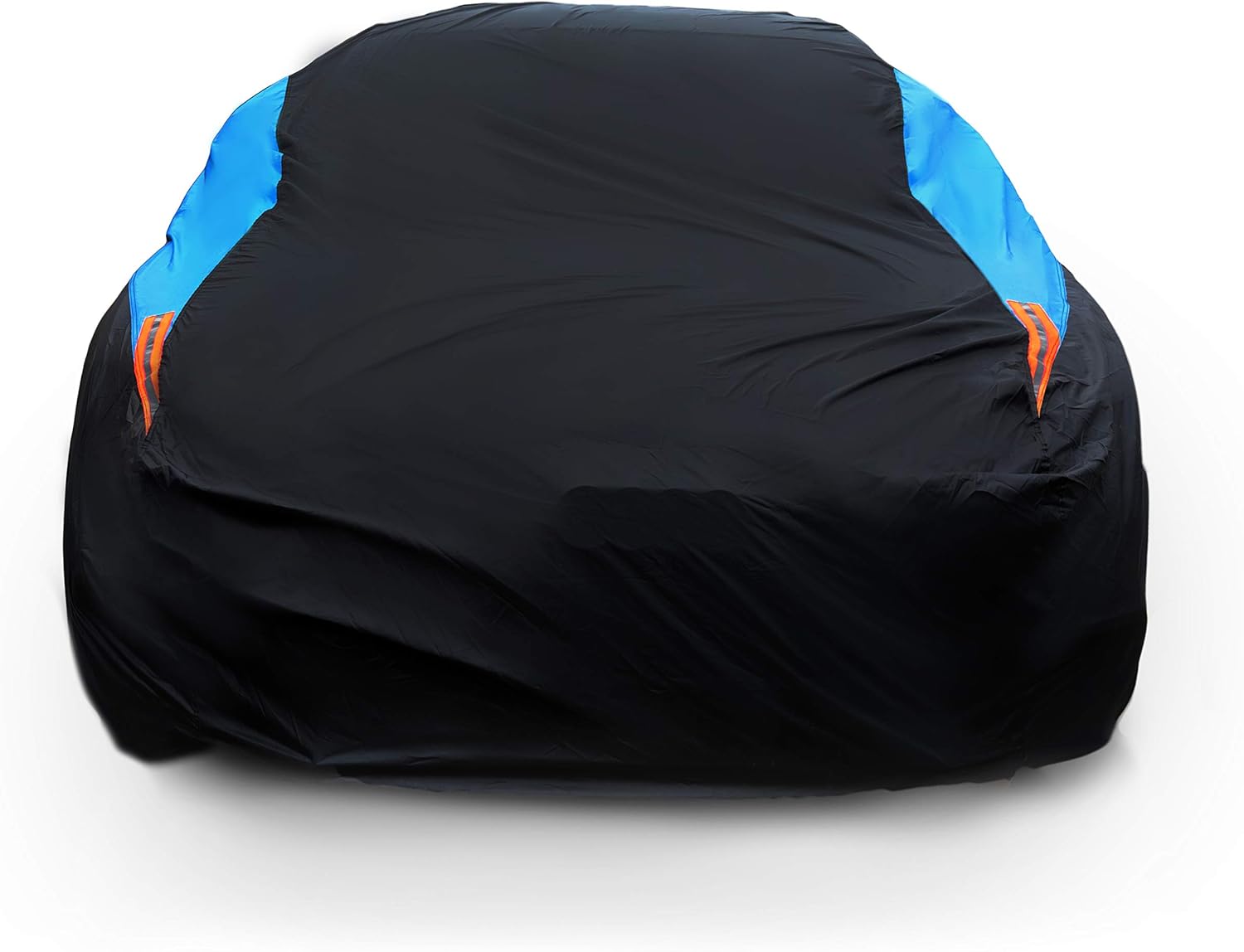
Car Cover on Ceramic-Coated Cars: Safe or Not?
⚡ Quick Answer
Yes, you can use a car cover on a ceramic-coated car, but only once the coating has fully cured and only with a soft, breathable cover. Doing it too soon, or with a stiff outdoor cover, can leave fine swirl marks in an otherwise scratch-free finish.
What Your Cover Choice Depends On
- Cure time: most coatings need 24-72 hours before anything touches the paint.
- Cover material: soft fleece or brushed polyester is safe; stiff vinyl or PVC is not.
- Cleanliness: dust under a cover acts like sandpaper, coated or not.
Bottom Line for Ceramic-Coated Cars
-
✓
Wait for full cure before covering -
✓
Wash the car before covering it -
✓
Choose a soft, breathable indoor cover
You just spent real money getting your car ceramic coated, and now the paint gleams under the garage light like it rolled off the showroom floor. Daniel Brooks, an automotive detailer who has coated hundreds of vehicles, hears the same worried question every week: will a car cover scratch that new finish? It’s a fair concern. Ceramic coating is hard, but hardness has nothing to do with scratch resistance from dust and grit trapped under fabric.
The good news is that a car cover and a ceramic coating work well together, as long as you respect the coating’s cure time and pick the right kind of cover. Get either one wrong, and you’ll trade a swirl-free finish for a network of fine marring. Let’s walk through exactly how to do it right.
📌 Key Takeaways
-
→
Ceramic coating protects against chemicals and UV, not abrasion from dust or fabric. -
→
Most coatings cure within 24 to 72 hours, depending on brand and weather. -
→
Soft, breathable covers like fleece-lined stretch fabric are the safest option. -
→
A dirty car under a cover is the single biggest cause of swirl marks, coated or not.
Is It Safe to Put a Car Cover on a Ceramic-Coated Car?
Yes, it’s safe once the coating has cured, but ceramic coating doesn’t make your paint scratch-proof. It’s a hard, glossy layer that resists chemicals, water spots, and UV fading. It does very little to stop physical abrasion. So if dust, sand, or grit sits between the paint and the cover, normal movement from wind or removal can grind those particles across the surface.
This is why detailers are split on covers. Owners who use soft, clean, indoor covers report zero issues for years. Owners who use stiff outdoor covers on a dirty car often end up with light swirling within months.
💡 Key Insight
A car cover doesn’t fight your ceramic coating. It fights the dust, wind, and contact that would still scratch the coating on its own.
So what does that mean for you? If your garage is clean and dry, and your car stays parked for long stretches, a breathable cover adds real protection against dust film and UV fade. If you drive daily and only park for a few hours, skip it. Frequent on-and-off handling raises the odds of marring more than it lowers the odds of dust settling.
How Long Should You Wait Before Covering a Freshly Coated Car?
Wait until the coating has fully cured, which typically takes 24 to 72 hours for most professional formulas and up to two weeks for some DIY kits. During this window, the coating is still bonding to the paint and is more vulnerable to pressure, moisture, and contact.
Curing happens in two stages. The initial cure sets in within a day or two, giving the coating basic hardness. The final cure, reaching full hardness, can take another one to three weeks depending on humidity and temperature.
Here’s why that matters: covering the car too early can trap moisture against a coating that isn’t fully hardened yet, which interferes with bonding and can leave uneven gloss.
⚠️ Warning
Never cover a car within the first few days after coating, even indoors. Ask your installer for the exact cure time for your specific product.
What Kind of Car Cover Is Safe for Ceramic Coating?
The safest cover is a soft, breathable, fleece- or microfiber-lined fabric made for indoor use. Stiff vinyl, cheap polyethylene, or anything with a rough inner texture is the wrong choice, coated paint or not.
Here’s how the common cover materials stack up for a coated car.
Non-breathable materials trap condensation against the coating, which can dull gloss over time even though they block rain well.
If your car lives in a garage, a fleece-lined indoor stretch cover is the easiest, lowest-risk choice.
Recommended Product
Budge Indoor Stretch Car Cover with Soft Fleece Lining
★★★★☆ Well-reviewed on Amazon
A stretch-fit, non-abrasive fleece lining that hugs the body panels without dragging, exactly what a cured ceramic coating wants underneath it.
As an Amazon Associate, we earn from qualifying purchases.
How Do You Put a Car Cover On Without Scratching the Coating?
Wash and dry the car first, then lay the cover on loosely and settle it into place instead of dragging it across the paint. The steps below keep every stage contact-safe.
🔢 Step-by-Step: Covering a Ceramic-Coated Car
-
1
Wash and dry the car
Use a rinseless or two-bucket wash. Never cover a dirty car.
-
2
Unfold the cover fully
Lay it flat first so no bunched fabric drags on the paint.
-
3
Drape from the roof down
Set it over the roof, then gently pull the sides down. Don’t slide it forward or back.
-
✓
Secure the hem
Cinch the elastic hem so wind can’t lift and rub the cover against the finish.
You might be thinking a quick wipe-down is enough before covering. It’s not. Loose dust that a microfiber cloth misses is exactly what causes cover-induced swirls, so a full rinse matters more than it seems.
What Most People Get Wrong About Car Covers on Ceramic Coating
Three beliefs cause most of the scratches people blame on car covers.
📋 Common Misconceptions
-
“Ceramic coating means the cover can’t scratch it”: the coating resists chemicals and UV, not grit trapped under fabric. -
“Any cover works once it’s cured”: stiff, non-breathable covers still cause marring and trap moisture, coated or not. -
“A quick wipe before covering is enough”: loose dust needs a real wash, not a dry cloth, before the cover goes on.
Do You Even Need a Cover on a Coated Car?
Not always. Ceramic coating already blocks most UV fading and makes dust wipe off easily, so a cover is optional rather than required.
🎯 Which Option Is Right For You?
If you are…
Parked long-term in a clean garage
→ Use a soft indoor cover
If you are…
Driving daily, parking a few hours
→ Skip the cover
If you are…
Storing outdoors seasonally
→ Use a breathable outdoor cover, not vinyl
Ceramic coating and a car cover aren’t at odds, they just need to be matched correctly. Wait for a full cure, wash before you cover, and choose fabric that’s soft and breathable over anything stiff or waterproof. That combination protects your investment instead of undoing it. Right now: go check the tag or spec sheet on your current cover, if it says vinyl, PVC, or “waterproof” with no mention of breathability, replace it before your next wash.
Frequently Asked Questions
Can a car cover scratch ceramic coating?
Yes, if dust or grit sits between the cover and the paint, or if the cover is stiff and dragged on and off. The coating itself resists chemicals well but offers little defense against abrasion.
How long after ceramic coating can I cover my car?
Wait 24 to 72 hours for most professional coatings to reach their initial cure, and check with your installer for the full cure timeline before covering.
Is a breathable cover better than a waterproof one for ceramic coating?
Yes, for most owners. Fully waterproof covers trap condensation underneath, while breathable materials let moisture escape and protect the coating’s gloss over time.
Do I need to wash my car before putting the cover on?
Always. Covering a dusty or dirty car, coated or not, is the most common cause of fine swirl marks under a cover.
Does ceramic coating make a car cover unnecessary?
Not entirely. Coating handles UV and chemical protection well, but a cover still adds a physical barrier against dust, bird droppings, and tree sap during long-term parking.
What material car cover is safest for coated paint?
A fleece- or microfiber-lined stretch cover made for indoor use is the safest choice, since it’s soft, breathable, and conforms to the body without dragging.
Can I use a car cover outdoors on a ceramic-coated car?
Yes, but choose a breathable, water-resistant outdoor cover with a soft inner lining and secure straps so wind can’t shift it against the paint.

Daniel Brooks is an automotive writer and product researcher focused on car accessories, car tech, maintenance, and practical driving guides. At Plug-in Car World, he helps drivers make smarter automotive decisions through honest reviews and research-driven content.