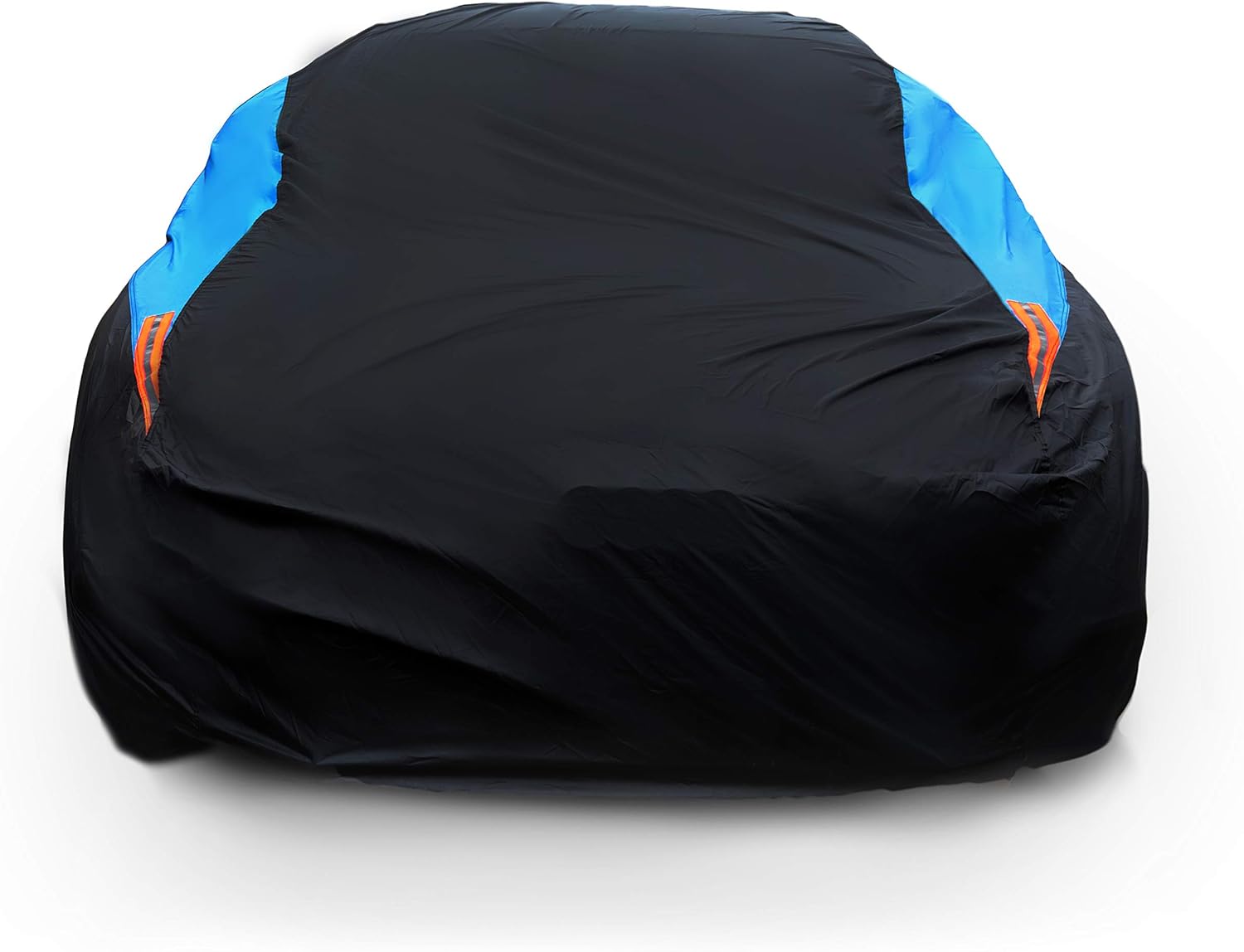
Common Classic Car Storage Cover Problems — Fix Them Fast
⚡ Quick Answer
The most common classic car storage cover problems are trapped moisture that causes rust, abrasive inner liners that scratch original paint, and loose-fitting universal covers that rub constantly. Each problem gets worse over time — and most owners don’t notice until the damage is already done.
The 5 Most Damaging Classic Car Cover Problems:
- Moisture trapping: Non-breathable covers seal humidity against the paint and metal.
- Abrasive inner lining: Rough polypropylene liners act like sandpaper on lacquer and enamel.
- Poor fit: A loose cover moves constantly, rubbing grit into the paint surface.
- Covering dirty paint: Dust trapped under the cover turns every movement into an abrasion pass.
- Wrong cover type: Outdoor waterproof covers used indoors trap vapor and cause hidden damage.
Fix These Problems First:
-
✓
Always wash the car before putting the cover on -
✓
Use only breathable satin or fleece-lined covers indoors -
✓
Never use a plastic tarp or waterproof outdoor cover in a garage
You pull off the cover after a long winter, expecting to see perfect paint — and instead find swirl marks, rust spots, or a musty smell you can’t explain. I’m Daniel Brooks, and after years researching classic car care, I can tell you: the cover itself is often the culprit. Classic car storage covers solve one set of problems while quietly creating another. Here’s exactly what’s going wrong and how to stop it.
📌 Key Takeaways
-
→
Wrong inner lining is the leading cause of swirl marks and paint dullness on garage-stored classics. -
→
Non-breathable covers trap moisture that causes rust even in a dry, enclosed garage. -
→
Original lacquer and enamel paint has no clear coat buffer — any scratch is permanent until repainted. -
→
Covering a dirty classic multiplies damage — trapped particles abrade paint with every small movement.
Why Classic Car Storage Covers Cause More Damage Than You’d Expect
A classic car cover can protect your vehicle — or quietly destroy it. The difference comes down to 3 factors: the inner liner material, the breathability of the fabric, and whether the car was clean before you covered it.
Most car owners assume that covering a classic car is always better than leaving it exposed. That’s not true. A bad cover in a damp garage causes more damage than no cover at all. The cover seals moisture, traps grit, and rubs against paint every time temperature shifts cause the fabric to flex.
Here’s why classic cars are especially vulnerable. Modern paint has a clear coat — a sacrificial outer layer that absorbs minor abrasion before the color is affected. Classic paint (lacquer, single-stage enamel, or pre-1980s acrylic) has no such buffer. The color coat is the surface. Any abrasion is permanent until you repaint.
⚠️ Warning
Refinishing original classic car paint can cost $8,000 to $15,000 per panel set. A wrong cover choice is never a minor mistake — it’s one that compounds silently for months.
So the cover problem is really 5 separate problems. Each one causes a different type of damage. Understanding all 5 is what separates owners whose classics come out of storage looking showroom-fresh from those who find surprises in spring.
Next, let’s look at the single most destructive problem first: moisture.
How Trapped Moisture Under a Cover Leads to Rust and Paint Damage
Trapped moisture is the number-one cause of hidden cover damage. When a non-breathable cover sits against a classic car in a garage with any humidity — even a “dry” one — condensation forms between the fabric and the paint, creating a wet microclimate that never dries.
Here’s how it happens. Your garage temperature drops at night. Metal surfaces cool faster than air. Moisture in the air condenses onto the cold metal panels. A breathable cover lets that vapor escape. A waterproof or poorly ventilated cover traps it — right against the paint, chrome, and bare metal seams.
The result shows up weeks or months later. You’ll notice rust spots on seams, bubbling paint near trim edges, or mold and mildew smells coming from inside the cabin. By the time these signs appear, the damage is often well advanced.
💡 Key Insight
In a garage with 70–85% winter humidity, a non-breathable cover creates conditions nearly as damaging as outdoor storage. The walls and roof don’t eliminate humidity — they just block wind and direct rain.
Two specific mistakes make this worse. First, covering a warm car right after driving it. The heat trapped under the cover turns into steam as the car cools, soaking the underside of the cover and the paint surface. Let the car cool for at least 30 minutes before covering.
Second, using a plastic tarp or fully waterproof outdoor cover inside a garage. These materials trap every drop of vapor. According to guidance on when and how to cover a classic car in a garage, leaving a classic uncovered with good airflow is often safer than using a non-breathable cover in a damp space.
The fix is straightforward: use only breathable covers indoors. Breathable fabrics allow vapor to pass through in both directions. Air moves. Moisture escapes. The paint dries. So if your garage sees any temperature swings — and most do — breathability isn’t optional.
Why Your Cover Is Scratching the Paint Instead of Protecting It
The inner lining of a car cover is the only layer that touches your paint. Its material matters more than any other feature — more than waterproofing, more than UV rating, more than the number of outer layers. A rough inner lining will scratch your paint on every contact cycle.
Here’s the mechanism. Covers made with non-woven polypropylene inner linings — which is what most cheap and mid-range outdoor covers use — have fiber ends that stand perpendicular to the fabric surface. Those upright fibers act like micro-abrasives. They also trap dust, grit, and pollen between fibers. Every time the cover flexes slightly (which happens dozens of times a day as temperatures shift), those fibers and the particles they hold run across your paint.
Which Inner Lining Materials Are Safe for Classic Cars?
Not all liners are equal. The table below shows how common inner liner materials compare for classic paint safety.
For classics with original lacquer or single-stage enamel, satin and micro-fleece are the only safe indoor liner choices. Polypropylene liners stiffen in cold weather, making them even more abrasive through winter storage.
You might think: “My cover is brand-name and expensive — it must be fine.” Here’s why that’s not always true. Most premium covers are designed for modern clear-coat finishes and outdoor conditions. Their inner liners handle wind-driven contact against clear coat just fine. But classic paint has no clear coat to sacrifice. The same liner that’s acceptable for a 2023 Mustang will slowly destroy a 1967 Mustang’s original enamel.
How Poor Cover Fit Creates a Slow-Motion Abrasion Problem
A cover that doesn’t fit snugly is a cover that never stops moving. Even in a closed garage with no wind, temperature changes cause fabrics to expand and contract slightly. A loose cover doesn’t shift dramatically — it just never sits still. And every tiny shift drags whatever is between the cover and the paint across the surface.
Universal covers are the most common fit offenders. They’re sized to fit a range of vehicles, which means they actually fit none of them perfectly. Too much loose fabric hangs at the sides. The cover rides up, drops down, and wrinkles against body panels.
Too Loose vs. Too Tight: Both Cause Damage
A cover that’s too loose flaps and rubs. A cover that’s too tight stresses paint at body curves and can rip at mirror points or antenna bases. Custom-fit or semi-custom covers are shaped for a specific make, model, and year — they hug contours without pulling or bunching.
📋 Signs Your Cover Fit Is Causing Damage
-
Swirl marks on roof and hood: These flat surfaces take the most cover movement. Swirls there confirm friction damage. -
Bunched fabric at door lines: Excess material creases against body panels, concentrating contact pressure. -
Cover slips off during removal: If you can’t remove the cover cleanly, it’s dragging across paint every time you use it. -
Visible rippling on flat panels: A rippled cover shifts with every air current, even gentle ones from an opened garage door.
The fix is a semi-custom or custom-fit cover matched to your car’s exact make, model, and year. These cost more up front — typically $80 to $300 for quality indoor covers — but the cost of one paint correction session on a classic starts at $500 and climbs fast.
Why Covering a Classic Car While It’s Dirty Is a Costly Mistake
Covering a dirty classic car is one of the fastest ways to cause paint damage without knowing it. Every speck of dust, brake dust, pollen, or road grit sitting on the paint becomes an abrasive agent the moment the cover goes on — and stays in contact with paint for months.
You might think: “It’s just garage dust — it can’t cause real damage.” Here’s why that reasoning fails. Garage dust contains fine silica particles. Those particles are harder than clear coat and far harder than classic lacquer. Trapped between a cover and paint with even minimal movement, they scratch at a microscopic level. After a full storage season, the cumulative damage shows as haze and dullness that’s hard to reverse.
🔢 Step-by-Step: Pre-Cover Cleaning for Classic Cars
-
1
Wash the full car with a pH-neutral soap
Remove all surface contaminants — don’t skip the lower panels and wheel wells.
-
2
Dry the car fully — wait 24 to 48 hours
Hidden moisture in seams and trim gaps causes rust if sealed in under a cover.
-
3
Apply a coat of paste wax before covering
Wax creates a barrier between paint and any residual contact friction from the cover.
-
4
Clean and dry the cover itself before use
A dirty cover brings its own grit to the clean paint surface — shake it out and inspect the lining.
-
✓
Roll the cover on — never drag it
Start from one end and roll the cover over the car body. Dragging it on creates instant abrasion.
Also clean the cover every 1 to 3 months during storage. Dust settles onto the cover fabric while it sits over the car. That dust works its way to the inner surface over time. A quick clean keeps the lining safe.
How to Choose the Right Cover for Indoor Classic Car Storage
Choosing the right classic car storage cover comes down to 3 non-negotiable criteria: inner liner material, breathability, and fit. Everything else — color, brand, price — is secondary to getting these 3 right.
For indoor storage, you don’t need waterproofing. You need a cover that’s breathable, smooth on the inside, and fits the body contours of your specific car without excess slack. Many owners buy outdoor covers because they seem more protective. Indoors, that extra thickness and waterproofing works against you.
Indoor vs. Outdoor Covers: What’s the Difference for Classic Cars?
| Feature | Outdoor Cover | Indoor Cover ✓ Best |
|---|---|---|
| Breathability | Limited — designed to shed rain | ✓ High — allows vapor to escape freely |
| Inner Liner | Often polypropylene — rough on lacquer | ✓ Satin or micro-fleece — safe for all paint |
| Weight | Heavy — extra layers for weather | ✓ Light — easy to handle without dragging |
| Best Use | Outdoor parking, shows, transport | ✓ Garage storage, long-term preservation |
Using an outdoor cover in a garage is one of the most common mistakes classic car owners make — it looks protective but traps vapor and uses harsher inner materials than indoor storage requires.
For garage-kept classics, look for a cover with a satin or micro-fleece inner lining, full breathability rating, and a semi-custom or custom fit for your model year. A quality indoor cover in the $80 to $250 range from a reputable brand covers all 3 criteria.
For more guidance on classic car storage risks including moisture control and cover selection, the State Farm resource center provides a solid overview of environmental threats specific to collector vehicles.
Recommended Product
Budge Indoor Stretch Car Cover — Luxury Indoor Protection, Soft Inner Lining, Breathable, Dustproof
★★★★☆ Highly rated on Amazon
A silky-touch stretch cover with a soft fleece inner lining — safe for lacquer and enamel finishes, breathable for garage use, and widely used by classic car owners including a 1959 Cadillac and vintage Mustangs.
As an Amazon Associate, we earn from qualifying purchases.
What Most People Get Wrong About Classic Car Covers
There are 3 deeply held beliefs about classic car storage covers that cause real damage every year. Each one sounds reasonable — which is exactly why it persists.
Misconception 1: A More Expensive Cover Is Always Safer
Premium car covers are engineered for modern clear-coat paint under outdoor conditions. A $400 outdoor cover from a top brand can still have a polypropylene inner liner — which is exactly wrong for a classic car stored indoors. Price doesn’t guarantee the correct inner liner or breathability spec for a garage-kept classic.
Always check the inner liner material before buying. Satin or micro-fleece is what you want. If the product listing doesn’t specify — assume it’s polypropylene and look elsewhere.
Misconception 2: A Garage Always Keeps the Air Dry Enough
Most home garages match the humidity levels of the outside air — 70 to 85% in winter months. A garage provides protection from UV rays, direct rain, and wind. It does not eliminate humidity. Temperature swings cause condensation on cold metal every night.
If your garage lacks climate control, a breathable cover plus a dehumidifier is the right approach. The cover alone is not enough to manage moisture in an unheated space.
Misconception 3: “Install and Forget” Is Fine for Long Storage
Leaving a cover on for an entire storage season without checking underneath hides developing problems. Condensation, mold, paint bubbling, and pest activity all progress unseen under a cover. Check under the cover at least once every 4 to 6 weeks.
Remove the cover, let the car air out for a few hours, and inspect for moisture, rust spots, or any changes in paint condition. Small problems caught early cost far less than surprises in spring.
Conclusion
The 5 classic car storage cover problems — moisture trapping, abrasive liners, poor fit, dirty paint at cover-on time, and wrong cover type — are all preventable with the right information. The biggest risk isn’t skipping the cover: it’s using the wrong one and thinking the car is protected when it isn’t.
For a classic with original lacquer or enamel paint, the stakes are especially high. That finish has no buffer — any abrasion is permanent. So the cover choice is not a minor accessory decision.
Right now, do this one thing: pull back a corner of your current cover and run your fingertip gently across the inner lining. If it feels at all rough or catches on your skin — it’s catching on your paint too. That’s your signal to upgrade before another storage season passes.
Frequently Asked Questions
Can a car cover scratch classic car paint?
Yes — a cover with a rough inner lining, or a cover placed on a dirty car, will scratch classic paint. Polypropylene inner liners trap grit and abrade paint on every contact cycle. Always use a cover with a satin or fleece inner lining and wash the car before covering.
Do car covers cause rust on classic cars?
Non-breathable covers cause rust by trapping condensation against metal surfaces. This happens even in a closed garage during temperature swings. A breathable indoor cover allows vapor to escape and dramatically reduces rust risk during storage.
Should I use a cover on my classic car in a garage?
Yes, if you use the right cover. A breathable indoor cover with a soft inner lining protects against dust, accidental contact, and gradual contamination. Avoid waterproof outdoor covers indoors — they trap vapor. Without the correct cover, an open garage still exposes your classic to dust and humidity.
What type of car cover is best for indoor classic car storage?
A breathable, soft-lined indoor cover with a satin or micro-fleece inner lining is best. It should be semi-custom or custom-fit for your car’s make and year to minimize movement. Cotton flannel is also good for pure dust protection in a stable garage environment.
How often should I clean my classic car cover?
Clean your car cover every 1 to 3 months, depending on how dusty your storage environment is. A dirty cover transfers grit to the inner lining and then to your paint. Wash it with mild soap and cold water, and air-dry it fully before putting it back on the car.
Can moisture get trapped under a car cover even in a garage?
Yes. Most garages reach 70 to 85% humidity in winter without active dehumidification. Temperature drops at night cause condensation on cold metal panels. A non-breathable cover seals that moisture against the paint and metal. This is one of the most common and least visible storage problems.
Why does my classic car cover keep blowing off or shifting?
A cover that shifts or blows off is too large for the vehicle or lacks an elastic hem and tie-down straps. In a garage, even opening a door creates enough air movement to shift a loose cover. Upgrade to a semi-custom or custom-fit cover with an elastic hem, or add aftermarket tie-down straps to your current cover.

Daniel Brooks is an automotive writer and product researcher focused on car accessories, car tech, maintenance, and practical driving guides. At Plug-in Car World, he helps drivers make smarter automotive decisions through honest reviews and research-driven content.