
Do Steering Wheel Covers Stretch Over Time?
Quick Answer
Yes, some steering wheel covers stretch or loosen over time, particularly flexible rubber, silicone, or elastic-lined designs. Heat, repeated handling, material aging, and an incorrect fit can contribute. However, not every cover stretches significantly. If yours slips, rotates, or bunches up, stop using it until you can correct the fit or replace it.
Why Do Steering Wheel Covers Stretch Over Time?
Steering wheel covers can gradually lose their original fit because their materials respond to repeated stress, temperature changes, and everyday use. The extent of stretching depends on the cover’s construction, material quality, fit, and condition.
A stretch-on cover is usually installed under tension so it grips the steering wheel. Over time, some materials may relax or become less resilient after repeated stretching. Others may become brittle, crack, or peel instead of becoming noticeably larger.
Several factors can contribute to a loose cover:
- Repeated use: Every drive involves gripping the cover and applying small forces while steering. Over a long period, these forces can contribute to wear or changes in fit.
- Heat exposure: A parked car can become very hot in direct sunlight. Depending on the material, repeated heating and cooling may affect flexibility, elasticity, or durability.
- Material aging: Rubber and some synthetic materials can lose their original properties as they age. The result may be reduced grip, deformation, surface damage, or cracking.
- Excessive installation force: Forcing an incorrectly sized cover onto a wheel can overstress seams, edges, or the material itself.
- Incorrect sizing: A cover that is too large may feel loose from the beginning. This is a fit problem rather than stretching that developed through use.
The important distinction is that a cover that becomes loose has not necessarily stretched. Its material may have deteriorated, its inner grip may have weakened, or it may never have fitted the steering wheel correctly.
Which Steering Wheel Cover Materials Stretch the Most?
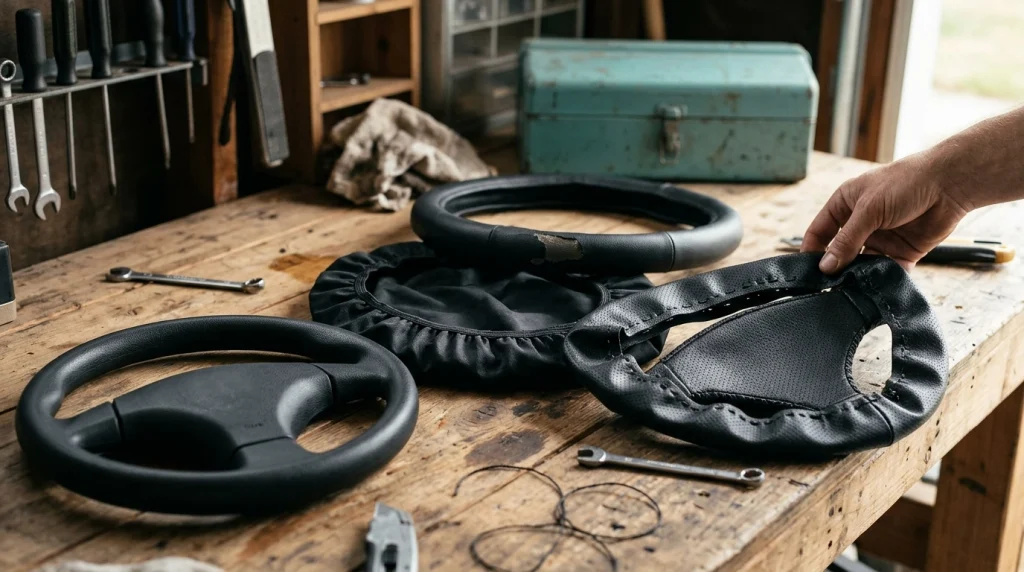
Material makes a difference, but the label alone cannot predict how well a particular cover will retain its fit. Construction, lining, seams, thickness, and manufacturing quality matter too.
The following comparison describes general tendencies, not guaranteed lifespans or a universal ranking.
| Cover material or design | Potential change over time | What to check |
|---|---|---|
| Rubber or silicone | May deform, lose grip, or change flexibility with aging and heat exposure. | Loose areas, tackiness, cracks, or rotation. |
| Synthetic leather or PU | May soften, wrinkle, peel, or separate at seams. | Seam separation, wrinkles, and lifting edges. |
| Genuine leather | May soften or change shape with use and environmental conditions. | Loose stitching, stretched sections, and surface wear. |
| Fabric or elastic-lined covers | Elastic components may lose tension; fabric may wrinkle or deform. | Sagging, bunching, and uneven tension. |
| Lace-on or stitched wraps | May develop loose stitching or wrinkles if poorly fitted or worn. | Loose thread, open seams, and lifting material. |
These differences matter because a cover can look worn without becoming larger. For example, peeling synthetic leather may expose a slippery surface, while an elastic-lined cover may lose tension and stop gripping the wheel firmly.
For a stitched wrap, the quality and tension of the installation also influence the final fit. Wheelskins’ fitting and care guidance explains why measuring the steering wheel and following the intended lacing method matter for a properly fitted cover.
How Can You Tell Whether Your Cover Has Stretched?
Compare how the cover fits now with how it fitted when first installed, if you remember. Look for changes in tension, alignment, and grip rather than relying on appearance alone.
Common signs include:
- The cover rotates independently: The cover moves while the steering wheel itself remains in position.
- New gaps appear: Sections that previously sat snugly against the rim now lift away or feel loose.
- The cover bunches up: Material gathers into folds, particularly around curves or near the lower section.
- The cover shifts during ordinary handling: Its seams, decorative marks, or alignment points no longer stay in place.
- The surface has deteriorated: Cracks, peeling, damaged stitching, or a change in texture may indicate aging rather than simple stretching.
A visible gap is not always proof of damage because some universal covers do not follow every steering wheel contour perfectly. However, a cover that lifts, shifts, or rotates should not be treated as acceptable merely because it still looks attractive.
Warning
Do not drive with a cover that slips, rotates, or interferes with your grip or steering-wheel controls. Remove it or have the fit corrected before driving again.
Can Heat Make a Steering Wheel Cover Stretch?
Heat can affect a steering wheel cover, but it does not automatically make every cover permanently larger. The effect depends on the material and how it responds to repeated temperature changes.
Some flexible covers become easier to fit when warm. Manufacturers may recommend warming a cover gently before installation because the material becomes more pliable. Plasticolor, for example, advises warming its steering wheel cover and fitting it from the top downward.
That installation advice is not evidence that normal sunlight will permanently stretch every cover. A material that becomes temporarily flexible when warm may return to its previous shape as it cools. Repeated heat exposure, however, can contribute to aging or deformation in materials that are vulnerable to it.
To reduce avoidable damage:
- Follow the cover manufacturer’s temperature and installation instructions.
- Avoid leaving the vehicle exposed to intense sunlight for unnecessarily long periods when shaded parking is available.
- Never use boiling water, an oven, a heat gun, or uncontrolled high heat to force a cover to fit.
- Do not assume that warming a loose cover will restore its original grip.
If you need installation guidance, consult the manufacturer’s steering wheel cover instructions for the relevant product. Different designs can require different fitting methods.
How to Prevent a Steering Wheel Cover From Becoming Loose
You cannot prevent all material aging, but you can reduce unnecessary strain and catch a fit problem before it becomes hazardous.
1. Choose the correct size
Measure the steering wheel according to the cover manufacturer’s instructions. Many covers use the wheel’s outside diameter, while some fitted wraps also require measurements around the rim or grip. Check the product’s stated compatibility rather than assuming that every wheel is the same size.
2. Install it without overstretching
Follow the supplied directions and position the cover evenly. For a slip-on design, many manufacturers recommend starting at the top and working down both sides. Do not pull so hard that seams split or the inner material becomes damaged.
3. Keep the cover clean
Sweat, skin oils, lotions, and cleaning residues can change the feel of a cover’s surface. Clean it using a method approved for its material, and allow it to dry fully. Avoid strong solvents or conditioners unless the manufacturer specifically permits them.
4. Inspect it periodically
Check the cover after extreme weather and during routine interior cleaning. Look for movement, loose seams, peeling, cracking, and sections that no longer sit flat. An early inspection can distinguish a minor appearance issue from a grip problem.
5. Avoid improvised fixes
Do not rely on household glue, loose tape, or improvised padding to keep a slipping cover in place. These materials can fail, create uneven surfaces, or leave residue. Use only a retention method explicitly approved for the cover and vehicle.
Tip
Before installing a replacement, compare the cover’s size range with your actual steering wheel dimensions. A correctly sized cover should fit securely without requiring damaging force or improvised attachments.
What Should You Do if Your Steering Wheel Cover Is Already Loose?

Start by determining whether the cover is incorrectly sized, improperly seated, or worn out. Do not continue driving while you investigate a cover that moves independently of the wheel.
- Park safely. Stop the vehicle in a safe location, switch it off, and assess the cover while stationary.
- Inspect the fit. Look for uneven edges, shifted seams, gaps, or damage. Check whether the cover matches the wheel’s dimensions.
- Check the manufacturer’s instructions. If the cover is intact and simply installed incorrectly, follow the approved method to reseat it. Do not force it over the rim.
- Assess material condition. If the cover has become permanently deformed, cracked, peeled, or lost its grip, replacement is usually the more reliable option.
- Check for secure seating. With the vehicle parked, gently assess whether the cover shifts independently. It must remain secure and must not interfere with controls or the driver’s grip.
If the cover remains loose after correct installation, stop using it. Replacing it with a properly sized model is preferable to trying to compensate for a worn or incompatible cover.
Should You Replace a Stretched Steering Wheel Cover?
Replace the cover if it cannot maintain a secure fit, has damaged seams, or has developed a slippery or deteriorating surface. Minor cosmetic wrinkles may not require replacement if the cover remains securely attached and the manufacturer considers the condition acceptable.
When choosing a replacement, prioritize fit and reliable grip over appearance. Verify the size, material, installation method, and compatibility with your vehicle’s steering wheel features.
If your vehicle has a heated steering wheel or integrated touch-sensitive controls, confirm that the cover is suitable for those features. A thick or incompatible cover may change how the wheel feels or affects the operation of certain functions.
Do not remove or modify the steering wheel itself to install an ordinary rim cover. The wheel may contain an airbag, electrical connections, and other safety-related components. Work involving those systems should be handled according to the vehicle manufacturer’s procedures by a qualified technician.
Related Product
Replacement Steering Wheel Cover
If your current cover no longer fits securely, compare replacement covers by steering wheel dimensions, material, and compatibility before choosing one.
As an Amazon Associate, we earn from qualifying purchases.
Frequently Asked Questions
How long does it take for a steering wheel cover to stretch?
There is no universal timeline. Some covers retain their fit for years, while others loosen or deteriorate sooner depending on material quality, temperature exposure, installation, and use. A cover that is loose immediately may simply be the wrong size.
Can you shrink a stretched steering wheel cover back to its original size?
There is no reliable method that works for every material. Heating or cooling a cover may damage it or create an unpredictable fit. Follow the manufacturer’s guidance, and replace the cover if it no longer grips securely.
Should a new steering wheel cover be difficult to install?
Many slip-on covers are deliberately snug and require effort to install. However, excessive force, splitting seams, or a cover that does not match the wheel’s dimensions are reasons to stop and recheck compatibility.
Does a leather steering wheel cover stretch more than a rubber one?
Not necessarily. Leather may soften or change shape, while rubber may deform or lose grip. Construction, quality, environmental conditions, and fit all influence how the materials behave.
Can a loose steering wheel cover be secured with glue?
Do not use household glue as an improvised fix. It may damage the cover or original steering wheel and may not prevent slipping. Use only a retention method approved by the manufacturer, or replace the cover.
Is it safe to keep using a steering wheel cover with small wrinkles?
Small cosmetic wrinkles are not automatically dangerous if the cover remains firmly attached. If the wrinkles cause bunching, movement, a slippery grip, or interference with steering controls, stop using the cover until the problem is corrected.
Conclusion
Steering wheel covers can stretch, loosen, or lose their grip as materials age, experience repeated use, or encounter heat. However, a loose fit can also result from incorrect sizing, poor installation, or deteriorating seams and inner materials.
Check the cover’s dimensions, follow the manufacturer’s installation and care instructions, and inspect it regularly. Most importantly, do not drive with a cover that shifts or rotates independently of the steering wheel. If correct installation does not restore a secure fit, replacing the cover is the safer and more dependable solution.

Daniel Brooks is an automotive writer and product researcher focused on car accessories, car tech, maintenance, and practical driving guides. At Plug-in Car World, he helps drivers make smarter automotive decisions through honest reviews and research-driven content.
