
Can You Put a Cover on a Cracked Steering Wheel?
Quick Answer
Yes, you can usually put a steering wheel cover on a cracked steering wheel if the damage affects only the outer surface and the wheel remains structurally sound. A correctly sized, securely fitted cover can hide cracks, improve grip, and protect against further surface wear. However, a cover cannot repair a loose, bent, or structurally damaged steering wheel, and you should address serious damage before driving.
What to Check Before Installing a Cover
- Crack depth: Surface-level cracks in leather or vinyl are generally suitable for covering once the surface is clean and stable.
- Wheel stability: The steering wheel must remain firmly attached, with no unusual movement, bending, or looseness.
- Cover fit: Choose a cover that matches the wheel’s measured diameter and grip circumference.
- Loose material: Remove or repair only appropriate loose surface material; don’t conceal sharp edges or unstable pieces.
- Airbag clearance: Keep the center airbag cover, horn controls, and other safety-related components unobstructed.
When to Stop
- Have a qualified mechanic inspect deep structural cracks, a loose wheel, or damage near the hub or spokes before driving.
A cracked steering wheel doesn’t always mean you need an expensive replacement. In many cases, the damage is limited to worn leather, peeling vinyl, or aging surface material that a properly fitted steering wheel cover can conceal.
In this guide, I’ll explain how to tell whether your wheel is safe to cover, which cover materials work best, and how to install one without creating new problems. I’ll also cover when a repair or replacement makes more sense than a cosmetic fix.
In This Guide
- Is it safe to put a cover on a cracked steering wheel?
- Which steering wheel cracks can you cover?
- Which steering wheel cover should you choose?
- How do you install a cover on a cracked steering wheel?
- Should you cover, repair, or replace the steering wheel?
- What mistakes should you avoid?
- Frequently asked questions
Is It Safe to Put a Cover on a Cracked Steering Wheel?
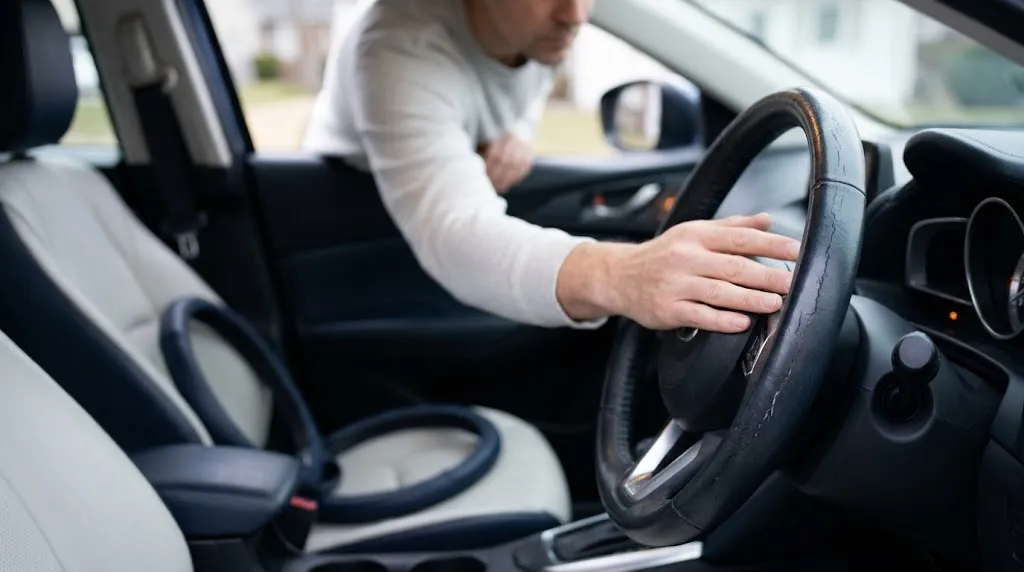
Yes, covering a cracked steering wheel is generally reasonable when the damage affects only the outer finish and the underlying wheel remains intact. The key is to determine whether you’re dealing with cosmetic deterioration or a problem that could affect steering control.
What a steering wheel cover can and cannot do
A steering wheel cover is a removable or fitted layer of material that wraps around the wheel’s outer gripping surface. It can improve comfort, conceal worn upholstery, and provide a more consistent gripping surface.
However, a cover doesn’t restore the strength of a cracked steering wheel, secure a loose wheel, or correct damaged mounting components. It can hide warning signs without eliminating the underlying problem.
Before choosing a cover, check these areas:
- Outer rim: Look for peeling leather, cracked vinyl, flaking coatings, or small surface splits.
- Spokes: Check for visible fractures, bending, or separation where the spokes meet the rim or center section.
- Hub and mounting area: Watch for unusual movement, looseness, or visible damage around the wheel’s attachment point.
- Controls and airbag: Make sure the horn, steering-wheel buttons, and airbag cover remain undamaged and unobstructed.
A cosmetic crack in the rim is different from a fracture in the wheel’s structural frame. If you cannot confidently distinguish between them, arrange a professional inspection rather than covering the damage immediately.
Could a cover make steering less safe?
Yes, an unsuitable cover can create a driving hazard if it slips, rotates, bunches up, or leaves an inconsistent grip. A cover that’s too large can move during a turn, while an excessively tight or incompatible cover may be difficult to install correctly.
Never assume that a cover is safe simply because it feels snug while the vehicle is parked. Its fit and grip must remain consistent throughout normal steering movements.
Pro tip: Consult your vehicle owner’s manual for steering-wheel and airbag precautions, and use the NHTSA airbag safety guidance when assessing potential safety concerns.
Section takeaway: Cover cosmetic damage only after confirming that the wheel is stable, secure, and safe to use.
Which Steering Wheel Cracks Can You Cover?
Small cracks, peeling upholstery, and superficial finish damage are usually the easiest problems to conceal with a steering wheel cover. Deep fractures, exposed structural material, and damage around the spokes or hub require a different approach.
1. Small cracks in leather or vinyl
Leather and vinyl steering wheels can develop fine cracks as their surfaces age, dry out, or experience repeated friction. If the underlying wheel remains sound, a cover can hide these imperfections and reduce direct contact with the damaged finish.
Clean the surface before installation, and remove dirt or loose debris that could rub against the cover. Don’t apply oily dressings or slippery conditioners underneath it.
2. Peeling or flaking steering wheel material
Peeling synthetic leather and worn surface coatings often make an otherwise usable steering wheel look worse than it is. A cover can provide a cleaner appearance without requiring complete upholstery restoration.
Check for loose strips that could bunch up under the new cover. Avoid aggressive scraping or cutting that could damage the underlying rim or expose sharp edges.
3. Deep cracks or missing pieces
Deep cracks deserve closer attention, particularly when the damaged area feels unstable or reveals material beneath the outer finish. A cover may conceal the opening, but it cannot establish whether the underlying structure remains safe.
If the rim has separated, a spoke appears fractured, or the wheel moves abnormally, don’t rely on a cover. Have the assembly inspected and repaired or replaced as appropriate.
4. Cracks near the center hub or airbag area
Damage near the center hub, spokes, or airbag housing should not be treated as ordinary cosmetic wear. These areas can involve steering attachments, electrical connections, and safety equipment.
Don’t pry open the airbag cover, remove the steering wheel, or attempt a structural repair as part of a cover installation. A qualified technician should assess damage in these locations.
| Damage type | Is a cover suitable? | Recommended action |
|---|---|---|
| Fine surface cracks | Usually | Inspect, clean, and fit a compatible cover. |
| Peeling leather or vinyl | Often | Remove loose debris safely and check for sharp edges. |
| Deep rim fracture | Not until inspected | Arrange a professional assessment. |
| Broken spoke or loose hub | No | Stop driving and have the steering assembly inspected. |
| Damage near airbag housing | Not without assessment | Consult the vehicle manufacturer or a qualified technician. |
Section takeaway: The location, depth, and stability of the damage matter more than how unattractive the crack looks.
Which Steering Wheel Cover Should You Choose?
The best cover for a cracked steering wheel fits tightly without slipping, feels comfortable in your hands, and accommodates the wheel’s actual dimensions. Material matters, but correct sizing and secure installation matter more.
Measure the steering wheel first
Most universal covers are designed for a stated range of steering-wheel diameters, but vehicle sizes vary. Measure straight across the wheel through its center, then check the manufacturer’s compatibility information before buying.
Also consider the rim’s thickness. Existing damage, raised seams, or loose upholstery can change how a cover sits, even when the wheel diameter matches the product specifications.
Compare common cover materials
| Material | Main advantage | What to consider |
|---|---|---|
| Genuine leather | Natural texture and a refined feel | Needs suitable cleaning and conditioning. |
| PU leather | Leather-like appearance and easy routine care | Quality and resistance to peeling vary. |
| Microfiber or suede-style material | Soft, textured grip | Can collect dirt and oils and require careful cleaning. |
| Rubber or silicone-based material | Practical grip and straightforward maintenance | Check for secure fit, texture, and added bulk. |
A soft cover can make a worn rim more comfortable, but extra thickness may change how the wheel feels in your hands. Choose a texture that stays grippy without feeling sticky or slippery.
Should you use a universal or custom-fit cover?
A universal cover can work well when the wheel matches its stated dimensions and the cover grips evenly around the rim. A vehicle-specific or professionally fitted cover may be preferable when the wheel has an unusual shape or integrated controls that leave little room for extra material.
Heated steering wheels need special consideration. A thick or insulating cover may reduce heat transfer, and the cover manufacturer may not approve its use on heated wheels.
Likewise, don’t assume every cover is suitable for a wheel with unusual contours, paddle controls, or nonstandard aftermarket components. Verify compatibility before installation.
Section takeaway: Match the cover to the measured wheel, damaged surface, driving conditions, and any factory features.
How Do You Install a Cover on a Cracked Steering Wheel?
Installing a steering wheel cover usually takes around 10–20 minutes, depending on its design and fit. You can complete most slip-on installations without removing the steering wheel or disturbing the airbag system.
What you’ll need
- A correctly sized steering wheel cover.
- A soft microfiber cloth.
- A mild, compatible cleaning solution.
- A clean, dry towel.
- A flashlight to inspect cracks and damaged areas.
Most importantly, don’t begin until you’ve confirmed that the wheel has no structural damage. If the damage extends beyond the outer finish, seek professional advice first.
Step-by-step installation
- Park safely. Park on level ground, engage the parking brake, switch off the engine, and remove the key or switch off the ignition.
- Inspect the wheel. Examine the entire rim, spokes, center hub, and visible attachment areas for damage beyond surface wear.
- Clean the rim. Use a compatible cleaner and microfiber cloth to remove dirt, sweat, and residue without soaking the damaged material.
- Let the surface dry. Make sure the wheel is completely dry before fitting the cover, especially if the original material is peeling or cracked.
- Position the cover. Align the cover with the top of the wheel and follow the manufacturer’s installation instructions.
- Fit the upper section. Secure the cover over the upper rim, keeping it centered and evenly positioned.
- Work around the sides. Gradually stretch or fit the remaining material around the rim without using sharp tools that could cut the cover or damage the wheel.
- Check the bottom section. Make sure the final portion sits evenly without folded material, exposed gaps, or excessive tension.
- Inspect the finished fit. Look for wrinkles, bulges, loose edges, and areas where the damaged surface pushes the cover outward.
Don’t force an incompatible cover into place. If it won’t fit using the manufacturer’s recommended method, choose another size or design.
How do you check that the cover is secure?
With the vehicle stationary, check whether the cover moves independently of the steering wheel when you apply gentle pressure. It should remain evenly positioned without bunching, rotating, or exposing sharp damaged material.
Never test an uncertain cover by driving at speed or making sudden turns. If the cover shifts during a stationary check, remove it and correct the fit before driving.
Keep the center airbag cover and steering-wheel controls unobstructed. A normal rim cover should not extend over the airbag deployment area or interfere with the horn and factory controls.
Pro tip: A routine cover installation normally doesn’t require steering-wheel removal. If a proposed repair involves removing the wheel, disconnecting electrical components, or working near the airbag, stop and follow the vehicle-specific factory service procedure or consult a qualified technician.
Section takeaway: A successful installation starts with a safe wheel and ends with a cover that fits evenly and cannot slip.
Should You Cover, Repair, or Replace the Steering Wheel?
Choose a cover when the damage is cosmetic and you want an affordable way to improve the wheel’s appearance and grip. Consider professional restoration when you want to preserve the original wheel, and replacement when the wheel itself has structural damage or cannot be restored safely.
When is a steering wheel cover enough?
A cover is often the simplest option for small surface cracks, faded finishes, and peeling outer upholstery. It avoids the labor involved in reupholstering or replacing the entire wheel.
For example, a wheel with fine cracks in its leather finish may need only cleaning and a compatible cover. The same approach isn’t appropriate for a rim that has split or a spoke that has fractured.
When should you repair the original wheel?
Professional leather restoration or reupholstery may make sense when the original wheel is structurally sound but has extensive cosmetic damage. A specialist can assess whether the material can be repaired or whether the rim needs new upholstery.
Surface repair products can help with certain small cosmetic defects, but they aren’t substitutes for structural repairs. Don’t fill a deep fracture with glue, filler, or epoxy and assume the wheel is safe.
When is replacement necessary?
Replacement may be necessary when the wheel has structural damage, damaged mounting components, or deterioration that cannot be repaired safely. A qualified technician should determine the correct repair approach for the specific vehicle.
Replacement can involve more than swapping the visible rim. Depending on the vehicle, the job may affect the airbag module, horn wiring, steering-wheel controls, clock spring, or steering-wheel alignment.
The NHTSA recall lookup is also worth checking if you suspect a safety-related defect. A recall check won’t diagnose a cracked wheel, but it can help identify relevant outstanding vehicle recalls.
What do the options cost?
Costs vary by vehicle, cover quality, damage severity, and local labor rates. The following are broad planning estimates in US dollars, not verified quotes or fixed market prices.
| Option | Indicative cost | Best suited for |
|---|---|---|
| Basic steering wheel cover | About $10–$30 | Minor cosmetic wear on a sound wheel. |
| Premium leather or custom-fit cover | About $30–$100 or more | Drivers wanting a more tailored appearance and feel. |
| Professional reupholstery | Roughly $100–$300 or more | Cosmetic deterioration on an otherwise sound wheel. |
| Steering wheel replacement | Several hundred dollars or more | Structural damage or a wheel that cannot be restored safely. |
Actual replacement costs can be substantially higher on vehicles with integrated electronics, heating, advanced driver-assistance controls, or expensive airbag assemblies. Request a vehicle-specific quote before approving any work.
Section takeaway: Compare the cost of a cover with the cost of proper restoration, but never choose a cosmetic fix over a necessary safety repair.
What Mistakes Should You Avoid When Covering a Cracked Steering Wheel?
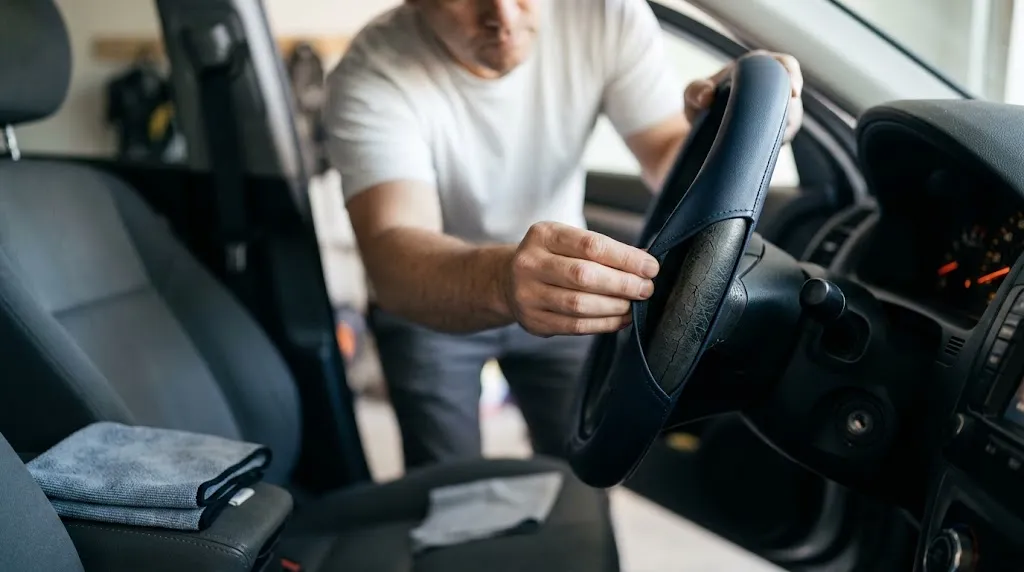
The biggest mistake is treating every crack as a cosmetic problem. A cover can improve the surface, but it cannot correct damage to the steering assembly or guarantee that a deteriorated rim is safe.
Don’t hide damage before inspecting it
Installing a cover immediately can make cracks harder to inspect later. Check the wheel carefully before installation and remove the cover periodically to monitor the original surface.
If the damage grows, the wheel becomes loose, or you notice new movement around the hub or spokes, stop using the vehicle until the problem receives an appropriate assessment.
Don’t use adhesives or household repair products indiscriminately
Superglue, expanding foam, hard fillers, and unsuitable adhesives can create uneven surfaces or damage existing materials. Some products also become brittle or slippery as they age.
Use only a repair product specifically suitable for the wheel’s surface material and the type of cosmetic damage. Never use an improvised repair to conceal a structural crack.
Don’t choose a cover that’s too thick or loose
A bulky cover can change your grip, reduce the feel of the original wheel, and make precise steering movements less comfortable. A loose cover can shift when you turn the wheel.
Choose a consistent thickness and a secure fit. If the cover feels awkward or changes your ability to grip the wheel comfortably, try a different design.
Don’t neglect maintenance after installation
Even a well-fitted cover needs occasional inspection and cleaning. Sweat, dust, skin oils, and heat can affect the cover’s texture and durability over time.
- Clean the cover according to its material-specific instructions.
- Check the seams and edges for wear or separation.
- Inspect the underlying steering wheel if the cover begins to move or develop unusual bulges.
- Avoid cleaners that leave an oily or slippery residue.
- Replace a cover that tears, loses its grip, or no longer fits securely.
As of 2026, the same basic rule still applies: choose a cover for comfort and cosmetic protection, not as a substitute for repairing a damaged steering component.
Section takeaway: Inspect first, install carefully, and treat any worsening damage as a reason to reassess the wheel rather than simply adding another cover.
Frequently Asked Questions
Can a steering wheel cover hide cracks completely?
Yes, a correctly sized cover can conceal many small cracks, peeling areas, and worn patches on the outer rim. However, deep cracks or raised sections may remain visible or create bumps beneath the cover. Inspect the wheel first and never conceal suspected structural damage.
Will a steering wheel cover stop cracks from getting worse?
A cover can reduce direct contact with the damaged surface and may protect it from additional rubbing. It cannot reverse material deterioration or guarantee that cracks will stop spreading. Monitor the original wheel underneath and arrange repairs if the damage progresses.
Can I put a cover over a steering wheel with peeling leather?
Usually, yes, provided the underlying wheel is structurally sound and the loose material doesn’t prevent a secure fit. Remove loose debris carefully, clean the surface with a compatible product, and let it dry. Avoid covering sharp edges or unstable sections.
Will a steering wheel cover fit over a thick or badly cracked rim?
It depends on the cover’s dimensions and the condition of the rim. Thick covers may accommodate minor surface irregularities, but raised cracks and loose material can create uneven pressure or prevent a secure fit. Measure the wheel and check the manufacturer’s compatibility guidance.
Can I use a steering wheel cover on a heated steering wheel?
Possibly, but you should check the vehicle and cover manufacturers’ instructions first. Some covers can reduce heat transfer, and certain materials may not be suitable for heated steering wheels. Choose a compatible product and don’t assume a universal cover is appropriate.
Should I repair a cracked steering wheel before installing a cover?
Cosmetic repairs may be optional when the wheel is sound and the cover fits securely. Structural damage, loose spokes, hub problems, or damage near the airbag require professional assessment before you use the wheel. A cover should never replace a necessary safety repair.
Can a cracked steering wheel cause a driving safety problem?
Yes, if the crack involves the wheel’s structure, attachment, or spokes rather than just its outer finish. Cosmetic cracks can also create sharp edges or uncomfortable grip. If the wheel feels loose, unstable, or unusually damaged, stop driving and arrange an inspection.
Final Takeaway: Should You Put a Cover on a Cracked Steering Wheel?
Yes, a steering wheel cover is a practical solution for many cracked, peeling, or worn steering wheels when the damage is limited to the outer surface. The right cover can improve the appearance, provide a more comfortable grip, and postpone cosmetic restoration.
Before buying one, inspect the rim, spokes, and hub, measure the wheel, and select a cover that fits securely. If you find deep cracks, loose components, or damage around the airbag area, get the wheel checked before driving.
**The bottom line:** Cover cosmetic wear, but repair safety problems. A properly fitted cover can refresh a tired steering wheel, but it should never hide damage that could compromise your control of the vehicle.

Daniel Brooks is an automotive writer and product researcher focused on car accessories, car tech, maintenance, and practical driving guides. At Plug-in Car World, he helps drivers make smarter automotive decisions through honest reviews and research-driven content.
