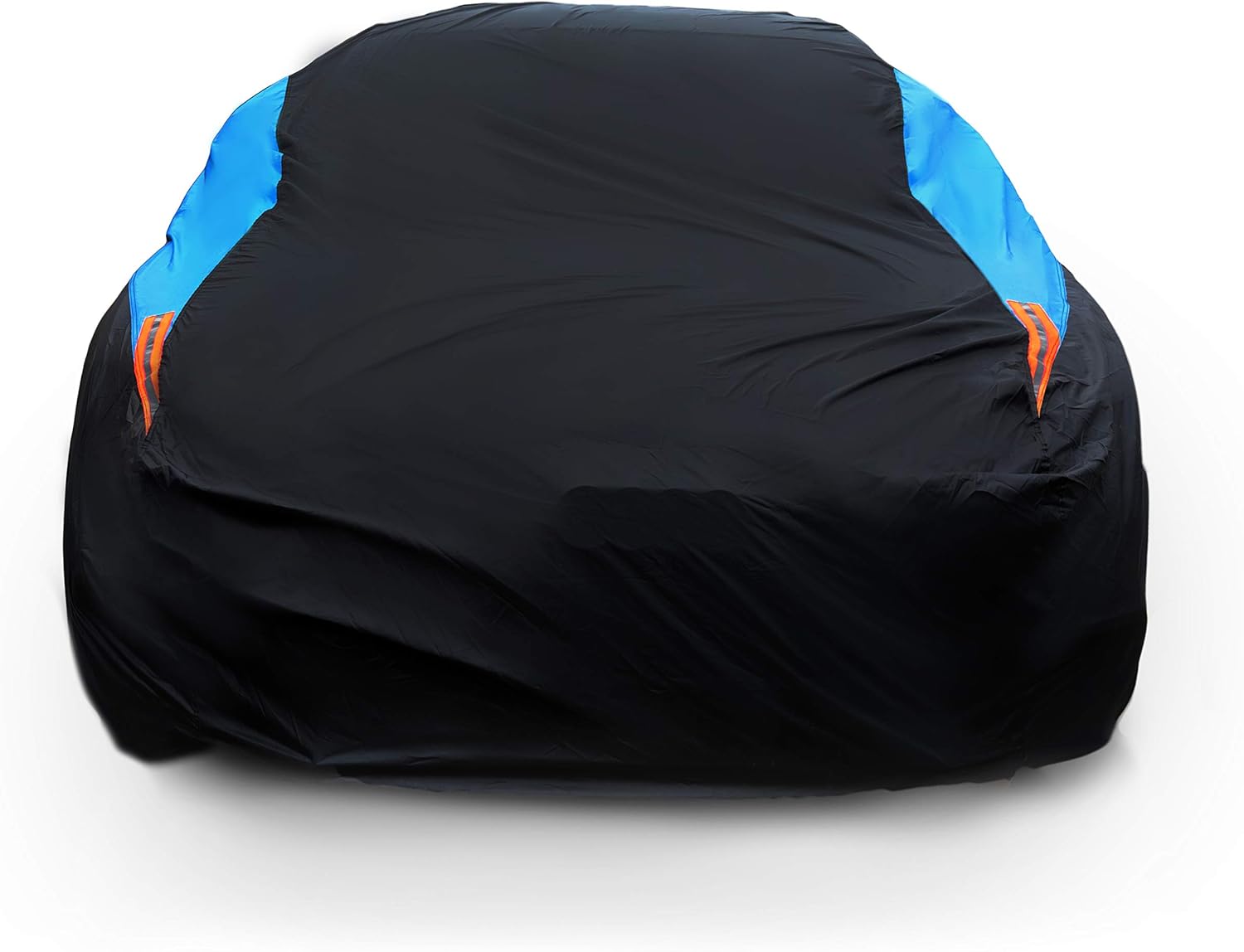
Preventing Sharp Edges From Damaging Your Car Cover: The Complete Guide
⚡ Quick Answer
Sharp edges on a car — like the license plate, antenna base, exhaust tips, and strap buckles — can tear, snag, or puncture a car cover over time. Protect against this by padding sharp points, using a soft-lined cover, and installing correctly to avoid contact.
Main sharp-edge threats to your car cover:
- License plate edges: Metal corners rub against the fabric when wind moves the cover.
- Antenna base: A fixed antenna can poke straight through unprotected cover fabric.
- Exhaust pipe tip: Heat plus sharp metal edges can melt or tear cover material.
- Strap buckles: Cover tie-down straps with metal hardware can scratch paint directly.
Quick fixes before you cover the car:
-
✓
Retract or remove the antenna before fitting the cover -
✓
Add foam tape or a rubber frame around the license plate edges -
✓
Let exhaust pipes fully cool before placing any cover material near them
You spent real money on a quality car cover. But the moment it snags on a license plate corner — or a wind gust drags it across an antenna base — that cover starts failing. I’m Daniel Brooks, and after years of covering cars in every condition, I know this problem is almost always avoidable.
Sharp edges on your vehicle are the hidden enemy of every car cover. Most people don’t realize the threat until they pull the cover off and find a torn seam, a hole, or worse — scratches on the paint where a buckle rubbed through. This guide covers exactly where those sharp edges live, how to protect against each one, and what mistakes to avoid.
📌 Key Takeaways
-
→
License plates are the #1 cause of car cover tears — their metal edges saw through fabric every time wind moves the cover. -
→
Foam tape costs under $10 and protects cover fabric from plate edges better than any premium cover material alone. -
→
Antenna grommets are a purpose-built solution — cut a small hole, reinforce it, and the antenna slides through safely. -
→
A custom-fit cover reduces sharp-edge damage by minimizing movement — loose, billowing covers grind against edges far more.
Where Do Sharp Edges Actually Damage Car Covers?
Sharp edges damage car covers in 4 main locations: the license plate, the antenna base, the exhaust pipe tips, and the tie-down strap hardware. Each one causes a different type of damage — from punctures to friction tears to heat burns — and each needs a different fix.
Most car owners only think about protecting their paint. But the cover itself is what gets destroyed first. Once a cover tears, it loses its protective value fast. Here’s where the damage starts.
📋 Sharp-Edge Damage Sources on a Typical Car
-
License plate corners: The metal edges act like a blade. Wind pushes the cover back and forth across them repeatedly. -
Fixed antenna base: A non-retractable antenna pokes directly into the cover fabric from below, creating a stress point that eventually tears. -
Exhaust pipe tips: Heat plus sharp chrome edges can melt synthetic cover materials in minutes if you cover a warm car. -
Strap buckles and metal hardware: Cover tie-down straps that use metal clips can press against painted surfaces when the cover shifts. -
Wiper blade tips and door edge guards: Aftermarket accessories with exposed metal corners can catch the cover lining on installation or removal.
So what does that mean for you? If your car lives outdoors and faces any wind at all, every one of these contact points is actively working against your cover. The good news is that each one has a simple, low-cost solution.
How Do You Protect a Car Cover From License Plate Edges?
Protect your car cover from license plate edges by adding foam tape, rubber bumpers, or a full rubber frame to the back of the plate before covering. These barriers absorb friction and prevent the plate’s metal corners from sawing through the cover fabric during wind movement.
The license plate is the most common cause of car cover tears. Here’s why: the cover drapes right over it, and any wind causes the fabric to rub back and forth across those sharp metal corners. Over weeks, even a quality cover will develop a hole right at that pressure point.
3 Methods to Cushion License Plate Edges
Each method below varies in cost and permanence. Choose based on how often you remove the plate and your budget.
Foam tape is the fastest fix. A rubber frame gives the most coverage and works even in windy outdoor conditions.
✅ Tip
Apply 3M foam tape along all 4 edges of the back of your license plate before reinstalling it. This lifts the plate slightly off the bumper, eliminates direct metal-to-paint contact, and creates a soft buffer between the plate and your car cover.
You might be thinking: “If I have a good cover, it should handle a license plate.” Here’s why that’s wrong. Even the softest fleece-lined cover has stitched seams. Wind-driven friction against a metal edge will always win over fabric — it’s just a matter of time. The plate edge always needs to be addressed separately.
How Do You Handle a Fixed Antenna When Using a Car Cover?
Handle a fixed antenna by either removing it before covering, using an antenna grommet (a reinforced hole cut in the cover fabric), or choosing a cover that ships with a built-in grommet kit. Never force a cover over a fixed antenna — this creates a stress tear that widens over time.
Retractable antennas are easy — pull them down before you cover the car. But a fixed shark-fin or mast-style antenna is a different problem. It pokes straight up, and a cover draped over it creates a sharp pressure point under tension.
How to Install an Antenna Grommet in Your Car Cover
🔢 Step-by-Step: Antenna Grommet Installation
-
1
Place the cover on the car first
Fit the cover normally, but stop when you reach the antenna area. Let the antenna push up against the fabric from below.
-
2
Mark the exact antenna location
Use a sharp pencil to push gently through the fabric at the antenna tip. Mark that spot without touching the paint below.
-
3
Cut a small hole and fit the grommet
Cut only as large as needed for the antenna to pass through. Snap the plastic grommet around the hole to reinforce the edge and stop fraying.
-
✓
Thread the antenna through and secure the cover
The grommet holds the opening firm. The antenna sits naturally through the cover with no stress or tearing pressure on the fabric.
Most premium car covers include a grommet kit in the box. If yours didn’t, they’re sold separately at any auto parts store for under $5. This is a 10-minute job that adds years to your cover’s life.
How Do You Protect a Car Cover From Exhaust Pipe Heat and Sharp Tips?
Protect your car cover from exhaust damage by always letting the engine fully cool before covering — at least 30 minutes after driving. Synthetic cover materials can melt at temperatures above 150°F, and chrome exhaust tips often stay hot far longer than the hood or hood vents.
This is a mistake many car owners make once. The cover touches a still-hot exhaust tip, the fabric melts, and suddenly there’s a permanent hole. Worse, some covers transfer heat back to the paint and leave marks. Always cool first — no exceptions.
⚠️ Warning
Never cover a car immediately after driving. Exhaust pipes retain heat for 30-60 minutes after the engine stops. Polyester and polypropylene covers — the most common outdoor materials — begin to deform at sustained contact with surfaces above 150°F. Let the car cool fully before covering.
But here’s the thing: even a cold exhaust tip has a sharp chrome edge. When you pull the cover tight and it drapes across the exhaust, that metal edge creates friction pressure. Over time, it wears a thin spot in the fabric, then a hole.
The fix is simple. When fitting the cover around the rear of the car, take it slow. Work the fabric around the exhaust tips carefully rather than pulling tight. If the cover fits loosely in that area, tuck it gently rather than stretching it over the tip.
Can Strap Buckles and Cover Hardware Damage Paint?
Yes — metal strap buckles, cable lock eyelets, and metal tie-down rings can all scratch paint if they press directly against the car body. Always check that strap hardware hangs below the door sill and never rests against the painted surface.
Cover straps keep the cover from blowing off in wind. But most straps use metal or hard plastic buckles. If the strap is routed incorrectly or falls against the door panel, it becomes a contact point every time the wind moves.
How to Route Straps Safely
The correct position for all strap hardware is below the rocker panel — the lowest part of the car body, typically under the doors. Hardware should never rest against door panels, fenders, or bumpers.
If your cover came with plastic buckles instead of metal, you’re already better protected. But metal eyelets with cable locks need extra attention. Thread the cable under the car through the chassis and clip it from below. The cable itself should never lay against the painted surface.
✓ Car Cover Strap Safety Checklist
-
✓
All buckles and clips hang below the rocker panel — never touching paint -
✓
Cable lock threads under the chassis, not around bumper corners -
✓
Straps are snug but not over-tightened — slack equals cover movement and friction -
✓
Check strap positions after the first heavy wind event and adjust if needed
Does Cover Fit Affect How Much Damage Sharp Edges Cause?
Yes — cover fit is directly linked to sharp-edge damage. A loose or universal-fit cover moves constantly in wind, increasing the number of times the fabric rubs against each sharp contact point. A custom-fit cover stays in place and reduces that friction to near zero.
Think of it this way. A cover that fits like a glove doesn’t billow or flap. It doesn’t slide back and forth across license plate corners. A universal-fit cover that’s too large will lift in the wind and slam back down across every edge on the rear of the car — dozens of times a night.
Custom-fit covers cost more, but they solve the sharp-edge problem at the source. They’re designed around the exact dimensions of your specific vehicle, so there’s no loose fabric to move. If a custom cover isn’t in the budget, at minimum choose a cover with elastic hems front and rear, and always use the tie-down straps provided.
💡 Key Insight
The best car cover in the world, fitted loosely, will still get destroyed by a license plate. The best way to protect your cover from every sharp edge on your car is to eliminate movement — fit it snugly, strap it down, and address each sharp contact point individually before you cover.
What Cover Material Resists Sharp-Edge Damage Best?
Multi-layer covers with woven outer fabrics resist sharp-edge damage better than single-layer covers. A tightly woven polypropylene or polyester outer layer is harder to puncture than a thin nylon shell. However, no material is immune — the real protection is reducing contact, not hoping the fabric holds up.
Soft inner linings — such as cotton, flannel, or micro-fleece — protect your paint from the cover itself, but they don’t add puncture resistance. The outer layer is what faces sharp edges. Look for covers rated as multi-layer with a reinforced hem and reinforced stitching around stress points.
Here’s how common car cover materials compare on resistance to sharp-edge puncture and abrasion.
Even the best outdoor material still needs sharp-edge protection — material quality buys you time, not immunity.
For more on keeping your car protected in all conditions, take a look at this guide on the best cleaning products for electric vehicles — since a dirty car under a cover can cause just as much paint damage as a sharp edge.
Recommended Product
Specialized Hail Protector Car Cover — Multi-Layered EVA Cushioning Foam Pad with Reflective Stripes
★★★★☆ Highly rated on Amazon
The 5mm EVA foam padding on this cover adds a cushion layer between the cover and your car’s surface — which means even if a strap or edge makes contact, the foam absorbs it rather than letting the cover grind against paint or fabric tear points.
As an Amazon Associate, we earn from qualifying purchases.
What Most People Get Wrong About Preventing Cover Damage From Sharp Edges
Most car owners assume buying a premium cover solves the problem. It doesn’t — not on its own. The cover material only determines how long it lasts before sharp edges win. The real protection comes from addressing those edges directly, before the cover goes on.
The second common mistake is ignoring the antenna. Owners with fixed mast antennas regularly drape the cover right over them and wonder why there’s a tear within a month. The antenna grommet fix takes 10 minutes and costs under $5. It’s one of the most overlooked steps in cover installation.
Third — and this surprises most people — is the exhaust pipe. Owners assume the back of the car is the safest part to cover. But if they covered a car that had been driven within the last 30 minutes, the exhaust tips are still hot enough to damage synthetic cover fabrics. The rule is simple: always let the car cool fully before covering, with no exceptions.
Conclusion
Sharp edges on your car — the license plate, antenna, exhaust tips, and strap hardware — are the real threat to your car cover. The cover material matters, but it’s second to fixing the contact points first. Foam tape, antenna grommets, a proper cool-down routine, and correct strap routing cost almost nothing and add years to any cover.
The one thing to do right now: flip your license plate and stick foam tape along all 4 edges on the back. It takes 3 minutes, costs under $8, and eliminates the most common source of car cover tears immediately.
Frequently Asked Questions
Can a car cover scratch my paint?
Yes, a car cover can scratch paint if it’s placed over a dirty surface or if the cover moves repeatedly against the car. Dust particles trapped under the cover act like sandpaper. Always wash the car before covering it and use a cover with a soft inner lining such as fleece or cotton.
How do I stop my car cover from tearing at the license plate?
Add foam tape or rubber bumpers to the back of the license plate before you install the cover. This creates a soft buffer between the plate’s metal edges and the cover fabric. A full rubber license plate frame gives even more protection and is available for under $20.
Should I remove my antenna before putting on a car cover?
Yes, if your antenna is retractable, retract it before covering. If it’s a fixed antenna, use a grommet kit to cut a small, reinforced hole in the cover so the antenna passes through safely. Forcing a cover over a fixed antenna creates a tear point that widens over time.
How long should I wait after driving before covering my car?
Wait at least 30 minutes after driving before covering your car. Exhaust pipes stay hot well after the engine stops, and synthetic cover materials can melt or deform on contact with heat above 150°F. Touch the exhaust tip before covering — if it’s warm, wait longer.
Do custom-fit car covers prevent more damage than universal covers?
Yes. A custom-fit cover stays in place and doesn’t billow or shift in wind. A loose universal cover moves constantly and rubs against every sharp edge on the car repeatedly. This movement is the main cause of cover tears and paint scratches, so a proper fit directly reduces both problems.
Can car cover straps scratch my car’s paint?
Yes, if metal strap buckles or cable hardware rests against the painted surface. All strap hardware should hang below the rocker panel — the lowest body panel under the doors. Never route a cable lock around a bumper corner where it contacts painted metal. Check strap positions after the first wind event.
What is the best car cover material to resist sharp-edge damage?
Multi-layer woven polypropylene or polyester outer fabrics resist sharp-edge abrasion better than single-layer covers. However, no material is fully immune — the solution is to pad the sharp edges on your vehicle, not rely on the cover fabric alone. Combine a quality multi-layer cover with foam padding at contact points.

Daniel Brooks is an automotive writer and product researcher focused on car accessories, car tech, maintenance, and practical driving guides. At Plug-in Car World, he helps drivers make smarter automotive decisions through honest reviews and research-driven content.