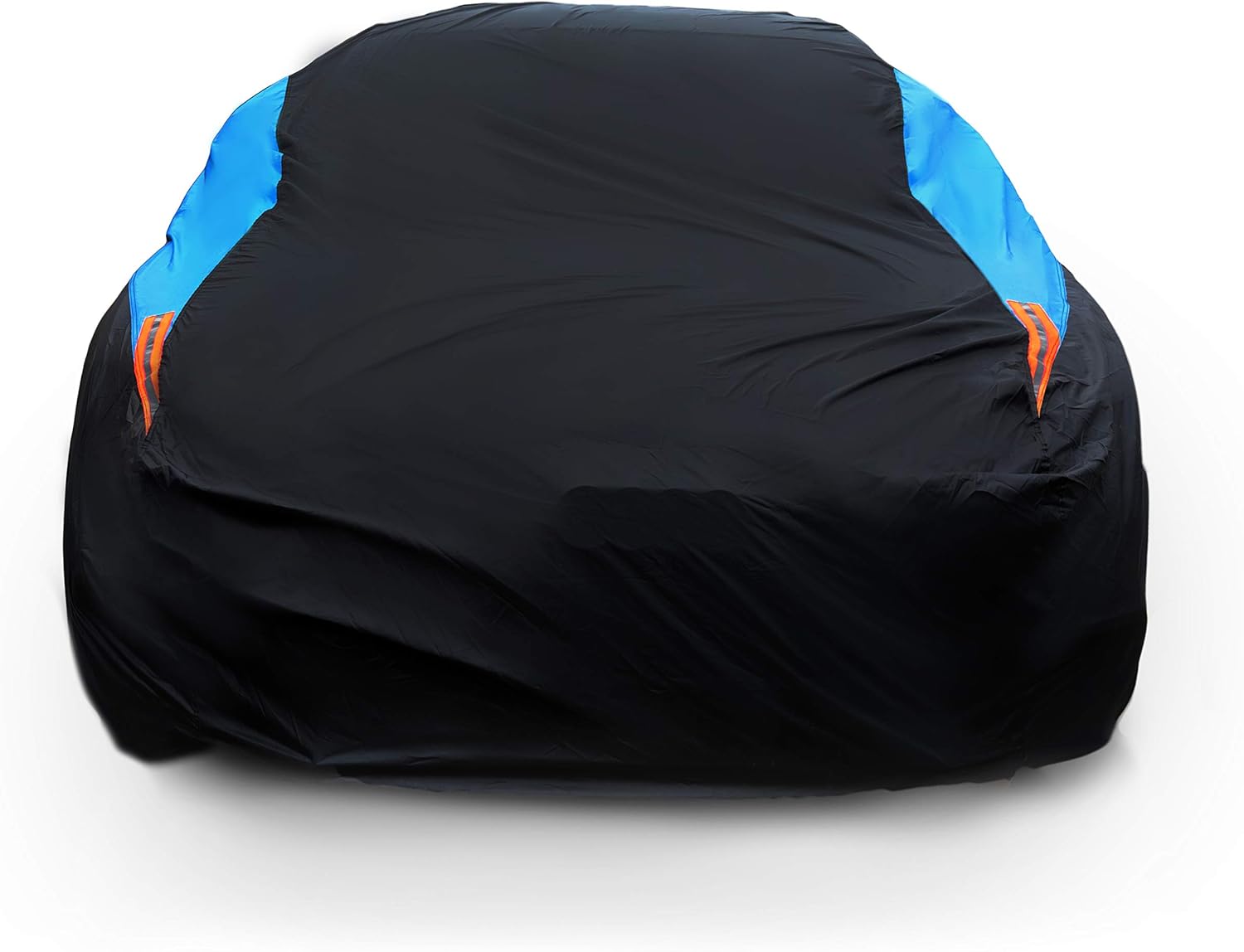
Can You Fix a Torn Car Cover? A Complete Repair Guide
⚡ Quick Answer
Yes — you can fix a torn car cover in most cases. Small to medium tears up to about 6 inches respond well to a self-adhesive patch kit or fabric glue. Large tears, frayed edges across multiple areas, or covers with UV-degraded fabric are better replaced than repaired.
How to Fix a Torn Car Cover:
-
1
Assess the tear — size, location, and how frayed the edges are. -
2
Clean and dry the area thoroughly before any repair attempt. -
3
Cut a patch 1 inch larger than the tear on all sides. -
4
Apply patch to the inside of the cover and press firmly for 60 seconds.
Signs the Tear is Too Far Gone:
-
✗
Fabric crumbles or flakes when you touch it -
✗
3 or more tears in different areas of the cover -
✗
Tear is longer than 12 inches with badly frayed edges
You pull the cover off your car and hear that awful ripping sound. Daniel Brooks here — and in over a decade of covering car care, I’ve seen this happen to even high-quality car covers. The good news is that a torn car cover is not always a death sentence.
Most tears can be fixed at home in under 30 minutes. The key is knowing the difference between a damage type that responds to a patch and one that means it’s time for a new cover. This guide covers both — so you know exactly what to do right now.
📌 Key Takeaways
-
→
Most car cover tears under 6 inches can be fixed with a self-adhesive patch kit. -
→
Always apply the patch to the inside of the cover for the strongest, longest-lasting bond. -
→
Patch material must match your cover type — polypropylene patches on polypropylene covers, polyester on polyester. -
→
Covers with UV-degraded fabric that crumbles or flakes should be replaced, not patched.
How Bad Is the Tear? Assessing the Damage First
Before buying anything or touching the cover, take 2 minutes to honestly look at the tear. The size, location, and condition of the fabric around the rip will tell you whether a repair is worth it.
Most repairs are possible when the damage is isolated to one area and the surrounding fabric is still in good shape. Here’s a clear breakdown:
This table shows which tear types are repairable at home versus which ones signal it’s time to replace the cover entirely.
If the fabric around the tear still feels flexible and intact, a patch will hold. If it feels brittle or paper-thin, the material has broken down and patching is a temporary fix at best.
Here’s the thing people often miss: location matters as much as size. A 4-inch tear on a flat section of the cover is simple to patch. That same tear at a stress point — like where the cover stretches over a spoiler or a mirror — may re-tear quickly because it sits under constant tension. If the tear is at a high-stress spot, double-patch it: one patch inside, one outside.
Now that you know whether your tear is worth fixing, let’s talk about what you’ll actually need.
What You Need to Fix a Torn Car Cover
You don’t need special tools or a workshop. Most car cover repairs need just 3 things: the right patch material, clean hands, and dry conditions. Using the wrong patch material is the single most common reason repairs fail within weeks.
📋 Car Cover Repair Supplies
-
Matching patch material: Must match your cover fabric — polypropylene patch for polypropylene covers, polyester patch for polyester covers. Wrong material won’t bond properly. -
Scissors: Sharp scissors to cut the patch cleanly. Round the corners of the patch slightly — square corners peel up faster over time. -
Mild soap and clean cloth: To clean and degrease the area before the patch. Any dirt or oil will stop the adhesive from bonding. -
Rubbing alcohol (optional): Wipe the area with alcohol after washing for the cleanest possible surface before patching. -
Roller or firm flat object: To press the patch firmly and remove air bubbles. A credit card or the back of a spoon works perfectly.
You don’t need fabric glue if you’re using a self-adhesive patch. But for larger tears where you sew the edges first, a thin bead of fabric glue around the thread line adds extra waterproofing and strength.
Recommended Product
Patch for Car Covers — Polyester Material — Strong Self Adhesive Backing — 1 ft x 1ft Patch — 2 Pack
★★★★☆ Highly rated on Amazon
This 2-pack gives you 2 full square-foot patches — enough for one large repair or two smaller ones — and the self-adhesive backing sticks directly to polyester cover fabric without glue.
As an Amazon Associate, we earn from qualifying purchases.
Once you have your supplies, the actual fix takes about 20 to 30 minutes. Next, let’s walk through it step by step.
How to Fix a Torn Car Cover Step by Step
The repair process is straightforward. Clean the area, cut the patch to the right size, and apply it to the inside of the cover. Doing these steps in order makes the difference between a repair that lasts years and one that peels off in 3 weeks.
🔢 Step-by-Step: Car Cover Tear Repair
-
1
Remove and lay the cover flat
Take the cover off the car and lay it on a clean, flat surface with the inside facing up. Work on the inside — patches bond better to the inner surface and stay protected from friction when the cover is put back on.
-
2
Clean the area around the tear
Wash a 4-inch area around the tear with mild soap and water. Let it dry fully — 15 minutes at minimum. A damp surface kills adhesive strength. For best results, wipe with rubbing alcohol after drying.
-
3
Cut the patch to the right size
Cut the patch so it extends at least 1 inch beyond the tear on every side. Round the corners with scissors — this single step stops corner peeling and extends patch life by months.
-
4
Peel and apply the patch
Peel the backing from the self-adhesive patch. Center it over the tear and press down firmly from the center outward. This pushes air bubbles toward the edges and stops them from getting trapped under the patch.
-
5
Roll it flat and apply pressure
Use a firm roller, a rolling pin, or the back of a spoon to press across the full patch for 60 seconds. Firm, even pressure is what activates the adhesive bond. Don’t rush this step.
-
✓
Wait before putting it back on the car
Let the repair cure for at least 2 hours before using the cover. Avoid water exposure during this time. The patch will reach full strength within 24 hours.
⚠️ Warning
Never apply a patch to a wet or even slightly damp cover. Moisture trapped under the adhesive creates a barrier that prevents bonding — the patch will lift within days. Full drying is non-negotiable.
For a large tear — over 6 inches — check the next section on sewing before patching, which adds significant extra strength to the repair.
Can You Sew a Torn Car Cover?
Yes — sewing is actually the strongest repair option for larger tears. It closes the torn edges together before you apply a patch, which means the patch doesn’t have to bridge a gap. A patch over a sewn seam will hold far longer than a patch applied directly over an open tear.
You don’t need a sewing machine. A heavy needle and weather-resistant nylon thread work well for hand sewing. Use a simple running stitch or zigzag stitch to close the gap. Pull the thread firmly but not so tight that it puckers the fabric — puckering creates new stress points.
Once the edges are sewn together, apply a self-adhesive patch over the stitched area on the inside of the cover. This combination — sewing plus patching — is the most durable repair possible for a car cover tear.
✅ Tip
If sewing isn’t your thing, take the cover to a local upholstery shop. Most will sew a torn car cover for $10–$30 — far cheaper than buying a new cover. Call ahead to confirm they work with the material type your cover is made from.
But what if you want to skip the needle entirely and just use glue? That brings up a question worth answering directly.
What Type of Glue Works on Car Covers?
Not all adhesives work on car cover fabrics. The cover material — polypropylene, polyester, or multi-layer fabric — has a low surface energy, which means most common household glues simply won’t bond to it. Using the wrong glue results in a repair that looks fine at first but peels away within days.
Here are the adhesive types that actually bond to car cover materials, and which situations they suit best.
The most reliable option for most people is a self-adhesive patch kit — it’s faster than glue, requires no drying time, and is designed specifically for this material. Keep fabric glue for edge-sealing stitches on sewn repairs.
Now you know how to fix it. But sometimes a repair isn’t the right call — and knowing when to stop trying is just as important.
When Should You Replace Instead of Repair?
A patch job makes sense when the cover is otherwise in good shape. It doesn’t make sense when the cover has aged to the point where the repair becomes the new weakest link in a fabric that’s failing everywhere else.
🎯 Repair or Replace?
If you have…
1 tear, fabric still flexible and intact around it
→ Repair it — patch will hold well
If you have…
2–3 tears in different areas of the cover
→ Consider replacing — cover is near end of life
If you have…
Brittle, crumbling, or paper-thin fabric
→ Replace — UV degradation can’t be undone
A quality outdoor car cover has a lifespan of 3 to 7 years depending on how often it’s used and where the car is stored. An outdoor cover that’s used daily in full sun will age faster than one stored in a garage. If your cover is over 5 years old and tearing, replacing it likely saves you money versus ongoing repairs.
The cost comparison is straightforward: a repair patch kit runs $8 to $20. A new mid-range outdoor cover runs $50 to $150. If you’re looking at 3 repairs in a single season, the math points toward a replacement.
What Most People Get Wrong About Car Cover Repairs
Most people assume any patch will work on any cover. It won’t. Car cover materials have a low surface energy — meaning adhesives struggle to grip them unless the patch was specifically designed for that fabric type. A patch made for canvas tents will not bond reliably to a polypropylene car cover, even if it sticks initially.
The second mistake is applying a patch to the outside of the cover. The outside takes the most friction — every time you slide the cover off, the patch edge catches and starts to peel. Inside patches are protected from this friction and last significantly longer.
Third: people skip the drying step. Even a slightly damp surface prevents proper adhesive bonding. You can’t see moisture in fabric with your eyes. Give it a full 15 minutes of air drying — or use a hair dryer on low heat for 3 minutes — before applying any patch or adhesive.
💡 Key Insight
The patch material, placement location, and surface dryness matter more than the size of the tear. Get all 3 right and even a 5-inch tear can be fixed to last for years. Get any one of them wrong and a 1-inch repair can fail in a week.
How to Stop Your Car Cover from Tearing Again
Understanding why covers tear helps prevent the next one. The most common cause isn’t age — it’s sharp contact points. Spoilers, antennas, side mirrors, and windshield wiper blades all create stress points where the cover stretches tight, and repeated movement cuts through the fabric from the inside out.
📋 How to Make Your Car Cover Last Longer
-
Pad sharp contact points: Wrap antennas and wiper blades in a soft cloth or foam before fitting the cover. This eliminates the most common tear source. -
Never put the cover on a dirty car: Grit and debris trapped between the cover and paint act like sandpaper. They wear through the inner lining fast and stress the outer fabric. -
Use wind straps in exposed areas: A cover flapping in wind acts like a flag — it builds repetitive stress at the same point until a tear forms. Wind straps eliminate this. -
Store it clean and dry: Folding a damp cover into a bag and leaving it promotes mildew growth that breaks down fabric from within. Always dry before storing. -
Inspect it every 3 months: A small stress point caught early — a thin spot, a starting fray — can be reinforced with a patch before it becomes a full tear.
For more detailed guidance on car cover maintenance and material selection, the experts at CarCovers.com cover repair guide go deep on material-specific care.
Conclusion
Yes — you can fix a torn car cover in most cases, and it’s worth doing if the fabric around the tear is still in good shape. Use a patch that matches your cover material, apply it to the inside, and let it cure fully before putting the cover back on.
If the fabric is crumbling, UV-degraded, or tearing in multiple spots, a replacement is the smarter call. A good cover is cheaper than the paint correction it prevents.
One thing to do right now: Take your cover off and inspect the most common stress points — around the antenna, spoiler, and mirrors. If you see any thin spots or small frays, grab a patch kit this week before they grow into a full tear.
Frequently Asked Questions
Can you fix a car cover with duct tape?
Duct tape is not recommended for car cover repairs. It’s too stiff, doesn’t bond reliably to polypropylene or polyester fabrics, and the adhesive breaks down quickly in UV exposure. The tape will peel within days, and the sticky residue left behind makes proper patching harder afterward.
How long does a car cover patch last?
A correctly applied self-adhesive patch on a clean, dry surface can last 1 to 3 years with regular use. Patches at high-stress points — like over a spoiler or mirror — tend to last 6 to 12 months before needing a refresh. Double-patching inside and outside adds significantly more life.
What is the best patch kit for a car cover?
The best patch kit is one that matches your cover material. For polypropylene covers — like Noah, Evolution, or Budge covers — use a polypropylene-specific patch. For polyester covers, use a polyester patch. Kits sold by CarCovers.com and similar cover-specific brands are formulated for these exact fabrics.
Can you wash a car cover after patching it?
Yes — but wait at least 48 hours after the repair before washing. Hand washing is safer than machine washing for patched covers. Use a gentle, fabric-safe cleaner and avoid wringing or twisting the cover near the repaired area. Air dry flat whenever possible.
Is it worth repairing an expensive car cover vs replacing it?
Yes — for a single tear on a cover that’s still in good condition overall, repair is always worth it. A patch kit costs $8 to $20. A new premium cover costs $80 to $200 or more. Repair becomes less worthwhile when the cover is over 5 years old or shows wear in multiple areas.
Why does my car cover keep tearing in the same spot?
Repeated tears in the same place mean a sharp object on the car is cutting through from underneath. The most common culprits are antennas, raised spoilers, wing mirrors, and wiper blades. Wrap the contact point in soft foam or cloth before fitting the cover to break the cycle.
Can a torn car cover still protect my car?
A small tear still provides most of the cover’s protection — a 2-inch rip doesn’t render the whole cover useless. But moisture, dust, and UV rays will enter through the opening and potentially collect in that area against your paint. Repair it as soon as possible to maintain full protection.

Daniel Brooks is an automotive writer and product researcher focused on car accessories, car tech, maintenance, and practical driving guides. At Plug-in Car World, he helps drivers make smarter automotive decisions through honest reviews and research-driven content.