
Are Full-Grain Leather Steering Wheel Covers Worth It? (Pros & Cons)
Quick Answer
Yes, a full-grain leather steering wheel cover is generally worth it for drivers looking for superior tactile feel, exceptional longevity, and a natural aging patina, provided they are willing to invest the time required for proper lacing and routine conditioning.
Understanding Full-Grain Leather in Automotive Accessories
When upgrading a vehicle’s interior, drivers often look at steering wheel accessories to improve grip, enhance aesthetics, or protect a worn factory rim. Among the various material options available, full-grain leather stands out as the highest quality grade. It utilizes the outermost layer of the hide, keeping the natural grain intact.
Unlike bonded or split leather, full-grain material has not been sanded, buffed, or snuffed to remove imperfections. This preserves its dense fiber structure, making it exceptionally strong and breathable. However, these natural properties also mean the material behaves differently under daily driving conditions than synthetic microfibers or polyurethane wraps.
Deciding if this specific upgrade fits your vehicle involves weighing its long-term performance, installation effort, and daily tactile experience against cheaper alternatives.
Key Benefits of Full-Grain Steering Wheel Wraps
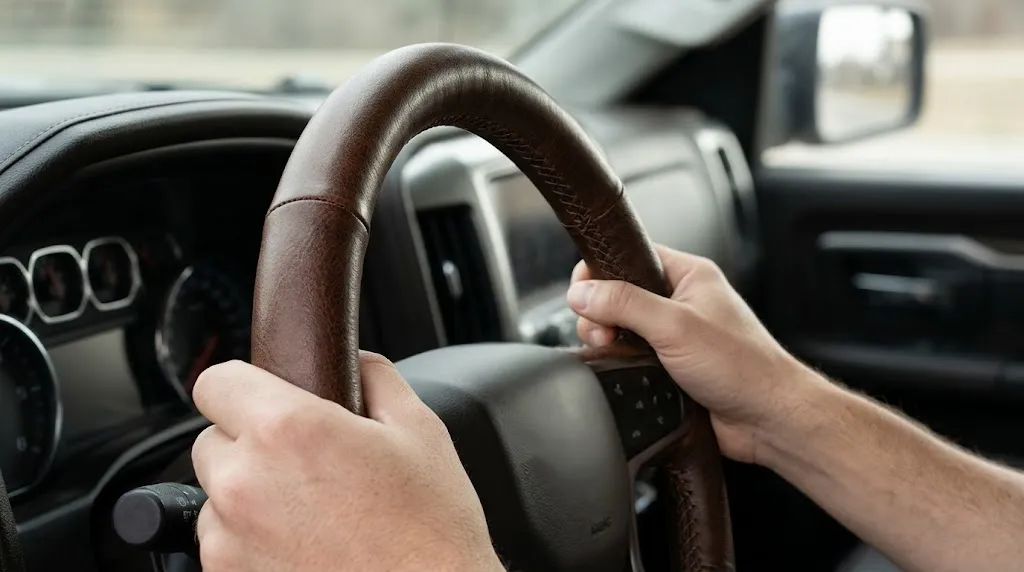
Investing in a high-grade natural hide offers several distinct advantages over standard slip-on covers.
Superior Tactile Feel and Grip
The primary reason drivers choose a genuine leather wrap is the hand-feel. Full-grain leather provides a warm, natural texture that improves with age. Unlike shiny synthetic plastics that can feel slick in hot weather or freezing in the winter, quality leather adapts to ambient temperatures more comfortably and offers a secure grip during long commutes.
Exceptional Durability and Aging
Because the natural grain fibers remain tight and unaltered, the material resists tearing and surface cracking far better than corrected-grain or synthetic counterparts. Over time, hand oils and friction develop a rich, personalized patina rather than wearing away into peeling flakes.
Custom, OEM-Like Appearance
Most premium full-grain covers are designed as lace-on wraps rather than simple elastic slip-ons. When installed correctly, they sit flush against the rim, tuck neatly behind the spokes, and closely mimic factory-installed leather steering wheels found in luxury vehicles.
Key Insight
Lace-on full-grain covers require physical stitching around the perimeter of the wheel. This prevents the rotation and slipping common with generic elastic covers, providing a safer and more stable grip.
Drawbacks and Practical Challenges
Despite the clear advantages, full-grain leather is not the ideal choice for every driver or vehicle.
Demanding Installation Process
Unlike slip-on covers that take seconds to stretch over a wheel, a proper full-grain wrap requires patient, manual stitching. The process often takes anywhere from 45 minutes to two hours. Pulling the thread tight requires steady hand strength and attention to detail to ensure the seams align evenly across the spokes.
Higher Upfront Cost
Quality natural hides command a higher price point than synthetic vinyl, PU leather, or basic rubberized grips. Drivers on a strict budget may find the price difference hard to justify for an interior accessory.
Maintenance Requirements
Real leather is skin-like in its need for care. Exposure to intense sunlight, extreme cabin heat, and constant hand oils can dry out the material. Without periodic cleaning and leather conditioning, the surface can stiffen or develop premature wear spots.
Full-Grain Leather vs. Synthetic and Slip-On Alternatives
Comparing material grades helps clarify which option aligns best with your daily driving habits and maintenance preferences.
| Feature | Full-Grain Leather | PU / Faux Leather | Basic Rubber / Silicone |
|---|---|---|---|
| Lifespan | 5–10+ years with care | 1–3 years (prone to peeling) | 2–4 years (fades/warps) |
| Installation | Manual lacing required | Slip-on stretch fit | Slip-on stretch fit |
| Tactile Feel | Natural, breathable, softens | Smooth, can feel synthetic | Tacky or rubbery grip |
| Maintenance | Periodic cleaning & conditioning | Wipe clean | Wipe clean |
This comparison highlights that while synthetic options win on convenience and initial cost, full-grain leather outperforms them significantly in longevity, tactile feedback, and structural integrity.
How to Determine If You Should Buy One
To decide whether the investment makes sense for your vehicle, evaluate your priorities against the following practical scenarios:
- You love a premium tactile interior: If you appreciate the feel of genuine materials and drive frequently, the upgrade noticeably improves daily interaction with your vehicle.
- You plan to keep your car long-term: Synthetic covers often degrade, crack, or peel within a couple of years under sun exposure. Full-grain leather lasts for years when maintained properly.
- You dislike loose steering wheel covers: If a shifting, rotating slip-on cover frustrates you, the secure, custom-laced fit of a quality leather wrap solves that issue entirely.
- You want a zero-effort installation: If spending an hour meticulously threading needle and cord through leather edges sounds tedious, you may prefer a standard slip-on alternative.
Warning
Avoid purchasing cheap covers marketed as “genuine leather” if they consist of heavily corrected or bonded scraps coated in polyurethane. True full-grain or high-grade top-grain leather will explicitly state its hide origin and feature natural surface texture variations.
Tips for Maintaining Full-Grain Steering Wheel Covers
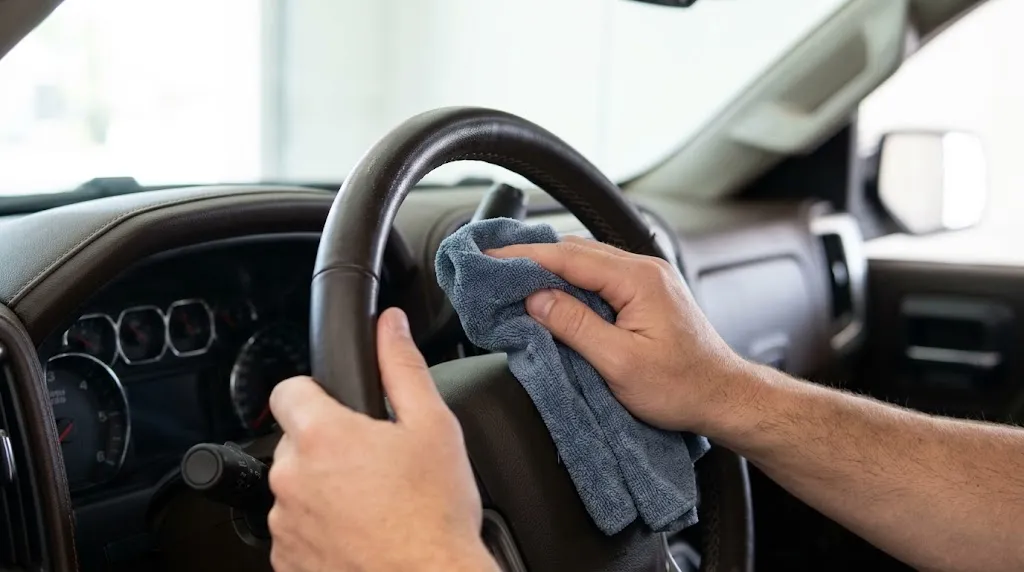
Protecting your investment ensures the leather retains its texture and appearance over hundreds of thousands of miles.
- Clean gently: Use a damp microfiber cloth with mild, pH-balanced leather cleaner to remove accumulated hand oils and dirt every few months.
- Condition periodically: Apply a small amount of dedicated leather conditioner annually to keep the hide supple and prevent drying or cracking from cabin heat.
- Park with care: Use a windshield sunshade during peak summer months to reduce UV degradation and extreme cabin temperature spikes.
Related Product
Leather Care and Conditioning Kits
Regular cleaning and conditioning preserves the natural oils in full-grain leather, preventing stiffness and wear on high-friction steering wheels.
As an Amazon Associate, we earn from qualifying purchases.
Frequently Asked Questions
Is a full-grain leather steering wheel cover difficult to install?
Installation requires more effort than a standard slip-on cover because it involves manual lacing and stitching around the rim. While it is not mechanically complex, expect to spend between 45 and 90 minutes taking your time to ensure tight, even stitches and proper alignment.
How can I tell if a steering wheel cover is truly full-grain leather?
True full-grain leather displays subtle natural variations, pores, and fiber texture rather than a uniform, machine-stamped pebble pattern. It also has a natural leather scent rather than a strong chemical or plastic odor, and it feels breathable and warm to the touch.
Will a leather cover make my steering wheel significantly thicker?
Lace-on full-grain covers add a minimal, comfortable thickness to the rim, often improving ergonomics for drivers who find factory steering wheels too thin. However, they do not add the bulky, spongy profile associated with cheap elastic gel or thick fleece covers.
Can a leather steering wheel wrap withstand extreme summer heat?
Yes, quality full-grain leather handles heat well compared to synthetic vinyl, which can become sticky or degrade. While dark leather absorbs heat in direct sunlight, using a windshield sunshade keeps cabin temperatures manageable and protects the hide from drying out.
How long does a full-grain leather steering wheel cover last?
With basic maintenance—such as periodic cleaning and conditioning—a high-quality full-grain leather wrap easily lasts 5 to 10 years or more. Because the natural grain is intact, it resists surface peeling and develops an attractive patina over years of use.
Do lace-on leather covers slip or rotate during driving?
No. When installed and pulled taut according to the manufacturer’s stitching instructions, a lace-on cover conforms tightly to the shape of the wheel rim and stays securely anchored in place without sliding.
Conclusion
A full-grain leather steering wheel cover is a worthwhile investment for drivers seeking an upgrade in grip, longevity, and interior aesthetics. While it requires more upfront installation effort and occasional maintenance than cheap synthetic alternatives, its superior tactile feedback, durability, and custom fit provide long-term value that easily justifies the cost for vehicle enthusiasts.

Daniel Brooks is an automotive writer and product researcher focused on car accessories, car tech, maintenance, and practical driving guides. At Plug-in Car World, he helps drivers make smarter automotive decisions through honest reviews and research-driven content.
