
Can You Install a Steering Wheel Cover Without Tools?
Quick Answer
Yes, you can install most standard steering wheel covers without any tools. Traditional slip-on covers rely on flexible inner cores that stretch over the wheel by hand, though tight-fitting leather or lace-up steering wheel wraps require a needle and thread included in the kit.
Understanding Steering Wheel Cover Types
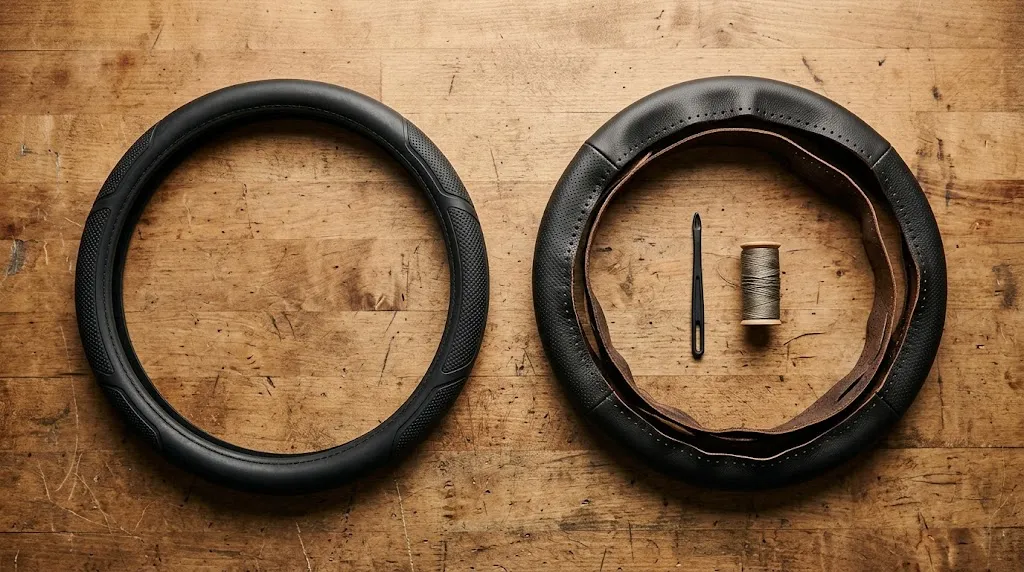
Before attempting an installation, it helps to understand the design of the cover you purchased. Steering wheel covers generally fall into a few distinct categories based on how they attach to the steering wheel.
The vast majority of aftermarket steering wheel covers sold today are slip-on covers. These feature a rubber or TPE (thermoplastic elastomer) inner ring designed to stretch over the outer diameter of the steering wheel. They require zero tools, relying entirely on hand strength and flexibility.
On the other hand, custom-fit or premium leather wraps are laced onto the wheel manually. While these do not require mechanical tools like screwdrivers or pliers, they do require the specialized plastic needle and thread supplied in the packaging.
Key Insight
Rubber-backed slip-on covers depend on friction and tension to stay secure. If a cover slides around while driving, it is either the wrong size for your steering wheel diameter or lacks sufficient inner grip.
Step-by-Step Guide to Installing a Slip-On Cover Without Tools
Installing a standard slip-on cover is straightforward, but it can test your grip strength if the material is cold and stiff. Follow this sequence to make the process easier without resorting to tools that could damage your steering wheel leather or plastic trim.
- Warm up the cover: If the weather is cold, leave the cover in a warm room or direct sunlight for 15 to 30 minutes. Warm rubber expands slightly and becomes much more pliable, making it significantly easier to stretch.
- Center the top: Align the top-center of the steering wheel cover with the top-center of your steering wheel. Hook the top portion of the cover over the top arc of the wheel.
- Work your way down: Hold the top firmly in place with one hand, and use your other hand to stretch the sides of the cover downward over the left and right edges of the wheel simultaneously.
- Secure the bottom corners: Pull the remaining bottom section downward. Because the final stretch requires the most tension, leverage your thumbs against the inside rim of the steering wheel while pulling down with your fingers.
- Adjust and center: Once the entire rim is seated, step back or rotate the wheel slightly to verify that the cover is centered evenly all the way around.
Why Warmth Matters During Installation
The most common reason people struggle to install a steering wheel cover by hand is ambient temperature. Rubber and synthetic lining materials stiffen significantly in cool environments, losing the elasticity required to stretch over a steering wheel.
If you attempt an installation in a cold garage or winter weather, the material may feel an inch too small. Warming the cover inside your house or running your car’s interior heater for a few minutes before starting softens the inner core. This simple step eliminates the temptation to pry the cover on with screwdrivers or flathead tools, which can puncture the material or scratch your vehicle’s steering column.
Warning
Never use metal tools like screwdrivers, pry bars, or pliers to force a steering wheel cover onto your wheel. They can easily rip the synthetic backing, puncture the cover’s exterior, or tear the factory leather wrapped around your steering wheel.
How to Handle Stubborn or Tight Covers
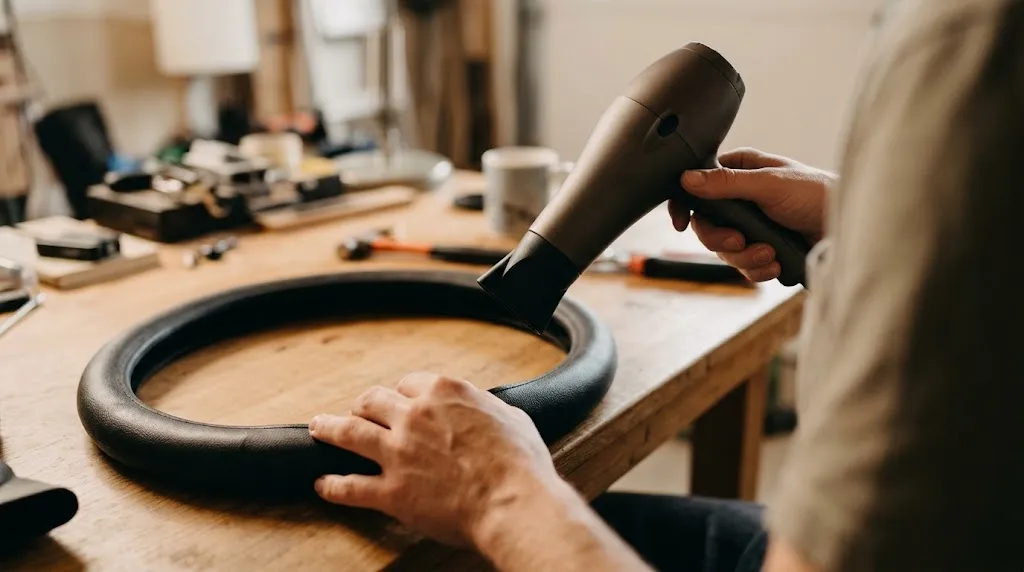
If you have warmed up the cover and are still struggling to fit the final bottom section over the wheel, adjust your technique rather than your tools.
- Enlist a second set of hands: Have someone hold the top and sides in place while you pull and stretch the final stubborn section over the bottom rim.
- Check the sizing: Verify that the cover’s specified steering wheel diameter range matches your vehicle’s exact steering wheel size. Standard steering wheels are usually either 14.5 to 15 inches or 15.5 to 16 inches in diameter. A cover meant for a smaller compact car will not stretch onto a large SUV or truck steering wheel.
- Work symmetrically: Pull down evenly from both the left and right bottom quarters rather than trying to stretch the entire bottom edge straight down at once.
Maintenance and Safety After Installation
Once your steering wheel cover is successfully installed, take a moment to test its stability. Grip the wheel at the 9 o’clock and 3 o’clock positions and attempt to twist the cover back and forth.
A properly installed cover should remain firmly in place without slipping independently of the steering wheel. If the cover rotates while you apply turning force, it is either too large or the inner rubber lining has lost its grip. A loose steering wheel cover is a safety hazard because it can slip during an evasive driving maneuver.
To clean your new cover, wipe it down periodically with a damp microfiber cloth and mild interior cleaner, avoiding harsh solvent-based chemicals that can degrade the surface texture over time.
Related Product
Standard Slip-On Steering Wheel Covers
Explore durable, tool-free steering wheel covers designed with flexible inner linings for quick, secure hand installation.
As an Amazon Associate, we earn from qualifying purchases.
Frequently Asked Questions
Can I use a hairdryer to warm up a tight steering wheel cover?
Yes. If the cover is too stiff to stretch into place, you can use a hairdryer on a medium heat setting to warm up the inner rubber core. Keep the dryer moving continuously so you do not overheat or melt the synthetic surface materials.
What should I do if my steering wheel cover keeps slipping?
If a slip-on cover rotates while you drive, it is likely too large for your steering wheel rim. You can temporarily improve grip by wrapping a thin layer of rubber friction tape or a non-slip shelf liner around the steering wheel before reinstalling the cover.
Do leather lace-up steering wheel covers require tools?
Lace-up covers require the included plastic needle and thread to stitch the edges together around the rim, but they do not require any mechanical or household tools like screwdrivers or pliers.
Are steering wheel covers universal?
Most standard slip-on covers fit steering wheels measuring between 14.5 and 15 inches in diameter, which covers the majority of standard passenger cars, sedans, and compact SUVs. Larger vehicles like full-size trucks often require specific large-diameter covers.
Will installing a tight cover damage my factory steering wheel?
No, standard slip-on covers will not damage your factory wheel as long as you install them by hand without using sharp metal tools or pry bars that could scratch or puncture the original materials.
How do I know if I bought the correct size?
Measure the outer diameter of your steering wheel from edge to edge across the center. Match that measurement against the sizing specifications provided by the cover manufacturer before beginning installation.
Conclusion
Installing a standard steering wheel cover is a straightforward process that requires patience and hand strength rather than mechanical tools. By making sure the material is warm and pliable, working from the top down, and verifying that the cover matches your steering wheel dimensions, you can achieve a snug, secure fit in just a few minutes. Taking these simple precautions ensures your new cover stays firmly in place during daily driving.

Daniel Brooks is an automotive writer and product researcher focused on car accessories, car tech, maintenance, and practical driving guides. At Plug-in Car World, he helps drivers make smarter automotive decisions through honest reviews and research-driven content.
