
Can a Steering Wheel Cover Damage a Leather Steering Wheel?
Quick Answer
Yes, a steering wheel cover can damage a leather steering wheel, but the risk depends on the cover’s fit, material, cleanliness, and how long it stays installed. A properly fitted, clean cover usually poses little risk, while trapped grit, excessive friction, moisture, and unsuitable adhesives can cause scratches, discoloration, peeling, or surface deterioration.
What can damage the leather?
- Trapped dirt: Dust and grit can rub against the leather and wear down its protective finish.
- Poor fit: A loose cover can move during steering and create repeated friction.
- Moisture buildup: Sweat, water, and humidity trapped underneath can contribute to staining or deterioration.
- Harsh materials: Rough seams, abrasive linings, and incompatible adhesives can scratch or mark the surface.
- Excessive heat: Heat can accelerate the aging of leather finishes and some synthetic cover materials.
How to protect your steering wheel
- Choose a correctly sized cover with a smooth, clean, nonabrasive interior.
- Remove it periodically to inspect and clean the leather using a compatible product.
- Stop using the cover if the leather becomes sticky, discolored, cracked, or unusually worn.
A steering wheel cover can protect leather from daily wear, but the wrong one can leave damage that is difficult to reverse. The key is understanding how the cover contacts the original steering wheel and what happens beneath it over time.
In this guide, I’ll explain the main causes of leather damage, compare cover materials, and show you how to choose, maintain, and remove a cover without unnecessarily risking your car’s interior.
In This Guide
- How can a steering wheel cover damage leather?
- Which cover materials and fits are safest for leather?
- What are the warning signs of steering wheel damage?
- How do you prevent damage when using a cover?
- How should you remove a cover and clean leather?
- Is a steering wheel cover worth using on leather?
- Frequently asked questions
How Can a Steering Wheel Cover Damage Leather?
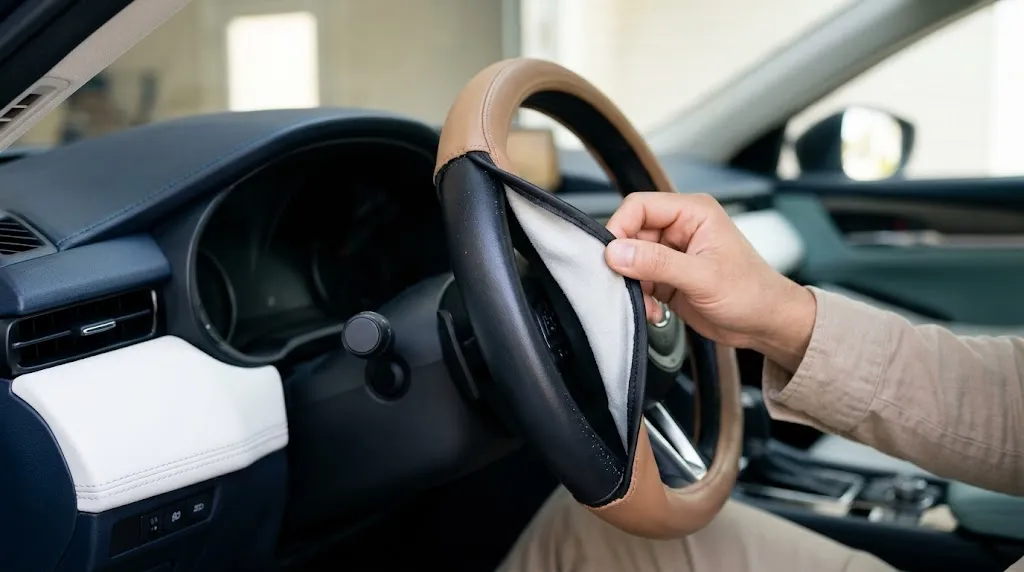
A steering wheel cover is a removable or fitted sleeve that wraps around the steering wheel rim to change its grip, comfort, appearance, or protection. On a leather steering wheel, the main risks come from friction, trapped contaminants, moisture, incompatible materials, and poor installation.
Modern automotive leather often has a protective surface coating rather than an exposed, untreated hide. Damage to that finish can make the wheel look shiny, patchy, faded, or worn even when the underlying leather remains intact.
Can friction and dirt scratch the leather?
Yes. Fine dust, sand, and other particles trapped between the cover and wheel can act like abrasives as the cover shifts during driving.
This risk increases when the cover fits loosely or has a rough inner lining. Even small movements repeated over months can dull the finish or create localized wear around the rim.
Before fitting any cover, inspect both its interior and the original leather. A clean cover installed over a dirty wheel can trap the very particles you want to keep away.
Can moisture cause discoloration or peeling?
Moisture trapped underneath a cover can contribute to staining, unpleasant odors, and deterioration, particularly when the leather finish is already damaged. Sweat and humid conditions make regular inspection especially important.
Leather also needs suitable care, not continuous exposure to excess moisture or heavy oils. A cover that prevents the surface from drying after cleaning can make an existing problem worse.
Can adhesives or tight covers damage the finish?
Some adhesive-backed wraps and poorly designed covers can leave residue or pull at a weakened finish when removed. A cover that is excessively tight can also stretch, compress, or rub against vulnerable areas during installation and use.
Stitch-on leather wraps require particular care because their installation can involve needles, thread, and close contact with the wheel surface. If you’re not confident about fitting one without puncturing the original leather, choose a suitable nonadhesive cover or use a qualified installer.
Section takeaway: A cover rarely damages leather simply by being present. Poor fit, abrasive contamination, trapped moisture, and aggressive attachment methods create the bigger risks.
Which Cover Materials and Fits Are Safest for Leather?
The safest steering wheel cover is one that matches the wheel’s size, grips securely without damaging pressure points, and uses a smooth, compatible inner surface. Material alone doesn’t determine safety; construction, cleanliness, and fit matter just as much.
Check your vehicle’s specifications before purchasing. Many passenger-car steering wheels measure roughly 14–15 inches (35.6–38.1 cm) across, but that range isn’t universal, and the rim’s thickness and shape also affect compatibility.
How do common cover materials compare?
| Cover material | Potential benefit | Main risk to leather |
|---|---|---|
| Smooth genuine leather | Natural feel and familiar grip | Rough edges, tight fit, or trapped dirt |
| PU or synthetic leather | Easy-care surface and broad style choices | Heat-related aging, coating transfer, or abrasion |
| Microfiber or suede-style fabric | Soft texture and added grip | Dust retention and difficult cleaning |
| Silicone or rubber-style material | Washable surface on suitable designs | Poor fit, residue, or surface marking |
| Adhesive-backed or stitched wrap | Close-fitting, tailored appearance | Adhesive residue, punctures, or finish pull-off |
This comparison describes common design-related risks, not a guarantee that every cover of a particular material behaves the same way. A well-made synthetic cover with a smooth lining may be safer for your leather than a poorly finished leather cover.
Is a loose cover worse than a tight cover?
Both can cause problems, but in different ways. A loose cover may slip and rub against the rim, while an excessively tight cover can be difficult to install and may put pressure on delicate trim or already worn leather.
Choose a cover made for the measured wheel diameter and rim profile. Avoid forcing an incompatible product onto the wheel or adding improvised adhesive, tape, or padding to make it fit.
What should you check before buying?
- Dimensions: Measure the wheel as the manufacturer instructs and verify the cover’s size range.
- Inner surface: Look for smooth, clean lining without exposed hard edges or abrasive seams.
- Construction: Check for loose stitching, sharp trim, and uneven sections that could rub the leather.
- Attachment: Prefer a secure, correctly sized design that doesn’t require permanent adhesive unless the manufacturer specifically approves it for the intended surface.
- Care instructions: Make sure you can clean the cover without harsh chemicals or excessive moisture.
Section takeaway: Prioritize correct sizing, a smooth interior, and a secure fit over appearance or material labels alone.
What Are the Warning Signs of Steering Wheel Damage?
Changes in texture, color, or surface condition can indicate that a steering wheel cover is harming the leather underneath. Inspect the wheel periodically instead of waiting until damage becomes obvious while driving.
Which changes should you look for?
- Shiny patches: A localized glossy area may indicate finish wear or repeated rubbing.
- Color transfer: Dark, colored, or uneven marks may come from the cover, accumulated dirt, or a deteriorating surface coating.
- Sticky or tacky leather: This can indicate residue, incompatible products, heat-related material breakdown, or a failing finish.
- Cracking and peeling: Flaking or lifting surface material may signal existing deterioration that the cover has concealed.
- Compressed areas: Uneven texture or flattened sections may point to pressure or repeated movement.
- Unusual odor: A persistent musty smell may indicate trapped moisture or contamination.
None of these signs proves that the cover caused the damage. Age, sunlight, body oils, hand lotions, cleaning chemicals, and ordinary use can also affect leather.
How can you tell cover damage from normal wear?
Look for a pattern that matches the cover’s contact points. For example, if discoloration follows a seam or appears only beneath one section of the cover, friction or material transfer becomes a reasonable possibility.
By contrast, worn areas where you normally hold the steering wheel may reflect years of direct contact and hand oils. Compare the exposed areas with the covered sections, but avoid assuming that every difference comes from the accessory.
| Observed problem | Possible explanation | Recommended action |
|---|---|---|
| Dust beneath cover | Contamination and potential abrasion | Remove cover and clean gently |
| Colored residue | Dye transfer, dirt, or finish breakdown | Test a compatible cleaner in a hidden area |
| Peeling surface | Coating failure or deeper wear | Seek an automotive upholstery specialist |
| Cover slipping | Incorrect size or worn grip | Stop using it until properly fitted |
| Musty smell | Trapped moisture or contamination | Remove, dry, inspect, and clean appropriately |
If the steering wheel itself feels loose or the cover rotates independently of the rim, don’t keep driving with an unstable grip. Remove or replace the cover safely before using the vehicle again.
Section takeaway: Inspect the leather beneath the cover and investigate changes early. Peeling or persistent stickiness often requires more than routine cleaning.
How Do You Prevent Damage When Using a Cover?
You can reduce the risk of leather damage by starting with a clean steering wheel, selecting a compatible cover, and checking the surface regularly. These simple habits help catch friction, dirt, and moisture problems before they become permanent.
How often should you inspect the leather?
There isn’t one inspection interval that suits every cover or driving environment. As a practical starting point, check underneath after the first few days of use, then inspect it every few weeks or whenever you notice slipping, odor, or unusual residue.
Inspect more frequently if you drive in dusty conditions, park outdoors in intense sunlight, or regularly use the car with sweaty hands. A quick check takes little time and can reveal a problem before it spreads.
What is the safest way to install a steering wheel cover?
Most conventional slip-on covers don’t require tools, but fitting them correctly still matters. Follow the cover manufacturer’s instructions rather than forcing it onto the wheel.
- Inspect the original wheel: Look for existing cracks, peeling, sticky patches, or loose trim.
- Clean the rim: Remove dust and oily residue with a cleaner compatible with the steering wheel’s finish.
- Dry the surface: Let the wheel dry completely before covering it.
- Check the cover: Examine the inner lining, seams, edges, and any exposed fasteners.
- Fit it evenly: Work around the rim according to the product instructions without stretching or twisting the cover excessively.
- Check stability: Confirm that the cover sits evenly and doesn’t rotate, bunch up, or obstruct your grip.
Don’t drive with a cover that slips, interferes with steering controls, or makes the wheel difficult to grip. Correct the fit or remove the cover before driving.
Do heat and sunlight make damage more likely?
Heat and sunlight can accelerate aging in leather finishes and synthetic materials, especially when the vehicle regularly sits in direct sun. A cover may reduce direct contact with the sun on covered areas, but it can also trap heat against the rim.
Don’t assume that a cover provides complete UV protection. Use a suitable windshield sunshade when practical, and follow the vehicle manufacturer’s recommendations for interior care.
What about heated steering wheels?
A cover can interfere with heat transfer from a heated steering wheel, depending on its thickness and material. Some covers may also be unsuitable for the wheel’s temperature range or construction.
Check the vehicle and cover manufacturers’ guidance before installing one over a heated wheel. If either manufacturer advises against using a cover, follow that advice rather than risking damage or reduced heating performance.
Pro tip: Consult your owner’s manual for guidance on steering wheel accessories, heated-wheel operation, and any restrictions that apply to your specific vehicle.
Section takeaway: Clean installation, periodic inspections, and correct fitment are your best everyday defenses against cover-related damage.
How Should You Remove a Cover and Clean Leather?
Remove a steering wheel cover carefully, clean the exposed leather with a compatible product, and let the surface dry before deciding whether to reinstall it. Avoid pulling aggressively or using sharp tools that could cut the leather or damage nearby trim.
How do you remove a tight cover without damaging the wheel?
- Park securely: Switch off the vehicle and ensure the steering wheel is stationary.
- Check the attachment: Identify whether the cover uses elastic, clips, laces, or adhesive.
- Release it gradually: Work around the rim a little at a time instead of yanking one section free.
- Avoid sharp tools: Don’t insert screwdrivers or blades between the cover and leather.
- Stop if it resists: If an adhesive wrap or stitched cover won’t release easily, consult its instructions or a professional installer.
You generally don’t need to disconnect the battery to remove an ordinary slip-on cover. However, don’t remove the steering wheel, airbag module, or other steering-column components as part of this job.
Pro tip: If a repair requires steering wheel or airbag removal, follow the factory service manual and use a qualified technician. The supplemental restraint system (SRS) contains safety components that require specific handling procedures.
How should you clean the exposed leather?
Use a soft microfiber cloth and a cleaner approved for your steering wheel’s actual finish. Many automotive leather surfaces have protective coatings, so aggressive scrubbing can damage the coating instead of improving the appearance.
- Wipe away loose dust before applying any cleaner.
- Apply the product to the cloth when its instructions permit, rather than soaking the wheel.
- Clean gently, paying attention to seams and the areas where your hands normally rest.
- Remove residue as directed by the product manufacturer.
- Allow the wheel to dry completely before fitting the cover again.
Consumer Reports’ car-interior cleaning guidance also emphasizes gentle cleaning for coated leather and vinyl, along with avoiding harsh products that can damage interior surfaces.
Which cleaning products should you avoid?
Don’t reach automatically for household degreasers, bleach, abrasive pads, or strong solvents. A product that removes grime from a hard surface can strip, discolor, or soften the finish on a leather steering wheel.
Be cautious with conditioners, too. Some wheels have coated finishes that need only light cleaning, and a heavy or oily product can leave the rim slippery.
For a sticky or discolored surface, test a suitable cleaner in an inconspicuous area if the manufacturer permits it. If the finish starts lifting or color transfers onto the cloth, stop cleaning and seek advice from an automotive upholstery specialist.
Section takeaway: Gentle cleaning protects the finish better than vigorous scrubbing. Let the leather dry fully before putting the cover back on.
Is a Steering Wheel Cover Worth Using on Leather?
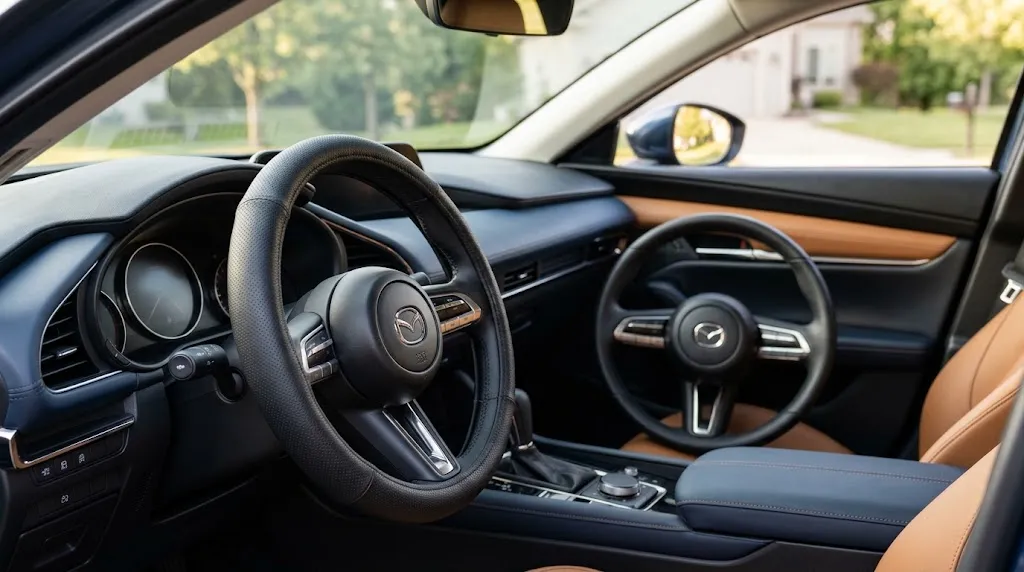
A steering wheel cover can be worthwhile if you want extra grip, a different feel, or a barrier against everyday contact. However, a clean, well-maintained original leather wheel may be better left uncovered when its condition and grip are already satisfactory.
The right choice depends on your priorities and the wheel’s condition. Consider the benefits against the maintenance involved and the possibility of hidden wear.
When does using a cover make sense?
- Protecting a newer wheel: A suitable cover may reduce direct contact from hands, oils, and ordinary surface dirt.
- Improving comfort: A correctly fitted design can change the rim’s thickness and texture to suit your preferences.
- Covering cosmetic wear: A cover may conceal worn leather, although it won’t repair the underlying damage.
- Changing appearance: A removable cover lets you update the interior without replacing the steering wheel itself.
When is it better to leave the wheel uncovered?
- Factory leather is in good condition: You may prefer its original texture and steering feel.
- The wheel has heating: A cover may reduce heating performance or conflict with manufacturer guidance.
- The leather is already peeling: Friction and trapped moisture may aggravate a deteriorating surface.
- The cover won’t fit properly: A loose or excessively tight product introduces unnecessary risk.
- Controls or grip are affected: Any accessory that interferes with safe steering should be removed.
Remember that a cover doesn’t correct damage to the underlying leather. If the original surface is cracked, peeling, or sticky, identify the cause before concealing it.
For a driver who wants to preserve a premium factory interior, routine gentle cleaning and sensible parking habits may be sufficient. A cover is an option, not a requirement.
Section takeaway: Use a cover when it provides a clear benefit and fits safely. If preserving the original leather is your main goal, a clean, uncovered wheel can be the simpler choice.
Frequently Asked Questions
Can a steering wheel cover permanently damage leather?
Yes. Abrasion, dye transfer, incompatible adhesives, and prolonged moisture exposure can leave lasting marks or damage the protective finish. However, a correctly fitted, clean cover doesn’t automatically damage leather, and many problems can be avoided through suitable material selection and regular inspection.
Can a black steering wheel cover stain a leather steering wheel?
It can, particularly if the cover’s dye or surface coating transfers under heat, moisture, or friction. Dark marks may also come from trapped dirt. Remove the cover and clean gently with a compatible product before deciding whether the leather needs professional treatment.
Should I remove my steering wheel cover at night?
Usually, there’s no need to remove a properly fitted cover every night. Regular inspections are more practical. Remove it when you need to check for trapped dirt, moisture, residue, slipping, or other signs of damage, and let the leather dry completely before reinstalling it.
Can a steering wheel cover cause leather to peel?
A cover may contribute to peeling if friction, heat, moisture, or an incompatible adhesive damages an already vulnerable finish. However, peeling can also result from age, sunlight, and ordinary wear. If the surface lifts or flakes, stop using the cover and have the leather assessed.
Is a leather steering wheel cover safer than a rubber one?
Not necessarily. A smooth leather cover and a well-designed rubber or synthetic cover can both be suitable if they fit correctly and have compatible inner surfaces. Construction, grip, cleanliness, and manufacturer guidance matter more than the material name alone.
Can I use leather conditioner underneath a steering wheel cover?
Only if the vehicle or leather-care manufacturer recommends it for that finish. Excess conditioner can leave a slippery or greasy surface and may transfer to the cover. Clean the wheel appropriately, remove residue, and allow it to dry before reinstalling the cover.
What should I do if the leather is already damaged?
Remove the cover carefully and assess the affected area. Gentle cleaning may resolve surface dirt or some residue, but peeling, deep cracks, and missing finish usually require professional repair or refinishing. Don’t apply more adhesive or aggressive cleaning chemicals to hide the damage.
Final Takeaway: Protect the Leather Before It Needs Repair
A steering wheel cover can damage a leather steering wheel, but the risk is manageable when you choose the right product and maintain it properly. The biggest concerns are abrasive dirt, slipping, trapped moisture, incompatible materials, and careless removal.
In 2026, the practical advice remains straightforward: check fitment, keep the wheel and cover clean, inspect the leather regularly, and follow your vehicle manufacturer’s care instructions. If the original leather starts peeling, becoming sticky, or changing color, remove the cover and investigate the cause.
Your steering wheel is one of the most frequently touched surfaces in your car. Protecting its finish matters, but maintaining a secure, comfortable grip matters even more.
For related safety guidance, consult the National Highway Traffic Safety Administration’s airbag information and your vehicle’s owner’s manual before using accessories that may affect steering wheel operation or safety equipment.
This article provides general vehicle-care information. Always follow the vehicle and accessory manufacturers’ instructions for your specific steering wheel and cover.

Daniel Brooks is an automotive writer and product researcher focused on car accessories, car tech, maintenance, and practical driving guides. At Plug-in Car World, he helps drivers make smarter automotive decisions through honest reviews and research-driven content.
