
How to Clean a Steering Wheel Cover Properly
Quick Answer
To clean a steering wheel cover properly, wipe away loose dirt, use a cleaner suited to its material, gently scrub with a soft microfiber cloth, and remove all residue with a clean, slightly damp cloth. Dry the cover completely before driving, and never soak an installed cover or use harsh chemicals that could damage its finish or grip.
The safest cleaning method by material
- Genuine leather: Use a leather-safe cleaner and a soft cloth, then apply a compatible conditioner only when appropriate.
- PU or synthetic leather: Start with mild soap and water, using very little moisture.
- Suede or microfiber suede: Brush gently with a suitable soft brush and avoid soaking the fibers.
- Silicone or rubber: Wipe with mild soapy water and rinse away residue with a damp cloth.
- Fabric or knitted covers: Follow the care label because some removable covers are washable while others require spot cleaning.
Before driving again
- Make sure the surface feels dry and provides its normal grip.
- Check that the cover hasn’t shifted, loosened, or become slippery.
- Never spray cleaner directly onto steering wheel buttons, seams, or electrical controls.
A clean steering wheel cover makes every drive more comfortable, but the wrong cleaning method can leave it sticky, faded, cracked, or slippery. The key is to remove sweat, skin oils, dust, and everyday grime without damaging the material underneath.
In this guide, I’ll explain how to clean a steering wheel cover properly, choose the right cleaner, handle stubborn stains, and maintain different materials. I’ll also cover when removing the cover makes sense and how to check that it’s safe to use again.
In This Guide
- Why Does a Steering Wheel Cover Need Regular Cleaning?
- What Do You Need to Clean a Steering Wheel Cover?
- How Do You Clean a Steering Wheel Cover Step by Step?
- How Do You Clean Different Steering Wheel Cover Materials?
- How Do You Remove Stains Without Damaging the Cover?
- How Often Should You Clean a Steering Wheel Cover?
- How Do You Dry, Inspect, and Maintain the Cover?
- Frequently Asked Questions
Why Does a Steering Wheel Cover Need Regular Cleaning?
A steering wheel cover is a removable or fitted layer of material that wraps around a vehicle’s steering wheel to change its grip, comfort, appearance, or protection. Depending on its construction, it may use genuine leather, synthetic leather, rubber, silicone, fabric, or suede-like material.
Because your hands touch the cover throughout every journey, sweat, body oils, dust, sunscreen, food residue, and hand lotion gradually build up on its surface. That buildup can make the cover look dirty, feel tacky, or lose its original texture.
What happens when you leave a dirty cover untreated?
- Reduced grip: Greasy residue can make the surface feel slick, particularly on smooth synthetic leather.
- Unpleasant odors: Sweat and moisture can linger in fabric and textured materials.
- Material deterioration: Harsh cleaners, embedded grit, and repeated friction can damage coatings and surface fibers.
- Visible discoloration: Oils and dirt can darken lighter-colored covers and leave marks around frequently held areas.
- Hidden damage: Dirt can collect along stitching, seams, and the inner edges of a fitted cover.
A steering wheel is a primary driving control, so cleanliness isn’t only about appearance. The surface needs to remain secure, comfortable, and predictable when you turn the wheel.
Can a dirty steering wheel cover affect driving safety?
Yes, if grime makes the cover slippery or the cover itself becomes loose. Cleaning won’t fix poor fitment, worn material, or a cover that rotates independently of the steering wheel.
After cleaning, check that the cover sits firmly and doesn’t move under normal hand pressure. Replace it if its fit has deteriorated or its surface remains slippery after proper cleaning.
Section takeaway: Regular cleaning removes the grime that affects appearance and grip, but a damaged or loose cover needs attention beyond washing.
What Do You Need to Clean a Steering Wheel Cover?
You usually need only a few basic supplies to clean a steering wheel cover at home. The most important choice is a cleaner that matches the cover’s material rather than a powerful product designed for general household cleaning.
Gather these cleaning supplies
- Two or three microfiber cloths: Use one for cleaning, another for removing residue, and a dry cloth for finishing.
- Mild soap or a material-specific cleaner: Choose a product labeled as suitable for your cover’s material.
- A small bowl of clean water: Use it to dampen the cloth and dilute mild soap when appropriate.
- A soft detailing brush: Use it for textured rubber, stitching, or fabric where a cloth cannot reach easily.
- A clean, dry towel: Use this to absorb moisture after wiping.
- A soft suede brush, if needed: Keep this separate from brushes used on greasy or rubber surfaces.
Start with the least aggressive cleaning method. A cleaner that works on automotive vinyl may not be suitable for genuine leather or delicate suede.
Which cleaners and tools should you avoid?
- Bleach, strong solvents, and abrasive household cleaners.
- Scouring pads, stiff wire brushes, and rough sponges.
- Excessive water, particularly on stitched leather and absorbent fabric.
- Unapproved alcohol-based products that may damage dyes, finishes, or protective coatings.
- Steam cleaners or high-pressure cleaning equipment unless the manufacturer specifically approves the method.
Don’t assume a product is safe just because it’s marketed for car interiors. Test it on a small, inconspicuous area first and check the manufacturer’s care instructions.
Should you clean the cover while it’s installed?
For routine surface cleaning, leaving a firmly fitted cover on the steering wheel is usually the simplest approach. It lets you clean small sections without stretching the cover or disturbing its fit.
However, a removable fabric cover may benefit from separate cleaning if its care label allows it. Never force a tightly fitted cover off if doing so could tear its seams or damage the steering wheel finish.
Section takeaway: Use soft tools, minimal moisture, and a material-compatible cleaner. Preparation prevents more damage than aggressive scrubbing can repair.
How Do You Clean a Steering Wheel Cover Step by Step?
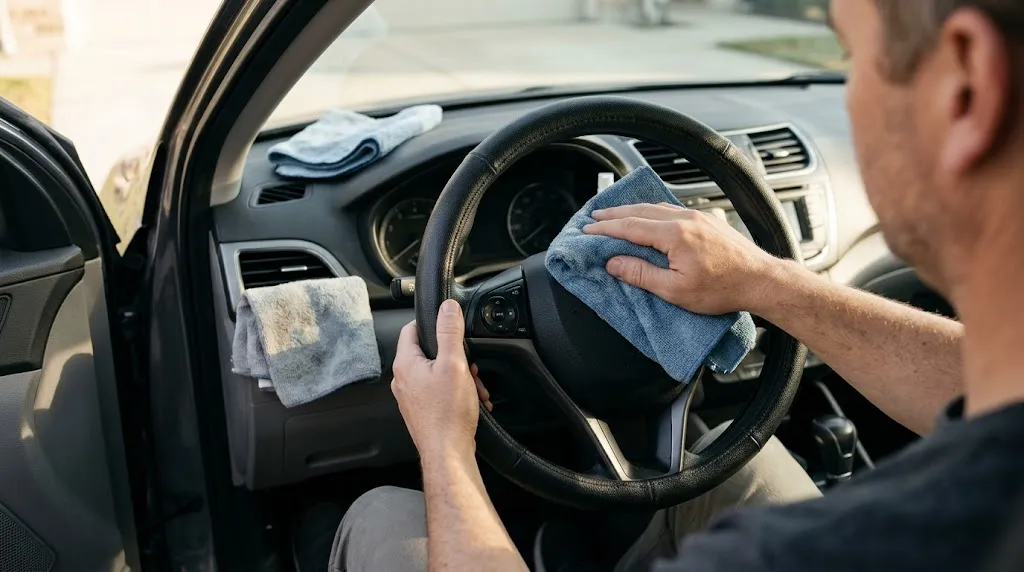
For most fitted steering wheel covers, the safest approach is to wipe away loose debris, clean gently with a suitable solution, remove residue, and dry the surface completely. Set aside roughly 10–20 minutes for a routine clean, allowing extra time for drying or stubborn stains.
Step 1: Park safely and inspect the cover
Park the vehicle on level ground, engage the parking brake, and switch off the ignition. Inspect the cover for peeling, loose stitching, cracks, unusual stickiness, or movement around the steering wheel.
If the cover is badly damaged or rotates independently, don’t rely on cleaning to restore it. Remove or replace it according to the manufacturer’s instructions before driving.
Step 2: Remove loose dust and debris
Wipe the cover gently with a clean, dry microfiber cloth. Work around the entire circumference, including the back of the wheel and the areas near the seams.
This first pass removes loose particles before they get rubbed into the surface during wet cleaning. Pay attention to textured sections where dust tends to collect.
Step 3: Prepare the right cleaning solution
Follow the cleaner’s label and the cover manufacturer’s care instructions. If mild soap and water are suitable, mix a small amount of soap into water rather than applying concentrated detergent directly.
Dampen a microfiber cloth until it’s moist but not dripping. A soaked cloth can push water into seams, stitching, and the space between the cover and steering wheel.
Step 4: Clean one small section at a time
Wipe a manageable section using gentle, overlapping strokes. Rotate your working position around the wheel rather than aggressively rubbing the same spot.
- Use light pressure on smooth leather and synthetic leather.
- Use a soft brush on textured rubber or silicone when necessary.
- Follow the material’s grain or texture where applicable.
- Use a lightly damp cloth on stitching instead of saturating the thread.
For stubborn surface grime, repeat the gentle cleaning pass instead of reaching immediately for a stronger chemical. Stop if the color transfers to your cloth or the finish begins to change.
Step 5: Remove soap and cleaner residue
Take a second cloth, dampen it with clean water, and wipe the entire cleaned surface. Rinse the cloth frequently so you don’t spread loosened grime back across the cover.
Residue matters because leftover cleaner can leave a film that feels sticky or changes the cover’s grip. Continue wiping until the surface no longer feels soapy.
Step 6: Dry the cover thoroughly
Blot away remaining moisture with a clean, dry microfiber cloth. Allow the cover to air-dry fully before driving, keeping the vehicle in a well-ventilated area when practical.
Avoid direct high heat, hair dryers on hot settings, and aggressive sunlight exposure as drying shortcuts. Heat can damage synthetic coatings, dry out leather finishes, or distort certain materials.
Step 7: Check the grip and fit
Once the cover is dry, run your hands around its surface to check for tackiness, greasy patches, or inconsistent texture. Confirm that the cover remains securely fitted and that cleaning hasn’t exposed loose seams or damaged areas.
Check that no moisture or cleaner remains around steering wheel buttons or controls. If anything feels slippery or the cover has shifted, correct the problem before driving.
Pro tip: Keep liquid away from electrical controls
Never spray cleaner directly onto the steering wheel, buttons, horn pad, or airbag cover. Apply it to your cloth instead, and consult your vehicle owner’s manual if the steering wheel has sensitive finishes or integrated electronics.
Section takeaway: A thorough clean depends on gentle wiping, complete residue removal, and full drying. Don’t drive until the cover feels dry and secure.
How Do You Clean Different Steering Wheel Cover Materials?
The correct cleaning method depends on the cover’s material and surface finish. When you’re unsure, check the packaging or manufacturer’s care label before using water, conditioner, or a specialty cleaner.
Use this comparison as a starting point, not a replacement for product-specific instructions.
| Cover material | Recommended cleaning method | Main precaution |
|---|---|---|
| Genuine leather | Leather-safe cleaner and soft microfiber cloth | Avoid soaking, harsh chemicals, and excessive conditioning. |
| PU or synthetic leather | Mild soap solution and a lightly damp cloth | Avoid solvents, abrasive pads, and excess heat. |
| Suede or microfiber suede | Suitable soft brush and approved spot cleaner | Avoid soaking or rubbing dirt deeper into the nap. |
| Rubber or silicone | Mild soapy water and a soft cloth or brush | Rinse away residue that could make the grip slippery. |
| Fabric or knitted material | Label-approved spot cleaning or washing | Prevent shrinkage, color bleeding, and damp inner padding. |
How do you clean a genuine leather steering wheel cover?
Use a cleaner specifically approved for finished automotive leather. Apply a small amount to a microfiber cloth, wipe gently, and remove any residue according to the product instructions.
Leather can lose flexibility or develop surface damage when exposed to unsuitable chemicals and excessive moisture. Don’t use household oils or heavy conditioners unless the leather manufacturer recommends them.
Some covers use coated leather rather than untreated leather, so products intended for absorbent leather may not be appropriate. Check the finish before applying any conditioner.
How do you clean a PU leather or synthetic leather cover?
PU leather, also called polyurethane leather, has a synthetic surface coating that can resemble genuine leather. A lightly damp cloth and mild soap are often sufficient for routine grime when the manufacturer permits water-based cleaning.
Wipe gently and dry promptly. Avoid solvents and abrasive scrubbing because they can dull, crack, or peel the coating.
How do you clean suede or microfiber suede?
Suede-like surfaces need a gentler approach because their fibers can flatten or change appearance when wet. Start with a soft, clean brush and follow the manufacturer’s instructions for spot treatment.
Don’t rub an oily stain aggressively or saturate the material. If a specialist cleaner is required, test it in a hidden area and allow the surface to dry before brushing the fibers back into shape.
How do you clean rubber, silicone, or fabric covers?
Rubber and silicone covers usually tolerate mild soapy water, but their textured grooves can trap residue. Use a soft brush where needed, then wipe thoroughly with a clean damp cloth and dry completely.
Fabric covers vary widely. Remove a fabric cover only if it’s designed to come off easily, and machine-wash it only when the care label explicitly allows it.
Section takeaway: Match the cleaner to the material. Leather, synthetic coatings, suede, rubber, and fabric don’t respond to moisture and chemicals in the same way.
How Do You Remove Stains Without Damaging the Cover?
Most steering wheel cover stains respond to gentle cleaning when you treat them early. The trick is identifying the residue before choosing a cleaning method.
How do you remove sweat and greasy fingerprints?
Sweat and skin oils commonly collect where your hands rest during normal driving. Start with a material-compatible cleaner and a lightly damp microfiber cloth, working over the affected area with gentle strokes.
Wipe away the residue with a separate clean cloth. If the surface remains greasy, repeat the process rather than applying stronger chemicals immediately.
How do you remove sticky residue?
Sticky patches can come from hand lotion, spilled drinks, food residue, or a deteriorating synthetic coating. Clean the surface gently with a suitable cleaner and check whether the stickiness disappears after drying.
If the material remains tacky, the coating itself may be breaking down. Stop scrubbing because additional friction can worsen the damage, and consider replacing the cover.
How do you clean white or light-colored covers?
Light-colored covers show dirt more easily, especially around the upper and side gripping areas. Use a cleaner approved for the material and test it somewhere inconspicuous before treating the visible surface.
Avoid bleach and aggressive stain removers unless the manufacturer explicitly approves them. These products can cause discoloration or weaken the surface finish.
What cleaning mistakes should you avoid?
- Using too much water: Moisture can penetrate stitching, padding, and absorbent materials.
- Scrubbing aggressively: Excessive friction can flatten suede fibers or damage synthetic coatings.
- Mixing cleaning products: Combining chemicals can create harmful reactions or damage the material.
- Applying oily dressings: Interior shine products may leave the gripping surface dangerously slick.
- Ignoring persistent stickiness: A deteriorating coating won’t necessarily improve with repeated washing.
- Driving with wet hands or a damp cover: Residual moisture can affect your grip on the steering wheel.
Important cleaning warning
If a cover develops cracks, peeling, exposed padding, or a persistent slippery finish, cleaning alone won’t restore its original condition. Replace a cover that no longer provides a secure grip.
Section takeaway: Treat stains with the mildest suitable cleaner, and stop if the surface changes or remains sticky. Material deterioration calls for replacement, not stronger chemicals.
How Often Should You Clean a Steering Wheel Cover?
For most drivers, a quick wipe once a week and a more thorough clean every two to four weeks provide a sensible starting routine. Adjust the schedule to your driving habits, climate, and how quickly the cover collects sweat or dirt.
Choose a cleaning schedule that fits your driving
| Driving conditions | Suggested routine |
|---|---|
| Light daily driving | Wipe weekly; deep-clean every 2–4 weeks as needed. |
| Hot, humid weather | Wipe more frequently, especially after heavy sweating. |
| Frequent long commutes | Inspect weekly and clean whenever oils or grime accumulate. |
| Off-road or dusty driving | Remove loose dust promptly and clean after heavy exposure. |
| Occasional vehicle use | Inspect before driving and clean whenever residue appears. |
These are practical maintenance intervals, not fixed manufacturer requirements. Your cover’s care instructions should take priority, particularly for suede, genuine leather, and specialist materials.
What is the easiest way to keep the cover clean between washes?
- Wipe away fingerprints and visible grime with a clean microfiber cloth.
- Wash your hands before driving when they’ve picked up grease, food, or workshop dirt.
- Avoid applying hand lotion immediately before gripping the wheel.
- Clean spills promptly using a method approved for the cover material.
- Inspect seams and textured areas where dirt tends to collect.
In my approach to basic car-interior maintenance, small, regular cleaning sessions make more sense than waiting until the entire cover feels greasy. They also reduce the temptation to use harsh cleaners when ordinary dirt becomes stubborn.
As of 2026, the most reliable rule remains straightforward: follow the manufacturer’s care instructions and judge cleaning frequency by actual use rather than a rigid calendar alone.
Section takeaway: Weekly surface wiping and periodic deeper cleaning help control grime without unnecessary wear. Increase the frequency when heat, humidity, sweat, or dust accelerate buildup.
How Do You Dry, Inspect, and Maintain the Cover?
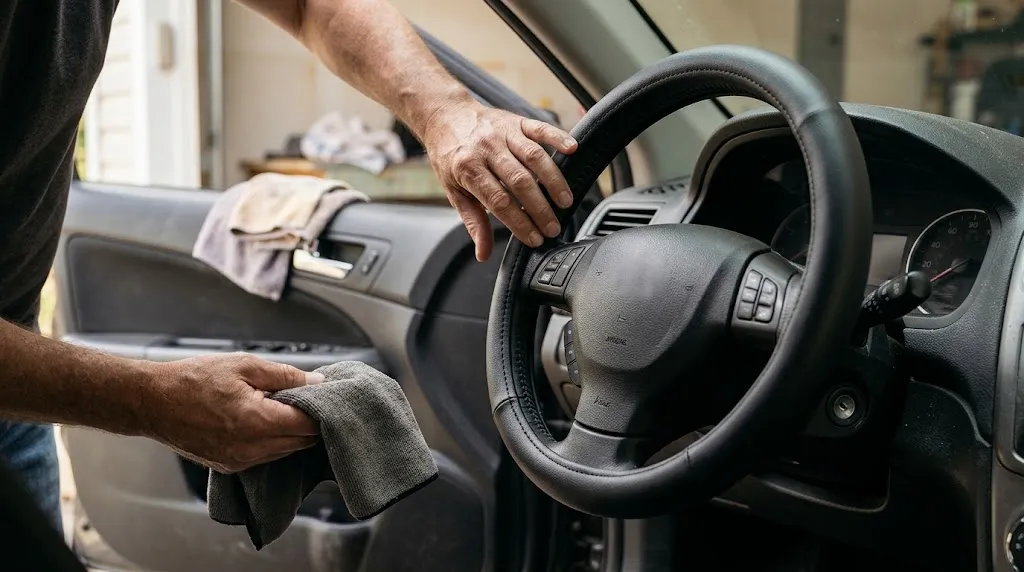
Proper drying is as important as cleaning because trapped moisture can affect stitching, absorbent materials, and the surface beneath a fitted cover. Before driving, confirm that the entire gripping surface feels dry and that the cover remains firmly attached.
Can you remove a steering wheel cover to clean it?
Yes, if the cover is designed to be removable and the manufacturer permits removal. A loose-fitting, removable fabric cover may be easier to clean separately than a tightly fitted leather or silicone cover.
Don’t pull, stretch, or cut a cover that resists removal. If it is stitched directly around the steering wheel or requires specialist tools, follow the manufacturer’s service instructions.
Pro tip: Never dismantle the steering wheel or airbag assembly just to clean a cover. Consult the vehicle owner’s manual and a qualified technician if access requires disturbing steering-wheel safety components.
How do you know when a cover needs replacing?
Cleaning can remove surface contamination, but it cannot reliably repair structural damage or restore a failed coating. Inspect the cover regularly for signs that its material or fit has deteriorated.
- Cracks, tears, or peeling that expose the underlying material.
- Loose stitching or sections that lift away from the wheel.
- Persistent stickiness or slipperiness after appropriate cleaning.
- Permanent deformation that prevents a secure fit.
- Damage that exposes sharp edges or creates an uneven gripping surface.
Replace a compromised cover with one that fits the steering wheel’s specified diameter and grip profile. A cover that is too loose or too bulky can interfere with confident steering control.
What about steering wheels with airbags and electronic controls?
Routine surface cleaning usually doesn’t require removing the steering wheel or disconnecting the battery. Keep liquid away from the horn pad, airbag cover, buttons, and exposed seams, and never pry at the airbag module to reach hidden dirt.
For broader safety guidance, consult the National Highway Traffic Safety Administration’s airbag information and your vehicle manufacturer’s instructions.
If a cleaning problem appears to involve an electrical control, warning light, or damaged steering-wheel component, stop and seek qualified assistance. Don’t treat a safety-system fault as an ordinary interior-cleaning issue.
Section takeaway: Dry the cover fully, inspect its fit, and replace damaged material. Never dismantle airbag or steering-wheel components for routine cleaning.
Frequently Asked Questions
Can I clean a steering wheel cover with dish soap?
Usually, a small amount of mild dish soap diluted in water can clean compatible synthetic leather, rubber, or silicone covers. Check the care instructions first, avoid soaking the material, and wipe away all soap residue. Genuine leather and suede may require specialized cleaners.
Can I use disinfectant wipes on my steering wheel cover?
Only use disinfectant wipes if the cover manufacturer approves their ingredients for that material. Some wipes contain alcohol or other chemicals that may damage coatings, dry out leather finishes, or alter colors. A compatible automotive cleaner is a safer starting point.
How do I clean a steering wheel cover without removing it?
Wipe away loose dirt with a dry microfiber cloth, then clean small sections using a lightly damp cloth and a suitable cleaner. Remove residue with a second clean cloth and dry the surface thoroughly. Keep liquid away from buttons, seams, and electrical controls.
Can I put a steering wheel cover in the washing machine?
Only if the cover’s care label explicitly permits machine washing. Some removable fabric covers tolerate a specified wash cycle, while leather, suede, rubber, and structured covers may become damaged. Remove the cover only as instructed and let it dry completely before reinstalling it.
Why does my steering wheel cover feel sticky after cleaning?
Sticky residue may come from leftover cleaner, hand lotion, or deteriorating synthetic material. Wipe the surface again with a compatible cleaning method and allow it to dry. If the tackiness persists, stop using the cover until you’ve determined whether its coating has started to break down.
How can I remove a bad smell from a steering wheel cover?
Clean the cover with a material-compatible product and dry it thoroughly in a ventilated area. Avoid masking the smell with perfume or applying strong chemicals. If the odor returns quickly, moisture or contamination may remain in absorbent padding, or the material itself may need replacing.
Is leather conditioner necessary after cleaning a leather steering wheel cover?
Not always. Some finished automotive leather covers need only a suitable cleaner, while others may benefit from a compatible conditioner. Follow the cover manufacturer’s recommendations, use products sparingly, and avoid anything that leaves the gripping surface oily or slippery.
Keep Your Steering Wheel Cover Clean and Safe
Learning how to clean a steering wheel cover properly doesn’t require expensive equipment or aggressive chemicals. A microfiber cloth, a suitable cleaner, gentle wiping, and complete drying will handle most everyday dirt.
Choose the method that matches your cover’s material, clean more often when sweat and grime build up, and inspect the fit after every thorough wash. Replace the cover if it becomes loose, damaged, or persistently slippery.
Make a quick steering wheel wipe part of your regular interior-care routine. It’s a simple habit that helps maintain a cleaner cabin and a dependable grip every time you drive.
For general vehicle maintenance and safety information, you can also consult NHTSA’s official vehicle safety resources and follow the care instructions supplied with your cover.

Daniel Brooks is an automotive writer and product researcher focused on car accessories, car tech, maintenance, and practical driving guides. At Plug-in Car World, he helps drivers make smarter automotive decisions through honest reviews and research-driven content.
