
Benefits of Neoprene Steering Wheel Covers: Comfort & Protection
Quick Answer
Neoprene steering wheel covers offer exceptional temperature insulation, preventing wheels from becoming scorching hot in summer or freezing in winter. Made from the same synthetic rubber used in wetsuits, they also provide a soft, cushioned grip, water resistance, and reliable protection for your factory steering wheel against UV fading and wear.
What Is Neoprene and Why Is It Used in Vehicles?
Neoprene is a family of synthetic rubbers produced by the polymerization of chloroprene. Originally developed for industrial and marine applications due to its remarkable resilience, neoprene gained widespread fame as the primary material for wetsuits because of its unique closed-cell structure.
When adapted for automotive accessories like steering wheel covers, neoprene brings those same heavy-duty material properties directly into the cabin of a vehicle. It is naturally flexible, resilient against stretching, and capable of maintaining its structural integrity under constant friction and environmental exposure.
Unlike hard plastic or bare leather steering wheels that react instantly to outside weather conditions, a neoprene layer acts as a physical buffer. This makes it an increasingly popular aftermarket upgrade for drivers seeking practical comfort without a complicated installation process.
Superior Temperature Insulation in All Seasons
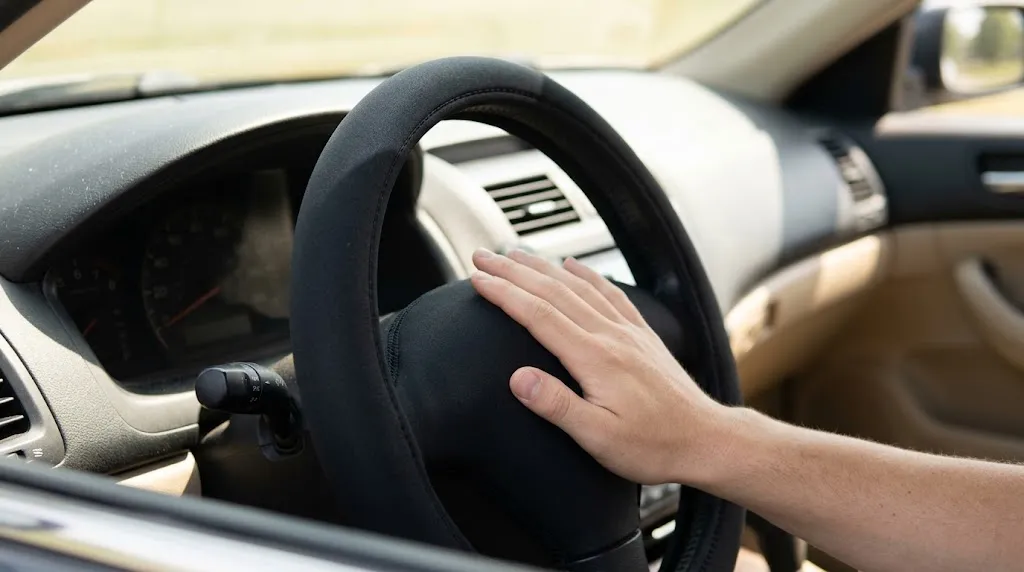
One of the most immediate practical benefits of a neoprene steering wheel cover is its thermal insulation performance. Bare steering wheels absorb ambient heat rapidly when parked under direct sunlight, often becoming too hot to touch comfortably. Conversely, during sub-freezing winter mornings, materials like metal and hard rubber sink body heat away from your hands instantly.
Because closed-cell neoprene contains trapped air pockets that resist thermal transfer, it neutralizes extreme temperatures.
- Summer performance: The cover stays comfortable to the touch even after hours spent parked in direct sunlight.
- Winter performance: It mitigates the biting chill of a freezing steering wheel, making initial winter commutes much more comfortable before the cabin heater warms up.
Key Insight
Neoprene’s thermal stability means you rarely need to wait for your car’s climate control system to adjust the steering wheel temperature before starting a drive.
Enhanced Grip and Hand Comfort
Long-distance driving can lead to hand fatigue, cramping, or discomfort caused by rigid factory steering wheel rims. Neoprene adds a layer of soft cushioning that absorbs micro-vibrations transmitted from the road through the steering column.
Furthermore, the material provides a naturally tacky, high-friction surface texture. This enhanced grip is especially valuable during wet weather or when driving with sweaty hands, helping ensure confident steering control without requiring excessive grip pressure. The slight compressibility of the foam core also softens the overall feel of the wheel for daily commuters.
Protection Against UV Damage and Daily Wear
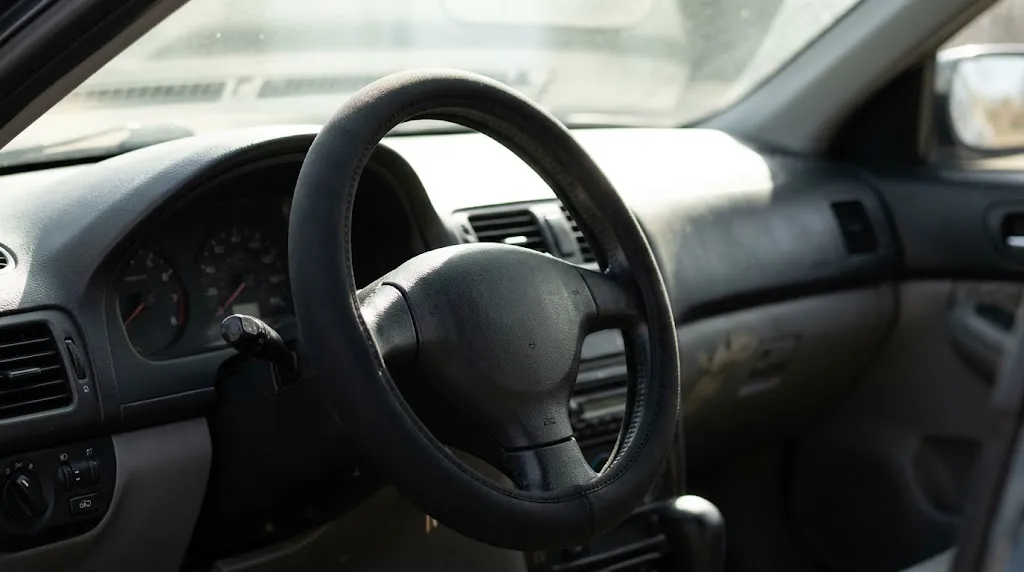
Factory steering wheels endure heavy daily friction from hands, rings, and jewelry, alongside continuous ultraviolet (UV) radiation pouring through the windshield. Over time, this exposure causes leather to crack, polyurethane to peel, and rubber to become sticky or brittle.
Installing a neoprene cover creates a protective shield over the entire rim. Because neoprene resists UV degradation, ozone, and natural skin oils, it absorbs the brunt of daily environmental wear. Preserving the original wheel underneath plays a direct role in maintaining the vehicle’s long-term interior condition and resale value.
Water Resistance and Low Maintenance
Spills, moisture, and sweat can ruin traditional fabric or poorly treated leather steering wheel wraps over time. Neoprene is inherently waterproof and moisture-resistant, meaning liquids stay on the surface rather than soaking deep into the material fibers.
This property makes cleaning straightforward:
- Wipe down the surface with a damp microfiber cloth and mild soap.
- Rinse gently if needed.
- Allow it to air dry quickly, as neoprene dries fast and resists mold, mildew, and lingering odors.
Aesthetic Customization and Interior Refresh
If an older steering wheel has already developed cracks, discoloration, or worn patches, replacing the entire steering assembly is expensive and time-consuming. A neoprene cover acts as an immediate cosmetic fix, hiding existing blemishes while transforming the cabin look.
These covers come in various colors, stitching styles, and dual-tone patterns, giving owners an easy way to personalize their vehicle interior on a modest budget.
Related Product
Neoprene Steering Wheel Covers
Explore durable, weather-resistant neoprene steering wheel covers designed to improve grip and protect your car interior year-round.
As an Amazon Associate, we earn from qualifying purchases.
Frequently Asked Questions
Do neoprene steering wheel covers slip while driving?
High-quality neoprene covers feature an internal anti-slip rubber lining that grips the steering wheel tightly. Ensuring you choose the correct size matching your steering wheel diameter is essential to prevent any shifting during sharp turns.
Are neoprene covers easy to install yourself?
Yes. Because neoprene is flexible and stretchy, most covers can be pulled onto the wheel by hand within a few minutes. Warming the cover in the sun beforehand makes the material even more pliable for a snug installation.
How long does a neoprene steering wheel cover last?
With normal daily use, a well-made neoprene cover typically lasts between two to four years. Its resistance to UV rays and moisture helps prevent premature degradation compared to cheap vinyl alternatives.
Can neoprene covers withstand extreme summer heat?
Yes. Neoprene handles high cabin temperatures well without melting, becoming sticky, or emitting harsh chemical odors, making it ideal for hot climates.
Do these covers absorb sweat and create bad odors?
Because closed-cell neoprene is moisture-resistant, it prevents sweat from soaking deeply into the core structure. Routine wiping with mild soap keeps the cover fresh and odor-free.
Will a neoprene cover fit a steering wheel with integrated heating elements?
Yes, though it will act as an insulating barrier, slowing down the direct warmth felt by your hands. Many drivers find the natural insulation of neoprene makes a heated steering wheel unnecessary anyway.
Conclusion
Neoprene steering wheel covers provide an effective, budget-friendly way to upgrade your daily driving comfort. By offering reliable temperature insulation across all seasons, reducing hand fatigue through cushioning, and shielding your factory wheel from UV damage, they deliver practical value that extends well beyond mere aesthetics. Choosing the right size ensures a secure fit, allowing you to enjoy a safer, more comfortable grip on every trip.

Daniel Brooks is an automotive writer and product researcher focused on car accessories, car tech, maintenance, and practical driving guides. At Plug-in Car World, he helps drivers make smarter automotive decisions through honest reviews and research-driven content.
