
Are Steering Wheel Covers Safe? Risks, Fit & What to Know
Quick Answer
Yes, steering wheel covers are generally safe to use provided they fit tightly, are made of high-friction materials, and do not obstruct the steering wheel hub or interfere with driving controls. However, loose, oversized, or poorly manufactured covers can slip during sudden maneuvers or hinder emergency steering, creating severe safety risks.
Understanding Steering Wheel Cover Safety
Steering wheel covers are popular automotive accessories valued for protecting factory steering wheels from sun damage, masking existing wear, or improving grip and tactile comfort. Despite their widespread use, questions regarding their safety surface frequently among drivers.
The safety of a steering wheel cover depends almost entirely on its construction, material quality, and sizing precision. A well-engineered cover designed specifically for a vehicle’s dimensions rarely presents a hazard. Conversely, universal covers that stretch poorly or rely on loose friction linings can shift unexpectedly under hand pressure.
The Primary Safety Risks of Low-Quality Covers
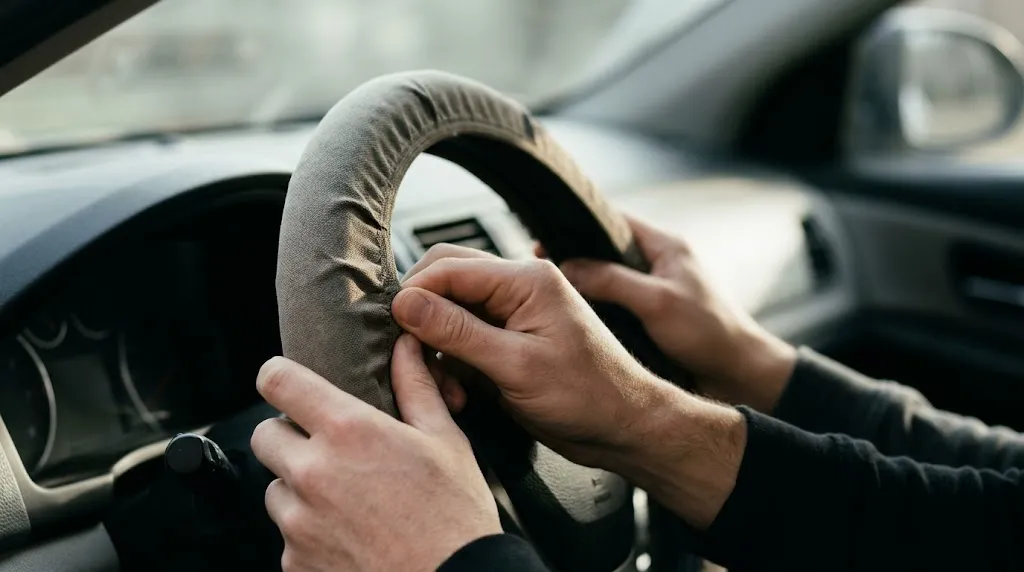
While many drivers install covers for comfort, improper options can introduce hidden mechanical and ergonomic risks. Evaluating these risks helps clarify why material choice and installation accuracy matter.
1. Sudden Wheel Slippage
The most dangerous issue associated with cheap or worn steering wheel covers is rotational slippage. If the inner lining lacks high-friction rubber or textured backing, the outer wrap can rotate independently around the steering wheel rim. During an emergency evasive maneuver or sharp turn, a slipping cover causes a momentary loss of control, which can easily trigger an accident.
2. Excessive Bulk and Grip Reduction
Some thick, plush, or heavily padded covers compromise the natural tactile feedback between the driver’s hands and the road. Overly bulky designs increase hand fatigue and make it difficult to maintain a secure grasp, especially if palms become sweaty during long drives or warm weather.
3. Obstruction of Controls and Airbags
Modern steering wheels integrate sensitive audio controls, cruise management systems, and the central driver-side airbag module. Ill-fitting or improperly positioned universal covers can creep over integrated buttons, hinder quick adjustments, or physically interfere with the steering hub where the airbag deploys.
Warning
Never use a steering wheel cover that shifts, rotates, or bunches up under normal hand pressure. If a cover requires constant readjustment or feels loose after installation, remove it immediately to prevent loss of vehicle control.
How to Choose a Safe Steering Wheel Cover
Selecting a secure accessory requires focusing on precise physical fit and high-grade materials rather than appearance alone. Drivers should apply specific criteria before purchasing any model.
- Precise Sizing: Measure the exact outer diameter and grip circumference of the steering wheel to match manufacturer specifications rather than relying on generic “one-size-fits-all” labels.
- Non-Slip Inner Lining: Look for natural rubber or specialized silicone interior tracks that grip the steering wheel rim firmly to eliminate rotational play.
- Breathable Exterior Textures: Choose perforated leather, microfiber, or moisture-wicking fabrics that maintain traction even when hands perspire.
- Low-Profile Design: Avoid excessively thick or fluffy padding that alters the natural ergonomic diameter of the steering wheel rim.
Proper Installation and Maintenance Practices
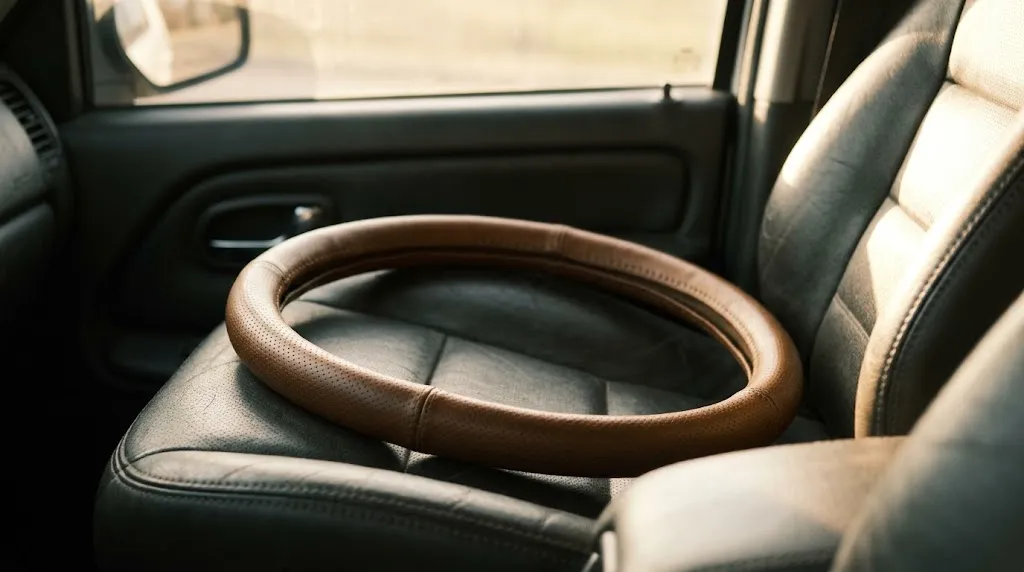
Even a high-quality cover can become hazardous if installed incorrectly. Warming stiff synthetic or leather covers in the sunlight prior to installation makes them pliable enough to stretch snugly over the rim without tearing or leaving loose gaps.
Routine inspection is equally vital. Over time, extreme cabin temperatures and constant friction can degrade the inner rubber lining, causing the cover to loosen. Drivers should periodically test the cover by attempting to twist it manually; any sign of loosening requires immediate re-securing or replacement.
Relevant Product
Steering Wheel Cover Grips and Accessories
Explore secure, precision-engineered steering wheel covers featuring tight interior rubber linings to prevent slip hazards and enhance daily driving control.
As an Amazon Associate, we earn from qualifying purchases.
Frequently Asked Questions
Do steering wheel covers damage the original factory wheel?
Low-grade covers with abrasive or chemical-laden backing can scratch, dry out, or wear down original leather and plastic surfaces over extended periods. High-quality covers with smooth, non-staining interior linings actually protect factory materials from UV fading and daily friction.
Are steering wheel covers difficult to install?
Installation difficulty varies based on material tightness. Tightly fitted leather or synthetic wraps often require warming in the sun to become flexible enough to stretch over the top and sides of the rim securely.
Can a steering wheel cover interfere with heated steering wheels?
Yes, thick or heavily insulated covers can act as thermal barriers, significantly reducing the effectiveness of factory heated steering wheels. Drivers with heated steering wheels should select thin, thermally conductive covers specifically rated for compatibility.
How often should a steering wheel cover be replaced?
A steering wheel cover should be replaced immediately if the outer material begins to crack, peel, become sticky, or show any tendency to rotate around the wheel during routine steering inputs.
Are universal covers safe compared to custom-fit options?
Custom-fit or hand-stitched steering wheel covers generally offer superior safety because they conform precisely to specific wheel dimensions, virtually eliminating the risk of unexpected shifting or bunching.
What materials offer the best combination of grip and safety?
Genuine leather, high-grade microfiber, and textured suede composites provide excellent tactile friction, moisture management, and durability without adding dangerous bulk to the rim.
Conclusion
Steering wheel covers are safe and practical when chosen carefully, fitted securely, and inspected routinely. By prioritizing tight sizing, high-friction backing materials, and breathable textiles, drivers can enhance comfort and protect their vehicle interior without sacrificing emergency vehicle control. Always avoid loose universal wraps or excessively bulky padding that compromises grip responsiveness on the road.

Daniel Brooks is an automotive writer and product researcher focused on car accessories, car tech, maintenance, and practical driving guides. At Plug-in Car World, he helps drivers make smarter automotive decisions through honest reviews and research-driven content.
