
Are Steering Wheel Covers Safe With Airbags? Safety Facts
Quick Answer
Steering wheel covers that fit loosely, slip around, or feature rigid attachments can interfere with proper airbag deployment in an accident. While a tightly fitted, high-quality standard wrap generally does not block the steering wheel module directly, any poorly secured accessory introduces potential safety hazards during a high-speed collision.
How Steering Wheel Airbags Deploy
Modern vehicle safety systems rely on precise physics and split-second timing. When a front-end collision occurs, crash sensors signal an inflator module hidden directly beneath the center horn pad of the steering wheel.
The airbag module cover is specifically engineered with predetermined tear seams. When the gas generator deploys, the center pad opens along these seams in milliseconds to allow the cushion to inflate toward the driver.
Any foreign object, loose wrap, heavy decoration, or rigid cover placed over or near the center hub can alter how that deployment unfolds. Understanding the physical interaction between aftermarket accessories and safety equipment is essential for maintaining vehicle safety.
Potential Risks of Aftermarket Steering Wheel Covers

Drivers install steering wheel covers for various reasons, including improving grip, protecting worn steering wheels, or enhancing interior aesthetics. However, certain styles introduce distinct mechanical risks.
Loose-fitting wraps can slip during emergency steering maneuvers. If a driver needs to make a sudden evasive turn, a cover that rotates independently of the steering wheel rim can compromise vehicle control.
Furthermore, thick, rigid, or laced covers that encroach upon the center hub can obstruct the deployment path of the airbag cushion. If debris or hard accessory fragments are propelled toward the driver during inflation, the risk of facial or hand injuries increases significantly.
Interference With Seams and Deployment Paths
The center horn pad is the designated exit point for the driver-side airbag. Manufacturers design steering wheels so that the surrounding rim remains clear of obstructions.
If a thick cover overlaps the center pad or alters the tension around the hub, it may delay deployment or cause the airbag to deploy unevenly. Even a fraction of a second delay during a high-speed collision can reduce the effectiveness of the restraint system.
Warning
Never install heavy decorative emblems, crystal covers, or rigid plastic shields over the center horn pad of an airbag-equipped steering wheel.
Types of Steering Wheel Covers and Their Safety Profiles
Not all steering wheel accessories pose the same level of risk. Evaluating different designs helps clarify which options are safer for daily driving.
Standard leather or silicone wraps that grip only the outer rim of the steering wheel—leaving the center hub completely exposed—generally present minimal interference with the airbag mechanism, provided they are properly sized and installed securely.
Conversely, full-coverage custom wheels or thick padded wraps that extend inward toward the center pad introduce higher potential for interference. Drivers should always verify that any accessory leaves the central module unobstructed.
What to Check Before Installing a Cover
Before purchasing or installing any steering wheel accessory, drivers should evaluate specific physical criteria to ensure safety is not compromised.
- Rim Coverage Only: The accessory should wrap exclusively around the outer handgrip area and must never touch or overlap the center horn pad.
- Secure Fit: The material must grip the wheel tightly enough to prevent slipping during rapid steering inputs.
- Material Flexibility: Flexible rubber, silicone, or soft leather linings absorb less energy and reduce the likelihood of hard projectiles during deployment.
- Absence of Rigid Embellishments: Avoid products featuring heavy metal studs, rhinestones, or hard plastic badges near hand placement areas.
How to Maintain Proper Steering Grip Safely
Maintaining a reliable grip on the steering wheel is critical for vehicle control. Worn, slick, or peeling steering wheel surfaces can cause hands to slip during emergency maneuvers, creating safety concerns similar to loose accessories.
If a factory steering wheel is damaged or deteriorated, replacing the wheel assembly entirely or utilizing a professionally fitted, manufacturer-approved wrap is often the safest solution.
Drivers seeking enhanced grip or temperature comfort should prioritize snug, low-profile designs that adhere strictly to the outer perimeter of the wheel without encroaching upon central safety components.
Key Insight
The primary safety danger does not come from standard outer-rim grips, but from accessories that alter, restrict, or add rigid debris to the central airbag deployment zone.
Common Mistakes to Avoid With Steering Wheel Accessories
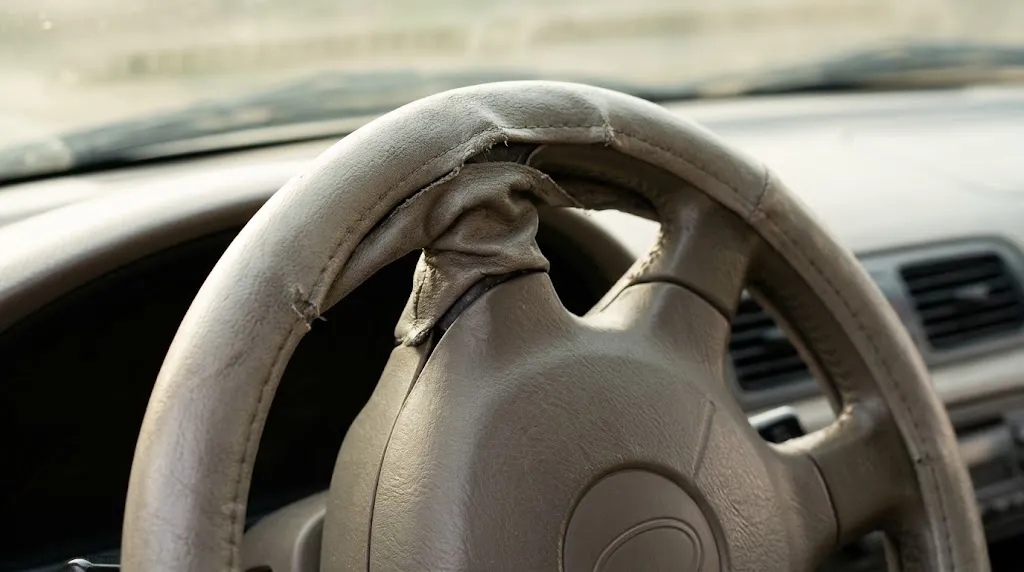
Many drivers make avoidable errors when accessorizing their vehicle interiors. Being aware of these pitfalls helps protect vehicle occupants.
- Installing universal covers that are too large, resulting in dangerous slippage when turning the wheel quickly.
- Placing decorative stickers, covers, or badge rings directly over the center steering wheel emblem.
- Ignoring signs of wear where a deteriorating wrap begins shredding or catching on clothing during operation.
- Using thick padded covers that diminish tactile feedback from the road and steering column.
When to Remove or Replace a Steering Wheel Cover
Inspecting interior accessories regularly is an important part of vehicle maintenance. If a steering wheel wrap begins to stretch, shift under hand pressure, or crack due to sun exposure, it should be removed immediately.
A cover that loses its tight fit can bunch up under the driver’s palms during sharp turns, creating an immediate hazard. Replacing worn accessories promptly ensures consistent vehicle control and prevents unexpected interference.
Related Product
Steering Wheel Cover
A secure, low-profile steering wheel wrap helps improve grip and protects interior materials without interfering with vehicle safety systems.
As an Amazon Associate, we earn from qualifying purchases.
Frequently Asked Questions
Do standard steering wheel covers block airbags?
Standard steering wheel covers that fit only around the outer rim do not block the center airbag module. However, improper installation or oversized designs that creep toward the center hub can cause potential obstruction.
Can a steering wheel cover fly off during deployment?
An airbag deploys with extreme force at high speeds. If a cover is loose, poorly fitted, or features rigid components, the explosive inflation force can displace the accessory or shatter hard decorative elements, creating projectile risks.
Are leather steering wheel wraps safer than synthetic ones?
Material choice matters less than fit and construction. Both genuine leather and quality synthetic wraps are safe as long as they maintain a tight, non-slip grip on the outer rim and leave the center horn pad completely unobstructed.
Is it safe to use heated steering wheel covers?
Heated steering wheel covers are generally safe if they are designed specifically for automotive use, feature secure wiring management, and plug into standard accessory outlets without interfering with mechanical steering components or airbag modules.
How do I know if my steering wheel cover is too loose?
If the cover shifts, rotates, or slips under normal hand pressure while turning the wheel, it is dangerously loose and should be removed or replaced immediately to ensure proper vehicle control.
Do car manufacturers recommend steering wheel covers?
Automobile manufacturers generally design steering wheels to be used bare to ensure optimal grip and unobstructed safety equipment operation. While they do not explicitly endorse aftermarket covers, standard rim wraps are widely used as long as they do not interfere with controls or airbags.
Conclusion
Steering wheel covers can provide comfort and aesthetic upgrades when chosen carefully, but safety must remain the top priority. Selecting a snug, high-quality wrap that covers only the outer rim ensures that vehicle airbag systems and steering mechanisms function exactly as engineered. By avoiding loose fits, rigid accessories, and center hub obstructions, drivers can enjoy a customized interior without compromising safety during an emergency.

Daniel Brooks is an automotive writer and product researcher focused on car accessories, car tech, maintenance, and practical driving guides. At Plug-in Car World, he helps drivers make smarter automotive decisions through honest reviews and research-driven content.
