
How Side-Impact Safety Features Work in Car Seats
Quick Answer
Side-impact safety features in child car seats work by controlling sideways movement, absorbing crash energy, and helping protect a child’s head and body from vehicle intrusion. Protective shells, energy-absorbing foam, supportive headrests, and correctly fitted harnesses work together. The NHTSA car seat safety guidance explains why choosing and installing the correct restraint matters as much as its individual features.
Five Key Protection Mechanisms
- Protective side wings: Help create a protective area around the child’s head and upper body.
- Energy-absorbing materials: Help manage impact forces through controlled compression and deformation.
- Secure harness system: Helps keep the child positioned inside the protective seat structure.
- Reinforced seat shell: Provides structural support and helps manage crash loads.
- Correct installation: Keeps the restraint securely attached so its protection systems can work as designed.
Important Safety Reminder
- Never assume that extra padding, oversized head wings, or a side-impact label guarantees better crash protection. Proper fit, tested construction, correct installation, and suitable child positioning all matter.
Side-impact protection can look simple from the outside. A car seat may have thick cushions and wide head supports, but its protective design involves much more.
When I evaluate car-seat safety features, I focus on how the entire restraint works together. This guide explains the engineering, testing standards, installation details, and cover-related mistakes that deserve attention.
In This Guide
What Happens During a Side-Impact Crash?
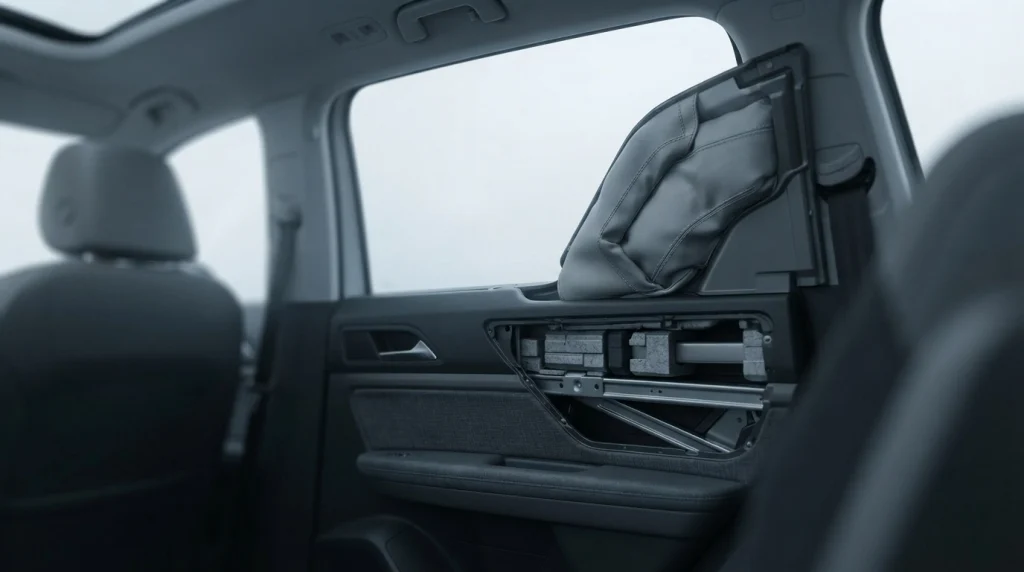
During a side-impact crash, another vehicle or object strikes the side of your vehicle. The resulting forces can push occupants sideways and cause the vehicle’s interior structure to move inward.
Side collisions present a different challenge from frontal crashes. There may be less space between an occupant and the point of impact.
Why Side Impacts Are Especially Challenging
In a frontal crash, vehicle structures can help manage energy before it reaches the passenger compartment. A near-side collision may place an occupant closer to the area experiencing direct intrusion.
For children, protecting the head and neck is especially important. Their bodies are still developing, and they depend on age-appropriate restraints for crash protection.
Several movements may happen during a side collision:
- Vehicle acceleration: The struck vehicle changes speed sideways, causing the occupant to move relative to the seat.
- Door intrusion: The vehicle door or nearby structure may move toward the passenger.
- Head movement: The child’s head can move laterally toward the restraint’s side structure.
- Torso loading: Crash forces can affect the chest, shoulders, and pelvis.
- Rebound: The occupant and restraint can move again as crash forces change direction.
What Is Side-Impact Protection in a Child Car Seat?
Side-impact protection describes a restraint’s ability to manage sideways crash forces and reduce the risk of injury. It depends on the structure, padding, harness, installation, and movement of the entire seat.
For example, a deep headrest may help keep the head within a protective area. Energy-absorbing material can help manage the forces when the head contacts that structure.
These features do not eliminate crash forces. Instead, engineers design them to control movement and reduce harmful loading.
The vehicle contributes to this protection through its own structure and safety systems. Side curtain airbags, seat-mounted airbags, and reinforced vehicle components may provide additional protection, depending on the vehicle and crash.
Section Takeaway: Side-impact protection involves controlling sideways movement, managing energy, and reducing contact with intruding vehicle structures.
Which Side-Impact Safety Features Work in Car Seats?
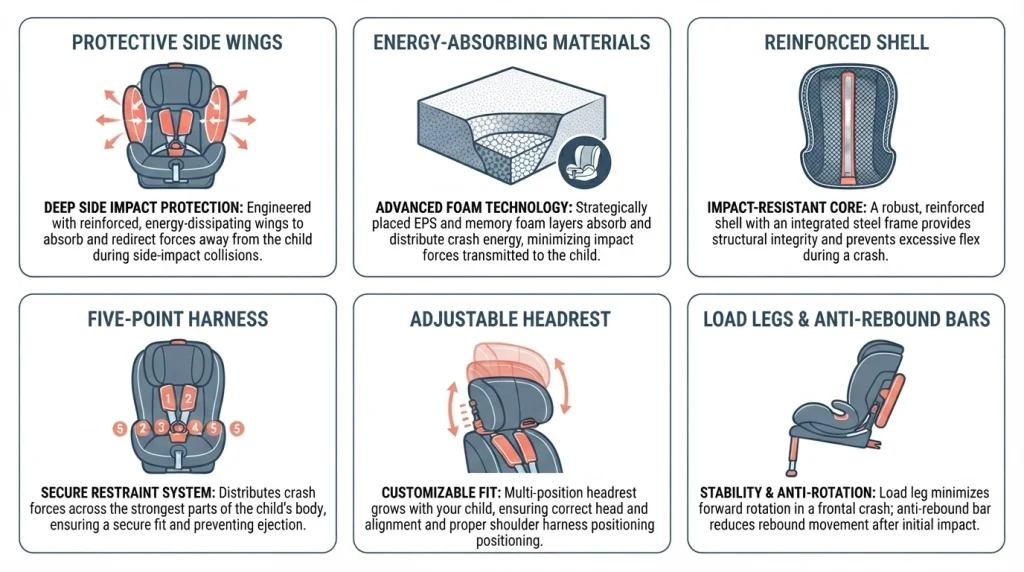
The most important side-impact car-seat features work as a connected system. No individual cushion, wing, or brace can replace the protection provided by a correctly designed and installed restraint.
1. Deep Side Wings and Protective Headrests
Many child car seats feature raised sections around the head and shoulders. These are often called side wings or protective headrest wings.
Their purpose is to help manage lateral head movement and maintain a protective structure between the child and nearby surfaces.
Their effectiveness depends on several design details:
- The shape and strength of the wings.
- The child’s position relative to the protective structure.
- The energy-absorbing material inside the headrest.
- The seat’s behavior during a crash.
- The headrest adjustment allowed by the manufacturer.
Large wings do not automatically mean better performance. Two car seats with similar-looking headrests may behave differently during testing.
2. Energy-Absorbing Foam and Materials
Some car seats use expanded polystyrene (EPS) or expanded polypropylene (EPP) foam within their protective structures. These materials can compress under load and help manage crash energy.
EPS is commonly associated with crushable protective foam. EPP can provide different deformation and recovery characteristics, depending on its formulation and design.
The foam’s thickness alone does not establish its safety performance. Its density, shape, location, and interaction with the seat shell are also important.
3. Reinforced Car Seat Shells
The shell forms the structural foundation of a child safety seat. It supports the restraint system and helps manage forces during a collision.
Manufacturers may use molded plastics, reinforcing components, or other engineered materials. The exact construction varies by model.
A properly designed shell helps maintain the protective seating area. It also works with the harness and installation system to manage the child’s movement.
4. Five-Point Harness Systems
A five-point harness secures the child at the shoulders, hips, and between the legs. Its job is to keep the child properly positioned and distribute restraint forces across appropriate areas.
In a side collision, the harness helps limit uncontrolled movement away from the seat. A loose harness can reduce the effectiveness of the surrounding protective features.
Look for these important characteristics:
- Correct shoulder height: Harness position must match the manufacturer’s rear-facing or forward-facing instructions.
- Snug fit: Excessive strap slack allows unnecessary movement.
- Proper chest clip position: On seats with a chest clip, position it at armpit level.
- Unaltered components: Use only the approved harness, pads, and accessories.
5. Adjustable Headrests and Harness Height
An adjustable headrest helps the seat accommodate a growing child. Some designs also adjust the harness height when the headrest moves.
Correct adjustment matters because the child’s head and shoulders must remain appropriately positioned. Follow the manual rather than estimating from appearance.
6. Load Legs and Anti-Rebound Bars
Some rear-facing car seats include a load leg that extends from the base toward the vehicle floor. Others use an anti-rebound bar near the vehicle seatback.
These components primarily help control particular rotational movements during a crash. They are not substitutes for side-impact head protection or correct installation.
A load leg must only contact a vehicle floor location permitted by both manufacturers. Some underfloor storage compartments or vehicle designs can restrict its use.
Section Takeaway: Strong side-impact protection depends on the interaction between structural supports, energy management, correct child positioning, and secure restraint attachment.
Is Rear-Facing or Forward-Facing Safer for Side Impacts?
Rear-facing travel is the recommended position for infants and toddlers until they reach their car seat’s rear-facing height or weight limit. The supporting shell helps manage crash forces while supporting the child’s head, neck, and back.
The American Academy of Pediatrics car seat guidance recommends keeping children rear-facing as long as their restraint allows.
How Rear-Facing Seats Manage Crash Forces
A rear-facing seat supports more of the child’s body against its shell during many crash movements. This is particularly valuable for young children whose head and neck structures are developing.
Side-impact performance still depends on the specific seat, crash direction, and installation. Rear-facing orientation does not make a child immune to side collisions.
How Forward-Facing Seats Protect Children
Once a child outgrows rear-facing limits, a forward-facing seat with a harness becomes the next appropriate stage. The harness and protective seat structure help manage movement during a collision.
A top tether is especially important for forward-facing installations. It helps limit forward rotation and head excursion during crash conditions.
Rear-Facing vs. Forward-Facing vs. Booster Seats
| Seat Type | Main Protection | Key Safety Requirement |
|---|---|---|
| Rear-facing | Shell supports the child’s head and body while managing crash movement. | Use until the manufacturer’s rear-facing height or weight limit. |
| Forward-facing harness | Harness restrains the child while the shell and padding manage contact. | Correct harness adjustment and top tether use as instructed. |
| Belt-positioning booster | Positions the vehicle’s lap-and-shoulder belt correctly. | Proper belt fit across the shoulder and upper thighs. |
Does the Middle Rear Seat Offer Better Protection?
The middle rear position can offer additional distance from either side of the vehicle. However, that advantage matters only when the child restraint can be installed correctly there.
Some vehicles lack middle lower anchors or have seating shapes that complicate installation. A secure outboard installation may be preferable to an unsuitable middle installation.
Children younger than 13 should ride in the rear seat. Follow the vehicle manual and have a certified child passenger safety technician assess difficult seating arrangements.
Practical Tip: Do not switch a child forward-facing just because the next seat looks more spacious. Use the full rear-facing limits permitted by the manufacturer.
How Are Side-Impact Car Seats Tested?
Side-impact testing evaluates how child restraints perform under defined crash conditions. Engineers use instrumented test dummies, controlled impact equipment, and measurements related to injury risk.
Testing is more meaningful than a seat’s appearance. A thick headrest cannot demonstrate compliance simply by looking protective.
What Is the Federal Side-Impact Standard?
In the United States, Federal Motor Vehicle Safety Standard No. 213a establishes side-impact protection requirements for specified child restraint systems. Its purpose is to reduce child injuries and deaths in side collisions.
The standard generally covers restraints recommended for children in a weight range including 40 pounds or less, or a height range including 43 inches or less, with stated exceptions.
As of November 2026, the revised mandatory compliance date is December 5, 2026. The U.S. Department of Transportation’s September 2026 final rule confirms that date and permits optional earlier compliance.
This matters when comparing older and newer models. Do not assume every seat already on the market has been certified to the newer side-impact requirements.
What Happens During a Side-Impact Test?
The federal test uses a special sliding seat assembly and a simulated vehicle door. The equipment reproduces defined sideways movement and contact conditions.
The regulated setup specifies a relative impact velocity of approximately 31.3 km/h, or 19.4 mph, between the sliding seat and the simulated door.
That figure describes the test’s relative movement. It should not be mistaken for a universal safe crash speed or a direct prediction of performance in every real collision.
Testing examines factors such as:
- How the child restraint remains structurally intact.
- Whether the dummy’s head stays within required movement limits.
- Head injury-related measurements.
- Chest loading and movement measurements where applicable.
- How the restraint performs in required orientations and configurations.
Do Extra Side-Impact Protection Labels Guarantee Better Safety?
No. Terms such as enhanced side-impact protection may describe a manufacturer’s design or testing program, but marketing language alone does not establish superiority.
Federal compliance and voluntary manufacturer testing are different concepts. Consumers should examine the manufacturer’s documented claims and the applicable safety requirements.
NHTSA does not preapprove each car seat before sale. Manufacturers are responsible for certifying compliance with applicable federal standards.
Be cautious with claims suggesting a precise percentage of extra protection. Such comparisons need clear testing methods, measurements, and a meaningful baseline.
Pro tip: Check the car seat’s model number, manufacturing date, instruction manual, and applicable certification information. Use official government safety resources when evaluating recalls or regulatory claims.
How Do You Install a Car Seat Correctly for Side-Impact Protection?
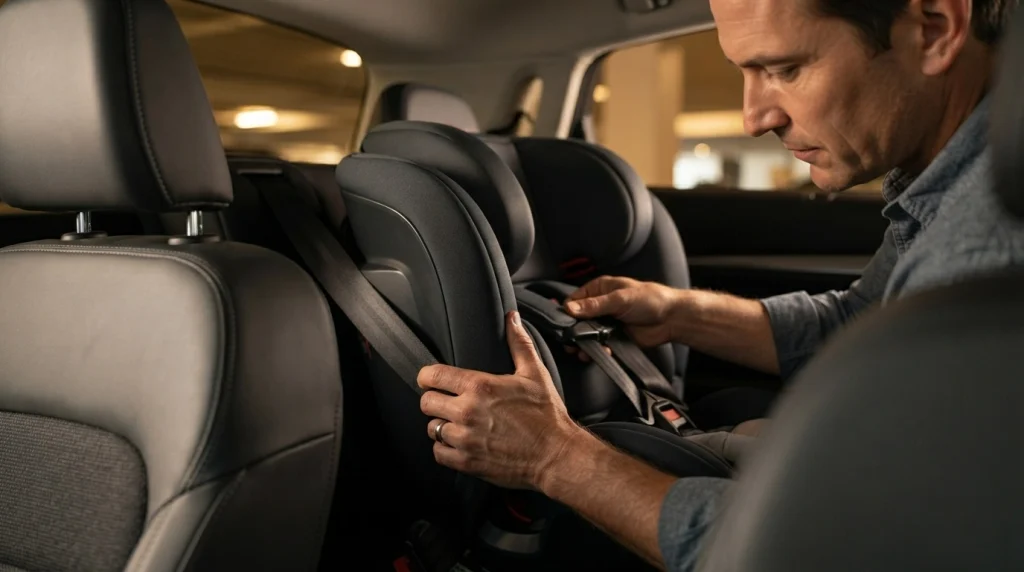
Correct installation keeps a child restraint securely connected to the vehicle. Even well-designed side-impact features can perform differently when the seat is loose or the child is improperly positioned.
I would prioritize a securely installed, appropriate car seat over one with impressive-looking extras but questionable fitment.
Step 1: Select a Suitable Seating Position
Start with your vehicle owner’s manual and child restraint instructions. Confirm that the chosen position supports the required installation method.
Check these details before installation:
- Whether the position permits a child restraint.
- Whether a compatible seat belt or lower-anchor system is available.
- Where the approved top tether anchor is located, when needed.
- Whether the car seat fits without prohibited interference.
- Whether the vehicle permits any required load-leg contact.
Never place a rear-facing child restraint in front of an active frontal passenger airbag. Follow all airbag warnings in the vehicle manual.
Step 2: Secure the Car Seat at the Correct Belt Path
Use the vehicle seat belt or lower anchors according to the manuals. Do not combine both methods unless the car seat and vehicle manufacturers explicitly allow it.
Once installed, hold the restraint at the belt path and test its movement. It should move less than one inch from side to side or front to back at that location.
The upper portion of a rear-facing seat may move more than the belt path. Do not judge installation tightness only by shaking the headrest.
Step 3: Adjust the Harness Correctly
Place the child fully against the seatback and secure the harness. The straps should lie flat without twists.
Use this checklist:
- Rear-facing: Position shoulder straps at or below shoulder level, following the manual.
- Forward-facing: Position shoulder straps at or above shoulder level, following the manual.
- Harness tension: Tighten until you cannot pinch excess webbing at the shoulder.
- Chest clip: Position it at armpit level when the restraint uses one.
- Clothing: Avoid bulky coats underneath the harness.
Step 4: Use the Top Tether When Required
For forward-facing harness seats, the top tether helps manage rotation and limits head movement. Attach it to the designated vehicle tether anchor as directed.
Do not confuse a luggage hook, cargo tie-down, or ordinary seat component with an approved tether anchor.
Step 5: Verify the Recline Angle and Child’s Fit
Rear-facing seats must use the recline range specified by their manufacturer. Many models include angle indicators or adjustable bases.
An incorrect angle can affect child positioning and restraint performance. Check the indicator after installation and whenever the seat is moved.
Step 6: Inspect the Seat Regularly
Harness settings and installation conditions can change over time. Children grow, vehicles get cleaned, and restraints may be removed or reinstalled.
A quick inspection should include:
- Harness tightness and adjustment.
- Seat movement at the belt path.
- Headrest position and allowable height.
- Damage to the shell or protective foam.
- Correct attachment of covers and accessories.
- Manufacturer recall information.
Section Takeaway: Installation and correct harness use are essential parts of side-impact protection. A certified child passenger safety technician can help verify fitment and installation.
Can Car Seat Covers Affect Side-Impact Safety?
Yes. Some replacement covers, thick padding, and unapproved accessories can interfere with a child restraint’s intended fit or operation.
There is also an important distinction between a child’s safety seat cover and a cover fitted over the vehicle’s original seat. They involve different safety concerns.
Replacement Covers for Child Safety Seats
A child car seat’s original cover is part of its intended design. It can influence how the child sits against the shell and how the harness fits.
Replacing that cover with a generic version may introduce unexpected changes. Additional cushioning can compress under crash forces, while altered openings can interfere with harness routing.
The safest approach is to use the original cover or a replacement expressly approved by the seat manufacturer. The NHTSA car seat glossary advises against unapproved aftermarket child restraint accessories.
Vehicle Seat Covers and Side Airbags
Many vehicles have side airbags built into the outer edges of the front seatbacks. These airbags are designed to deploy during certain side impacts.
A poorly designed or incompatible seat cover can interfere with deployment. This is a different problem from the protective wings on a child restraint.
According to NHTSA’s vehicle airbag guidance, side airbags deploy rapidly to protect occupants during certain crashes.
For a vehicle with seat-mounted side airbags, follow these precautions:
- Check the vehicle manual before fitting seat covers.
- Use only covers expressly approved as compatible with the specific seat and airbag design.
- Never block designated airbag deployment areas.
- Avoid attaching accessories near side airbag modules.
- Consult the vehicle manufacturer or qualified technician when compatibility is uncertain.
A generic airbag-compatible label is not enough to prove that a cover fits every vehicle. Verify compatibility with your exact model and seating configuration.
What Should You Look for When Buying a Car Seat?
Choosing a safe restraint requires more than comparing extra padding and protective headrest shapes. Begin with your child’s size and the manufacturer’s permitted usage limits.
Then compare the features that affect everyday installation and correct use:
- Appropriate fit: The seat supports your child’s current height, weight, and developmental stage.
- Vehicle compatibility: It can be securely installed in an approved seating position.
- Clear instructions: Harness adjustment, belt routing, and installation are easy to understand.
- Documented compliance: The seat meets applicable standards for its market and manufacturing date.
- Manufacturer support: Replacement parts, manuals, and recall information remain accessible.
When Should You Replace a Child Car Seat?
A car seat may need replacement after a crash, after reaching its manufacturer-defined expiration date, or when structural damage is found. Some recalls also require replacement or specific corrective action.
NHTSA recommends replacing child restraints after moderate or severe crashes. Its criteria for potentially retaining a seat after a minor crash must also be considered alongside the manufacturer’s instructions.
Do not continue using a restraint with a cracked shell, damaged harness, or compromised safety structure. Contact the manufacturer if its condition is uncertain.
Section Takeaway: Covers and accessories should never compromise the original safety design. Choose verified compatibility over appearance, extra thickness, or unsupported protection claims.
Frequently Asked Questions About Side-Impact Car Seat Safety
1. Do all child car seats have side-impact protection?
Child car seats provide crash protection through their overall restraint systems, but designs and testing requirements vary. In the United States, FMVSS No. 213a establishes additional side-impact requirements for specified restraints, with mandatory compliance beginning December 5, 2026. Older seats should not automatically be assumed to meet that newer standard.
2. Are larger side wings always safer?
No. Side-wing size alone cannot prove better crash protection. Safety depends on how the headrest, foam, shell, harness, and installation perform together under impact forces. Look for documented testing and applicable regulatory compliance rather than relying on the visual appearance of the headrest.
3. Does side-impact protection work in rear-facing car seats?
Yes. Rear-facing restraints can incorporate energy-absorbing materials, head-support structures, and side-impact protection features. Rear-facing travel also provides important support for young children’s heads, necks, and backs. Keep children rear-facing until they reach the restraint’s specified rear-facing height or weight limit.
4. Can extra padding improve side-impact protection?
Not necessarily. Adding cushions or aftermarket inserts can change harness fit and introduce compressible material that was not part of the original restraint design. Use only padding supplied or expressly permitted by the child seat manufacturer. More padding does not automatically mean more protection.
5. Is a car seat safer in the middle of the back seat?
The middle rear seating position may provide additional distance from side impacts, but only when the car seat fits and installs securely there. Some vehicles do not provide suitable middle anchors or seat-belt geometry. A correctly installed rear outboard seat may be the safer practical choice.
6. Can vehicle seat covers block side airbags?
Yes. In vehicles with seat-mounted side airbags, incompatible covers can interfere with the airbag deployment path. Use covers specifically approved for the vehicle’s seat and airbag design. Never assume that a universal-fit product is safe simply because its packaging mentions airbag compatibility.
7. Is an expensive car seat automatically safer in a side collision?
No. A higher price may reflect convenience features, materials, or styling, but it does not independently establish better crash performance. Choose a restraint that meets applicable requirements, fits your child and vehicle, and can be installed and used correctly on every trip.
Final Takeaway: Side-Impact Safety Is a Complete System
Understanding how side-impact safety features work in car seats makes it easier to separate meaningful protection from marketing language. Protective wings, energy-absorbing structures, secure harnesses, and strong seat shells are most useful when they work together.
Correct installation remains essential. So does choosing an appropriate restraint for the child’s size and keeping its original safety components intact.
Before your next journey, check the harness, installation, headrest position, and any seat covers or accessories. If something seems incompatible or damaged, consult the manufacturer’s instructions or a certified child passenger safety technician before using the seat.
The best protection begins with a suitable car seat, a secure installation, and consistent use on every drive.

Daniel Brooks is an automotive writer and product researcher focused on car accessories, car tech, maintenance, and practical driving guides. At Plug-in Car World, he helps drivers make smarter automotive decisions through honest reviews and research-driven content.
