What Should You Do With an Expired Car Seat? A Complete Safety and Disposal Guide
Quick Answer
What should you do with an expired car seat? Stop using it for child transportation, check for a local recycling or retailer trade-in program, and dispose of it safely if recycling isn’t available. Never sell, donate, or pass an expired child car seat to another family for continued use. Manufacturers such as Graco recommend making expired seats unusable before discarding them.
Your safest options:
- Stop using it: Replace the expired restraint before your child’s next vehicle trip.
- Check recycling programs: Ask local recycling facilities whether they accept child car seats.
- Explore trade-in events: Some retailers accept expired seats during scheduled recycling promotions.
- Prevent accidental reuse: If disposing of the seat, remove its harness and clearly mark it as expired.
- Follow disposal rules: Separate materials only when your recycling or waste service requires it.
Important: A car seat can look spotless and still be past its manufacturer’s approved useful life.
Finding an expired car seat in your garage raises an important question: what should you do with it? Throwing it away seems wasteful, but giving it to another family could create a safety risk.
I approach child car seats differently from ordinary automotive accessories. A worn seat cover is inconvenient, but an expired child restraint involves crash protection.
This guide explains how to confirm expiration, find responsible disposal options, avoid common mistakes, and choose a safe replacement.
In This Guide
- How Can You Tell Whether a Car Seat Has Expired?
- Why Is an Expired Car Seat No Longer Safe to Use?
- What Should You Do Immediately After a Car Seat Expires?
- Can You Recycle, Trade In, or Donate an Expired Car Seat?
- How Do You Safely Dispose of an Expired Car Seat?
- Frequently Asked Questions About Expired Car Seats
- What’s the Safest Next Step?
How Can You Tell Whether a Car Seat Has Expired?
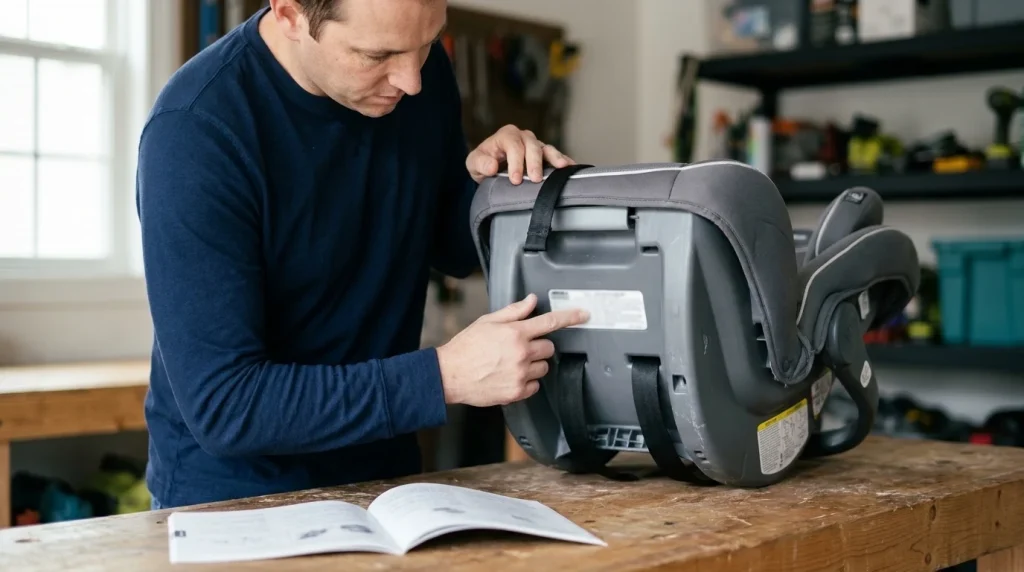
You can confirm a car seat’s expiration date by checking its manufacturer label, molded markings, and instruction manual. Most child car seats have a manufacturer-defined useful life, commonly around six to ten years.
An expired car seat is a child restraint that has reached the end of the useful life specified by its manufacturer. That date matters even when the seat has never been involved in a crash.
Where Is the Expiration Date Located?
Start by examining the plastic shell rather than the upholstery. Manufacturers frequently place important identification information in less visible areas.
Check these locations:
- Underneath the seat: Look for stickers or manufacturing information molded into the plastic.
- Back of the shell: Many seats display model and production details near their rear structure.
- Side panels: Some models have printed labels beside the belt path.
- Instruction manual: Find the manufacturer’s useful-life or expiration section.
- Infant car seat base: Check its identification label and expiration requirements separately.
You’ll usually find a model number and date of manufacture. Some manufacturers also print the exact expiration date.
If the label is damaged or unreadable, contact the manufacturer with the model information you can identify. Don’t estimate a safe expiration date from appearance alone.
How Do You Calculate a Car Seat’s Expiration Date?
Some manufacturers specify a fixed number of years after manufacture. Others provide an exact expiration date or different starting point.
Here’s a simple example for a hypothetical seat with a seven-year life measured from manufacture:
- Date manufactured: June 2020.
- Manufacturer-specified lifespan: Seven years.
- Calculated expiration: June 2027, subject to the manufacturer’s exact date rules.
This calculation isn’t universal. Always follow the instructions for your specific model.
According to Safe Kids Worldwide’s car seat guidance, car seats generally have useful lives between six and ten years.
Does Every Car Seat Have the Same Expiration Period?
No. Lifespan varies by manufacturer, model, and sometimes product configuration.
Infant seats, convertible seats, all-in-one restraints, and boosters can have different useful-life requirements. Two seats from the same brand may also expire at different times.
Don’t automatically apply the expiration period from an older seat to a newer model. Confirm the details using its identification label and manufacturer documentation.
One common mistake is treating the purchase date as the manufacturing date. A car seat might have spent months in a retailer’s inventory before purchase.
Section Takeaway: Check the exact model and manufacture date before deciding whether a seat remains usable. Manufacturer instructions take priority over general lifespan estimates.
Why Is an Expired Car Seat No Longer Safe to Use?
Manufacturers limit car seat lifespans because materials, components, and safety requirements change over time. A restraint’s condition cannot be judged reliably from its appearance alone.
Expiration doesn’t mean every component suddenly fails on a particular day. It means the seat has passed its manufacturer-defined period for continued use.
Plastic and Structural Components Can Age
A child car seat’s shell is part of its crash-protection system. Age, temperature exposure, sunlight, and repeated use can affect some materials over time.
The shell may look normal despite years of use or storage. That’s why visual inspection cannot replace the manufacturer’s useful-life limit.
Foam components can also experience damage or deterioration. Some problems become visible only after removing the fabric cover.
Harnesses and Buckles Experience Wear
The restraint system depends on more than its outer shell. Harness webbing, adjusters, buckles, and attachment components must work together.
Common concerns include:
- Frayed harness webbing: Repeated use can damage restraint straps.
- Sticky buckles: Food residue and spilled drinks can interfere with operation.
- Missing components: Older seats may lack original hardware or inserts required for certain configurations.
- Damaged energy-absorbing foam: Cracks or missing sections may affect the restraint’s protective design.
- Unknown crash history: Previous impact damage may not always be obvious.
Replacing an individual part doesn’t automatically extend a seat’s approved lifespan. Only the manufacturer can establish whether a specific repair or replacement is permitted.
Safety Standards and Designs Change
Child-restraint technology and regulatory requirements continue to evolve. Newer seats may incorporate updated designs, testing requirements, or usability improvements.
That doesn’t make every older design inherently defective. It does reinforce the importance of following the manufacturer’s defined service life.
The National Highway Traffic Safety Administration’s used car seat checklist emphasizes known history, manufacturing labels, recall status, complete parts, and instructions.
An expired seat shouldn’t be returned to child transportation simply because it passes a visual inspection.
Pro tip: Check the manufacturer’s manual whenever you have questions about a restraint’s lifespan. A child passenger safety technician can help with selection and installation, but cannot override an expiration date.
What Should You Do Immediately After a Car Seat Expires?
Once you confirm that a child car seat has expired, remove it from service and arrange a suitable replacement. Don’t keep using it while waiting for a convenient disposal event.
The safest process begins with your child’s transportation needs. Disposal comes afterward.
Step 1: Stop Using the Expired Restraint
Remove the expired seat from your vehicle when you have a safe opportunity. Keep it somewhere children cannot accidentally use it.
Don’t lend it to a friend or place it in a vehicle as a temporary backup. Occasional use doesn’t remove the manufacturer’s lifespan restriction.
If you discover the expiration date shortly before a trip, arrange an appropriate unexpired restraint before traveling. Don’t substitute an adult seat belt for a child who still needs a car seat or booster.
Step 2: Check Whether Your Child Still Needs the Same Seat Type
Replacing a seat doesn’t always mean buying the same category. Your child’s current height, weight, and developmental stage determine the appropriate restraint.
Common options include:
- Rear-facing infant seat: Designed for younger children within the model’s limits.
- Rear-facing convertible seat: Often allows continued rear-facing travel at higher height or weight limits.
- Forward-facing harnessed seat: Appropriate after a child outgrows rear-facing limits and meets the seat’s requirements.
- Belt-positioning booster: Helps position the vehicle belt correctly for a child who is ready for that stage.
Children should remain rear-facing until they reach the maximum rear-facing height or weight allowed by their restraint. An expired seat is never a reason to move a child into the next stage prematurely.
Step 3: Choose and Install a Replacement
A new seat doesn’t need to be the most expensive model available. Proper fit, correct installation, and compliance with applicable safety requirements matter more than decorative features.
Before purchasing, check the following:
- The restraint is approved for your child’s height and weight.
- It meets the applicable safety standards in your country.
- It fits the intended seating position in your vehicle.
- Its installation method works with your vehicle’s seat belt or lower anchors.
- It comes with complete instructions and manufacturer identification.
- Its remaining useful life meets your expected needs.
Use the NHTSA car seat and booster seat guidance to understand seat categories, installation, and child-size recommendations.
When installing a replacement, check both the car seat manual and vehicle owner’s manual. Follow the specified installation method and limits.
A correctly installed restraint should move less than one inch side-to-side or front-to-back when tested at the belt path. Don’t judge installation tightness by pulling on the top of the seat.
Pro tip: A certified child passenger safety technician can help you check the replacement seat’s installation and harness fit. Look for a recognized inspection service in your area.
Step 4: Prevent Anyone Else From Using the Old Seat
Keep the expired restraint separate from usable child equipment. Label it as expired while deciding how to recycle or discard it.
Don’t cut the straps immediately if you’re considering a recycling or trade-in event. Some programs have specific instructions for how they accept seats.
Once you’ve confirmed disposal, take steps to prevent accidental reuse.
Section Takeaway: Replace the restraint before your child’s next trip. Handle the expired seat afterward, using a method that prevents it from returning to service.
Can You Recycle, Trade In, or Donate an Expired Car Seat?
You may be able to recycle or trade in an expired car seat, depending on local programs. Donating or selling it for continued child use is not an appropriate option.
Car seats contain plastic, metal, fabric, foam, and webbing. These materials make recycling more complicated than placing an ordinary plastic container in a recycling bin.
What Are the Best Disposal Options?
| Disposal method | Suitable for expired seats? | Main requirement |
|---|---|---|
| Specialized recycling program | Yes, when accepted | Follow the program’s instructions for preparation and materials. |
| Retailer trade-in event | Yes, if event rules permit | Confirm event dates, accepted seat types, and participating locations. |
| Municipal waste collection | Yes, where local rules allow | Make the seat unusable and follow waste collection requirements. |
| Safety technician training | Sometimes | A training organization must specifically request and accept the seat. |
| Selling or donating for child transportation | No | Do not transfer an expired restraint for continued use. |
Can an Expired Car Seat Be Recycled?
Yes, some dedicated recycling programs accept expired seats and recover certain materials. Availability depends on your location and the capabilities of nearby facilities.
Before visiting a recycler, ask:
- Do you accept expired child car seats and booster seats?
- Can I bring the entire seat or must I disassemble it?
- Should I remove the harness, metal buckles, foam, or fabric?
- Do you accept infant car seat bases?
- Is there a fee or designated drop-off time?
Don’t assume that a recycling symbol on the plastic shell means the entire seat belongs in curbside recycling. Mixed materials and bulky construction can make standard processing unsuitable.
Some programs recover hard plastic or metal components but cannot process the fabric and foam. Others require you to deliver the seat intact.
Can You Trade In an Expired Car Seat?
Yes. Retailer trade-in events can offer a convenient alternative to ordinary disposal.
Target, for example, has operated car seat trade-in events that accept expired or damaged infant seats, convertible seats, boosters, and bases. Accepted seats are sent for recycling through participating partners.
According to Target’s car seat trade-in event information, its September 20 through October 3, 2026 event included a 20% Target Circle promotional bonus.
That event has ended as of October 31, 2026. Check the retailer’s current announcement before making a trip, because events and offers aren’t continuously available.
Programs vary by country and retailer. Never assume that every store accepts expired seats throughout the year.
Can You Donate an Expired Car Seat?
Don’t donate an expired car seat to another family, thrift store, or charity for transportation. Someone unfamiliar with its expiration may assume it’s suitable for a child.
Even a seat with an intact harness and clean upholstery can be beyond its approved useful life. Its appearance doesn’t change that restriction.
Some child passenger safety training organizations use old seats for demonstrations. Contact the organization first and make sure it understands the seat is expired.
A training prop must never return to actual child transportation. Clearly identify it as unsuitable for travel.
Section Takeaway: Specialized recycling and verified trade-in events are preferable when available. If neither exists, responsible disposal is safer than allowing an expired seat to be reused.
How Do You Safely Dispose of an Expired Car Seat?
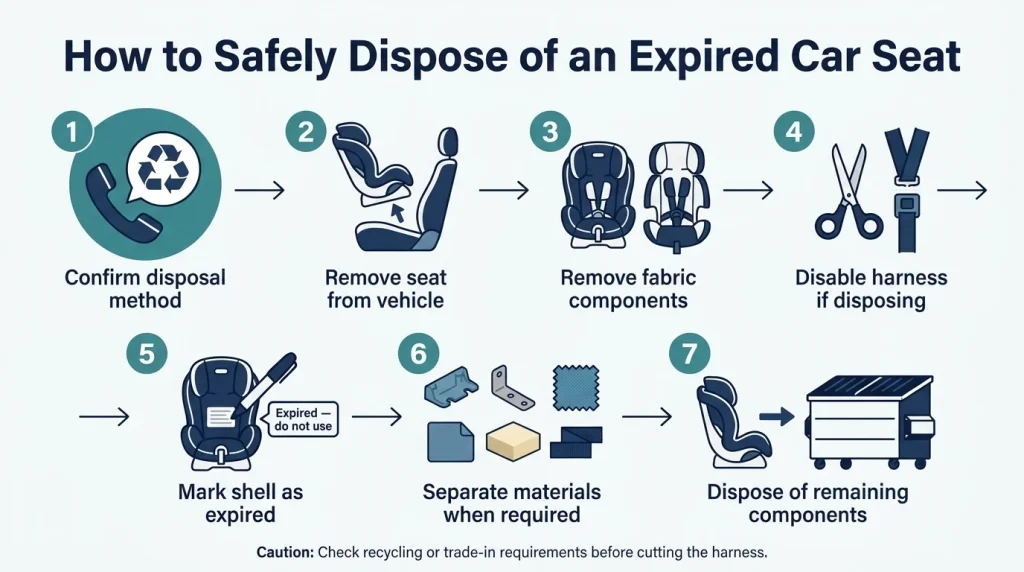
To dispose of an expired car seat safely, first confirm the requirements of your chosen waste or recycling service. If the seat is going into regular waste, disable it so nobody can reuse it for child transportation.
This process is straightforward, but it requires care. Work on a stable surface and keep sharp tools away from children.
Step-by-Step Car Seat Disposal Instructions
- Confirm your disposal method. Contact your recycling provider or waste collection service before taking anything apart. Follow their requirements for accepted materials and preparation.
- Remove the seat from the vehicle. Uninstall the child restraint according to its manual. If there’s a separate infant base, check whether that component also needs disposal.
- Remove removable fabric components. Take off the seat cover and padding as permitted by the manufacturer’s instructions. Separate materials only if the disposal service requires it.
- Disable the harness if disposing of the seat. Use suitable cutting tools to cut through the harness webbing and buckle strap. Do this only after confirming that the seat won’t be accepted intact by a recycling or trade-in program.
- Mark the shell as expired. Write “Expired — do not use” prominently on the plastic shell with a permanent marker. Make the warning easy to see.
- Separate materials when required. Place accepted plastic, metal, and other components into the collection streams specified by your recycling service. Don’t put unsupported materials into recycling bins.
- Dispose of the remaining components. Follow your local waste authority’s rules for bulky or mixed-material items. Keep the unusable seat out of circulation.
Should You Cut the Harness Straps?
Yes, if the seat is being discarded through ordinary waste collection. Cutting the harness helps prevent another person from using the expired restraint.
However, cutting is not always appropriate before a retailer trade-in or specialized recycling drop-off. Those programs may accept an intact seat or require a particular preparation method.
Use scissors or appropriate cutting tools on a stable surface. Keep your hands away from blades and sharp plastic edges.
Never cut harness straps on a car seat that will continue to transport children. Once you disable a seat for disposal, it should remain permanently out of service.
Can You Recycle the Plastic Shell and Metal Parts?
Some recycling facilities accept separated plastic shells or metal components. Acceptance depends on material type, local sorting requirements, and available recycling markets.
Child car seats can contain several materials:
- Hard plastic: The main structural shell and certain attachment pieces.
- Metal: Buckles, clips, adjusters, and some reinforcement components.
- Fabric: Covers, upholstery, and decorative material.
- Foam: Comfort padding and energy-absorbing components.
- Webbing: Harness straps, tether straps, and lower-anchor attachment straps.
These materials don’t all follow the same recycling process. Some local facilities accept one category while rejecting another.
Don’t force parts apart with unsafe tools simply to separate materials. Ask the recycler whether further disassembly is necessary.
What Should You Do With the Car Seat Cover?
The removable fabric cover presents a separate disposal question. Most ordinary curbside recycling services don’t accept mixed car seat upholstery.
A textile recycling provider may accept certain clean fabrics, but acceptance is not guaranteed. Check before placing the cover in a textile collection bin.
Avoid transferring a cover from an expired seat onto another restraint unless the receiving seat’s manufacturer expressly approves that exact replacement part. Nonapproved covers can interfere with harness fit or protective components.
Do not reuse damaged harness webbing or crash-protection foam in another child seat. Those components belong to a specific restraint system.
What If Your City Doesn’t Offer Car Seat Recycling?
Regular waste disposal may be the practical fallback. Confirm that your local service accepts the item, then disable the seat before collection.
Remove the harness, mark the shell, and follow the waste provider’s packaging instructions. Some services require advance scheduling for bulky items.
Don’t leave an intact expired seat beside a donation bin or on a curb with a free sign. Someone could take it without knowing its history.
I use one rule when dealing with safety-critical automotive equipment: once an item is no longer suitable for its intended safety function, don’t let convenience put it back into service.
Section Takeaway: Follow the receiving program’s instructions first. For ordinary disposal, remove essential restraint parts and mark the seat so it cannot be mistaken for usable equipment.
Frequently Asked Questions About Expired Car Seats
1. Can You Still Use a Car Seat After Its Expiration Date?
No. Once a child car seat reaches its manufacturer’s expiration date, stop using it for transportation. A clean appearance doesn’t prove that its plastic shell, foam, or harness system will perform as intended in a collision.
2. Can You Donate an Expired Car Seat to Charity?
Don’t donate an expired seat for use by another child. Most responsible donation programs require child restraints to remain within their approved lifespan. Some safety training organizations may accept expired restraints as clearly identified demonstration equipment, but you must arrange this beforehand.
3. Do Booster Seats and Infant Car Seat Bases Expire?
Yes. Booster seats and infant car seat bases can have manufacturer-defined expiration dates or useful-life limits. Check the identification labels and instructions for each component. Don’t assume an infant carrier’s base remains usable just because the carrier itself hasn’t expired.
4. Can You Recycle an Expired Car Seat at Home?
You can sometimes separate materials for approved recycling streams, but that doesn’t mean home collection will accept them. Contact your local waste authority first. Never place a complete car seat in a curbside recycling bin unless the service explicitly permits it.
5. Is an Expired Car Seat Safe If It Has Never Been Used?
No. A car seat’s expiration date isn’t based solely on how frequently someone used it. Manufacturers also consider materials, age, design, and other factors. A seat stored in its original packaging must still follow the manufacturer’s lifespan requirements.
6. Is It Illegal to Use an Expired Car Seat?
The legal answer depends on where you live and the applicable child-restraint laws. Some jurisdictions require compliance with manufacturer instructions. Regardless of the precise legal rule, using an expired restraint is not recommended, and replacing it is the safer choice.
7. Can You Use an Expired Car Seat Until a Replacement Arrives?
You shouldn’t continue using an expired seat, even temporarily. Arrange a suitable unexpired restraint before traveling with your child. Don’t move a child prematurely into a booster or adult seat belt simply because a replacement seat isn’t immediately available.
What’s the Safest Next Step?
Knowing what to do with an expired car seat protects your child and prevents unsafe equipment from reaching another family. The first priority is replacing the restraint, not deciding where to throw it away.
Check the manufacturer’s expiration information, choose a suitable replacement, and explore local recycling or scheduled trade-in programs. If disposal is your only option, disable the old seat and follow local waste collection rules.
Before your next family trip, take a few minutes to check the expiration dates on every child restraint and infant base in your vehicle. It’s a small maintenance habit that supports safer travel.
The bottom line: An expired car seat has reached the end of its approved useful life. Keep it out of transportation, dispose of it responsibly, and make sure your child travels in a suitable, correctly installed replacement.

Daniel Brooks is an automotive writer and product researcher focused on car accessories, car tech, maintenance, and practical driving guides. At Plug-in Car World, he helps drivers make smarter automotive decisions through honest reviews and research-driven content.