
What Is Side-Impact Protection in a Car Seat?
Quick Answer
Side-impact protection in a car seat refers to safety features designed to reduce injury during a collision from the side. In a child car seat, an energy-absorbing shell, protective head supports, and a correctly fitted restraint system work together to manage crash forces. These features support the broader child passenger safety principles explained by the National Highway Traffic Safety Administration. No design can eliminate every injury risk.
Key Things to Know
- Head protection: Protective structures help manage movement and impact forces around a child’s head.
- Energy absorption: Special materials and structures can absorb some crash energy.
- Body restraint: A correctly adjusted harness helps hold a child in the intended position.
- Proper installation: Even advanced protective features depend on the seat being installed correctly.
- Verified performance: Crash-test compliance matters more than decorative padding or marketing labels.
Important Safety Reminder
- Follow both manuals: Always follow the child car seat instructions and your vehicle owner’s manual.
A child car seat can look impressively protective, especially when thick side cushions surround the head. But appearance alone doesn’t tell you how that seat will perform during a collision.
I’ve always believed that understanding a safety feature matters more than recognizing its marketing name. This guide explains how side-impact protection works, which features deserve attention, and how seat covers and installation choices affect safety.
In This Guide
- What Does Side-Impact Protection Mean in a Car Seat?
- How Does Side-Impact Protection Work During a Crash?
- Is Side-Impact Protection Required by Law?
- Which Side-Impact Protection Features Matter Most?
- How Can You Improve Side-Impact Safety?
- Can Car Seat Covers Affect Side-Impact Protection?
- Frequently Asked Questions
What Does Side-Impact Protection Mean in a Car Seat?
Side-impact protection is the combination of design features intended to protect an occupant during a crash involving the side of a vehicle. In child safety seats, these features help manage head and body movement while reducing exposure to impact forces.
A side collision creates a different challenge from a frontal collision. The vehicle door and interior structures may be closer to the occupant, leaving less room to manage crash energy.
Definition: Side-impact protection in a child car seat is an engineered system that helps control occupant movement and reduce injury-producing forces during a side collision.
Why Are Side Collisions Different?
During a frontal crash, the restraint system primarily manages forward movement. During a side crash, movement may occur toward the striking side and nearby vehicle structures.
The child’s head, neck, and torso need particular attention because these body regions can experience harmful forces.
A protective design may use several components together:
- Rigid seat shell: Provides the supporting structure around the child.
- Energy-absorbing material: Helps manage impact forces when incorporated into the tested design.
- Side head supports: Help maintain protective space around the head.
- Harness system: Limits excessive movement within the seat.
- Installation hardware: Connects the child restraint securely to the vehicle.
Is It the Same as a Vehicle’s Side Airbag?
No. A child’s car seat and a vehicle’s side airbags are different safety systems.
Some vehicle airbags deploy from the seatback, while curtain airbags deploy near the windows. Child car seats generally rely on their built-in structure and restraint system rather than inflatable side airbags.
Both systems may contribute to occupant protection, but they perform different jobs.
How Does Side-Impact Protection Work During a Crash?
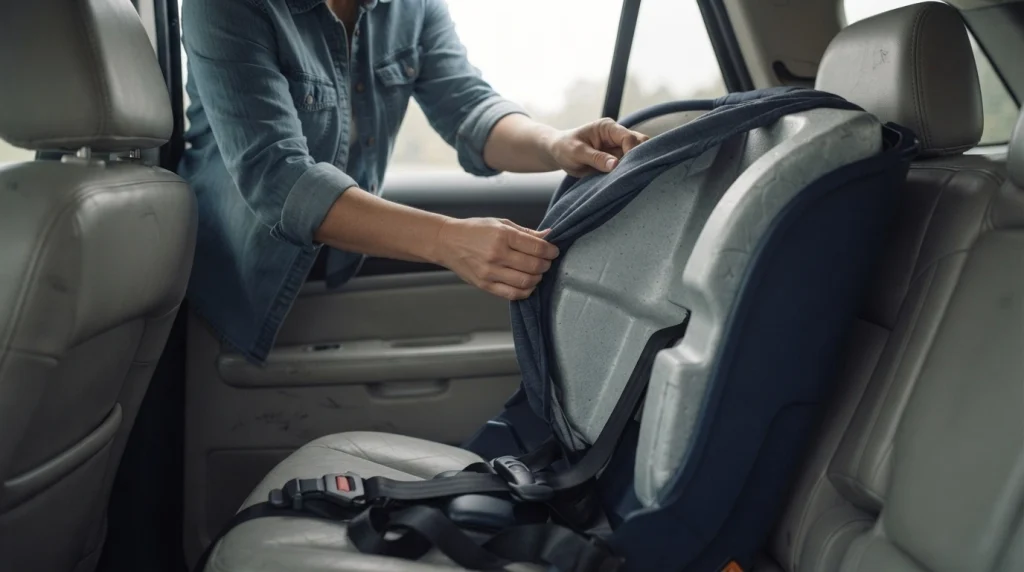
Side-impact protection works by managing how a child’s body moves and how crash forces travel through the restraint system. Its effectiveness depends on the entire seat design rather than one cushion or panel.
1. The Seat Shell Provides a Protective Structure
The shell forms the main structure surrounding the child. Manufacturers design its shape and material to support the restraint system during a collision.
Some shells include side sections extending around the head and torso. Their protective value depends on the complete crash-tested design.
2. Energy-Absorbing Materials Manage Impact Forces
Some child car seats incorporate specialized energy-absorbing foams or structures. These materials can deform under load and absorb some energy during an impact.
Two materials commonly associated with protective padding include:
- Expanded polystyrene (EPS): A relatively rigid foam used in certain energy-absorbing structures.
- Expanded polypropylene (EPP): A resilient foam that manufacturers may use in protective components.
Neither material automatically makes one car seat safer than another. Placement, thickness, surrounding components, and tested performance all matter.
3. The Harness Controls Body Movement
A five-point harness secures a child at the shoulders, hips, and between the legs. When adjusted properly, it helps keep the child positioned within the restraint’s protective structure.
Loose straps allow additional movement before the harness restrains the child. That extra movement can undermine the protection intended by the seat design.
4. The Vehicle and Child Seat Work Together
Even the best child restraint cannot control every aspect of a collision. Door structure, vehicle movement, seating position, and crash direction also affect the outcome.
Rear-facing seats offer an important advantage for young children because the seat shell supports much of the head, neck, and back. The American Academy of Pediatrics’ car seat guidance recommends keeping children rear-facing until they reach the manufacturer’s height or weight limit.
The goal is not to make the child completely motionless. It is to manage movement and forces within the design’s intended limits.
Is Side-Impact Protection Required by Law?
Yes, the United States has established a dedicated federal side-impact standard for specified child restraint systems. However, the compliance timeline matters when evaluating products in 2026.
What Is FMVSS 213a?
Federal Motor Vehicle Safety Standard (FMVSS) No. 213a establishes side-impact performance requirements for certain child restraints. The National Highway Traffic Safety Administration issued the original final rule in 2022.
The standard covers specified restraints recommended for children in a weight range including 40 pounds (18 kilograms) or less, or a height range including 1,100 millimeters (approximately 43 inches) or less. Certain categories, including car beds and specified school-bus restraints, are excluded.
What Changed in 2026?
As of November 2026, the revised mandatory compliance date is December 5, 2026. NHTSA moved the original June 30, 2025 deadline through a final rule published on September 9, 2026.
The revised rule became effective October 9, 2026, and permits early compliance. You can review the changes in the U.S. Department of Transportation’s 2026 rule summary.
That means a newly manufactured seat may already meet FMVSS 213a, but parents should not assume every existing seat carries that certification.
Does a Side-Impact Tested Label Prove a Seat Is Safer?
Not by itself. Manufacturers have used different side-impact testing methods and marketing descriptions over time.
Before comparing claims, look for:
- The exact safety standard the manufacturer says the seat meets.
- Whether testing covers the model and configuration you intend to use.
- The seat’s stated height and weight limits.
- Clear installation and harness instructions.
- Available independent testing information with a disclosed test method.
Federal compliance establishes minimum performance requirements for products within the standard’s scope. It does not create a universal ranking of every child car seat.
Pro tip: Check the manufacturer’s current certification information and the official federal rules before relying on a side-impact claim. An older compliant seat does not automatically become unsafe when standards change.
Which Side-Impact Protection Features Matter Most?
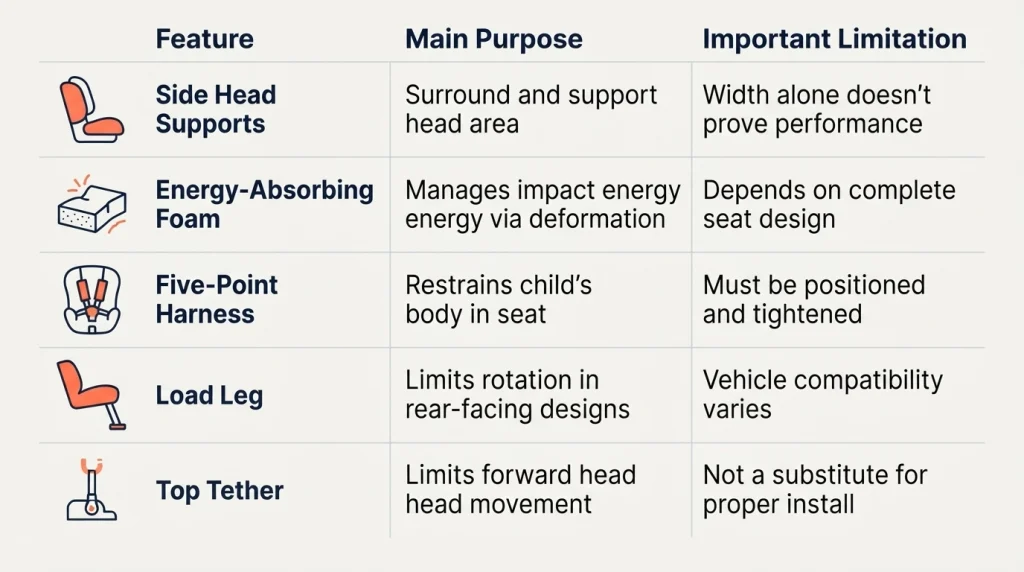
The most useful features are those that form part of a well-engineered, properly used restraint system. Visible size and thick cushioning alone cannot establish superior protection.
Comparing Common Car Seat Safety Features
| Feature | Main Purpose | Important Limitation |
|---|---|---|
| Side head supports | Help surround and support the head area. | Greater width does not prove better crash performance. |
| Energy-absorbing foam | Manages some impact energy through deformation. | Effectiveness depends on the complete design. |
| Five-point harness | Restrains the child’s body within the seat. | Must be positioned and tightened correctly. |
| Load leg | Helps limit rotation in some rear-facing designs. | Compatibility and permitted installation vary. |
| Top tether | Limits forward head movement in forward-facing seats. | Not a substitute for correct installation. |
Does a More Expensive Car Seat Offer Better Side Protection?
Not necessarily. Higher prices may reflect premium fabrics, convenience features, brand positioning, or additional adjustability.
I would prioritize a seat that fits the child and vehicle over one with the biggest-looking head wings. A seat that is difficult to secure correctly can create unnecessary installation problems.
What Should You Check Before Buying?
- Child fit: Confirm the approved height and weight range.
- Vehicle fit: Check available space and approved installation positions.
- Safety certification: Review the applicable regulations and manufacturer documentation.
- Harness adjustment: Choose a system you can tighten and position consistently.
- Maintenance: Make sure replacement parts and manufacturer instructions remain available.
Safety features should work together without making everyday use unnecessarily complicated.
How Can You Improve Side-Impact Safety?
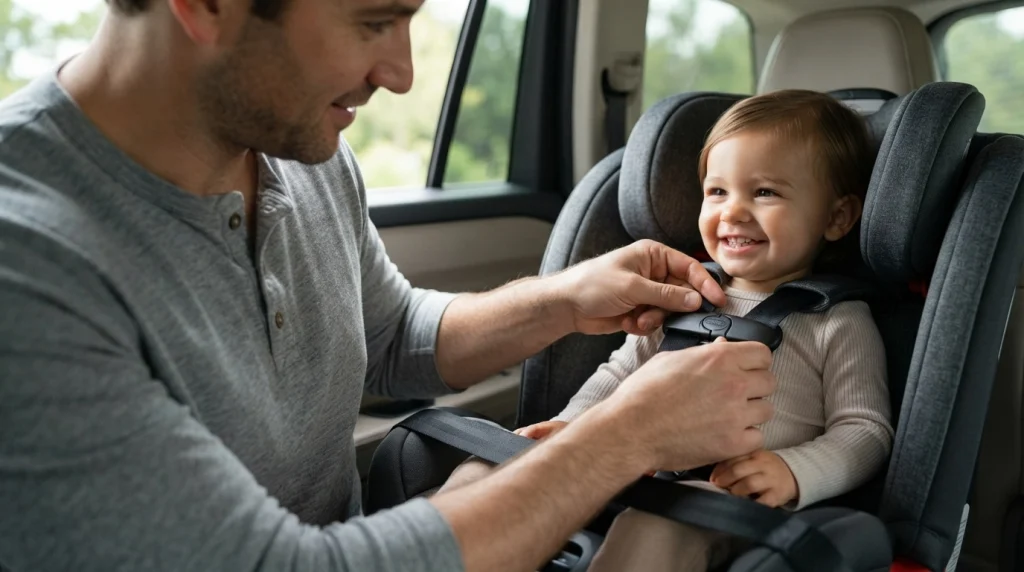
Correct installation and daily use are essential to a child car seat’s protective performance. Advanced side-impact features cannot compensate for major installation or harness errors.
1. Choose the Correct Seating Position
Children younger than 13 should ride in the back seat. The center rear position can offer greater distance from either side of the vehicle, but only when a correct installation is possible.
A tightly installed seat on an approved outboard position is preferable to an incorrectly installed seat in the center.
2. Secure the Car Seat at the Correct Belt Path
Depending on the model, you may use an approved vehicle seat belt installation or lower anchors. Lower Anchors and Tethers for Children (LATCH) are built-in vehicle anchorage points for compatible restraints.
Follow these checks:
- Read the child restraint manual and vehicle owner’s manual.
- Use the correct rear-facing or forward-facing belt path.
- Lock and tighten the seat belt, or secure the lower-anchor attachments as instructed.
- Check movement where the installation belt or lower-anchor strap passes through the seat.
- Confirm the seat moves no more than 1 inch (2.5 centimeters) side-to-side or front-to-back at that belt path.
- Check the approved recline angle and any required tether attachment.
Use both a seat belt and lower anchors together only when the relevant manufacturers explicitly allow that combination.
The official NHTSA installation instructions explain these checks in more detail.
3. Adjust the Harness Properly
The harness should lie flat against the child’s body without twisting. A snug harness helps prevent unnecessary movement during sudden changes in vehicle speed.
- Rear-facing: Position harness straps at or below shoulder level, following the seat manual.
- Forward-facing: Position straps at or above shoulder level.
- Chest clip: Position at armpit level when the restraint uses one.
- Harness tightness: Check that you cannot pinch excess strap webbing at the shoulder.
- Clothing: Avoid bulky coats beneath the harness.
4. Keep Children Rear-Facing as Long as Allowed
Rear-facing restraints support the head, neck, and back through their protective shell. Keep children rear-facing until they reach the applicable height or weight limit.
Do not switch directions simply because a child’s legs bend or touch the vehicle seat.
5. Inspect the Seat and Check for Recalls
Inspect the shell, harness, buckles, and approved attachments according to the manufacturer instructions. Never continue using a restraint with damage that compromises its safe operation.
Register the seat to receive recall notices. After a crash, follow the manufacturer’s replacement guidance and applicable NHTSA recommendations rather than judging safety by appearance alone.
Section Takeaway: The strongest daily safety habits are correct positioning, secure installation, proper harness fit, and consistent inspection.
Can Car Seat Covers Affect Side-Impact Protection?
Yes. Certain aftermarket covers and accessories can interfere with safety equipment if they are not approved for the specific seat.
However, it is important to distinguish between covers for a child’s safety seat and covers installed over the vehicle’s passenger seats.
Aftermarket Covers for Child Safety Seats
Child restraints use carefully designed shells, padding, harness openings, and adjustment mechanisms. Adding an unapproved cover or cushion may change how these components function.
Potential problems include:
- Interfering with harness adjustment or positioning.
- Covering important safety labels or indicators.
- Changing the fit of original protective padding.
- Obstructing buckle access or adjustment controls.
- Preventing inspection of damaged or missing components.
Use only accessories supplied with the restraint or specifically approved by its manufacturer for that exact model.
Vehicle Seat Covers and Side Airbags
Some vehicle seats contain side airbags inside their backrests. These airbags must deploy through designated areas of the factory upholstery.
An incompatible seat cover may obstruct that deployment path. It can potentially delay or interfere with proper airbag operation.
Even a product advertised as airbag-compatible needs verification against the exact vehicle’s requirements.
The NHTSA airbag safety information explains how side airbags operate and why their rapid deployment matters.
How to Choose Safer Seat Covers
Before installing a cover on a vehicle seat, make these checks:
- Find the side-airbag locations in your owner’s manual.
- Verify the cover is approved or compatible with the exact vehicle and seating position.
- Follow all manufacturer installation restrictions.
- Never cover an airbag deployment seam with an improvised accessory.
- Avoid loose padding or accessories that interfere with seat belts and child restraints.
Pro tip: Ask the vehicle manufacturer or a qualified technician when airbag compatibility is unclear. A generic compatibility label does not override official vehicle instructions.
Frequently Asked Questions About Side-Impact Protection
1. Is side-impact protection necessary in a child car seat?
Side-impact protection addresses an important collision risk and is now covered by a dedicated U.S. federal standard for specified child restraints. However, the complete seat design, appropriate child fit, correct installation, and proper harness use remain essential for effective protection.
2. Are car seats with deeper side wings safer?
Not automatically. Deep side wings may be part of an effective protective design, but additional width alone does not demonstrate better crash performance. NHTSA research has shown that wider side structures do not necessarily improve measured results.
3. Does side-impact protection replace the need for a five-point harness?
No. Side-impact structures and the harness perform complementary jobs. The protective shell helps manage crash forces, while the harness keeps the child restrained within the seat. Always use the restraint system appropriate for the child’s size and seat configuration.
4. Should I replace an older car seat because of FMVSS 213a?
Not solely because the standard has changed. Check the seat’s expiration or useful-life guidance, crash history, recalls, physical condition, and suitability for your child. Contact the manufacturer if you are uncertain about the seat’s safety or certification.
5. Can an aftermarket car seat cover improve side-impact safety?
A decorative cover is not a substitute for tested protective engineering. Unapproved covers may interfere with the harness, padding, or other components. Use only manufacturer-approved accessories, and never assume extra cushioning provides additional crash protection.
6. Is the middle of the back seat always the safest location?
The middle rear position may offer additional separation from the vehicle sides, but it is not always suitable for every restraint. The best position is one where the car seat can be securely installed according to both manuals.
7. Can side-impact protection prevent all injuries?
No child restraint can guarantee injury prevention in every crash. Protection depends on collision severity, crash direction, vehicle structure, restraint design, and proper use. Side-impact technology helps manage risks but cannot eliminate them.
Final Takeaway: Focus on Tested Protection, Not Appearance
Side-impact protection is an important part of modern child car seat engineering. The most effective approach combines a suitable restraint, reliable safety design, correct installation, and daily attention to harness fit.
Don’t judge safety by thick padding, wide head wings, or impressive packaging alone. Look for applicable standards, clear instructions, and compatibility with your vehicle.
Before your next drive, check the installation, inspect the harness, and confirm that no added cover interferes with safety equipment. Those simple checks are worth making every time.

Daniel Brooks is an automotive writer and product researcher focused on car accessories, car tech, maintenance, and practical driving guides. At Plug-in Car World, he helps drivers make smarter automotive decisions through honest reviews and research-driven content.
