
Can You Wash Dog Car Seat Covers? Washing and Drying Guide
Quick Answer
Yes, you can wash most dog car seat covers. Use cold water, mild detergent, and air drying unless the care label says otherwise, and choose washable car seat covers if you drive with a dog often.
Wash It the Safe Way
- Check the label first: It tells you if machine washing, hand washing, or spot cleaning is safe.
- Shake off hair and dirt: Loose hair clogs washers and sticks to wet fabric.
- Use cold, gentle cycles: Hot water can shrink fabric and weaken waterproof backing.
- Skip harsh cleaners: Bleach and strong solvents can damage coatings and irritate your dog.
- Air dry flat: Heat from a dryer can warp straps, melt coatings, and shrink the cover.
Do This Before You Refit It
- Let the cover dry fully, then check straps, buckles, and seat anchors before your next trip.
- Refit it snugly so it cannot slide under your dog or block a seat belt.
I’ve washed dog seat covers after muddy park runs, wet beach days, and one memorable trip with a very happy Labrador in my 2018 Honda CR-V. Some covers came out clean and kept their shape. Others shrank, lost their waterproof layer, or never fit right again.
This guide covers what I learned in the garage, step by step. You’ll learn how to wash a dog car seat cover, how to dry it without damage, and how to deal with hair, smell, and stains.
In This Guide
- Can You Wash Dog Car Seat Covers?
- How Do You Wash Dog Car Seat Covers Step by Step?
- Machine Wash vs Hand Wash: Which Is Better?
- How Do You Dry Dog Car Seat Covers Without Shrinking Them?
- How Do You Remove Dog Hair, Smell, and Stains?
- How Often Should You Wash a Dog Car Seat Cover?
- Frequently Asked Questions
Can You Wash Dog Car Seat Covers?
Yes, most dog car seat covers are washable. The right method depends on the material, the backing, and the care label.
A dog car seat cover is a removable layer that protects your back seat, bench seat, or cargo area from hair, claws, mud, and moisture. It differs from a child car seat cover, which must meet strict safety rules for harness fit and crash use.
Most pet covers use polyester, Oxford fabric, canvas, neoprene, or quilted cotton. Many have a waterproof TPU or PVC backing, plus straps, clips, and a non-slip base.
That backing is the part people damage first. Heat, bleach, and rough spin cycles can crack it or peel it away from the fabric.
What does the care label tell you?
The care label is your first stop, not a guess. It lists wash temperature, cycle type, drying method, and any banned cleaners.
Check for these symbols and words before you wash:
- Machine washable: You can use a washer on a gentle or normal cycle, as stated.
- Hand wash only: The cover needs a tub, sink, or hose wash by hand.
- Do not tumble dry: Heat can shrink fabric or damage the waterproof layer.
- Do not bleach: Bleach can break down coatings and fade colour.
- Do not iron: Direct heat can melt synthetic fabric and backing.
If the label has faded or torn off, treat the cover as hand wash only. That choice is slower, but it protects the waterproof layer.
Different brands use different care instructions, even for covers that look the same. Check the maker guidance for your model before you pick a cycle.
Which dog seat covers should you not machine wash?
Do not machine wash leather, faux leather, or suede pet covers unless the maker states it is safe. These materials need spot cleaning with a damp cloth and a cleaner made for that surface.
Skip the washer for covers with rigid inserts, thick foam, or sewn-in seat anchors that cannot flex. A spin cycle can bend inserts and tear stitching at stress points.
Skip it too if the waterproof backing feels stiff, cracked, or peeling. Washing will often make that damage worse, not better.
Pro tip: When in doubt, check the cover maker’s care page and your vehicle owner’s manual for seat and airbag guidance before you remove or refit a cover.
Section Takeaway: Most dog covers are washable, but the care label decides the method. Protect the waterproof backing, and hand wash when the label is missing or unclear.
How Do You Wash Dog Car Seat Covers Step by Step?
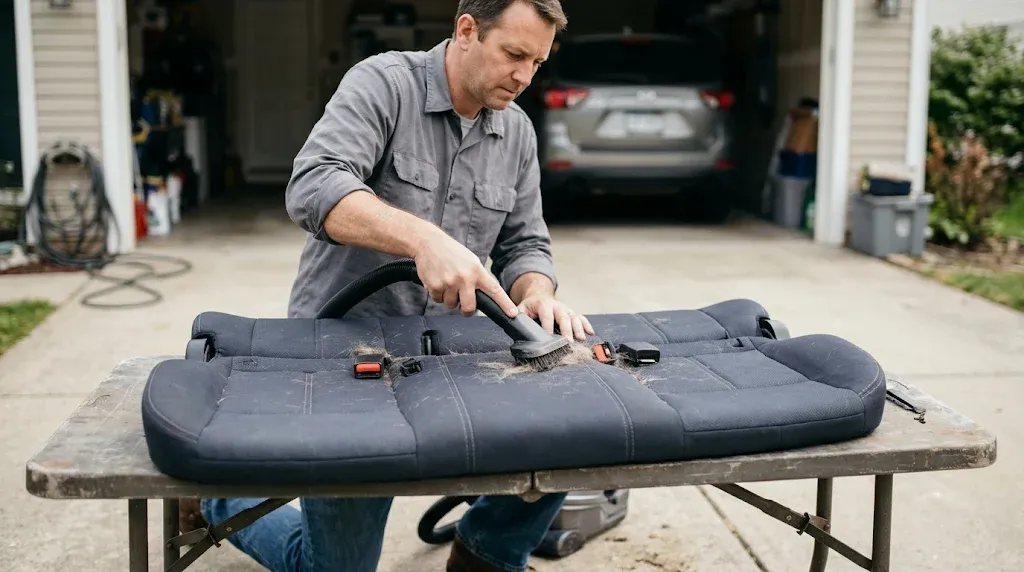
Start with a dry clean, then wash, rinse, and dry in order. Rushing the prep stage is the most common mistake I see.
I learned this after washing a cover full of Labrador hair in my home washer. The hair stuck to the wet fabric, clogged the filter, and took longer to remove than the wash itself.
Step 1: Remove the cover and shake it out
Unclip straps and seat anchors first. Note how each strap routes, so refitting takes minutes, not an hour.
Take the cover outside and shake it hard. Brush off dried mud, sand, and loose hair with your hand or a stiff brush.
Step 2: Vacuum and pre-treat stains
Vacuum both sides with an upholstery tool. Pay close attention to seams, pockets, and strap slots, where hair collects.
Pre-treat mud, food, and urine stains with mild detergent and cool water. Dab the stain, do not scrub it in circles.
Let the pre-treatment sit for 10 to 15 minutes. This step lifts most fresh stains without a harsh cleaner.
Step 3: Choose your wash method
Use the care label to pick machine wash or hand wash. If the label allows machine washing, close zips, fold the cover loosely, and load it alone.
Use cold water and a gentle cycle. Add a small amount of mild, unscented detergent, and skip fabric softener.
For hand washing, fill a tub with cool water and mild detergent. Soak the cover for 15 to 20 minutes, then press and lift it to work the dirt out.
Step 4: Rinse well and check the result
Rinse until the water runs clear. Leftover soap attracts dirt and can irritate a dog’s skin on the next ride.
Check stains before drying. Heat sets stains, so repeat the pre-treatment if a mark is still clear.
Step 5: Dry fully before refitting
Air dry the cover flat or on a line, out of direct sun if the label warns against it. Do not refit a damp cover, as trapped moisture can cause smell and mildew.
Refit the cover only when it feels dry on both sides. Test each strap and anchor, and tug the cover to check for slip.
Universal car seat covers can shift after washing if straps stretch or shrink. Measure the fit again after the first wash, and adjust the anchors before you load your dog.
Pro tip: Check NHTSA guidance on loose items and seat safety if you use a pet harness, carrier, or restraint with the cover.
Section Takeaway: Shake, vacuum, pre-treat, wash cold, rinse well, and dry fully. A clean cover that fits loose is worse than a dirty cover that stays put.
Machine Wash vs Hand Wash: Which Is Better?
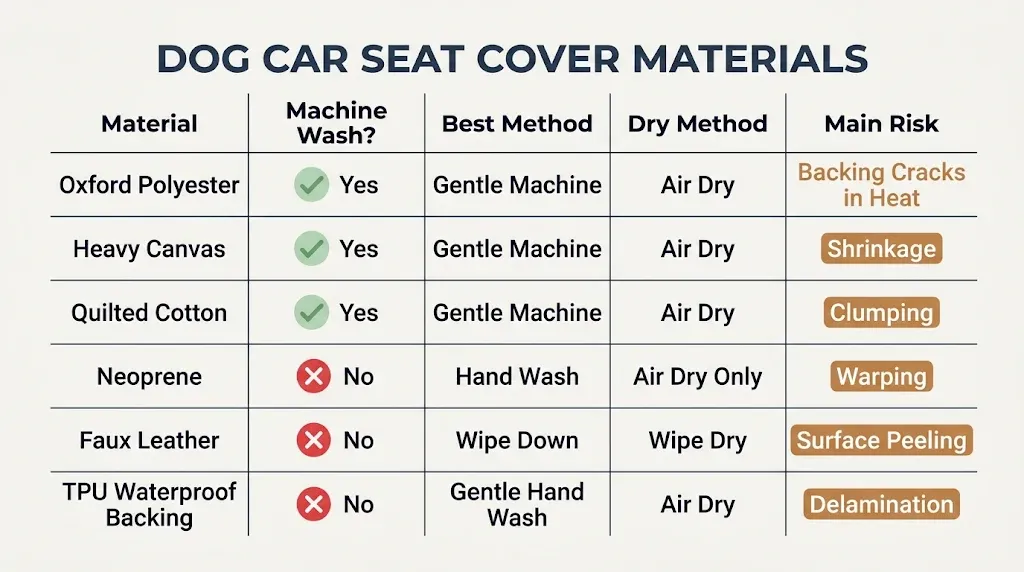
Machine washing is faster and works well for sturdy polyester and Oxford fabric covers. Hand washing is gentler and safer for waterproof backing, quilted layers, and older covers.
Your choice should match the material, not your schedule. A quick machine wash can cost you a cover if the backing cannot take the spin.
| Material | Machine Wash? | Best Method | Dry Method | Main Risk |
|---|---|---|---|---|
| Polyester / Oxford fabric | Yes, if labelled | Cold, gentle cycle | Air dry | Backing cracks in heat |
| Canvas | Often yes | Cold, gentle cycle | Air dry flat | Shrinkage in hot water |
| Quilted cotton | Often yes | Cold, gentle cycle | Air dry flat | Clumping and shrinkage |
| Neoprene | Rarely | Hand wash, cool water | Air dry, no sun | Warping and stiffness |
| Leather / faux leather | No | Spot clean only | Wipe dry | Cracking and peeling |
| Waterproof TPU-backed fabric | If labelled | Cold, gentle cycle | Air dry | Coating peels with heat |
When does machine washing make sense?
Machine washing makes sense for a sturdy, labelled cover after a muddy walk or a long road trip. It removes ground-in dirt that hand washing often leaves behind.
Use a front-loader if you can. Top-loaders with a centre agitator twist long covers and stress seams.
Wash the cover alone, on cold and gentle. A second rinse helps remove soap and loose hair.
When should you hand wash instead?
Hand wash when the label says so, or when the cover is older, quilted, or has a delicate backing. Hand washing gives you control over pressure, water temperature, and soak time.
It also works well for spot dirt. You can clean one muddy corner without washing the whole cover.
Budget car seat covers often use thinner backing and lighter stitching. Hand washing can extend their life, even if machine washing is listed as safe.
Pro tip: Consumer Reports cleaning guidance stresses cold water and mild detergent for coated fabrics, since heat and harsh chemicals shorten coating life.
Section Takeaway: Machine wash sturdy, labelled fabric covers on cold and gentle. Hand wash neoprene, leather, quilted, and older covers to protect backing and shape.
How Do You Dry Dog Car Seat Covers Without Shrinking Them?
Air dry your dog car seat cover in most cases. Tumble drying is safe only if the label states low heat is allowed, and even then it adds risk.
Drying is where most covers shrink. Heat tightens cotton and polyester fibres, warps straps, and weakens waterproof coatings.
How do you air dry a cover?
Shake the cover gently after washing to remove excess water. Lay it flat on a clean towel or hang it on a line, with good airflow.
Flip it after a few hours so both sides dry at the same rate. A cover that dries on one side only can curl at the edges.
Allow 12 to 24 hours for thick quilted covers. Thin polyester covers often dry in 4 to 8 hours in a warm, dry room.
Can you tumble dry a dog seat cover?
You can tumble dry only if the label allows it. Use the lowest heat setting, add clean tennis balls or dryer balls for quilted covers, and check the cover every 10 minutes.
Stop the dryer while the cover still feels slightly damp. Let it finish air drying to cut heat exposure.
Do not use high heat to speed the job. It can melt TPU backing, shrink cotton, and stiffen straps.
What drying mistakes should you avoid?
Avoid direct sun for long periods on dark covers, as sun can fade colour and dry out coatings. Avoid radiators, heaters, and hot garages for the same reason.
Avoid wringing a cover to remove water. Press it between towels instead, and let gravity do the rest.
Avoid refitting a damp cover. Moisture under the cover can trap smell and help mildew grow on the seat below.
Section Takeaway: Air dry flat or on a line, flip it once, and wait until both sides feel dry. Use low-heat tumble drying only when the label allows it.
How Do You Remove Dog Hair, Smell, and Stains?
Remove hair first, then treat smell and stains. Washing a hair-covered cover spreads hair through the wash and back onto the fabric.
Dog hair, wet-dog smell, and mud stains need different tools. One wash rarely fixes all three at once.
How do you remove dog hair before washing?
Use a rubber glove, rubber squeegee, or pet hair brush on dry fabric. Short, firm strokes pull hair into clumps you can lift off.
Vacuum after brushing, with a brush head or upholstery nozzle. A lint roller helps on smooth polyester, but it struggles on quilted fabric.
For heavy shedding, brush the cover outside before each wash. Truck seat covers built for heavy use still collect hair in seams, so check pockets and strap slots too.
How do you remove dog smell from a seat cover?
Air the cover outside for a few hours before washing. Fresh air cuts mild wet-dog smell better than extra detergent.
Wash with mild detergent and add a cup of white vinegar to the rinse cycle if the label allows it. Vinegar helps neutralise odour without bleach.
For strong urine smell, pre-soak the stained area in cool water with an enzyme cleaner made for pet stains. Rinse well before the main wash.
Do not mask smell with heavy scent sprays. They can irritate dogs and leave a sticky layer that attracts dirt.
How do you remove common dog stains?
Treat each stain by type, not by force:
- Mud: Let it dry, brush it off, then wash cold with mild detergent.
- Urine: Blot, rinse cold, pre-soak with an enzyme cleaner, then wash.
- Vomit: Remove solids, rinse cold, pre-treat, then wash on gentle.
- Food and grease: Blot, apply mild dish soap, rinse, then wash.
- Blood: Rinse cold at once, never hot, then pre-treat and wash.
Hot water sets protein stains like blood, urine, and vomit. Cold water is your first move for those stains, every time.
Edmunds interior care guides note the same rule for car upholstery: blot first, use mild cleaners, and test any product on a hidden spot.
Section Takeaway: Brush and vacuum hair first, air out smell, and treat stains cold. Enzyme cleaner helps urine smell, and hot water makes protein stains worse.
How Often Should You Wash a Dog Car Seat Cover?

Wash a dog car seat cover every 2 to 4 weeks for regular use. Wash it at once after mud, rain, urine, vomit, or a strong smell.
Frequency depends on your dog, your trips, and your car use. A short-haired dog on dry roads needs less washing than a long-haired dog after wet park runs.
Use this guide as a starting point:
- Daily dog trips: Wash every 1 to 2 weeks, and brush hair off between washes.
- Weekly trips: Wash every 3 to 4 weeks, or sooner after mud or rain.
- Occasional trips: Wash every 4 to 6 weeks, and air the cover between trips.
- After illness or accidents: Wash at once, and check the seat below for moisture.
- Before long trips: Wash and dry fully, so the car starts clean and dry.
Seat covers made for long drives often face more hair, food, and sweat on multi-day trips. Wash them after the trip, not before the next one, so damp fabric does not sit in a closed car.
Check the cover between washes for wear. Look for frayed straps, cracked backing, loose stitching, and a non-slip base that no longer grips.
Replace a cover when the waterproof layer peels, straps no longer hold, or washing no longer removes smell. A worn cover can slide, bunch, or trap moisture against your seat.
As of 2026, most pet covers still list cold wash and air dry as the safest default. That has not changed, even as new waterproof fabrics have reached the market.
Pro tip: Car and Driver interior guides stress the same habit: clean pet gear often, and inspect straps and anchors after each wash.
Section Takeaway: Wash every 2 to 4 weeks for regular use, and at once after mud, accidents, or illness. Replace the cover when backing peels or straps fail.
Frequently Asked Questions
Can you put a dog car seat cover in the washing machine?
Yes, if the care label allows machine washing. Use cold water, a gentle cycle, and mild detergent, and wash the cover alone. Skip the washer for leather, faux leather, neoprene, and covers with rigid inserts.
Can you put a dog car seat cover in the dryer?
Only if the label allows low-heat tumble drying. Air drying is safer for most covers, since high heat can shrink fabric and damage waterproof backing. Stop the dryer early and finish air drying if you use it.
How do you get dog smell out of a car seat cover?
Air the cover outside, then wash it cold with mild detergent. Add white vinegar to the rinse if the label allows it, and pre-soak urine stains with an enzyme cleaner. Dry the cover fully before refitting it.
Will washing shrink a dog car seat cover?
Hot water and high dryer heat can shrink cotton, canvas, and some polyester covers. Cold water, a gentle cycle, and air drying cut that risk. Check the fit after the first wash, since straps can tighten or stretch.
Can you wash a waterproof dog car seat cover?
Yes, if the label allows washing. Use cold water and mild detergent, skip bleach and fabric softener, and air dry it. Heat and harsh cleaners can crack or peel the waterproof coating.
How do you clean a dog car seat cover without a washing machine?
Shake and vacuum it, then hand wash it in a tub with cool water and mild detergent. Soak for 15 to 20 minutes, press out dirt, rinse until clear, and air dry flat. Spot clean leather and suede covers instead.
Your next step is simple: check the label, shake off the hair, wash cold, and air dry fully.
Do that after each muddy trip, and your cover will last longer, smell fresher, and fit better. Your dog gets a clean seat, and your car seats stay protected for the next ride.

Daniel Brooks is an automotive writer and product researcher focused on car accessories, car tech, maintenance, and practical driving guides. At Plug-in Car World, he helps drivers make smarter automotive decisions through honest reviews and research-driven content.
