
How to Check Whether Car Seat Straps Are Too Tight
Quick Answer
Car seat harness straps are too tight if you cannot pass the pinch test, your child shows lasting red marks or distress after a short ride, or the harness pulls the shoulders down. A correct fit is snug, with no slack at the collarbone and the chest clip at armpit level. Check fit on every ride, and confirm your seat type with NHTSA car seat guidance.
Quick checks
- Pinch test: You should not be able to pinch a fold in the harness at the collarbone.
- Chest clip: The clip should sit centered on the chest at armpit level.
- Shoulder height: Harness slots should match the direction rules for your seat type.
- Comfort signs: Your child should breathe easily and sit upright without arching.
- Clothing check: Test fit without a bulky coat or thick padding behind your child.
If straps feel too tight
- Loosen in small steps, then retest the pinch test on both sides.
- Remove bulky layers first, and never loosen straps just to fit a coat.
A harness that feels tight is not always wrong. A snug harness is what keeps a child safe in a crash.
This guide explains the pinch test, the signs of straps that are too tight, and how to adjust them. It also covers loose straps, common mistakes, and when to get help.
In This Guide
- What Does Too Tight Mean for a Car Seat Harness?
- How Do You Do the Pinch Test Correctly?
- What Are the Signs Car Seat Straps Are Too Tight?
- How Can You Tell If Straps Are Too Loose Instead?
- How Do You Adjust Straps for a Snug Fit?
- Do Seat Covers and Extra Padding Change Strap Fit?
- Frequently Asked Questions
- Final Takeaway
What Does Too Tight Mean for a Car Seat Harness?
A car seat harness is the strap system that holds a child in a safety seat. It includes shoulder straps, a buckle, and a chest clip.
Too tight means the harness restricts breathing, presses hard into skin, or forces an unnatural posture. It does not mean snug.
As of 2026, the core safety idea has not changed. A harness must hold a child firmly, with no slack that lets the body move too far forward.
Why snug feels different from tight
Snug can feel firm at first, and that firmness often worries parents. Tight is different, because it causes pain, redness, or trouble breathing.
- Snug: No slack at the collarbone, and your child can breathe and move the head normally.
- Tight: Straps dig in, shoulders pull down, or your child arches and cries soon after buckling.
- Unclear: Recheck clothing, strap twists, and chest clip height before you loosen or tighten more.
Use the pinch test as your main check, not how the straps look from the side. Looks can mislead you when clothing or padding hides slack.
Takeaway: Snug means no slack and easy breathing. Tight means pain, pressure, or a forced posture.
How Do You Do the Pinch Test Correctly?
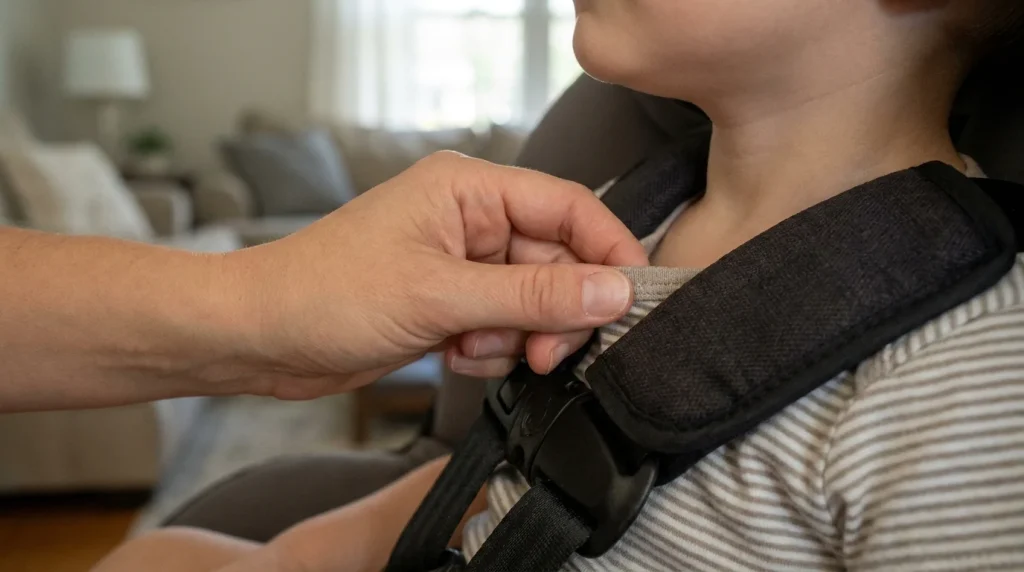
Place your thumb and finger on the harness at your child’s collarbone. Try to pinch the webbing into a fold, and if you cannot pinch any slack, the fit is snug enough.
Do this test after you buckle, tighten, and set the chest clip. Test both shoulder straps, because one side can feel different from the other.
- Buckle the harness and the chest clip fully.
- Tighten the harness until slack leaves the shoulder straps.
- Slide the chest clip to armpit level.
- Pinch the strap at the collarbone on one side.
- Repeat the pinch on the other side, then adjust if either side has slack.
Common pinch test mistakes
- Pinching over padding: Test the strap itself, not a strap cover or a thick coat.
- Pinching at the clip: The test point is the collarbone, not the chest clip.
- Testing one side only: Straps can twist or tighten unevenly, so check both sides.
- Testing before tightening: Tighten first, set the clip, then pinch.
If you can pinch a fold, tighten a little more and test again. If you cannot pinch any fold, stop tightening and check comfort and posture.
Takeaway: Pinch at the collarbone, on both sides, after tightening. No fold means snug, not too tight on its own.
What Are the Signs Car Seat Straps Are Too Tight?
Straps are likely too tight if your child shows lasting pressure marks, distress, or restricted movement after a short ride. One light mark alone does not prove a problem, so look for a pattern.
- Lasting red marks: Marks that stay visible well after you unbuckle, not faint lines that fade fast.
- Digging straps: Webbing that cuts into the shoulders, neck, or legs.
- Pulled shoulders: Shoulders forced down or inward by the harness.
- Arching or crying: Your child arches, strains, or cries soon after buckling, with no other clear cause.
- Breathing trouble: Fast, shallow, or noisy breathing that eases after you loosen the harness.
- Stiff posture: Your child cannot sit upright or turn the head in a normal range.
Illustrative example only: a child in a thick winter coat may look tightly strapped, while the harness is loose under the coat. That is why you should test fit without bulky layers, even when the straps look firm.
Check the harness height and the chest clip before you blame tightness alone. A low clip or a wrong slot height can make a correct harness feel wrong.
Pro tip: If breathing trouble, color change, or distress does not ease after you loosen the harness, seek medical help right away and check your seat manual for fit guidance.
Takeaway: Lasting marks, digging, pulled shoulders, and breathing trouble point to straps that are too tight. Recheck clothing, clip height, and slot height first.
How Can You Tell If Straps Are Too Loose Instead?
Loose straps are the more common safety risk, and they often feel kinder to a child. The pinch test tells them apart fast, because loose straps let you pinch a clear fold.
| Check | Too tight | Just right | Too loose |
|---|---|---|---|
| Pinch test at collarbone | No fold, plus pain or pressure | No fold, child breathes easily | You can pinch a fold |
| Chest clip | Clip may sit high or pull straps in | Centered at armpit level | Clip slides low or straps fall off shoulders |
| Shoulder position | Shoulders pulled down | Shoulders rest in a natural line | Straps sit off the shoulders |
| Child comfort | Distress, arching, or stiff posture | Calm, upright, and able to breathe | Child can lean far forward or slip a shoulder out |
Do not loosen straps just because your child fusses at first. Check the pinch test, the clip, and the clothing layers before you change the fit.
Takeaway: Loose means you can pinch slack or straps fall off the shoulders. Tight means no slack plus pain or pressure.
How Do You Adjust Straps for a Snug Fit?
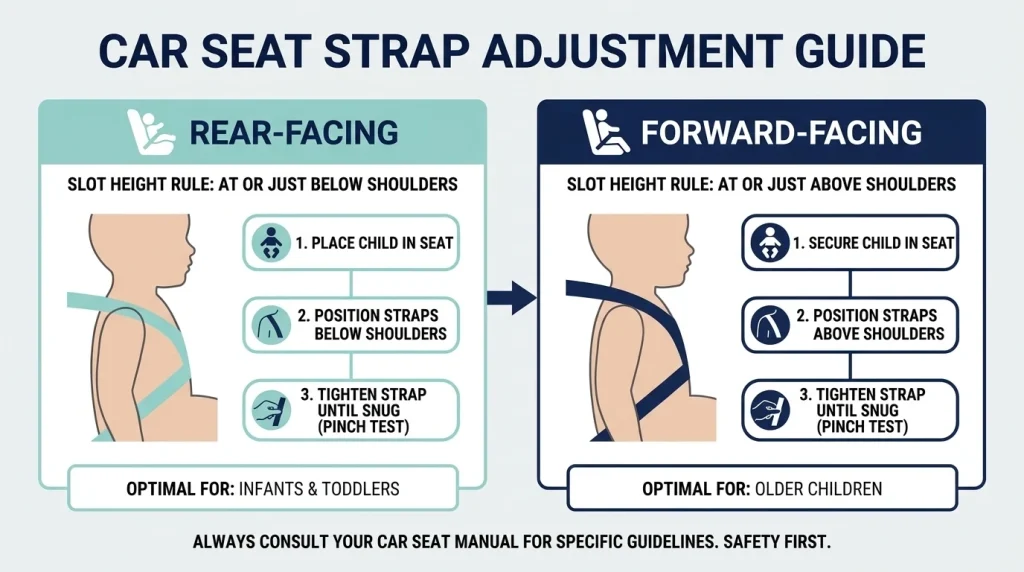
Start with your child in thin, normal clothing and the seat installed as the manual directs. Remove bulky coats, blankets under the child, and thick inserts that did not come with the seat.
- Place your child flat against the seat back, with the bottom and back in contact.
- Route both shoulder straps flat, with no twists in the webbing.
- Buckle the harness, then set the chest clip at armpit level.
- Tighten until the pinch test passes on both sides.
- Recheck posture, breathing, and clip height before you drive.
What harness height should you use?
- Rear-facing: Use slots at or below your child’s shoulders.
- Forward-facing: Use slots at or above your child’s shoulders.
- Height change: Move slots up as your child grows, and retest the pinch test after each change.
What if you cannot get a snug fit?
- Check for twisted straps, a caught buckle tongue, or straps routed through the wrong slots.
- Check that the harness adjuster strap moves freely and is not caught under the seat.
- Check your manual for your seat model, because routing and adjuster location vary by seat.
- Ask a certified child passenger safety technician for a hands-on check if fit stays uneven.
For general car seat safety information, Safe Kids Worldwide offers parent guides on fit and seat types. Your seat manual still wins when its steps differ from a general guide.
Pro tip: Check your vehicle owner’s manual and your car seat manual together, and use NHTSA’s recall lookup if you suspect a seat or harness defect.
Takeaway: Thin clothing, flat straps, correct slot height, and a pinch test on both sides give a snug fit. Get a technician check if fit stays uneven.
Do Seat Covers and Extra Padding Change Strap Fit?
Yes, extra padding can change strap fit, even when it looks soft and harmless. Thick inserts behind a child, bulky strap covers, and unapproved pads can add slack or shift the harness.
Use only inserts and covers approved by your car seat maker for that seat model. Aftermarket items that sit behind a child or under the harness can change how the harness holds the body in a crash.
- Behind the child: Thick padding can compress and leave slack you cannot see during a normal check.
- On the straps: Bulky strap covers can hide twists and make the pinch test hard to read.
- Under the buckle: Extra layers can change buckle position and chest clip height.
Vehicle seat covers are a different product from child seat inserts. If you are shopping for the car itself, these general cover guides may help you compare types, but they do not replace your child seat manual.
- See the cooling car seat cover review for a ventilated cover option for vehicle seats.
- See the Sprints car seat cover review for another vehicle seat cover style.
- See the Astonish car seat cover review for a third vehicle seat cover option.
When you wash a child seat cover, refit it exactly as the manual shows. Recheck strap routing, slot height, and the pinch test after any cover change.
Takeaway: Unapproved padding can hide slack and shift the harness. Use only maker-approved inserts, and retest fit after any cover change.
Frequently Asked Questions
How tight should car seat straps be?
Straps should be snug with no slack at the collarbone, and you should not be able to pinch a fold in the webbing. The chest clip should sit at armpit level, and your child should breathe and sit comfortably without straps digging in.
Can tight straps hurt my child?
Yes, straps that are far too tight can cause discomfort, red marks, and restricted movement, and they may make a child arch or cry. Loosen in small steps until the pinch test passes, then check breathing, posture, and comfort before you drive.
Should I loosen straps for a winter coat?
No, do not loosen straps to fit a bulky coat, because the coat can compress in a crash and leave dangerous slack. Remove the coat, buckle and tighten the harness, then place the coat or a blanket over the buckled straps for warmth.
How often should I check strap fit?
Check fit on every ride, because growth, clothing, and seat adjustments can change slack quickly. Recheck after you change the harness height, wash the cover, move the seat, or notice your child sitting differently.
What if one strap feels tighter than the other?
Uneven straps often mean a twisted strap, a caught buckle, or a harness that needs rethreading to the same slot height. Straighten both straps, check that they sit at the same height, and retest the pinch test on each side.
Does chest clip position affect tightness?
Yes, a chest clip that sits too low or too high can change how straps feel and how they hold the shoulders. Keep the clip centered on the chest at armpit level, then tighten and pinch-test the harness again.
Final Takeaway
Use the pinch test at the collarbone, keep the chest clip at armpit level, and check fit without bulky clothing. Those three checks separate snug from too tight, and they also catch loose straps.
For a second opinion on ratings and seat types, see Consumer Reports, then follow your seat manual for your exact model. Recheck before your next ride, and get a technician check if fit stays uneven or your child shows breathing trouble.

Daniel Brooks is an automotive writer and product researcher focused on car accessories, car tech, maintenance, and practical driving guides. At Plug-in Car World, he helps drivers make smarter automotive decisions through honest reviews and research-driven content.
