
How to Clean Car Seat Covers: Washing and Care Guide
Quick Answer
Most car seat covers can be cleaned by vacuuming, spot-treating stains, then hand washing or machine washing on cold and gentle if the care label allows it. Always remove the cover the right way first, check the material, and air dry it fully before you refit it.
Quick steps
- Vacuum first: Remove crumbs, pet hair, and grit before any water touches the fabric.
- Check the label: Follow the care label for water temperature, machine washing, and drying.
- Spot-treat stains: Blot, do not rub, and test cleaner on a hidden area first.
- Wash gently: Use cold water, mild detergent, and a gentle cycle or hand wash.
- Air dry fully: Hang it in airflow until dry inside and out, then refit it snugly.
Do not do this
- Do not use bleach, hot water, or high dryer heat unless the label clearly allows it.
- Do not refit a damp cover, as trapped moisture can cause mildew and odors.
I’ve cleaned seat covers after muddy soccer practice, a spilled coffee, and one very hairy dog ride in my 2018 Honda Civic. Each mess taught me the same lesson.
The material decides the method. Get that right, and most covers wash up well in 30 to 45 minutes of hands-on work, plus drying time.
In This Guide
- What Is a Car Seat Cover and How Do I Identify the Material?
- What Do I Need to Clean Car Seat Covers?
- How Do I Clean Car Seat Covers Step by Step?
- Can You Machine Wash Car Seat Covers?
- How Do I Remove Stains and Odors From Car Seat Covers?
- How Do I Dry, Store, and Maintain Car Seat Covers?
- Frequently Asked Questions
- Final Takeaway
What Is a Car Seat Cover and How Do I Identify the Material?
A car seat cover is a removable layer that fits over your car’s seat to protect the original upholstery from dirt, wear, spills, and sun damage. It can be universal or custom fit, and it usually fastens with straps, hooks, or elastic.
Cleaning starts with identification, not water. A leather cover needs a different cleaner than a neoprene or cotton cover, and a wrong choice can fade, stiffen, or shrink it.
What does the care label actually tell you?
The care label is your first stop. It usually sits on a side seam, under the headrest flap, or near a strap.
Look for wash symbols, water temperature, and drying notes. If it says hand wash only, do not machine wash it to save time.
Keep the label photo on your phone. I snap one for every cover I test, so I don’t have to hunt for it again.
How can you spot the material if the label is gone?
Feel and look closely before you clean. Leather feels smooth and cool, with a slight grain and a distinct smell.
PU leather, also called faux leather, looks similar but feels more plastic-like and uniform. Neoprene feels thick, rubbery, and stretchy, like a wetsuit.
- Fabric and cotton: Soft, woven, and absorbent, with visible fibers.
- Microfiber and suede: Soft and velvety, with a nap that changes shade when you brush it.
- Neoprene: Thick, smooth, and water-resistant, with a rubber backing.
- Leather and PU leather: Smooth and wipeable, with stitched seams and a firmer feel.
- Sheepskin and faux fur: Thick, fluffy, and warm, with a dense pile.
When in doubt, treat it as the more delicate option. A gentle hand wash rarely harms a tough fabric, but a harsh wash can ruin leather or suede.
Check the fit and airbag setup too. Some seat covers are made for seats with side airbags, and a thick or poorly fitted cover can interfere with deployment.
Pro tip: Check your vehicle owner’s manual and the NHTSA recall lookup before you refit a cover, especially if your seats have side airbags or seat sensors.
Section takeaway: Identify the material first, follow the care label, and choose a gentle method when you are unsure.
What Do I Need to Clean Car Seat Covers?
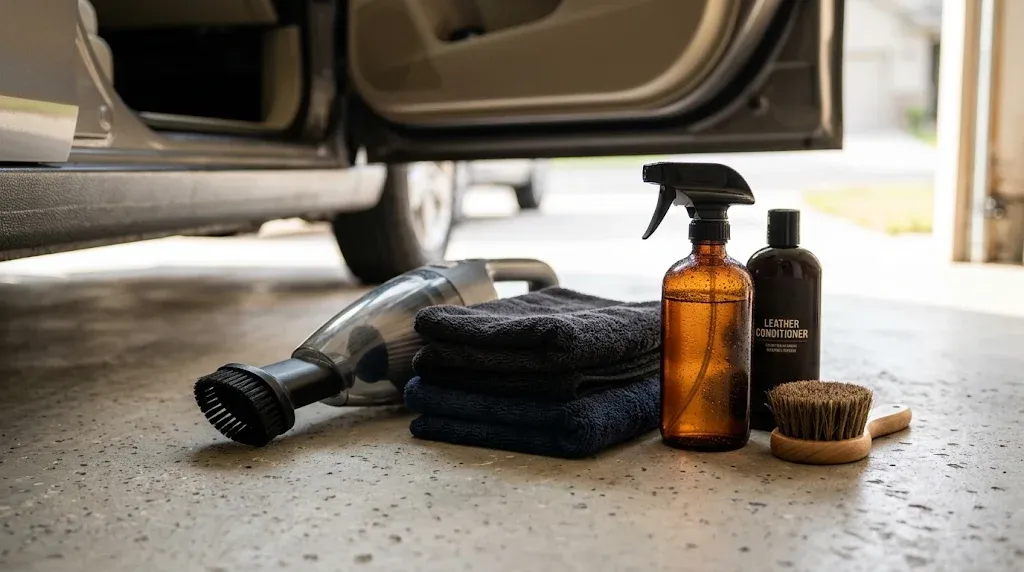
You do not need a pro detail kit. Most jobs use tools you already have at home, plus one cleaner matched to the material.
Gather everything before you start. Wet covers are hard to handle, and you do not want to leave one soaking while you hunt for a brush.
Basic cleaning kit
- Vacuum with brush: Removes dust, crumbs, and pet hair from seams and stitching.
- Soft brush: Lifts dirt from fabric without scratching leather or PU leather.
- Microfiber cloths: Clean and blot without leaving lint behind.
- Large basin or tub: Gives you room to soak and rinse a fabric cover.
- Mild detergent: Use a small amount of gentle laundry detergent or upholstery cleaner.
- Leather cleaner and conditioner: Use a product made for car leather, not household cleaner.
- Baking soda: Helps with light odors on fabric covers.
- White vinegar: Use diluted, only on fabrics that tolerate it, and test first.
- Spray bottle: Lets you dampen a spot without soaking the whole cover.
- Clothesline or drying rack: Supports air drying without creasing the cover.
What should you avoid using?
- Bleach: It can fade color, weaken fibers, and damage stitching.
- Harsh solvents: Avoid acetone, strong degreasers, and all-purpose cleaners with bleach.
- Stiff wire brushes: They can tear fabric and scratch leather.
- High heat: Hot water and high dryer heat can shrink fabric and crack leather.
- Excess soap: Too much detergent leaves residue that attracts dirt.
For leather, skip soap-heavy mixes. A dedicated leather cleaner lifts dirt without stripping the finish.
For suede and microfiber, use a suede-safe cleaner and a soft brush. Water alone can leave marks, so work in small sections and brush the nap as it dries.
Section takeaway: Use mild products, soft tools, and cold water, and leave bleach and harsh chemicals out of the job.
How Do I Clean Car Seat Covers Step by Step?
This is my standard routine for fabric, neoprene, and PU leather covers. Leather needs a shorter version, which I cover below.
Set aside 30 to 45 minutes for one set of front covers. Rear bench covers take longer because they are larger and have more straps.
- Remove the cover: Unclip straps, unhook elastic, and lift the headrest flap off first.
- Shake it outside: Shake it well away from the car to drop loose dirt and hair.
- Vacuum both sides: Use the brush tool on seams, pockets, and stitching lines.
- Spot-treat stains: Apply cleaner to the stain, wait 5 to 10 minutes, then blot.
- Wash by hand or machine: Follow the label, use cold water, and use mild detergent.
- Rinse well: Rinse until the water runs clear and no soap remains.
- Air dry fully: Hang it in airflow and turn it once so both sides dry.
- Refit and check: Refit it snugly and check straps, headrest holes, and airbag seams.
How do I clean a cover without removing it?
Sometimes removal is not practical. Vacuum the cover on the seat, then spot-clean with a damp microfiber cloth.
Work in small areas and blot, do not soak. Too much water can seep into the seat foam below.
Let it dry with the doors open for 20 to 30 minutes. This works well for light dust, pet hair, and small spills.
How do I clean leather seat covers?
Vacuum first, then wipe with a damp microfiber cloth. Apply leather cleaner to the cloth, not directly to the cover.
Wipe in small circles, then wipe again with a clean, damp cloth. Finish with leather conditioner once the cover feels dry.
I learned this the hard way on a used leather cover in my Tacoma. Too much cleaner left a sticky film, and a second wipe fixed it.
Do not soak leather or use a pressure washer. Water can stain the surface and stiffen the hide as it dries.
For the seat underneath, vacuum while the cover is off. This is a good time to clean a car seat safely and check for crumbs or moisture under the cover.
Section takeaway: Remove, vacuum, spot-treat, wash gently, rinse well, and air dry before you refit the cover.
Can You Machine Wash Car Seat Covers?
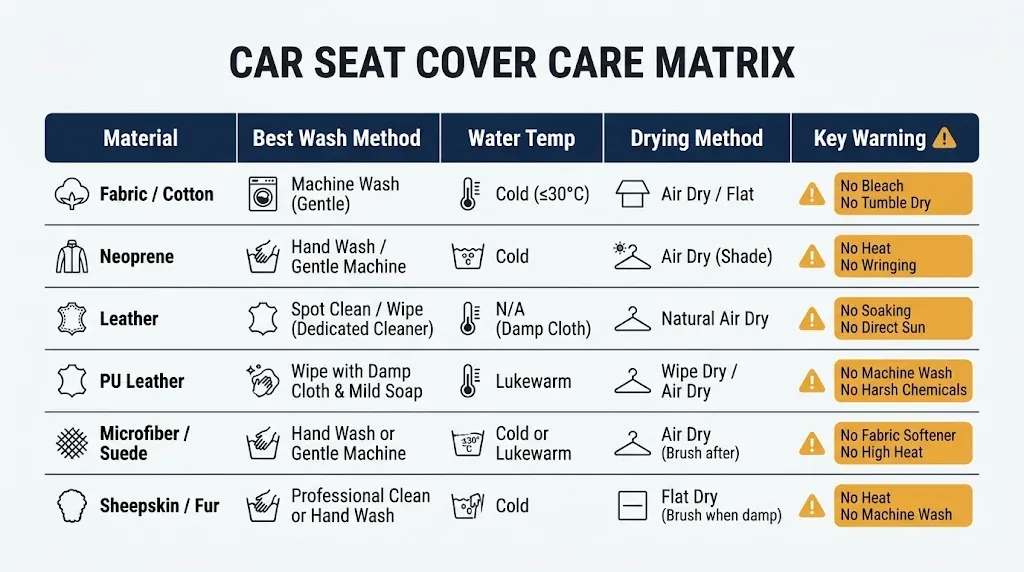
Yes, some covers can be machine washed, but only if the care label allows it. Fabric, cotton, and many neoprene covers often qualify, while leather, suede, and sheepskin usually do not.
When the label is unclear, hand wash it. A hand wash takes more time, but it protects the fit and finish.
| Material | Best wash method | Water | Dry method | Avoid |
|---|---|---|---|---|
| Fabric / cotton | Machine gentle or hand wash | Cold | Air dry | Bleach, hot dryer |
| Neoprene | Hand wash | Cold to lukewarm | Air dry flat | Machine spin, heat |
| Leather | Wipe clean only | Damp cloth | Air dry, then condition | Soaking, machine wash |
| PU leather | Wipe or hand wash | Cold | Air dry | Solvents, high heat |
| Microfiber / suede | Hand wash, suede-safe cleaner | Cold | Air dry, brush nap | Soaking, stiff brush |
| Sheepskin / faux fur | Hand wash or pro clean | Cold | Air dry, brush pile | Machine wash, dryer heat |
How do I machine wash a cover safely?
Close all zips and fasten straps first. Loose straps can tangle and pull seams in the wash.
Use a front-loader if you can. A top-loader with a central agitator can twist a large cover and stress the seams.
Wash one cover at a time on cold and gentle. Use a small amount of mild detergent and skip fabric softener.
Use an extra rinse if your machine offers it. Soap residue can make fabric feel stiff and attract dust.
How do I hand wash a cover?
Fill a tub with cold water and a small amount of mild detergent. Submerge the cover and press it gently, do not wring it hard.
Let it soak for 15 to 20 minutes. Brush stained areas lightly, then rinse in clean cold water.
Press out water with a towel. Do not twist neoprene or suede, as twisting can stretch the shape.
If you want a fuller walk-through, this guide on how to wash a car seat cover without damaging it covers the same gentle method in more detail.
Section takeaway: Machine wash only when the label allows it, use cold and gentle, and hand wash leather, suede, and sheepskin.
How Do I Remove Stains and Odors From Car Seat Covers?
Act fast for best results. Fresh stains lift easier than set stains, and blotting beats rubbing every time.
Test any cleaner on a hidden seam first. Wait 10 minutes and check for color change before you treat the visible area.
What works for common stains?
| Stain | First step | Cleaner | Note |
|---|---|---|---|
| Coffee or tea | Blot, do not rub | Mild detergent mix | Rinse well to avoid rings |
| Food or grease | Scrape off solids | Upholstery cleaner | Repeat in small passes |
| Mud | Let it dry, then brush | Mild detergent mix | Vacuum before washing |
| Pet urine | Blot and rinse | Enzyme cleaner | Air dry fully |
| Sweat or body odor | Vacuum and air out | Baking soda, then wash | Do not mask with spray |
For a deeper stain on the seat itself, the same blot-first method helps. You can also learn how to remove stains from a car seat without pushing the stain deeper into the foam.
How do I remove odors from a fabric cover?
Sprinkle baking soda over the dry cover and leave it for 30 minutes. Vacuum it off, then wash if the label allows it.
For pet smells, use an enzyme cleaner made for pet odors. It breaks down the source instead of covering it up.
Air the cover outside for a few hours on a dry day. Sunlight helps, but do not leave dark fabric in strong sun for a full day.
What about mold or mildew smell?
Do not ignore a musty smell. It often means the cover stayed damp or the seat foam got wet.
Wash the cover if the material allows it, then dry it fully in airflow. Check the seat and floor for dampness too.
If the smell stays after a full wash and dry, consider a pro clean. A detailer can use an extractor to pull moisture from the seat, and RepairPal can help you find a local shop and get a quote.
Section takeaway: Blot fast, test first, use the right cleaner for the stain, and dry fully to stop odors from coming back.
How Do I Dry, Store, and Maintain Car Seat Covers?
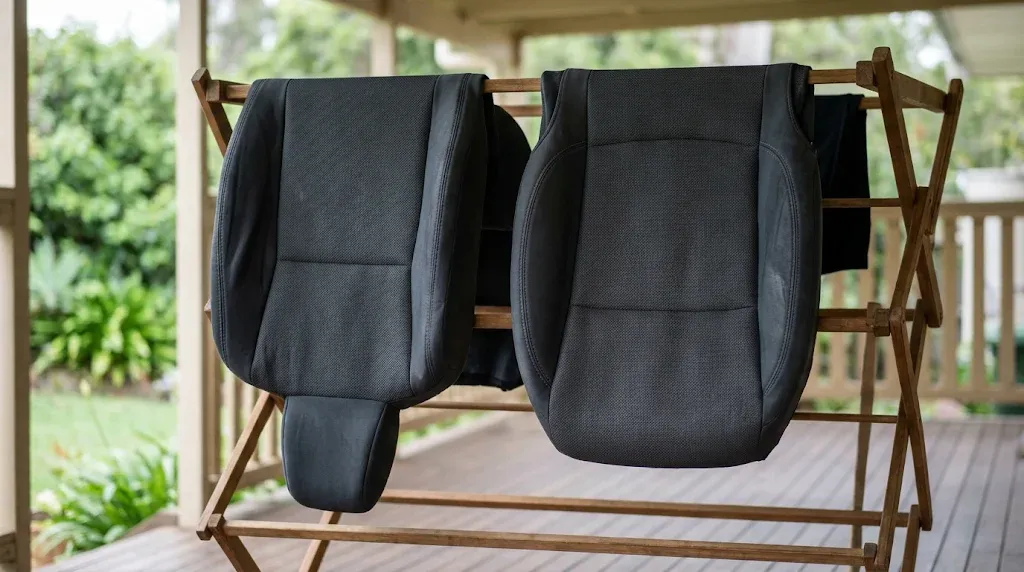
Drying matters as much as washing. A cover that looks clean can still hold moisture in seams and padding.
As of 2026, most makers still recommend air drying for seat covers. It takes longer, but it protects shape, color, and waterproof coatings.
How do I air dry a car seat cover?
Hang the cover on a line or rack in a shaded, breezy spot. Turn it after a few hours so the inside dries too.
Allow 6 to 12 hours for a fabric cover, longer for thick neoprene or sheepskin. Do not refit it until it feels dry to the touch inside and out.
Avoid direct high heat from a dryer, radiator, or hair dryer. Heat can shrink fabric, melt PU coatings, and crack leather.
If the label allows low tumble dry, use the lowest heat and remove it while slightly damp. Then finish air drying on a rack.
How do I refit a cover after washing?
Start with the headrest, then pull the cover down over the seat back. Smooth out wrinkles before you fasten straps.
Fasten straps under the seat and check that the cover sits centered. A loose cover can bunch up and feel uncomfortable on a long drive.
Check seat controls, seatbelt buckles, and airbag seams. Nothing should block a buckle or cover a side airbag seam that needs to open.
For a step-by-step refit, see how to install a car seat cover correctly after it is fully dry.
How often should I clean car seat covers?
- Every 2 to 4 weeks: Vacuum and wipe down covers in daily-use cars.
- Every 1 to 3 months: Wash fabric covers, or more often with kids or pets.
- After a spill: Spot-clean the same day to stop stains from setting.
- Seasonal: Do a full wash and seat check at the start of summer and winter.
Keep a small kit in the car for spills. A microfiber cloth and a small spray bottle can save a cover on a road trip.
When you shop for a replacement, choose a washable material that suits your use. The best car seat covers for families and pet owners are often the ones that are easiest to remove and wash.
For general car care advice, Consumer Reports and Edmunds both cover interior care and long-term upholstery wear in their car maintenance guides.
Section takeaway: Air dry fully, refit snugly, and clean on a regular schedule so small messes never become set stains.
Frequently Asked Questions
Can I put car seat covers in the washing machine?
Yes, if the care label allows machine washing. Use cold water, a gentle cycle, and mild detergent, then air dry the cover fully before refitting it.
How do I clean leather car seat covers?
Vacuum first, then wipe with a damp microfiber cloth and leather cleaner. Wipe again with a clean damp cloth, let it dry, then apply leather conditioner.
Can I use a pressure washer on seat covers?
No, do not use a pressure washer on seat covers. It can force water into seams, damage stitching, and soak foam or leather in ways that are hard to dry.
How do I get pet hair off car seat covers?
Vacuum with a brush tool, then use a rubber glove or lint roller to lift the remaining hair. A damp microfiber cloth also helps, and a wash will remove the rest.
Why does my car seat cover smell after washing?
It was likely refitted while still damp, or soap residue stayed in the fabric. Rewash with less detergent, rinse well, and air dry it fully in airflow.
Can I dry car seat covers in the dryer?
Only if the label clearly allows low-heat tumble drying. Most covers should air dry, as high heat can shrink fabric, damage coatings, and crack leather.
How often should I wash car seat covers?
Wash fabric covers every 1 to 3 months, or more often with kids, pets, or daily commuting. Vacuum every 2 to 4 weeks, and spot-clean spills the same day.
Final Takeaway
Clean car seat covers last longer, smell better, and protect your seats. The job is simple once you match the method to the material.
Vacuum first, spot-treat stains, wash gently on cold, and air dry fully. Check the care label, keep airbag seams clear, and refit the cover snugly.
Start with the dirtiest cover today. You will see the difference on your next drive, and your seats will thank you for it.

Daniel Brooks is an automotive writer and product researcher focused on car accessories, car tech, maintenance, and practical driving guides. At Plug-in Car World, he helps drivers make smarter automotive decisions through honest reviews and research-driven content.
