
Can You Wash Leather Car Seat Covers? Cleaning Guide
Quick Answer
Yes, you can wash most leather car seat covers by hand, with a pH-neutral leather cleaner, lukewarm water, and a soft cloth. Machine washing is risky for real leather, and harsh soaps can strip the finish and leave the surface stiff or cracked. The safest routine is a gentle hand wash, a full air-dry, and a light conditioner after. Start with the best car seat covers if you are still choosing a set, then follow the steps below.
What to remember first
- Hand wash wins: It cleans real and faux leather without the heat and tumbling that cause shrinkage.
- Check the label: The care tag tells you if the cover is removable, washable, or wipe-clean only.
- Test a hidden spot: Try any cleaner on the back edge first and wait a few minutes.
- Use little water: A damp cloth cleans leather, while soaking can warp it and stain the foam beneath.
- Condition after drying: A thin coat of leather conditioner keeps the surface soft and stops cracking.
Do not use
- Dish soap, laundry detergent, bleach, or all-purpose cleaners on leather.
- Abrasive pads, stiff brushes, or a pressure washer.
- A tumble dryer, a heater vent, or direct sun for drying.
I have washed leather seat covers in my own garage more times than I can count, and the short answer is yes, you can wash them. The trick is knowing which leather you own and keeping the wash gentle, because one harsh cleaner can do more damage than a year of daily driving.
This guide walks through real leather versus faux leather, the supplies that work, a step-by-step hand wash, and the drying and conditioning routine that keeps covers soft. You will also learn when machine washing is safe, which mistakes to avoid, and how often to clean.
In This Guide
- Can You Wash Leather Car Seat Covers?
- How Do You Tell Real Leather From Faux Leather?
- What Do You Need Before You Wash Leather Seat Covers?
- How Do You Wash Leather Car Seat Covers Step by Step?
- Can You Machine Wash Leather Car Seat Covers?
- What Mistakes Damage Leather Car Seat Covers?
- How Do You Dry and Condition Leather Seat Covers After Washing?
- Frequently Asked Questions
Can You Wash Leather Car Seat Covers?
Yes, you can wash leather car seat covers, but hand washing is the safe default for real leather. Faux leather, also called PU leather or vinyl, tolerates more water and mild soap, yet it still lasts longer with a gentle hand wash.
A leather car seat cover is a removable layer that sits over your factory seat and protects it from wear, spills, and sun. Real leather covers use animal hide with a dyed, sealed finish, while faux leather covers use a plastic-based surface printed to look like hide.
The care label is your first stop, and it matters more than any general guide. Some covers are made to come off and wash, while others are stitched in place and should only be wiped down on the seat.
If the label is missing, treat the cover as real leather and hand wash it. That approach is safe for both types, and it avoids the one wash that ruins a good set.
- Removable covers: Take them off the seat and wash them flat, so every panel dries evenly.
- Fixed covers: Clean them on the seat with a damp cloth and a small amount of cleaner.
- Perforated leather: Use even less water, since holes let moisture reach the padding fast.
- Work trucks and family cars: Wash more often, because dirt, sweat, and food build up quicker in daily use.
I learned this the hard way on a 2018 Honda Civic with a light tan set. A coffee spill sat for a week, and the stain set into the finish because I kept putting the wash off.
A 20-minute hand wash fixed most of it, and the conditioner brought the color back. If you drive a work truck, leather seat covers for trucks face the same grime, so a regular wash routine pays off even faster there.
Section Takeaway: Yes, leather car seat covers can be washed, and a gentle hand wash is the safest method for both real and faux leather.
How Do You Tell Real Leather From Faux Leather?
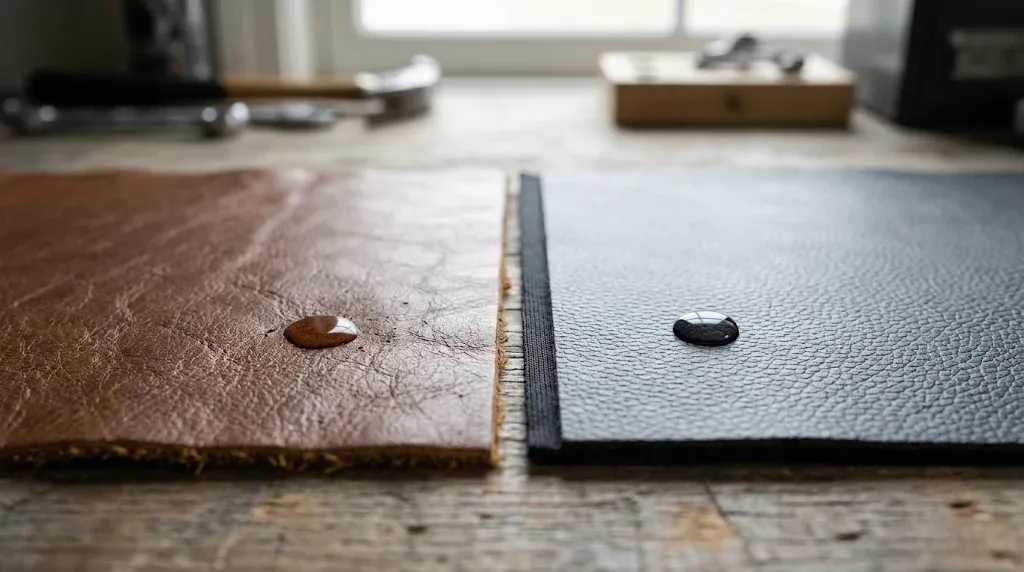
Check the label first, then look at the grain, feel the surface, and smell the material. Real leather has uneven grain, a warm feel, and a rich, earthy smell, while faux leather looks uniform, feels cooler and plasticky, and smells faintly chemical.
Most covers sold as leather are actually faux leather, and that is fine for washing. Faux leather is cheaper, easier to wipe clean, and common on universal-fit sets, so do not assume a leather look means real hide.
Consumer Reports covers material care in its car-care guidance, and the same test-first habit applies here. When in doubt, test your cleaner on a hidden edge before you touch the seating surface.
What does real leather feel and smell like?
Real leather feels soft and slightly warm, and it gives a little when you press it. The grain changes across the panel, with small pores and natural creases, and the back side feels rough like suede.
- Smell: A warm, earthy leather scent, not plastic or chemicals.
- Water drop test: A small drop darkens real leather briefly, then soaks in slowly.
- Creases: Fine, random wrinkles appear when you bend the panel, and they relax when you let go.
What does faux leather look like?
Faux leather has a printed grain that repeats in a regular pattern, and the surface feels smooth and cool. The back side is usually fabric or a smooth plastic backing, not suede, and the edges look clean-cut rather than fibrous.
- Smell: Little smell, or a faint plastic odor when new.
- Water drop test: A drop beads on the surface and stays put, because the plastic coating seals it.
- Price and label: Terms like PU leather, faux leather, leatherette, or vegan leather all mean it is not real hide.
Knowing the type changes your cleaner choice and your drying time. Real leather needs a pH-neutral leather cleaner and conditioner, while faux leather handles a mild soap solution and needs no conditioner.
Section Takeaway: Label, grain, feel, and smell will tell you the type, and when the label is gone, treat the cover as real leather.
What Do You Need Before You Wash Leather Seat Covers?
You need a pH-neutral leather cleaner, two soft microfiber cloths, a soft-bristle brush, lukewarm water, and a leather conditioner for real leather. Skip the bucket of soapy water and the stiff brush, since both push too much moisture and friction into the finish.
Gather everything before you start, because a half-wet cover should not sit while you hunt for a cloth. I keep a small cleaning kit in a box in my garage, and it takes me under five minutes to pull it out.
- pH-neutral leather cleaner: Made for car leather, with no bleach, ammonia, or harsh solvents.
- Two microfiber cloths: One damp cloth for cleaning, and one dry cloth for buffing.
- Soft-bristle brush: A horsehair or soft detailing brush for grain and stitching, used lightly.
- Lukewarm water: Warm enough to lift dirt, cool enough not to shrink or stiffen the hide.
- Leather conditioner: For real leather only, applied thin after the cover is fully dry.
- Vacuum with a brush head: For crumbs and grit in seams before any water touches the leather.
Which cleaners are safe for leather seat covers?
A dedicated leather cleaner is the safest choice, and a small amount goes a long way. For faux leather, a few drops of mild, fragrance-free soap in lukewarm water also works, as long as you rinse the cloth well and wipe the soap off.
Never use dish soap, laundry detergent, glass cleaner, or an all-purpose spray on real leather. Those products strip the natural oils and the protective finish, and the surface turns dry, dull, and stiff over time.
Section Takeaway: A pH-neutral leather cleaner, soft cloths, and lukewarm water are enough, and harsh household cleaners are the fastest way to ruin leather.
How Do You Wash Leather Car Seat Covers Step by Step?
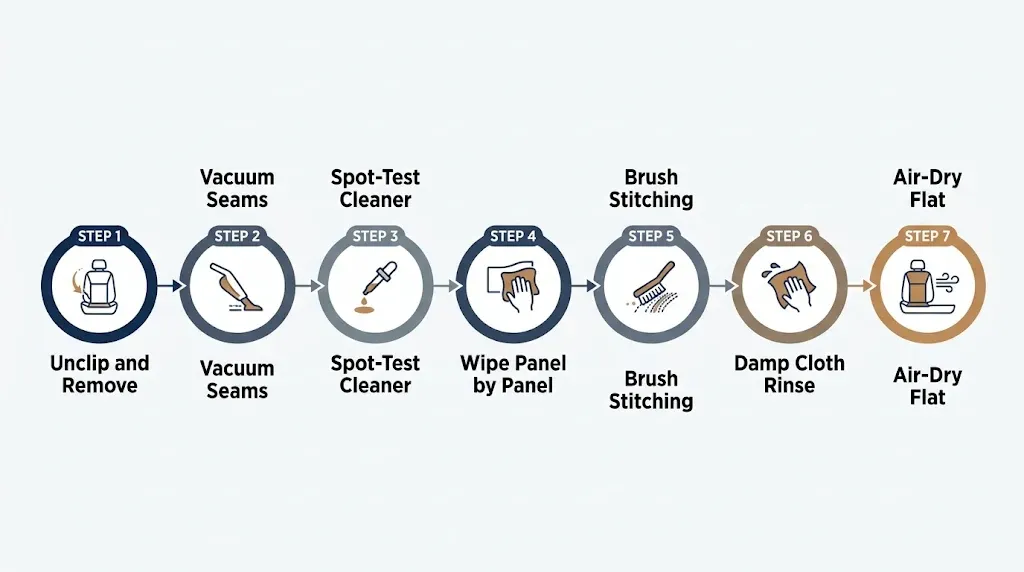
Remove the cover if you can, vacuum it, spot-test your cleaner, wipe it panel by panel, rinse with a clean damp cloth, and let it air-dry flat. The whole job takes 20 to 40 minutes for a full set, plus drying time, and rushing the dry is the step most people get wrong.
Work in the shade or inside the garage, since sun heats the leather and dries cleaner on the surface before you wipe it off. Heat also makes stains set faster, so a cool, shaded spot gives you time to work.
Before you remove anything, check how the cover fits around side airbags and seat controls. Pro tip: check your owner’s manual and the NHTSA recall and safety guidance before removing or refitting a cover that sits over a side airbag, and refit it exactly as it was.
- Remove the cover: Unclip straps and hooks in order, and note how each one routes, so refitting takes minutes. If you need the removal steps in detail, see how to remove a car seat cover for cleaning.
- Vacuum first: Run a brush-head vacuum over every panel and seam to lift grit that would scratch the finish.
- Spot-test the cleaner: Apply a small amount to a hidden edge, wait a few minutes, and check for color change.
- Wipe panel by panel: Spray cleaner on the cloth, not the leather, and wipe in small circles with light pressure.
- Brush the grain: Use the soft brush lightly on textured areas and stitching, then wipe the loosened dirt away.
- Rinse the cloth: Wipe each panel again with a clean, damp cloth to lift cleaner residue.
- Dry the surface: Pat the cover with a dry microfiber cloth, then lay it flat to air-dry fully.
For a stain, work from the outside edge toward the center, so you do not spread it. Let the cleaner sit for a minute on a tough spot, then wipe and repeat, rather than scrubbing hard once.
Do not refit a cover that still feels cool or damp to the touch. Trapped moisture breeds odor and mildew, and it can stain the factory seat underneath.
Section Takeaway: Remove, vacuum, spot-test, wipe panel by panel, rinse, and air-dry flat, and never refit a cover that still feels damp.
Can You Machine Wash Leather Car Seat Covers?
No, do not machine wash real leather car seat covers, since the agitation, heat, and detergent can shrink, stiffen, and crack the hide. Some faux leather covers list machine washing on the label, but hand washing still lasts longer and keeps the fit true.
The label is the only authority here, and a missing label means hand wash only. I have seen a faux leather set survive one cold gentle cycle, then fit loose and wrinkled after the second, so even a washable label is not a promise of no wear.
| Method | Best for | Main risk | My verdict |
|---|---|---|---|
| Hand wash | Real and faux leather | Low, if water stays light | Safest choice |
| Wipe-down on the seat | Fixed covers, light dirt | Missed seams and edges | Good for upkeep |
| Machine wash, cold and gentle | Some faux leather only | Shrinkage, loose fit, peeling | Only if the label allows it |
| Professional clean | Deep stains, real leather | Cost and turnaround time | Worth it for tough jobs |
If a faux leather label does allow machine washing, use cold water, a gentle cycle, and mild detergent, then air-dry flat. Skip the dryer completely, since heat is what shrinks the backing and peels the surface.
Shrinkage matters more than it sounds, because a cover that fit snug can turn loose and bunch after one hot wash. That loose fit is why custom-fit leather seat covers need extra care, as their shape is cut to your exact seat.
What about steam cleaners and pressure washers?
Skip both on leather seat covers, since steam forces moisture deep into the hide and a pressure washer can tear stitching and strip the finish. A steam cleaner suits carpets and fabric, not a sealed leather surface that needs to stay dry inside.
For a deep stain on real leather, a professional detailer is the safer spend. RepairPal lists local shops and service guidance, and a pro can test cleaners on a hidden spot before touching the visible panels.
Section Takeaway: Never machine wash real leather, and only machine wash faux leather when the label clearly allows it, on cold and gentle, then air-dry.
What Mistakes Damage Leather Car Seat Covers?
The most common mistakes are harsh cleaners, too much water, scrubbing, heat drying, and skipping conditioner. Each one is easy to make, and each one shows up weeks later as stiffness, fading, or fine cracks.
I made the scrubbing mistake early on, with a stiff brush on a dark brown set. The dirt came off, and so did a patch of finish, which left a light spot I could see every time I opened the door.
- Harsh soap: Dish soap and all-purpose cleaners strip oils and dull the finish fast.
- Soaking the cover: Standing water warps the hide and soaks the foam or backing beneath it.
- Scrubbing hard: Stiff brushes and pads scratch the surface and wear the color away.
- Heat drying: A dryer, a heater vent, or hot sun stiffens leather and can shrink it.
- Skipping conditioner: Real leather dries out after washing, and cracks follow if you never feed it.
- Cleaning in full sun: Cleaner dries on the surface before you wipe it, and leaves streaks and spots.
Another quiet mistake is refitting a cover while it is still damp. Moisture trapped against the factory seat causes odor, and it can leave a musty smell that takes weeks to clear.
Edmunds covers interior care in its car-ownership guidance, and the same gentle, test-first rule runs through it. Treat leather like skin, not like a floor mat, and it will stay soft for years.
Section Takeaway: Harsh cleaners, soaking, scrubbing, and heat drying cause most leather damage, and all four are easy to avoid.
How Do You Dry and Condition Leather Seat Covers After Washing?
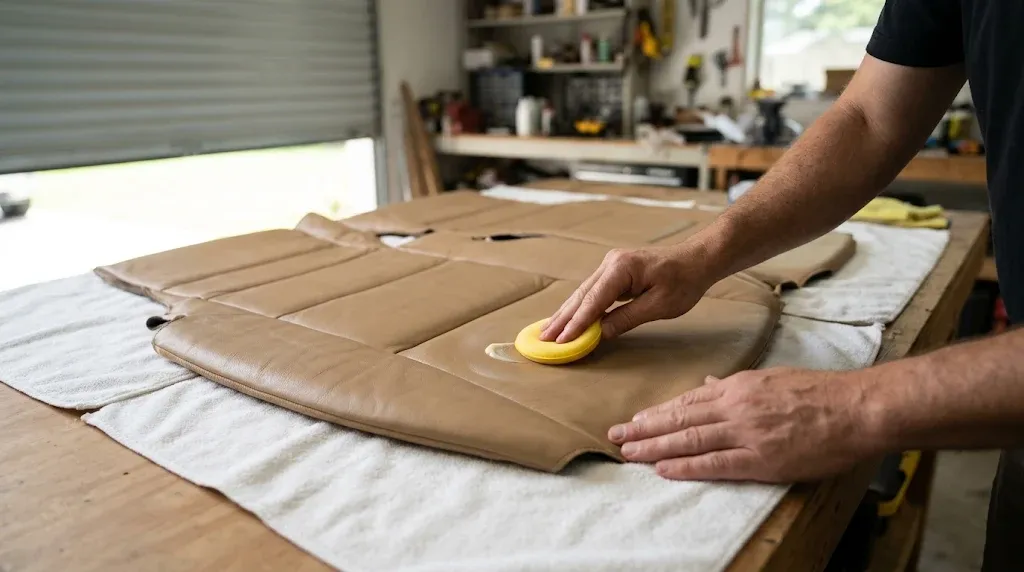
Air-dry the cover flat in a shaded, ventilated spot until it feels dry on both sides, then apply a thin coat of leather conditioner to real leather. Drying usually takes a few hours, and conditioning takes five minutes, yet both steps decide how the cover feels next month.
Lay the cover flat on a clean towel, and flip it once during drying so both sides get air. Hanging it by one edge stretches the shape, and a bunched cover dries uneven and fits loose after.
- Shade and airflow: A garage with the door cracked open, or a shaded room with a fan, works well.
- No direct heat: Keep the cover away from radiators, heater vents, and a hot dashboard.
- Flip once: Turn the cover over halfway through, so the backing dries too.
- Touch test: Press the thickest seam, and wait until it feels dry, not just cool.
How do you condition leather after washing?
Put a small amount of conditioner on a clean microfiber cloth, not straight on the leather. Rub it in with small circles, cover one panel at a time, and buff off any excess with a dry cloth after a few minutes.
Use a thin coat, since too much conditioner leaves a greasy feel and attracts dust. Faux leather needs no conditioner, and a quick wipe with a damp cloth is enough to restore its sheen.
Condition real leather every few months, or after each wash, whichever comes first. As of 2026, most leather care guides still follow the same rule, and it holds up in my own cars: wash gently, dry fully, condition lightly.
If you want a fuller view of quality options before your next set, check leather car seat cover brands and compare materials and fit. A better-made cover is easier to wash, since the stitching and backing hold up through more cleaning cycles.
Section Takeaway: Air-dry flat in the shade, wait until the cover is dry on both sides, then condition real leather with one thin coat.
Frequently Asked Questions
Can you put leather car seat covers in the washing machine?
No, not real leather, since machine agitation, heat, and detergent can shrink and crack it. Some faux leather covers allow a cold, gentle cycle if the label says so, but hand washing is safer and keeps the fit true.
Can you use dish soap on leather car seat covers?
No, dish soap strips the oils and protective finish from real leather, and it leaves the surface dry and dull. Use a pH-neutral leather cleaner instead, or a mild soap solution only on faux leather.
How often should you wash leather car seat covers?
Wipe them down every few weeks, and hand wash them every two to three months, or sooner after a spill. Cars with kids, pets, or daily work use need washing more often than a weekend car.
Will washing leather car seat covers fade or shrink them?
It can, if you use hot water, harsh cleaners, or a tumble dryer, since heat and strong chemicals damage the dye and the hide. Lukewarm water, a gentle cleaner, and air-drying flat keep color and fit intact.
Can you wash leather seat covers with heated seats or side airbags?
Yes, you can wash the covers, but refit them exactly as they were, so heating elements and airbag seams stay clear. Check your owner’s manual first, and do not cover an airbag seam with a thick or altered panel.
Do leather car seat covers need conditioner after washing?
Real leather does, since washing removes some surface oils and conditioner restores softness and stops cracking. Faux leather does not need conditioner, and a clean, damp wipe is enough after washing.
Leather covers reward gentle care, so wash by hand, dry fully, and condition lightly, and they will stay soft and clean for years.

Daniel Brooks is an automotive writer and product researcher focused on car accessories, car tech, maintenance, and practical driving guides. At Plug-in Car World, he helps drivers make smarter automotive decisions through honest reviews and research-driven content.
