Why Is My Car Wet Under the Cover? (The Real Reason — And What to Do)
⚡ Quick Answer
Your car is wet under the cover because of condensation — not a leaking cover. When overnight air cools below the dew point, water vapor turns to liquid on your car’s surface. This is completely normal with breathable covers. A non-breathable cover makes it worse by trapping moisture inside permanently.
The 3 main reasons your car is wet under the cover:
- Condensation: Overnight temperature drops cause water vapor to collect on car surfaces.
- Rain seepage: Light rain can pass through loose or low-quality cover fabric.
- Covered while wet: Covering a damp car traps moisture inside the cover.
What you should do right now:
-
✓
Lift the cover and let both car and cover dry fully. -
✓
Switch to a breathable cover so moisture evaporates quickly. -
✓
Never cover a wet car — always dry it first.
You pull off your car cover in the morning and run your hand across the hood. It’s damp. The car was dry when you covered it. Nothing leaked. So what happened? Michael here — and this is one of the most common questions car cover owners ask. The answer surprises most people, and understanding it can save your paint, your metal, and your money.
📌 Key Takeaways
-
→
Condensation is normal — any car parked outside will get damp overnight, even under a cover. -
→
Non-breathable covers trap moisture permanently — breathable covers let it evaporate within hours. -
→
Covering a wet car creates a sealed humid environment that leads to rust and mold in weeks. -
→
Lifting your cover once a month in cold months prevents trapped moisture from causing long-term damage.
Why Is My Car Wet Under the Cover?
The most common reason is condensation — and your cover isn’t broken. When the air temperature drops overnight, the air loses its ability to hold water vapor. That vapor turns into liquid water and settles on cool surfaces. Your car’s metal panels are one of those surfaces.
This process happens whether your car has a cover or not. The difference is that a cover traps the air around the car. That trapped air goes through the same dew-point process and deposits moisture directly onto your paint.
Here’s what’s actually happening at a science level. The dew point is the temperature at which air becomes fully saturated with water vapor. Once air cools to that point, condensation forms. Overnight temperature swings — common in spring, autumn, and coastal areas — create the perfect conditions for this every single night.
✅ Tip
If your car sits on grass or gravel rather than a hard concrete surface, it will get wetter. Moisture from the ground rises and collects under the cover. Parking on concrete significantly reduces this effect.
So this isn’t your cover failing. This is basic physics. The real question is what your cover does with that moisture once it forms — and that’s where the type of cover makes all the difference. More on that in the next section.
Is This Normal, or Is Something Wrong?
Finding moisture under a breathable car cover in the morning is completely normal. No outdoor car cover can stop condensation from forming — because condensation forms from air that’s already inside the cover, not water coming through it. Even a perfect cover can’t change the laws of thermodynamics.
What matters is whether that moisture stays or goes. A breathable cover lets water vapor escape through its fabric as temperatures rise throughout the morning. A non-breathable or “100% waterproof” cover seals that moisture in — and that’s when problems start.
📋 Normal vs. Problem Moisture: How to Tell
-
Normal: Light dampness on the paint in the morning that dries within 1-2 hours once the cover is lifted. -
Normal: Light “blooming” — a hazy film on the paint that disappears as the surface dries. -
Problem: Water stays on the car all day, even after removing the cover — sign of a non-breathable cover sealing moisture in. -
Problem: Mold, mildew smell, or rust spots forming — moisture is being trapped long-term.
You might be thinking: “But the cover is supposed to keep water out.” Here’s why that thinking misses the point. The best car covers are designed to be water-resistant on the outside and breathable on the inside. They repel rain from above while still letting trapped moisture escape upward through the fabric.
If your car dries fully by midday — you’re fine. If moisture lingers all day under the cover — that’s the problem to solve. Read on for what causes each situation.
Does Rain Actually Seep Through a Car Cover?
Yes — in heavy rain, water can seep through most car covers. But here’s the thing: most quality covers are designed to let this happen. This isn’t a flaw. It’s a trade-off that protects your car better long-term.
A car cover that is 100% waterproof — meaning zero breathability — will keep rain out but trap every drop of condensation inside. That sealed environment becomes a breeding ground for mold, mildew, and rust. Industry experts and cover manufacturers consistently warn against fully waterproof, non-breathable covers for outdoor use.
Here’s how different cover types handle rain vs. moisture — and which matters more for your car’s long-term health.
The right cover repels rain from outside while still letting trapped moisture breathe out — not one or the other.
For deeper reading on how breathable car cover materials work, Coverstore’s breathable cover guide explains the fabric science clearly.
The real risk from heavy rain isn’t dampness — it’s pooling. When water pools on top of a cover (especially in dips around the roof or trunk), sustained pressure can push it through the fabric. This is when you’ll find significant wetness under the cover after a storm, not just morning dew.
Is It Bad to Cover a Wet Car?
Yes — covering a wet car is one of the worst things you can do. When you put a cover on a damp vehicle, you seal that water against the paint and metal with nowhere to go. Even a breathable cover can’t fully compensate for a car that’s soaked when you apply it.
The space between the cover and your car’s surface becomes a warm, humid chamber. That’s exactly the right conditions for mold growth, mildew smell, and — given enough time — rust formation on exposed metal edges and panel seams.
⚠️ Warning
Never cover your car right after washing it or when it’s still wet from rain. Always dry the car completely first — then apply the cover. Doing this once is fine; doing it regularly over weeks will cause paint and metal damage that costs hundreds of dollars to repair.
The same rule applies to the cover itself. If your cover got soaked in a storm, remove it and let both the car and the cover dry separately before putting it back on. A wet cover pressed against dry paint still traps moisture between the two surfaces.
So what should you do after a heavy rainstorm? Remove the cover, dry the car with a microfiber towel if needed, let the cover air dry fully, then reapply. It takes 15 minutes and saves you from expensive rust repair later.
Can a Wet Car Under a Cover Cause Rust or Mold?
Yes — and it’s faster than most people expect. Moisture trapped under a non-breathable cover creates a sealed, humid environment. Rust begins forming on bare metal edges, chips in the paint, and exposed panel seams within weeks of sustained dampness. Mold and mildew can appear on rubber seals and interior components if moisture gets into door gaps.
But here’s the nuance: brief condensation under a breathable cover does not cause rust. The problem is sustained moisture — water that stays trapped for days or weeks because it can’t evaporate. This only happens with the wrong cover or a covered wet car.
24hrs
How long mold needs to start growing in a sealed moist environment
2hrs
How fast condensation dries under a quality breathable cover on a warm morning
$300+
Typical cost of professional rust spot treatment and repainting
The color of your cover matters too. Some non-breathable covers bleed dye when wet — and that dye can transfer directly onto your car’s paint. This is a double problem: trapped moisture plus color staining.
The fix is simple. Use a breathable, water-resistant outdoor cover. Normal condensation will dry on its own within hours. You’ll never deal with trapped moisture, mold, or rust from routine overnight parking. More on choosing the right cover in the next section.
What Most People Get Wrong About Car Covers and Moisture
Myth 1: “A waterproof cover is better than a breathable one”
This is the most damaging belief in car cover ownership. A 100% waterproof cover — meaning no breathability — traps condensation inside permanently. The car sits in a sealed humid bubble every night. The right cover is water-resistant on the outside and breathable on the inside. Those are not the same thing.
Myth 2: “If my car is wet under the cover, the cover is defective”
Morning dampness is not a cover failure. No cover can prevent condensation — it forms from air already trapped inside the cover. A quality breathable cover’s job is to let that moisture escape quickly, not to prevent it from forming. Finding light dampness in the morning is working as designed.
Myth 3: “Leaving the cover on all winter is fine without checking”
Many car owners cover a vehicle in October and check on it in March. This is a real risk. In cold months, temperatures don’t rise high enough for moisture to evaporate through the cover. The car stays damp for weeks. Best practice: lift the cover at least once a month in winter to let trapped moisture escape and let the car breathe for a few hours.
💡 Key Insight
A car cover should never be “set and forget.” The cover is a tool — and like any tool, it needs occasional attention. A 10-minute monthly check in winter is the difference between a car that emerges from winter pristine and one that needs a paint correction.
How to Stop Your Car from Getting Wet Under the Cover
You can’t stop condensation entirely — but you can make sure it never stays long enough to cause damage. The solution comes down to 3 things: the right cover, correct use habits, and seasonal attention.
🔢 Step-by-Step: How to Minimize Moisture Under Your Car Cover
-
1
Choose a breathable, water-resistant cover
Look for multi-layer covers with a soft inner lining and water-resistant outer fabric. Avoid 100% waterproof plastic covers for outdoor storage.
-
2
Always cover a dry car
Never apply the cover while the car is still wet from rain or a wash. Dry the car fully — even a quick wipe with a microfiber towel is enough.
-
3
Park on concrete, not grass or gravel
Ground moisture rises and collects under the cover. Concrete reduces this significantly compared to gravel or lawn surfaces.
-
4
Lift the cover at least once a month in winter
Cold temperatures prevent moisture from evaporating through the cover. Lifting it for a few hours monthly lets the car breathe and moisture escape.
-
✓
After a storm: remove, dry, reapply
After heavy rain, remove the cover, let both car and cover dry completely, then reapply. This 15-minute habit prevents weeks of trapped moisture damage.
If you’re still using a budget single-layer cover or a plastic tarp, that’s your first upgrade to make. A quality multi-layer breathable cover handles moisture correctly from the start — and the difference to your car’s paint and metal long-term is significant.
Recommended Product
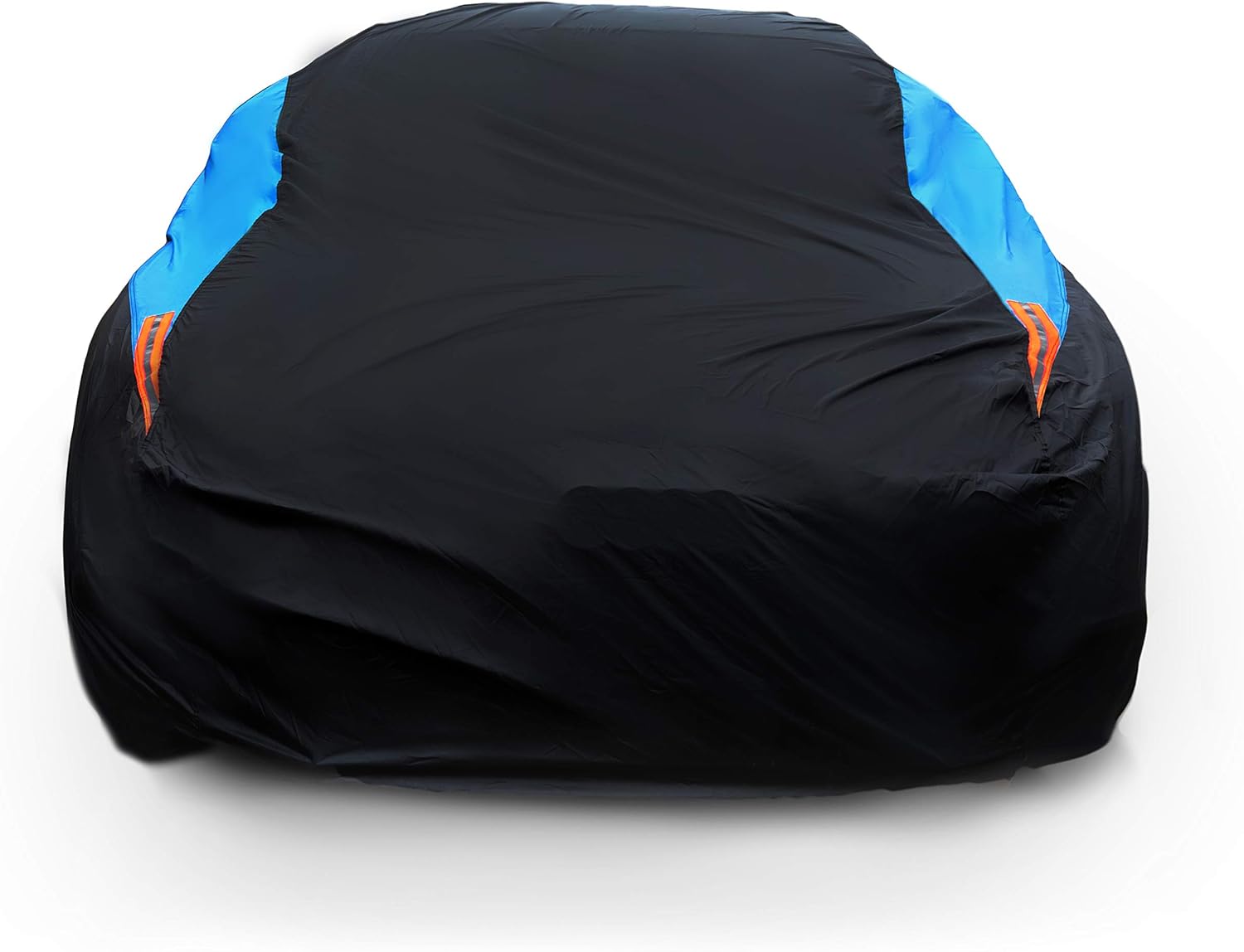
Kayme 6 Layers Car Cover Waterproof All Weather for Automobiles, Outdoor Full Cover Rain Sun UV Protection with Zipper Cotton, Universal Fit for Sedan (194-208 inch)
★★★★☆ Highly rated on Amazon
A 6-layer cover with a soft cotton inner lining and water-resistant outer fabric — it repels rain while staying breathable, which is exactly what prevents the trapped-moisture problem described in this article.
As an Amazon Associate, we earn from qualifying purchases.
Should I Remove the Cover After Rain?
It depends on the cover type and how much rain fell. After light rain, a quality breathable cover will dry on its own within a few hours — no action needed. After heavy rain or a storm, it’s worth removing the cover to check for pooled water and let both surfaces dry properly.
The Classic Additions condensation guide recommends lifting the cover in winter whenever temperatures stay consistently cold, since moisture can’t evaporate if the air never warms up. This is the one seasonal habit that prevents most long-term cover-related moisture damage.
Here’s a simple rule: if your cover feels heavy, soaked, or cold to the touch — remove it. Let both the car and the cover dry in open air before reapplying. This one step eliminates the risk of trapped moisture almost entirely.
Conclusion
A wet car under the cover is almost always condensation — and that’s normal. The real danger isn’t the morning dew. It’s a non-breathable cover or a car covered while wet, both of which trap moisture with no way out.
Switch to a quality breathable outdoor cover, always cover a dry car, and lift the cover once a month in cold weather. Those 3 habits will keep your car’s paint and metal in excellent condition year-round.
One thing to do right now: Pull off your cover and check the inside lining. If it feels like plastic or vinyl with no air movement through it — that’s a non-breathable cover. Replace it this week before the next rainy spell causes damage that’s far more expensive to fix.
Frequently Asked Questions
Why does condensation form under a car cover overnight?
Condensation forms when overnight air cools below the dew point — the temperature at which air can no longer hold its water vapor. That vapor becomes liquid and settles on cool surfaces like your car’s paint. This happens regardless of cover type, as the air trapped inside the cover goes through the same process.
Do breathable car covers keep the car completely dry?
No — breathable covers don’t prevent condensation from forming, but they allow it to evaporate quickly once temperatures rise in the morning. You may still find light dampness under a breathable cover at dawn. That dampness typically dries within 1-2 hours, causing no harm to paint or metal.
Is it bad to cover a car with a tarp?
Yes — plastic tarps are 100% non-breathable. They block rain from above but permanently trap all condensation underneath. This creates a humid sealed environment that accelerates rust, mold growth, and paint damage far faster than leaving your car uncovered. A breathable car cover is always better than a tarp for outdoor storage.
Can leaving a car cover on cause rust?
Yes — if the cover is non-breathable or the car was covered while wet. Trapped moisture against metal edges, paint chips, and panel seams creates the exact conditions that cause rust. A breathable cover used correctly does not cause rust — it prevents it by allowing moisture to escape before it can damage metal.
How often should I remove my car cover in winter?
At least once a month during cold months. Winter temperatures often stay too low for moisture to evaporate through the cover. Lifting the cover monthly for a few hours lets trapped moisture escape and prevents the sustained dampness that leads to rust and mold in long-term storage situations.
What happens if I cover a wet car with a car cover?
You seal water directly against the paint and metal. Even a breathable cover can’t fully compensate for a car that’s soaked when covered. The trapped moisture creates ideal conditions for mold growth (within 24 hours in severe cases) and paint damage. Always dry the car fully — even a quick wipe — before applying the cover.
Why is my car wetter under the cover when parked on grass?
Ground moisture from grass, soil, and gravel rises and collects under the cover. Concrete hardstanding significantly reduces this effect because it doesn’t release the same level of ground moisture. If you must park on grass or gravel long-term, check under the cover more often and lift it regularly to let accumulated ground moisture escape.

Daniel Brooks is an automotive writer and product researcher focused on car accessories, car tech, maintenance, and practical driving guides. At Plug-in Car World, he helps drivers make smarter automotive decisions through honest reviews and research-driven content.