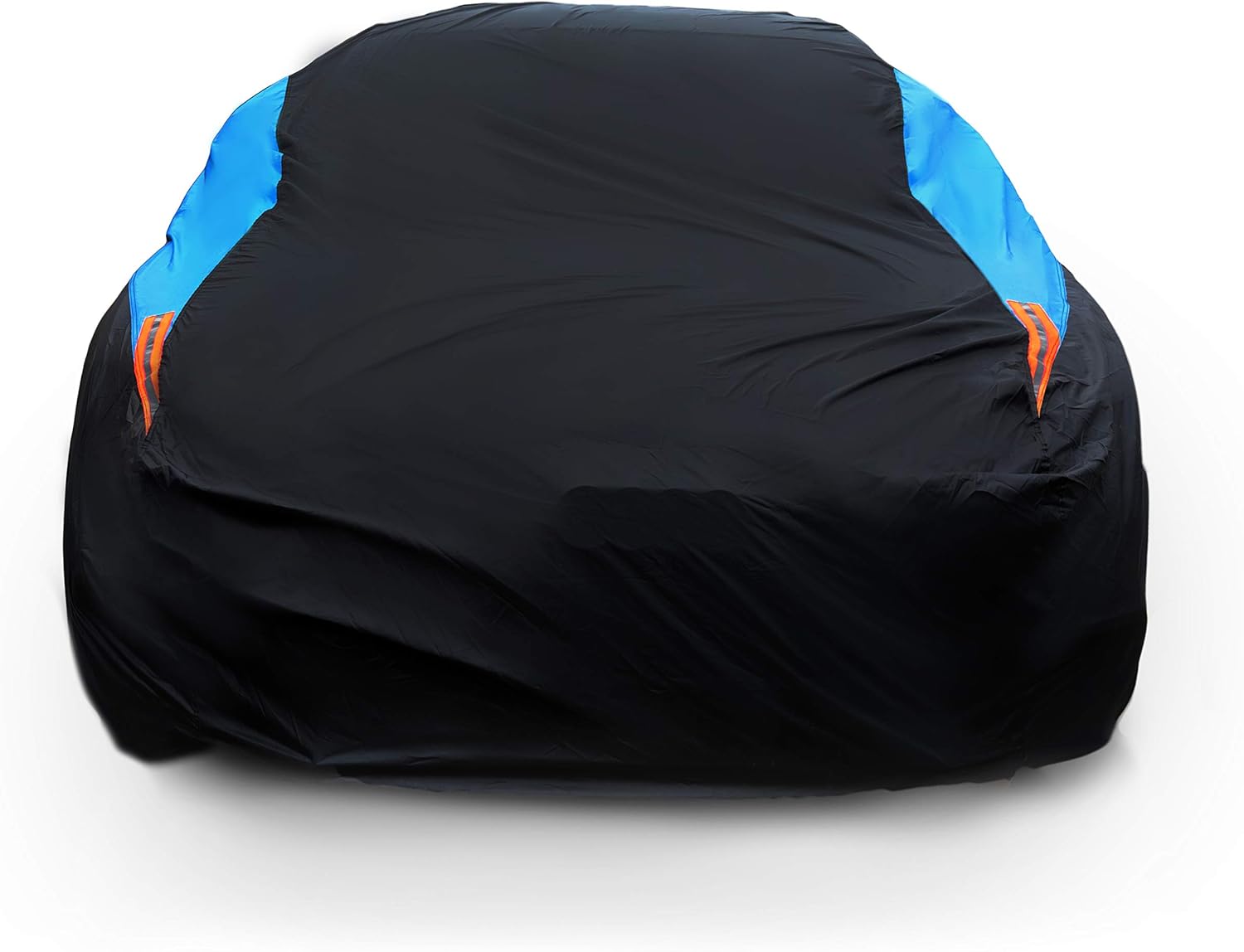
Mildew Under a Car Cover: Complete Removal Guide
⚡ Quick Answer
Mildew under a car cover forms when trapped moisture can’t escape. Remove it by lifting the cover, vacuuming loose spores, scrubbing with a white vinegar solution, and drying the car fully in sunlight. Always air out and re-apply a breathable cover only on a dry car.
How to Remove Mildew Under a Car Cover:
-
1
Remove the cover and vacuum all mildew-affected surfaces -
2
Scrub with white vinegar or a mildew-specific cleaner for 5–10 minutes -
3
Dry the car fully in direct sunlight with doors open -
4
Switch to a breathable cover and only cover a fully dry car
Mistakes That Make Mildew Worse:
-
✓
Never put the cover back on a damp car -
✓
Avoid using air freshener — it hides returning mildew smell -
✓
Skip waterproof covers for storage — use breathable fabric only
You pull off your car cover and get hit with that musty, earthy smell — the unmistakable sign of mildew. It’s not just unpleasant. Left untreated, mildew spreads fast and starts eating into fabric, paint, and upholstery.
I’m Michael, and in this guide you’ll get a clear, step-by-step removal process, the real reasons mildew forms under a cover, and exactly how to stop it from coming back.
📌 Key Takeaways
-
→
Mildew needs 3 things: moisture, organic material, and time — car covers trap all 3 easily. -
→
White vinegar (1:1 with water) kills mild mildew on most car surfaces without damaging paint. -
→
Full drying takes 2–3 hours in direct sunlight with a fan — surface-dry is not the same as fully dry. -
→
Non-breathable covers cause mildew even with zero rain — trapped humidity is enough.
Why Does Mildew Grow Under a Car Cover?
Mildew forms under a car cover when moisture gets trapped and can’t escape. Your car cover creates a sealed microclimate. If the car is even slightly damp underneath, humidity can’t leave — and mildew spores don’t need much to get started.
Mildew needs 3 things to grow: moisture, an organic surface to feed on, and time. Car covers give it all 3. The paint, fabric interior, rubber seals, and carpeting all provide organic material for mildew to feed on.
But here’s the thing. The cover itself doesn’t cause the problem. The problem is almost always a non-breathable cover material, a damp car, or both.
📋 Common Reasons Mildew Forms Under a Car Cover
-
Non-breathable cover: Waterproof covers seal in humidity and create a warm, damp environment. -
Cover applied wet: Covering a car after rain — before it fully dries — traps moisture under the cover instantly. -
High humidity climate: Humid air carries enough moisture to support mildew growth without any rain at all. -
Interior leaks: Leaky weather stripping or window seals let water inside — and the cover then traps it. -
Infrequent airing: Cars left covered for weeks without being aired out let moisture build over time.
So if you find mildew, the first question to ask is: was my car dry when I covered it? The answer is usually no — or the cover material didn’t allow moisture to escape.
Next, let’s remove the mildew you already have.
How to Remove Mildew Under a Car Cover: Step-by-Step
Removing mildew from under a car cover takes less than 2 hours if you work methodically. The key is dealing with both the car surface and the cover itself — skipping either one means mildew comes right back.
Put on gloves and an N-95 mask before you start. Mildew spores become airborne during cleaning and can irritate your lungs. The EPA’s mold guidance recommends minimum PPE — gloves, eye protection, and an N-95 respirator — for any mold or mildew cleanup task.
🔢 Step-by-Step: Mildew Removal Under a Car Cover
-
1
Remove the cover and move the car into sunlight
Sun exposure kills mildew spores and speeds drying. Park with all doors and windows open immediately.
-
2
Vacuum all affected surfaces thoroughly
Vacuum the paint surface, door jambs, and any visible mildew spots to lift loose spores before wet cleaning. Focus on door seals, floor mats, and under-seat areas.
-
3
Apply your cleaner and let it soak 5–10 minutes
For exterior paint: use a 1:1 mix of white vinegar and water. For upholstery and carpet: use a fabric-safe mildew remover or the same vinegar mix. Let it soak before scrubbing.
-
4
Scrub with a stiff brush, then wipe clean
Scrub firmly to lift embedded mildew. Wipe away residue with a clean microfiber cloth. Repeat the spray-and-scrub process on stubborn spots.
-
5
Spray a 1:1 isopropyl alcohol and water mix to neutralize spores
This final step kills remaining spores the scrub missed. Wipe down with a dry cloth and leave the car in sunlight with doors open for at least 2 hours.
-
6
Wash and dry the car cover separately
The cover carries mildew spores too. Wash it with a mild detergent and let it air dry fully in sunlight before storing or re-applying.
-
✓
Only re-apply the cover once everything is fully dry
Covering a damp car restarts the mildew cycle within days. Wait until both the car and the cover are completely dry — not just surface-dry.
⚠️ Warning
Don’t use air freshener after cleaning. It hides the smell of returning mildew — which you actually want to detect early. Wait at least 3 days before using any air freshener in the car.
For stubborn growth that won’t respond to vinegar, try an enzyme cleaner containing protease or lipase. These enzymes break down the proteins and fatty components that mildew feeds on — making them effective for deeply embedded cases.
Best Products to Remove Mildew From Under a Car Cover
The right cleaner makes a real difference. The wrong one can strip paint, bleach fabric, or just fail to kill spores at the root. Here’s what works for each surface type under a car cover situation.
Match your cleaner to the surface you’re treating — paint and glass need a gentler approach than carpet or fabric seats.
Test any cleaner on a hidden spot first — especially on fabric and vinyl — to confirm it won’t cause discoloration.
Recommended Product
Meguiar’s D10101 All Purpose Cleaner — 128 oz Concentrate
★★★★★ 4.7 stars — Highly rated on Amazon
A professional-grade concentrate that tackles mildew on carpet, upholstery, vinyl, and leather — and dilutes to different strengths for different surfaces under a car cover.
As an Amazon Associate, we earn from qualifying purchases.
For really deep mildew growth in carpet padding or seat foam, a steam cleaner is your best tool. Steam reaches temperatures that kill spores deep in fabric — somewhere a spray can’t always reach.
How to Dry Your Car Fully After Mildew Removal
Drying is where most people fail. The surface feels dry after an hour — but carpet padding, seat foam, and door insulation hold moisture for much longer. Covering the car before these dry fully means mildew returns within days.
A targeted fan directed at wet spots dries them in 2–3 hours. Leaving the car in direct sun with all doors and windows open for a full day handles the rest.
✅ Tip
Run a portable dehumidifier inside the car with the windows slightly cracked during drying. It pulls hidden moisture from foam and carpet faster than sun alone. This matters most in humid climates where air drying is slower.
After the visible dry, lift your floor mats and press down on the carpet underneath. If it feels cool or damp — it’s still wet. Don’t cover the car yet.
Air movement is the most effective drying tool you have. According to mildew prevention research published through the University of Florida IFAS Extension, air circulation directly removes moisture by carrying it away — making electric fans in enclosed spaces far more effective than waiting for natural drying alone.
Is Your Car Cover Actually Causing the Mildew?
Your cover may be the problem — but not in the way you think. The cover itself doesn’t create mildew. What it does is trap moisture that was already there. A breathable cover lets humidity escape. A non-breathable one seals it in.
Older or cheaper covers often use non-porous materials that act like plastic wrap over your car. Any moisture between the cover and the paint stays there — warm, dark, and undisturbed — which is exactly what mildew needs.
| Feature | Non-Breathable Cover | Breathable Cover ✓ Best |
|---|---|---|
| Moisture escape | Trapped — no escape path | ✓ Vents out continuously |
| Mildew risk | High — especially in humid areas | ✓ Low with proper use |
| Best use case | Short-term weather events only | ✓ Daily use and storage |
| Paint safety | Can trap abrasives against paint | ✓ Soft inner lining standard |
If you’re storing a car long-term, a breathable multi-layer cover is the only real option. Fully waterproof covers are fine for short rain events, but not for storage.
You might be thinking: “My car is under a carport — it never gets wet.” Here’s why that doesn’t matter. High humidity alone — even without rain — provides enough airborne moisture for mildew to grow on a covered car. If your area has relative humidity above 70% regularly, a non-breathable cover will cause issues regardless of rainfall.
What Most People Get Wrong About Mildew Under Car Covers
Most people treat mildew as a cleaning problem. It’s actually a moisture problem. That single misunderstanding is why mildew so often returns — even after a thorough cleaning job.
If you only clean but don’t fix the moisture source, you’ll be back scrubbing in a few weeks.
📋 Common Mildew Misconceptions — Corrected
-
“The cover caused the mildew.” The cover traps moisture that was already there. Moisture is the real cause — the cover is just the container. -
“Cold weather kills mildew.” Cold slows growth but doesn’t kill spores. Mildew stays dormant and reactivates when temperature and humidity rise again. -
“Surface-dry means fully dry.” Carpet padding and seat foam stay wet long after the surface feels dry. They’re the hidden fuel source for recurring mildew.
💡 Key Insight
Mildew prevention is moisture management, not cleaning. Fix the moisture source first — whether that’s a non-breathable cover, a leaky seal, or covering a damp car — and mildew stops returning on its own.
How to Prevent Mildew Under a Car Cover for Good
Preventing mildew long-term comes down to 3 habits: cover only a dry car, use a breathable cover, and air the car out at least every 2 weeks. These 3 steps together make mildew return almost impossible.
Air movement is the most powerful prevention tool you have. When the air around your car can circulate freely, moisture can’t build up. A sealed cover over a damp car in a humid garage is the worst possible situation.
✓ Mildew Prevention Checklist for Car Covers
-
✓
Always dry the car fully before putting the cover on — even after light rain -
✓
Use only a breathable, multi-layer cover for storage or regular use -
✓
Air the car out every 14 days — remove the cover and open windows for several hours -
✓
Check and repair weather stripping seals — leaks let water into the interior under the cover -
✓
Place a moisture absorber (desiccant pack) inside the car during long-term storage -
✓
Keep garage air flowing — electric fans in a wall or window reduce ambient humidity significantly
One more thing most people overlook: condition your car’s leather and fabric after cleaning. Conditioned surfaces create a light moisture-resistant barrier — making it harder for mildew to take hold even if humidity does build up.
Now let’s look at when the problem has gone beyond a DIY fix.
When Should You Call a Professional Detailer?
Most mildew under a car cover is a manageable DIY job. But some cases need professional help — and knowing when to make that call saves you from making a small problem much worse.
A professional detailer has access to steam extractors, commercial-grade enzyme cleaners, and ozone generators that reach areas a home cleaning simply can’t. Ozone generators, for example, convert oxygen into ozone — which neutralizes organic odors and spores at a molecular level.
🎯 DIY or Professional — Which Is Right for You?
If you have…
Light musty smell, small visible spots, recent mildew discovery
→ DIY removal works fine
If you have…
Strong persistent smell after cleaning, large coverage, deep carpet growth
→ Use a professional detailer
If you have…
Mildew that returns within days of cleaning, possible flooding history
→ Fix moisture source + professional clean
If mildew keeps coming back after thorough cleaning, the problem is almost always hidden moisture that never fully dried. Carpet padding under the main layer and seat foam hold moisture for weeks. A professional extractor removes it properly.
Conclusion
Mildew under a car cover comes down to one thing: trapped moisture. Remove it with vinegar or a quality cleaner, dry the car completely, and switch to a breathable cover — and it won’t come back.
The most common mistake is covering a slightly damp car and wondering why mildew returns. Don’t mask the smell with air freshener. Fix the source.
One thing to do right now: Lift your car cover, press your hand firmly into the carpet near the door sill, and check if it feels cool or damp. If it does — start the drying process today before covering the car again.
Frequently Asked Questions
Can a car cover cause mildew inside the car?
A car cover doesn’t directly cause interior mildew, but a non-breathable cover traps humidity inside — which can enter through leaky seals. If interior moisture can’t escape, mildew will grow on seats and carpet even when the outside stays dry.
Does white vinegar really kill mildew on car paint?
Yes — white vinegar diluted 1:1 with water kills mild mildew on most car surfaces. It’s effective for paint and glass but should not sit longer than 10 minutes. Always rinse thoroughly with clean water afterward to prevent any acid residue from affecting the finish.
How long does it take for mildew to grow under a car cover?
Mildew can begin forming within 24–48 hours when conditions are right — meaning a damp car covered by a non-breathable material in warm, humid weather. In cooler conditions, growth is slower, but spores can stay dormant and reactivate when humidity rises again.
What is the difference between mold and mildew on a car?
Mildew is a surface-level fungal growth — typically white or gray — that stays on top of materials and is easier to clean. Mold penetrates deeper into surfaces, appears in darker colors (green, black), and requires more aggressive treatment. Both grow from moisture and spread through airborne spores.
Is mildew under a car cover dangerous to health?
Yes — mildew and mold spores can cause respiratory issues, allergic reactions, and irritation when inhaled during cleaning or when driving with active growth inside a car. Always wear an N-95 mask and gloves during removal, and ventilate the car fully after treatment.
How often should I air out a covered car to prevent mildew?
Remove the car cover and open all windows at least every 14 days during storage. In high-humidity climates — where relative humidity regularly exceeds 70% — air it out every 7 days. This prevents moisture from building up to levels where mildew can take hold.
Can mildew under a car cover damage the paint?
Mildew on exterior paint won’t eat through clear coat quickly, but prolonged growth — especially on paint with micro-scratches or worn wax — can stain and etch the surface over time. Interior mildew is more damaging, as it degrades fabric, foam, and rubber materials and can corrode electronic connections if moisture reaches wiring.

Daniel Brooks is an automotive writer and product researcher focused on car accessories, car tech, maintenance, and practical driving guides. At Plug-in Car World, he helps drivers make smarter automotive decisions through honest reviews and research-driven content.