How to Prevent Condensation Under a Car Cover (And Why It Matters)
⚡ Quick Answer
You can reduce condensation under a car cover by using a breathable cover, always covering a dry car, leaving slight airflow underneath, and lifting the cover at least once a month. No cover eliminates condensation completely — but the right steps stop it from damaging your paint or causing rust.
How to prevent condensation under a car cover:
-
1
Always cover a clean, completely dry car. -
2
Use a breathable, multi-layer cover — not a solid waterproof tarp. -
3
Secure straps to allow slight airflow under the hem. -
4
Lift the cover at least once a month to let trapped moisture escape.
Common mistakes to avoid:
-
✓
Never cover a wet or freshly washed car. -
✓
Never use a plastic tarp — it seals in moisture. -
✓
Don’t ignore condensation during spring and autumn — worst seasons.
You pull off your car cover and there it is — a film of moisture clinging to the paint, droplets running down the windows, and that faint musty smell rising from the fabric. It’s frustrating, and it feels like the cover is making things worse. I’m Daniel Brooks, and after testing dozens of car covers in real storage conditions, the good news is: this problem is fixable.
Condensation under a car cover is common, but it’s not inevitable. The right cover, the right technique, and a few simple habits cut moisture build-up dramatically. This guide covers exactly how to do that.
📌 Key Takeaways
-
→
No car cover can fully stop condensation — breathable covers let moisture evaporate instead of trapping it. -
→
Covering a wet car is the single biggest mistake — trapped moisture promotes rust, mold, and paint damage. -
→
Spring and autumn are the worst seasons for under-cover condensation due to warm days and cold nights. -
→
Lift the cover at least once a month — even in winter — to release trapped humidity and air out the paint.
Why Does Condensation Form Under a Car Cover?
Condensation forms when warm, moist air meets a cold surface — and your car’s metal body is a perfect cold surface. At night, air temperatures drop. The warm air trapped under your cover can’t hold its water vapour anymore, and it deposits that moisture directly onto your paint.
This is basic physics — called the dew point. It happens whether you use a cover or not. But a cover changes how long that moisture stays in contact with your car.
If your cover is breathable, moisture evaporates as temperatures rise. If it’s a sealed waterproof tarp, moisture stays locked against the paint for hours — sometimes days. That’s when damage starts.
💡 Key Insight
Condensation under a car cover isn’t caused by the cover — it’s caused by temperature swings. The cover only determines how quickly that moisture escapes. Breathable covers let it out. Waterproof tarps lock it in.
Cars parked on grass or gravel face extra risk. Ground moisture rises and collects under the cover, adding to the humidity already forming from the air above.
That means parking surface matters too. Concrete and asphalt are far better for covered storage than soil or gravel.
What Is the Best Type of Car Cover to Prevent Condensation?
The single most important factor is breathability. A breathable car cover has microscopic pores in the fabric that let moisture vapour escape outward while blocking liquid rain from getting in. This balance is what prevents condensation from being trapped against your paint.
A fully waterproof cover does the opposite. It blocks rain — but also blocks the moisture already under it. Over time, that trapped humidity damages paint, fosters mold, and speeds up rust on any exposed metal.
Here’s how breathable and non-breathable covers compare on the factors that matter most for condensation control:
The verdict is clear: breathable, water-resistant covers outperform waterproof covers for cars stored in real-world conditions where temperature swings are unavoidable.
Look for covers labelled “water-resistant and breathable” — not “100% waterproof.” Multi-layer covers work best. The outer layers repel rain; the inner layers wick and release moisture vapour.
Recommended Product
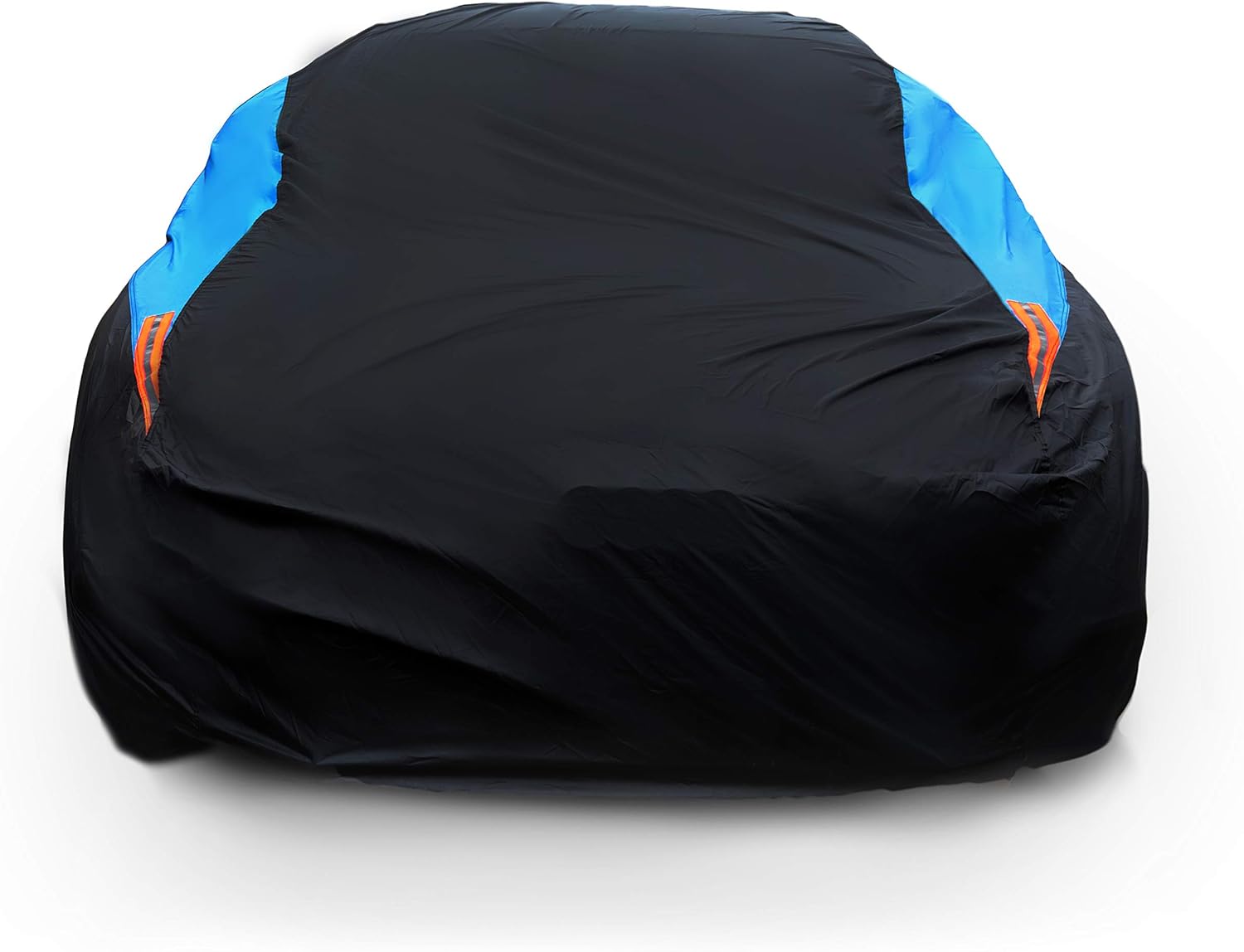
Motor Trend Breathable Lightweight Car Cover, Anti-Moisture Build-Up Water-Resistant Scratch-Resistant
★★★★☆ Highly rated on Amazon
A purpose-built anti-moisture cover with water-resistant, breathable fabric — designed to stop condensation build-up under the cover while keeping rain out, with a soft scratch-resistant lining safe for all paint finishes.
As an Amazon Associate, we earn from qualifying purchases.
Should You Cover a Wet Car? (The Rule That Stops Most Damage)
Never cover a wet or freshly washed car. This is the most important rule in car cover use — and the most frequently broken one. When you cover a wet car, you seal that surface moisture against the paint with no way to escape.
The warm, humid pocket that forms under the cover becomes ideal for mold, mildew, and rust. Even a breathable cover can’t move moisture fast enough when the car starts soaking wet.
⚠️ Warning
Covering a wet car — even once — can lead to trapped moisture sitting on paint for 8–12 hours or longer. Done repeatedly, this causes paint bubbling, rust spots, and mold growth inside door seals and trunk edges. Always dry the car first.
So what counts as “dry enough”? The car should feel completely dry to the touch on all panels, mirrors, window seals, and roof. Air-dry for at least 30 minutes after rain stops. After washing, hand-dry with a clean microfibre towel before covering.
One more thing: let a hot car cool down before covering. Covering a car that’s warm from driving traps that heat and humidity inside — the same effect as covering a wet car, but from the inside out.
How Does Airflow Under the Cover Reduce Condensation?
Air circulation is the second most powerful tool against under-cover condensation. When air can move under the cover, moisture evaporates and escapes rather than sitting on the metal surface. The trick is allowing airflow without letting the cover blow off or let in debris.
The best approach is to fit the cover snugly using straps or elastic hems — but to keep the hem slightly raised above the ground. Don’t let the cover drag flat on the floor all the way around. That creates a sealed pocket with no way for humid air to move.
How to Set Up Airflow Under Your Car Cover
🔢 Step-by-Step: Fitting a Car Cover for Airflow
-
1
Fit the cover snugly over the roof and body
Pull it down firmly so it hugs the car’s contours and doesn’t flap in the wind.
-
2
Secure under-body straps or bungee cords
Straps under the car keep it locked in wind but allow the hem to sit slightly off the ground.
-
3
Tuck cover edges at wheel arches
Pull the cover up slightly at each wheel and tuck it behind the valance — this opens an air path at the corners.
-
✓
Check that the cover doesn’t touch the ground all around
A small gap at the hem allows humid air to escape rather than pool under the cover.
If your car is stored in a garage, a small fan on the floor blowing under the cover works very well. Even a few hours of air movement each day dramatically cuts condensation build-up on stored cars.
This matters especially for long-term storage. Condensation that evaporates during the day rarely causes damage. Condensation that sits for 3–4 days does.
How Often Should You Lift a Car Cover to Prevent Moisture Build-Up?
Lifting the cover regularly is one of the most effective — and most overlooked — ways to prevent condensation damage. Even with a breathable cover, moisture can accumulate in pockets, seams, and on window seals if the cover stays on too long without a break.
Most cover experts recommend lifting the cover at least once a month. In spring and autumn — when temperature swings between day and night are the greatest — lift it every 2 weeks.
Seasonal Lifting Schedule
The frequency you lift your cover should change with the season — condensation risk is not equal year-round:
Spring creates the highest condensation risk because daytime warmth deposits heavy moisture that cold overnight temperatures can’t evaporate — so it stays trapped under the cover.
When you lift the cover, let both the car and the cover air out for at least 20–30 minutes. Don’t just peel it up and drop it back down. Let the moisture escape properly before recovering.
Do Extra Steps Like Desiccants and Moisture Absorbers Help?
Yes — especially for indoor storage or cars sitting unused for 3 months or more. Desiccants absorb excess humidity from the air under and inside the cover, keeping moisture levels down between lifts.
The 3 most practical options are silica gel packs, activated charcoal bags, and cat litter in a sock. All 3 work by pulling moisture out of the air rather than letting it settle on the car’s surface.
📋 Moisture Absorbers That Work Under a Car Cover
-
Silica gel packs: Highly effective, reusable — bake them dry and reuse. Place 2–3 packs inside the car cabin. -
Activated charcoal bags: Absorbs moisture and odors. Place bags on the floor of the car and on the bonnet under the cover. -
Cat litter in a sock: An old trick — cheap and surprisingly effective for interior humidity. Place under both front seats. -
Commercial car dehumidifiers: Plug-in or rechargeable units designed for parked car use — best for long-term indoor storage.
Desiccants work on the air inside the cabin. They don’t directly stop external condensation on the paint surface. Think of them as a secondary defence — not a substitute for a breathable cover and regular lifting.
✅ Tip
Leave car windows cracked open 2–3 cm during long-term storage. This allows air to circulate inside the cabin, reducing the humidity that builds up and seeps into door seals — a common source of mold and musty smells.
Does Condensation Under a Car Cover Cause Rust?
Yes — if moisture is trapped long enough, condensation absolutely causes rust. When warm humid air meets a cool metal surface and condenses, that water starts the process of oxidation on any exposed metal. Paint protects the surface, but rust forms fast on chips, scratches, and unprotected underbody metal.
The real danger is not the condensation itself — it’s the duration. Brief condensation that evaporates in 2–3 hours is normal and harmless. Condensation that stays trapped under a non-breathable cover for 24–72 hours is a serious rust accelerator.
2–3h
Normal condensation — evaporates safely with a breathable cover
24–72h
Danger zone — trapped moisture promotes rust, mold, and paint damage
Weeks
Paint bubbling, corrosion, mold — requires professional repair
Areas most at risk are the underbody, wheel wells, door sill edges, and any chip or scratch in the paint. These spots hold moisture longer and have less protection than flat painted panels.
If you already have condensation damage starting — bubbling paint or orange-brown spots — deal with it immediately. Touch-up paint on exposed metal stops rust before it spreads.
What Most People Get Wrong About Car Cover Condensation
Myth 1: “A waterproof cover stops condensation”
This is the most common mistake. A fully waterproof cover blocks rain from the outside, but it also traps all humidity from the inside. Condensation still forms on the car surface — but now it has nowhere to go. Breathable covers are the correct choice, not waterproof ones.
Myth 2: “The car cover is faulty if moisture gets under it”
Moisture under a car cover is a natural result of dew point physics — not a sign the cover is broken. Even premium covers on well-maintained cars will show some condensation in spring. The question is whether that moisture evaporates quickly or stays trapped. Breathable covers handle this well.
Myth 3: “Winter is the worst time for condensation”
Actually, spring is worse. Winter temperatures stay consistently cold, so the dew point is less likely to be reached repeatedly. Spring brings warm afternoons followed by cold nights — the ideal cycle for heavy condensation. If you only lift your cover seasonally, lift it more often in spring, not winter.
Conclusion
Condensation under a car cover is a physics problem, not a cover quality problem. The fix is straightforward: use a breathable cover, always start with a dry car, allow airflow under the hem, and lift the cover regularly — especially in spring.
Done right, these steps keep moisture exposure short and harmless. Done wrong, trapped condensation silently eats your paint and starts rust you won’t notice until it’s expensive to fix.
Do this right now: check your current cover. If it’s a solid plastic tarp or labelled “100% waterproof,” switch to a breathable, water-resistant alternative. That one change prevents most condensation damage before it starts.
Frequently Asked Questions
Can any car cover completely prevent condensation?
No car cover can fully stop condensation — it’s a physics process caused by temperature change. The best covers are breathable, allowing moisture to evaporate quickly rather than trapping it against the paint. This limits damage without eliminating the natural dew process.
Is it bad to put a car cover on a wet car?
Yes — covering a wet car traps moisture against the paint with no way to escape. This creates a warm, humid environment that promotes mold, mildew, and rust. Always dry the car completely before covering, even after a light shower. A 30-minute air-dry is the minimum.
How often should I lift my car cover to let moisture out?
Lift the cover at least once a month, even in winter. In spring and autumn — when condensation risk is highest due to warm days and cold nights — lift it every 1–2 weeks. When you lift it, let both the car and cover air out for at least 20–30 minutes before recovering.
Does condensation under a car cover cause rust?
Yes, if it’s trapped long enough. Brief condensation that evaporates in 2–3 hours is harmless. Moisture locked under a non-breathable cover for 24–72 hours or longer causes rust on exposed metal, especially on underbody surfaces, chips, and door sill edges.
Should I leave a gap under my car cover to allow airflow?
Yes. Don’t let the cover hem sit flat on the ground all the way around — that seals in humidity. Use straps to secure the cover snugly on top while keeping a slight gap at the hem. Tucking the cover behind the wheel arches also opens airflow paths at each corner.
Do desiccants or moisture absorbers help under a car cover?
Yes, as a secondary defence. Silica gel packs, activated charcoal bags, and cat litter in a sock all reduce cabin humidity during storage. They’re most useful for indoor covered storage over 3+ months. They don’t replace a breathable cover or regular lifting — they support them.
Is condensation worse in spring or winter under a car cover?
Spring is worse. Winter keeps temperatures consistently cold, so the dew cycle is less severe. Spring brings warm daytime air that holds heavy moisture, followed by cold nights that force it out as condensation. If you only increase lifting frequency once a year, do it in spring.

Daniel Brooks is an automotive writer and product researcher focused on car accessories, car tech, maintenance, and practical driving guides. At Plug-in Car World, he helps drivers make smarter automotive decisions through honest reviews and research-driven content.