Why Is My Car Cover Leaking Water? (Causes + Fixes)
⚡ Quick Answer
Your car cover leaks because its waterproof DWR coating has worn off, the fabric seams have failed, or the cover fits too loosely — letting wind-driven rain force water underneath. Most covers stop beading water within 6–12 months of outdoor use. Re-treating with a fabric waterproofing spray restores protection fast.
Top reasons your car cover is letting water in:
- Worn DWR coating: The water-repellent finish degrades from UV, rain, and heat exposure.
- Failed seams: Stitched seams become entry points as thread loosens or seam tape peels.
- Poor fit: A loose cover flaps in wind, letting rain blow underneath the edges.
Quick fixes to try right now:
-
✓
Spray the cover with a DWR fabric waterproofing spray and let it dry completely. -
✓
Apply seam sealer tape to stitched seam lines on the outside of the cover. -
✓
Tighten the tie-down straps so the cover hugs the car and can’t flap in wind.
You covered your car to protect it — so seeing water pooling underneath feels like a betrayal. Michael here, and I’ve seen this happen to car covers of every price range. The frustrating truth is that most covers don’t fail overnight. They quietly lose their water protection over months of sun, rain, and wind — until one storm reveals the problem.
The good news: leaking car covers are almost always fixable without buying a new one. Here’s exactly why it’s happening and what to do right now.
📌 Key Takeaways
-
→
DWR coatings degrade within 6–12 months of outdoor use under UV and rain exposure. -
→
Seam stitching is the #1 weak point — water enters through thread gaps even when the fabric itself is fine. -
→
Condensation under a cover is not a rain leak — it’s trapped moisture from temperature changes and is normal. -
→
A waterproofing re-spray costs under $15 and can restore full rain protection to a worn cover.
Why Is My Car Cover Leaking Water? The 4 Real Causes
A car cover leaks for one of 4 reasons: its waterproof coating has worn off, the seams have failed, the cover fits too loosely, or you’re actually seeing condensation rather than a rain leak. Each cause looks different and has a different fix — so identifying the right one saves you time and money.
Here’s a breakdown of each cause and what it looks like:
These are the 4 most common reasons car covers leak, ranked from most to least frequent.
Knowing which of these 4 causes applies to your cover points you to the right fix — no guesswork needed.
Cause 1: The DWR Waterproof Coating Has Worn Off
Most car covers use a DWR (Durable Water Repellent) coating sprayed onto the fabric surface. This coating makes water bead up and roll off. But it’s not permanent — UV rays, heat cycles, and repeated wetting break it down within 6–12 months of regular outdoor use.
Once the DWR fails, the fabric starts to “wet out” — meaning it absorbs water instead of repelling it. The cover feels heavy when wet and damp patches appear on your car underneath. The test is simple: sprinkle water on the cover. If it beads and rolls off, the coating is fine. If it soaks in, the coating is gone.
⚠️ Warning
Many brands spray DWR coating over basic polyester and market it as “fully waterproof.” This coating can start failing within weeks of UV exposure. Day-one water-beading tests don’t reflect real-world performance after a season of use.
Cause 2: Seam and Stitch Failures
Even if the cover fabric itself is water-resistant, stitched seams are a built-in weak point. Every time a needle passes through the fabric to create a seam, it leaves tiny holes. Over time, thread loosens, seam tape peels, and those holes become water entry points — especially under heavy or wind-driven rain.
This is why premium covers use welded seams instead of stitched ones. Welded seams fuse the fabric layers together without needle holes. If your cover has stitched seams and you notice wet patches running in straight lines across the cover — that’s the seams leaking.
Cause 3: Poor Fit Letting Wind Drive Rain Underneath
A loose or universal-fit cover doesn’t seal tightly against the car’s body. When wind picks up, it gets under the edges and carries rain with it. Universal-fit covers cause about 70% of waterproofing failures this way, because they’re sized for a range of vehicles rather than mapped to one specific model.
You’ll notice this if your car is dry on calm rainy days but wet after storms with wind. The cover isn’t truly leaking through the fabric — rain is simply blowing under the loose edges.
Is It a Rain Leak or Just Condensation Under My Car Cover?
Before you re-treat or replace your cover, confirm it’s actually leaking rain and not producing condensation. These two look identical — moisture on your car under the cover — but they have completely different causes and different fixes.
Condensation forms when warm, humid air trapped under the cover contacts the cooler metal surface of your car. This is especially common on cold mornings or when day-to-night temperatures swing more than 15°F. A breathable cover lets this moisture vapor escape. A non-breathable cover traps it — leaving your car damp even on days with zero rain.
💡 Key Insight
A fully waterproof cover that traps all moisture can actually damage your paint more than rain. Trapped condensation creates a continuously damp environment against your clear coat — accelerating rust and mold growth from the inside.
Here’s how to tell them apart:
📋 Rain Leak vs. Condensation — How to Tell the Difference
-
Timing: Moisture only after rain = leak. Moisture on dry but cold mornings = condensation. -
Location: Leak appears in one spot or along seam lines. Condensation spreads evenly across the whole surface. -
Cover type: Condensation is far more common with vinyl or PVC covers that have no breathability at all. -
Amount: A true rain leak produces standing water. Condensation leaves a light damp film that dries quickly.
According to the experts at Engineer Fix’s car cover water protection guide, the best outdoor covers aren’t designed to be fully impermeable — they’re engineered to be water-resistant AND breathable so vapor can escape while liquid rain is repelled.
So if you have a condensation issue, the fix isn’t a more waterproof cover. It’s a more breathable one with mesh vents.
Why Do Car Cover Waterproof Coatings Fail Over Time?
Car cover waterproof coatings fail because DWR is a surface treatment — not a permanent part of the fabric. It sits on top of the fibers like a thin invisible shell. Three forces break it down: UV radiation from sunlight, the physical abrasion of rain hitting the surface repeatedly, and heat cycles as the cover expands and contracts through seasons.
Some brands test their covers’ waterproofing on day one — before any environmental exposure — and present those results as the cover’s permanent performance. In reality, that water-beading you see in demo videos can degrade within weeks of real outdoor use.
6–12
Months until DWR coating typically degrades outdoors
70%
Of waterproofing failures caused by poor fit allowing wind-driven rain
$15
Approximate cost to re-treat a cover with DWR spray
There’s also the seam problem. Even if a brand uses certified waterproof fabric, the certification applies to the raw material — not the finished, stitched cover. The needle holes and thread gaps created during sewing aren’t covered by fabric waterproofing certifications. As the experts at Coverstore explain on their waterproof vs. breathable car cover guide, no fabric or special coating will completely prevent water from eventually getting through — the goal is to maximize resistance while maintaining breathability.
The good news: DWR coating is easy to restore. You don’t need a new cover. A fabric waterproofing spray reactivates the water-repellent chemistry and buys another 6–12 months of protection.
How to Fix a Leaking Car Cover in 4 Steps
Fixing a leaking car cover is almost always a 20-minute job with under $20 in materials. The process depends on which cause you identified — but here’s the full step-by-step to cover all 3 failure points at once:
🔢 Step-by-Step: Restore Water Protection to Your Car Cover
-
1
Wash the cover first
Use a mild soap and rinse thoroughly. DWR spray bonds poorly to dirty or oily fabric — washing first doubles the effectiveness.
-
2
Apply DWR waterproofing spray while the cover is slightly damp
Spray evenly across the entire outer surface — damp fabric helps the DWR absorb more deeply into the fibers.
-
3
Seal the seams with seam sealer tape
Run seam sealer tape (available at outdoor gear stores) along every stitched seam line on the outside of the cover.
-
✓
Let it dry fully, then do the water-bead test
Sprinkle water on the treated surface — it should bead and roll off cleanly. If it doesn’t bead yet, apply a second coat and let it dry overnight.
✅ Tip
For the DWR re-treatment, use a spray designed for outdoor gear or tents — brands like Nikwax or GEAR AID work on car cover fabrics just as well as on jackets. Avoid silicone-only sprays — they can affect breathability and may leave a residue on adjacent car surfaces.
If the cover is more than 3 years old and the fabric itself has started to thin or tear, re-treatment won’t hold for long. At that point, replacing the cover makes more sense than treating it.
Recommended Product
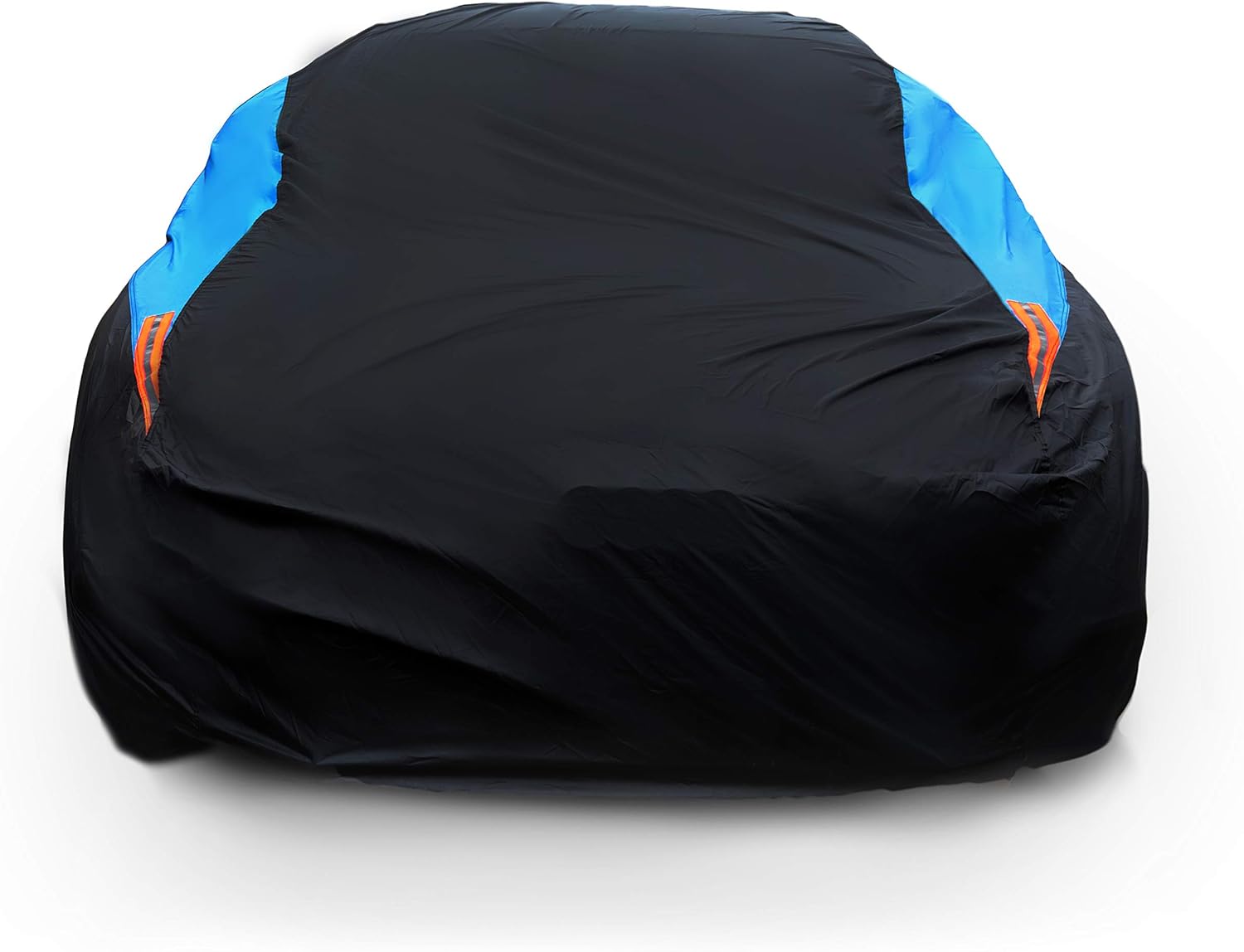
GUNHYI 16 Layers Car Cover Waterproof All Weather, Heavy Duty Outdoor Car Cover Universal Fit Sedan
★★★★☆ 4.3 stars — Highly rated on Amazon
If your cover is too far gone to repair, this 16-layer cover includes breathable vents and reinforced seams — addressing the 3 main failure points right out of the box.
As an Amazon Associate, we earn from qualifying purchases.
What Most People Get Wrong About Car Cover Waterproofing
There are 3 very common beliefs about car covers that lead people to either waste money or damage their cars. All 3 are worth correcting before you make any decisions.
Wrong belief #1: “A fully waterproof cover is always better.”
This sounds logical but it’s backwards. A cover that blocks all moisture also traps condensation inside — creating a damp microclimate directly against your paint and metal. Rust, mold, and clear coat haze can develop faster under a sealed cover than under light rain.
The better goal is a water-resistant AND breathable cover — one that blocks liquid rain while letting moisture vapor escape through microscopic pores or mesh vents.
Wrong belief #2: “My cover is waterproof because the label says so.”
Manufacturers can label a cover “waterproof” based on day-one test results before any environmental exposure. The same cover may start soaking through after 3 months outdoors. Always check whether the waterproofing is a factory DWR spray (will degrade) or a multi-layer membrane construction (far more durable).
Wrong belief #3: “Condensation under my cover means it’s leaking.”
Condensation is moisture produced by temperature change — not by rain entering the cover. If your car is damp under a cover on a dry, cold morning, the cover is working exactly as designed. Switch to a breathable cover and the condensation problem disappears without any re-treatment needed.
Conclusion
Your car cover is leaking because its DWR coating has worn off, its seams have failed, or it fits too loosely to block wind-driven rain. All 3 are fixable in under 30 minutes with the right materials — and a DWR re-spray alone costs under $15.
The single most important thing to check first: sprinkle water on the cover surface. If it doesn’t bead, the coating is gone and a re-treatment will solve the problem immediately. Do that today — don’t wait for the next rainstorm to confirm the issue is still there.
Frequently Asked Questions
Why does water get under my car cover?
Water gets under a car cover most often because the DWR waterproof coating has degraded, allowing the fabric to absorb rain instead of repelling it. A loose fit can also let wind blow rain underneath the cover’s edges, especially during storms with gusting winds.
Are car covers actually waterproof?
Most car covers are water-resistant, not fully waterproof. High-quality outdoor covers are intentionally designed this way — a cover that blocks all moisture also traps condensation against the paint, which can cause rust and mold. The best covers balance water resistance with breathability.
How do I waterproof my car cover again?
Wash the cover, then spray it with a DWR (Durable Water Repellent) fabric treatment while it’s still slightly damp. Products like Nikwax or GEAR AID Revivex work well on most car cover fabrics. One application typically restores water-beading for 6–12 months of outdoor use.
Is condensation under a car cover normal?
Yes, condensation under a car cover is completely normal — it’s caused by warm, humid air touching the cooler car surface, not by rain entering the cover. It’s most common on cold mornings or when temperatures swing sharply overnight. A breathable cover with mesh vents reduces this significantly.
Can a leaking car cover cause rust?
Yes. If a car cover traps moisture against the vehicle’s metal surfaces — whether from rain leaking in or condensation — and that moisture can’t evaporate, it creates the ideal conditions for rust and mold. Trapped moisture against bare metal or through paint chips will start forming surface rust within weeks.
Why is my car cover leaking at the seams?
Stitched seams create small needle holes in the fabric. Over time, thread loosens and any seam tape applied at the factory peels away, turning the seam lines into entry points for water. Apply seam sealer tape (sold at outdoor gear retailers) along every stitch line on the outside of the cover to fix this.
How long do car cover waterproof coatings last?
Most factory DWR coatings on car covers last 6–12 months with regular outdoor use before they need re-treatment. Covers stored in especially sunny, hot, or humid climates may degrade faster — sometimes within 3–4 months. Premium multi-layer covers with membrane construction last significantly longer than single-layer DWR-treated covers.

Daniel Brooks is an automotive writer and product researcher focused on car accessories, car tech, maintenance, and practical driving guides. At Plug-in Car World, he helps drivers make smarter automotive decisions through honest reviews and research-driven content.