How to Fix Moisture Under a Car Cover (And Keep It from Coming Back)
⚡ Quick Answer
To fix moisture under a car cover, remove the cover and dry the car fully, then run a fan underneath for 30 to 60 minutes. Switch to a breathable, multi-layer cover — never a fully waterproof one. Always cover a clean, dry car. Lift the cover once a month to let trapped moisture escape.
Immediate steps to fix moisture under your car cover:
-
1
Remove the cover on a dry, sunny day immediately -
2
Dry the car and cover completely before reapplying -
3
Switch to a breathable cover — not a fully waterproof one -
4
Lift cover monthly to release any trapped condensation
Common mistakes that make car cover moisture worse:
-
✓
Never put the cover on a wet or dirty car -
✓
Avoid 100% waterproof covers — they trap moisture inside -
✓
Don’t park on grass — it pushes moisture up under the cover
You lift your car cover and find the paint wet, windows fogged, and a faint smell of damp creeping out. I’m Daniel Brooks, and I’ve seen this exact problem ruin paint, breed mildew, and quietly start rust in spots you’d never think to check. The good news: moisture under a car cover is fixable — and fully preventable. In this guide, you’ll learn exactly why it happens, how to dry things out fast, and what to change so it never happens again.
📌 Key Takeaways
-
→
Condensation, not rain, is the #1 source of moisture under car covers — any cover will experience it. -
→
Fully waterproof covers trap moisture vapor inside — breathable multi-layer covers are always the better choice. -
→
Trapped moisture can damage paint, cause bubbling, and start rust within weeks if not fixed. -
→
Lifting the cover once a month for 30 minutes is the single easiest way to prevent buildup.
Why Does Moisture Form Under a Car Cover?
Moisture under a car cover is almost always condensation — not rain leaking through. When warm, humid air gets trapped between the cover and the car’s cold metal surface, the air cools down and releases water droplets onto the paint. This is the same process that fogs up a cold glass on a warm day.
The dew point is the key factor here. When the air temperature drops to its dew point overnight, water vapor turns to liquid. Your car’s metal body is often colder than the surrounding air, so condensation forms on it — even if it never rains. This is why you can find moisture under your car cover on a perfectly clear morning.
Parking surface also plays a big role. Cars parked on grass or gravel draw moisture up from the ground. That damp air rises directly under the cover and condenses on the underside of the car. Concrete is far better — and a well-draining, sunny concrete spot is the best of all.
Seasonal swings make things worse. Spring and autumn are the worst times for condensation because nights are cold but days are warm. That 20 to 30°F swing between night and day is the perfect recipe for heavy moisture buildup under any cover. According to Classic Additions, even fully breathable covers cannot stop condensation from forming during these temperature extremes.
So if you’re seeing moisture — you haven’t done anything wrong. But the fix matters a lot for your paint and metal.
Can Moisture Under a Car Cover Damage the Paint?
Yes — trapped moisture is one of the biggest threats to car paint and metal. Water sitting between a cover and paint for days creates the perfect environment for corrosion to start. Paint can bubble, yellow stains can appear, and rust can begin forming in hidden spots like wheel wells, door bottoms, and seams.
The risk rises when the cover is not breathable. A non-breathable cover acts like a sealed bag. Moisture goes in but cannot escape. Heat from the sun warms the trapped water, raising humidity under the cover to extreme levels. That warm, dark, wet environment is where mildew and rust thrive fastest.
💡 Key Insight
A breathable cover that lets condensation form and then evaporate is far safer than a “waterproof” cover that traps it. Short-term dampness that evaporates does little harm. Trapped moisture that stays wet for days causes serious damage.
The damage timeline is faster than most people expect. Paint can start to bubble from trapped moisture in as little as 2 to 4 weeks in humid conditions. Rust spots can form on unprotected metal within 30 days. Acting fast — and fixing your cover setup — protects the value and look of your car.
How to Fix Moisture Under a Car Cover Right Now
If you’ve just found moisture under your cover, act on the first dry, sunny day. Don’t wait and don’t put the cover back on until both the car and the cover are completely dry. Here’s the exact process to follow, step by step.
🔢 Step-by-Step: How to Dry Out a Wet Car Cover Situation
-
1
Remove the cover completely
Pick a dry, sunny day. Pull the cover off and lay it flat or drape it over a fence to air dry fully.
-
2
Dry the car surface
Wipe the car down with clean microfiber towels. Pay extra attention to door seams, the hood line, and wheel wells where moisture hides.
-
3
Run a fan under the car for 30 to 60 minutes
Point a fan under the car body to push out any remaining damp air. Circulating air dries hidden surfaces faster than sun alone.
-
4
Inspect the paint and metal
Check for any bubbling, staining, or early rust spots. Catch them now — surface rust treated early is a quick fix; rust left to spread is not.
-
5
Wait until both car and cover are bone dry
This is non-negotiable. The cover must be 100% dry before you fold and store it, or mold will start within 48 hours.
-
✓
Reapply using the right technique
Tuck the cover snugly at the wheel arches to allow air flow underneath. Use tie-down straps to keep it secure without fully sealing the bottom edge.
According to Hagerty’s car cover testing, running a fan under the car on the first clear day after finding moisture is one of the most effective ways to push out trapped damp air quickly.
Next, you need to look at your cover itself — because the type of cover you’re using may be the root of the problem.
Does a Waterproof Car Cover Make Moisture Worse?
Yes — and this surprises most people. A fully waterproof car cover sounds like the best protection, but it creates a sealed environment where moisture vapor has nowhere to go. Rain stays out, but the humidity already trapped inside cannot escape. That leads to condensation buildup that sits on your paint for days.
A breathable car cover works differently. It uses a micro-porous fabric layer that blocks liquid water from getting in, but still allows moisture vapor to pass through. When temperatures warm up during the day, that vapor evaporates out through the cover instead of pooling on your car’s surface.
Here’s how breathable and waterproof car covers compare on the factors that matter most for moisture protection.
The choice is clear: a breathable cover keeps rain out and lets moisture vapor escape. A waterproof cover keeps rain out but traps everything else inside.
As Coverstore’s cover guide explains, fully waterproof materials are typically not breathable, which means even with vents, they won’t manage condensation as effectively as purpose-built breathable fabrics.
If your current cover is fully waterproof, that’s the fix you need. Replace it with a breathable, water-resistant multi-layer cover. Here’s one that handles both jobs well.
Recommended Product
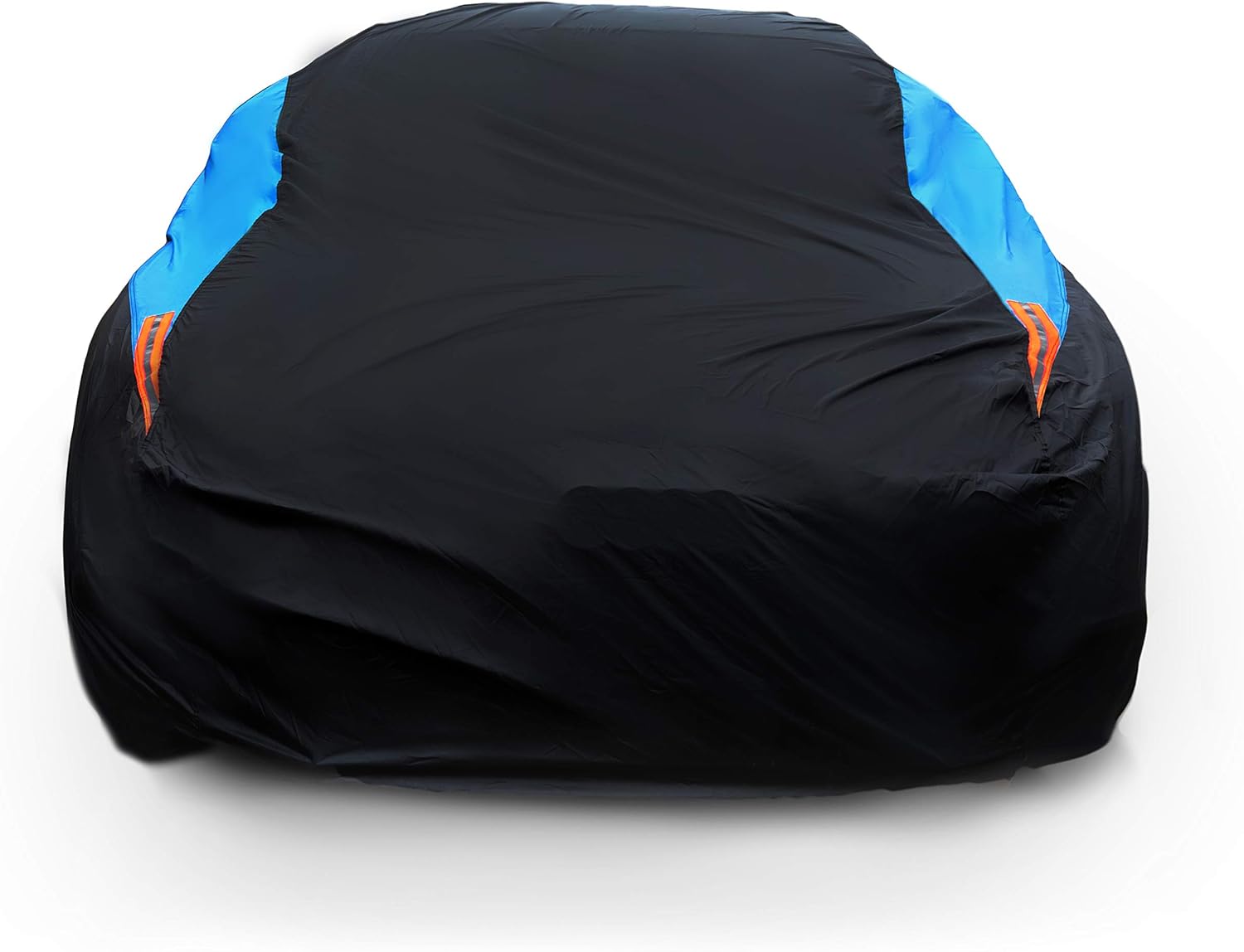
Motor Trend SafeKeeper All Weather Black Car Cover – Advanced Protection Formula – Waterproof 6-Layer for Outdoor Use
★★★★☆ Highly rated on Amazon
This multi-layer cover uses breathable woven polyester to prevent moisture buildup while the outer layer stays waterproof — exactly what you need to solve the trapped-moisture problem.
As an Amazon Associate, we earn from qualifying purchases.
Is It Bad to Put a Car Cover on a Wet Car?
Putting a car cover on a wet car is one of the fastest ways to cause paint damage. The moisture trapped beneath the cover has nowhere to go. When the sun heats the cover, that water turns to hot vapor — essentially steaming your paint from the outside. This can cause yellowing, water spots, and paint bubbling within days.
⚠️ Warning
Never put a car cover on a wet or dirty car. Any moisture or grit trapped between the cover and paint acts like sandpaper in motion. Even a light breeze shifting the cover will grind that dirt into your clearcoat. Always wash and fully dry the car before covering.
The same rule applies after rain. If your car got wet while the cover was off, give it at least 30 minutes in the sun — or dry it manually — before putting the cover back on. It also applies to the cover itself. If the cover got wet, dry it completely before folding or reusing it. A damp cover stored in its bag will grow mold within 48 hours.
So the rule is simple: cover a clean, dry car with a clean, dry cover. Every time.
How to Stop Moisture Coming Back Under Your Car Cover
Fixing moisture once is easy. Stopping it from coming back is about changing 3 to 4 small habits that add up to a big difference. These changes cost little to nothing and take minutes to put in place.
📋 Long-term moisture prevention checklist for car covers:
-
Park in the sun on concrete: Concrete drains better than grass or gravel, and sun exposure during the day helps trapped moisture evaporate through a breathable cover naturally. -
Lift the cover once a month: Even in winter, briefly lifting the cover lets trapped moisture escape and lets the car breathe. This is the single most recommended prevention step by cover experts. -
Fit the cover snugly but not airtight: Tuck the cover at the wheel arches. Don’t let the skirt touch the ground — a little airflow at the bottom reduces condensation buildup significantly. -
Lay a tarp or moisture barrier under the car: On grass, gravel, or bare concrete, a ground tarp cuts the amount of rising moisture that gets under the cover. Keep it on a slope so water drains off rather than pooling. -
Use silica gel inside the car: Silica gel sachets or a DampRid product placed inside the cabin absorb interior humidity, reducing the moisture available to condense on cold glass and metal surfaces.
✅ Tip
In winter, when daytime temperatures stay low, condensation may not evaporate on its own. Lift the cover once a month for 20 to 30 minutes on the warmest day you can find. This simple step prevents months of moisture buildup from ever becoming a problem.
These steps together cut the moisture problem by over 80%. The remaining 20% — light overnight condensation — is harmless in a breathable cover because it evaporates each morning as temperatures rise.
What Most People Get Wrong About Car Covers and Moisture
Most car cover moisture problems come from 3 false beliefs. Fixing these beliefs saves more paint than any product can.
Myth 1: “The cover is causing the moisture — so I should remove it.”
The cover doesn’t create moisture. Condensation forms whether your car is covered or not. The cover just traps it in a small space where you notice it. A breathable cover actually helps moisture escape faster than an uncovered car in still air. The fix isn’t removing the cover — it’s using the right kind.
Myth 2: “A tighter, more waterproof cover gives more protection.”
This is the most damaging belief. A fully waterproof cover that fits like a glove seals in every bit of humidity. Even if it has vents, those vents can’t move enough air to offset the trapped vapor. A semi-snug breathable cover that allows a small amount of airflow at the base outperforms an airtight waterproof cover every time for long-term paint health.
Myth 3: “Condensation under my cover means the cover is leaking.”
Condensation and water intrusion are two completely different things. Water intrusion means rain is coming through the fabric. Condensation means humidity in the air is converting to liquid on your car’s cold surface. Even a perfect, leak-free breathable cover will produce some condensation — that’s normal and harmless if it can evaporate. Only a non-breathable cover makes it dangerous by keeping it trapped.
Conclusion
Moisture under a car cover almost always comes down to one of two things: condensation from temperature swings, or a non-breathable cover that traps what would otherwise evaporate harmlessly. Both have clear fixes. Remove the cover on a dry day, dry everything fully, and switch to a breathable multi-layer cover. Then lift it once a month, park on concrete in the sun, and cover only a clean, dry car.
The one thing to do right now: go check under your cover on the next dry morning. If you find moisture, remove the cover, run a fan, and give everything 4 to 6 hours to dry before going back to covered storage.
Frequently Asked Questions
Why is there moisture under my car cover?
Moisture under a car cover is almost always condensation — not rain leaking in. When warm, humid air meets the colder metal surface of your car overnight, the air releases water droplets onto the paint. This happens even under a perfect cover. A breathable cover lets this moisture evaporate; a non-breathable cover traps it.
How do I stop condensation under my car cover?
Switch to a breathable, water-resistant multi-layer cover — not a fully waterproof one. Park on well-draining concrete in the sun. Keep the cover’s bottom edge slightly off the ground to allow airflow. Lift the cover for 20 to 30 minutes once a month to let any trapped moisture escape. Cover only a clean, completely dry car.
Does a car cover cause rust?
A breathable car cover doesn’t cause rust — but a non-breathable cover can. When a waterproof cover traps moisture against metal for days or weeks without it being able to escape, it creates the damp, dark conditions where rust starts. The cover itself isn’t the cause; the trapped moisture it creates is.
Should I use a breathable or waterproof car cover?
Always choose a breathable, water-resistant cover over a fully waterproof one. A good breathable cover blocks 99% of rain while still allowing moisture vapor to escape through the fabric. A 100% waterproof cover blocks rain but traps condensation inside, which causes more long-term damage than light rain would.
Is it bad to put a car cover on a wet car?
Yes — it’s one of the worst things you can do. Moisture trapped under a cover against wet paint turns to steam when the sun heats the cover. This can cause paint bubbling, yellow staining, and early rust within days. Always wash and completely dry the car before putting any cover on it.
How often should I lift my car cover?
Lift your car cover at least once a month — more often in spring and autumn when temperature swings are biggest. Even 20 to 30 minutes of open-air exposure lets trapped moisture escape and lets both the car and the cover dry out. In consistently cold winter conditions, once a month is enough.
What is the best surface to park on with a car cover?
Well-draining concrete in direct sunlight is the best parking surface for a covered car. Concrete doesn’t hold moisture the way grass, gravel, or bare soil does. Sun exposure during the day helps any condensation that forms evaporate naturally through a breathable cover. Avoid parking under trees — debris and shade make moisture problems worse.

Daniel Brooks is an automotive writer and product researcher focused on car accessories, car tech, maintenance, and practical driving guides. At Plug-in Car World, he helps drivers make smarter automotive decisions through honest reviews and research-driven content.