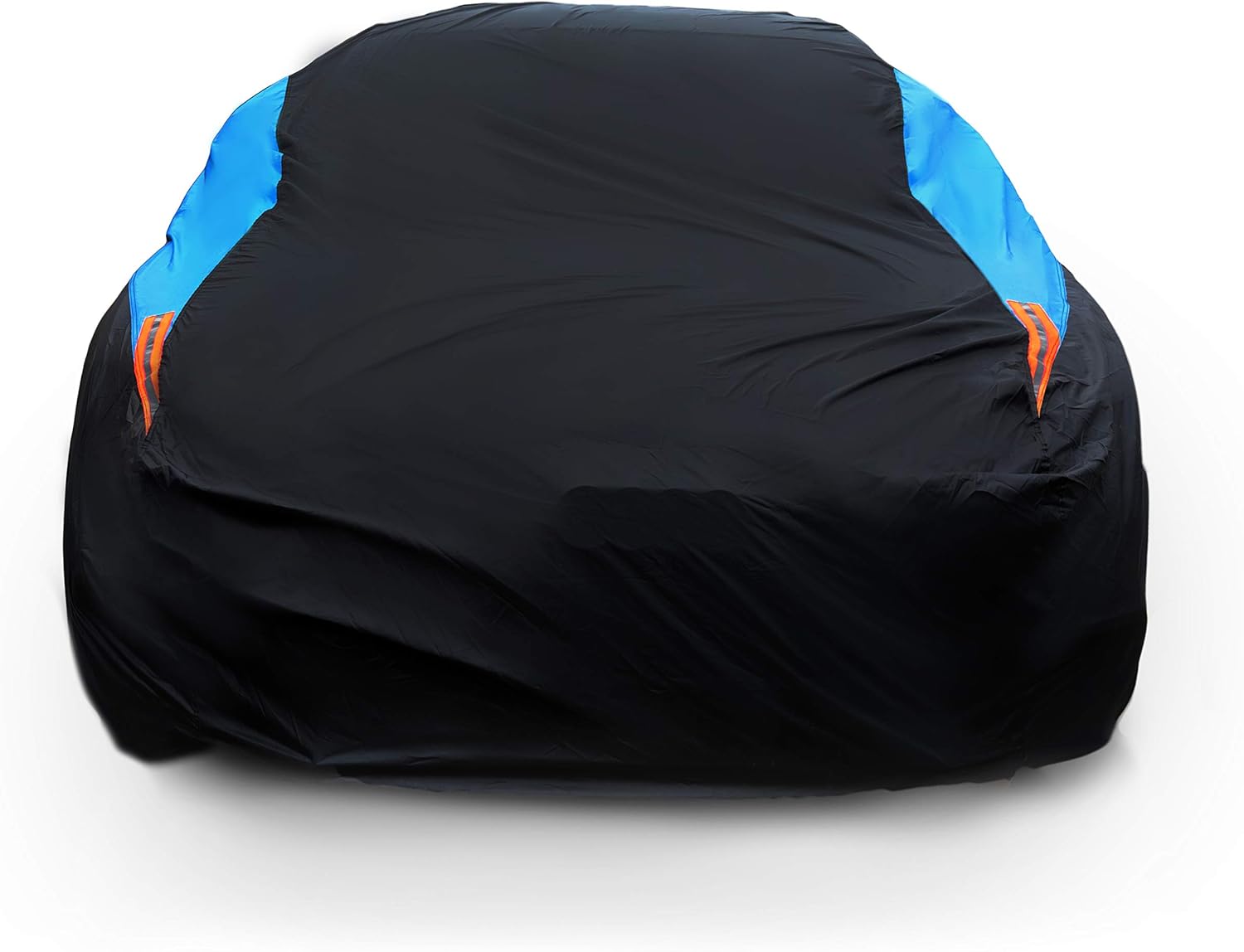
How to Prevent Mold Growth Under a Car Cover: The Complete Guide
⚡ Quick Answer
To prevent mold under a car cover, always use a breathable cover — not a waterproof one. Dry the car fully before covering, add a moisture absorber inside, and lift the cover at least once a week to air it out. Trapped condensation is the cause; airflow is the fix.
Steps to prevent mold under your car cover:
-
1
Choose a breathable, multi-layer car cover — not waterproof -
2
Dry the car completely before putting the cover on -
3
Place silica gel packs or a car desiccant inside the cabin -
4
Remove and air out the cover once a week
Common mold mistakes to avoid:
-
✓
Never use a 100% waterproof cover on a stored car -
✓
Never cover a wet or freshly washed car -
✓
Never skip the weekly airing routine during storage
You lift the car cover after a week of storage — and something smells wrong. That damp, earthy odor is the first sign mold has moved in. I’m Michael, and after years of covering and uncovering stored vehicles, I know exactly how fast this problem develops — and how easy it is to stop before it starts.
The good news: preventing mold under a car cover is not complicated. It comes down to one core principle — airflow. The right cover, the right prep routine, and two simple habits will keep your car dry and mold-free every single time.
📌 Key Takeaways
-
→
Breathable covers allow moisture to evaporate and are essential for mold prevention. -
→
Condensation forms under any cover when warm air cools, even without rain. -
→
Covering a wet car is the single fastest way to create mold conditions. -
→
Silica gel packs placed inside the cabin reduce interior humidity significantly.
Why Does Mold Grow Under a Car Cover?
Mold under a car cover grows because of one thing: trapped moisture. When warm, humid air gets sealed under a cover and cannot escape, it cools and forms water droplets. Mold needs just 3 things to grow — moisture, organic material, and time. A covered car provides all 3 very easily.
According to the mold and moisture guide from the EPA, controlling moisture is the single most important step in preventing mold growth in any environment. The same principle applies directly under a car cover.
Temperature swings make this worse. As night falls, the air under the cover cools — and warm air always holds more moisture than cold air. That moisture has to go somewhere. Without a breathable fabric to let it escape, it stays trapped against the paint.
⚠️ Warning
Temperature swings of just 20°F between day and night are enough to trigger condensation under a sealed, non-breathable cover. You don’t need rain for mold to form.
Your car’s paint, carpet, and fabric seating all contain the organic material mold feeds on. The cover just creates the dark, enclosed space mold loves. Remove the moisture — and mold has nothing to work with.
So if you’re using a car cover right now, the question isn’t whether moisture is forming underneath. It is. The question is whether your cover lets that moisture escape — or traps it in.
Does a Car Cover Cause Mold? The Real Answer
A car cover doesn’t cause mold — the wrong type of car cover does. A fully waterproof, non-breathable cover acts like a sealed plastic bag over your vehicle. Condensation forms inside and has nowhere to go. That moisture sits against the paint for hours or days, which is exactly the window mold needs to take hold.
A breathable car cover works differently. It resists water from outside while still allowing trapped moisture vapor to escape through the fabric. Think of it like a Gore-Tex jacket — water can’t get in, but sweat can get out. That one design difference is everything when it comes to mold prevention.
Here’s what the cover material determines:
A breathable, water-resistant cover gives you the best of both worlds: rain stays out, condensation gets out.
So the cover itself isn’t the problem. The problem is a sealed environment with no airflow. Pick the right cover and you’ve already solved the biggest part of this challenge.
How to Choose a Breathable Car Cover That Prevents Mold
The right car cover is your first and most important line of defense. Look for a multi-layer fabric made from polypropylene or polyester with a polyurethane coating. These materials repel water from outside while allowing internal moisture vapor to pass through. Single-layer plastic or vinyl covers trap everything and should be avoided for storage.
Here’s what to look for on the product label or spec sheet:
📋 Car Cover Features That Prevent Mold
-
Breathable fabric rating: The product listing must explicitly say “breathable” — not just “water-resistant.” -
3 or more fabric layers: Multi-layer construction balances rain resistance with vapor permeability. -
Soft inner lining: A soft layer prevents scratches and does not trap moisture against the paint. -
Snug elastic hem: A proper fit reduces gaps where wind-driven rain enters, without sealing airflow. -
Quick-dry material: Fabrics that shed water fast deny mold the extended damp window it needs.
Recommended Product
XCAR Car Cover Breathable Dust Prevention for All Weather Fits Sedan Hatchback Up to 200 Inch
★★★★☆ Highly rated on Amazon
A 3-layer breathable polypropylene cover with elastic hems and water-repellent fabric — built specifically to prevent the moisture buildup that leads to mold and rust under a stored vehicle.
As an Amazon Associate, we earn from qualifying purchases.
Avoid any cover marketed as “airtight” or described with plastic or vinyl materials. Those covers work like shrink wrap — great for dust, catastrophic for moisture. For long-term storage of 2 weeks or more, a breathable cover is non-negotiable.
How to Prep Your Car Before Putting the Cover On
The cover gets all the attention — but how you prep the car before covering it matters just as much. The most common reason mold grows under a cover is simple: the car was wet when covered. Even residual dampness from a car wash, morning dew, or a light rain creates enough moisture to feed mold for days.
Follow this prep routine every single time before putting the cover on:
🔢 Step-by-Step: Car Cover Pre-Application Routine
-
1
Dry the exterior completely
After washing or rain exposure, use a microfiber towel and give the car at least 30 minutes of air drying time before covering.
-
2
Check for interior dampness
Press the carpet and fabric seats with your hand. Any moisture means the interior needs time to dry with windows cracked before covering.
-
3
Remove any wet items from inside
Gym bags, umbrellas, towels, and damp floor mats all release moisture. Take them out before covering.
-
4
Place moisture absorbers inside the cabin
Set 2-3 silica gel packs or a reusable car desiccant on the floor before you cover. This is your moisture insurance.
-
✓
Apply the cover smoothly
A cover applied flat and taut with no bunching gives the best airflow distribution and prevents water pooling on top.
This routine takes under 10 minutes. It’s the difference between a car that stays dry for months and one that develops mold in 2 weeks.
How to Use Your Car Cover Correctly to Stop Mold
A breathable cover used incorrectly still creates mold. The most important habit is regular airing — lifting the cover completely at least once a week to let fresh air reach the paint surface. Even 15 minutes of open-air exposure breaks the dark, damp cycle that mold depends on.
But weekly airing is just one piece. Here’s how to use the cover correctly day to day:
📋 Correct Car Cover Usage Habits
-
Lift and air every 7 days: Remove the cover fully for at least 15 minutes once a week during storage. -
Don’t cover after rain without drying: Rain leaves residual dampness on the roof and hood — always dry first. -
Wash the cover every 2 months: A dirty cover traps mold spores and bacteria in the fabric itself — clean it regularly. -
Store the cover dry: Never fold and bag a damp cover — mold will grow in the storage bag and transfer to the car next use.
You might be thinking: “If I air it out, won’t dust just get on the car?” A 15-minute window in a garage or covered area adds negligible dust. Mold damage is permanent. Dust wipes off in seconds. Always prioritize the airflow.
Using Moisture Absorbers Under a Car Cover
Moisture absorbers are the most underrated tool in car cover mold prevention. Even a perfectly breathable cover can’t stop all condensation — but a desiccant inside the cabin gives you a second layer of defense that absorbs the moisture before it reaches harmful levels.
The most effective options are silica gel packs, reusable car dehumidifier bags, and plug-in car dehumidifiers (for garaged vehicles with access to power). Here’s how they compare:
Place 2-3 packs on the rear floor and one under the passenger seat for full cabin coverage.
✅ Tip
Reusable calcium chloride dehumidifier bags cost about $10 and last 6 months. Recharge them by placing in a 250°F oven for 30 minutes. They outperform single-use packs for any storage longer than 4 weeks.
The interior cabin is often forgotten when people focus on the cover itself. But mold doesn’t just grow on the paint — it grows on seats, carpets, and headliners. Keeping the interior dry with absorbers protects the surfaces the cover can’t directly defend.
Does Parking Location Affect Mold Risk Under a Car Cover?
Yes — where you park matters as much as the cover you choose. A covered car parked in a damp, poorly ventilated garage is at higher mold risk than the same car parked under an open carport. Airflow around the vehicle affects how quickly condensation dissipates through the breathable cover fabric.
Here’s how each parking environment affects your mold risk:
A sealed, damp garage with no airflow is the worst environment for a covered car. A small fan running a few hours a day dramatically lowers humidity.
If your car lives in a garage during storage season, run a small fan for 2-3 hours a day or crack a window. That single change reduces ambient humidity enough to make a real difference. Pair it with a breathable cover and moisture absorbers, and the mold risk drops dramatically.
💡 Key Insight
A breathable cover in a humid, enclosed garage without ventilation will still allow moisture to build faster than it evaporates. Location and airflow are not optional extras — they’re core parts of the mold prevention system.
What Most People Get Wrong About Car Cover Mold
Most mold problems under car covers come from a few fixable misunderstandings. The good news: once you know what’s wrong, the fix is fast.
Myth 1: “A waterproof cover gives my car the best protection”
A fully waterproof car cover is actually worse for long-term storage than a breathable one. The EPA’s guidance on mold consistently confirms that moisture control and ventilation — not sealing — prevent mold growth. A waterproof cover traps condensation directly against the paint, which can also cause rust and clear-coat damage over time.
Myth 2: “If the outside is dry, I don’t need to worry about mold”
Mold grows on the interior surfaces — carpet, foam seats, headliner — not just the paint exterior. A car that looks dry on the outside can have damp seats from a forgotten spill or a leaking weather seal. Always check the interior before covering, not just the paint.
Myth 3: “Once I buy a good cover, I’m done”
A breathable cover is a tool — not a set-and-forget solution. Without the weekly airing habit and moisture absorbers inside, even the best cover won’t fully prevent mold in a damp environment. The cover does its job; you still have to do yours.
Conclusion
Preventing mold under a car cover comes down to 3 things: a breathable cover, a dry car, and a weekly airing habit. None of these are complicated — they just need to become routine.
The cover you choose is the foundation. Everything else — prep, moisture absorbers, parking location — builds on top of that foundation.
One thing to do right now: Check your current car cover label. If it says “waterproof” and does not also say “breathable,” replace it before your next storage period. That one change eliminates the biggest source of mold risk immediately.
Frequently Asked Questions
Can a car cover cause mold on paint?
A non-breathable waterproof car cover can cause mold on paint by trapping condensation against the surface. A breathable cover allows moisture to escape and does not create the sealed, damp environment mold needs. The cover material is the critical variable.
How often should I remove my car cover to prevent mold?
Remove the cover fully at least once every 7 days during storage. Leave it off for a minimum of 15 minutes to allow fresh air to reach the paint surface. In high-humidity environments, airing every 4-5 days is better.
What material car cover prevents mold best?
Multi-layer polypropylene and spunbond composite fabrics with a polyurethane coating are the best at preventing mold. They resist rain from outside while allowing moisture vapor to pass through. Single-layer plastic and vinyl covers are the worst for mold prevention.
Should I use a car cover in a humid climate?
Yes — but only a breathable one. In humid climates, add 3-4 silica gel packs or a reusable dehumidifier bag inside the cabin. Also increase your airing frequency to every 4-5 days instead of every 7. Pair the cover with a garage fan or dehumidifier if parking indoors.
Why does condensation form under a car cover even without rain?
Condensation forms when warm, humid air cools under the cover. Temperature swings between day and night — even 20°F — are enough to trigger this process. The moisture has nowhere to go in a sealed cover, so it settles on the car’s surface.
How do I know if mold is forming under my car cover?
The first sign is a musty, earthy smell when you lift the cover. Visible signs include dark spots (green, black, or white) on paint, fabric, or rubber seals. Check seams, door edges, and under floor mats first — mold hides in dark, enclosed spaces before spreading to open surfaces.
Is it better to store a car covered or uncovered in a garage?
A breathable car cover in a garage is better than no cover for protecting against dust and minor humidity fluctuations. An uncovered car in a well-ventilated garage has better airflow but collects dust and debris. A breathable cover with a ventilated garage is the best combination for long-term storage.

Daniel Brooks is an automotive writer and product researcher focused on car accessories, car tech, maintenance, and practical driving guides. At Plug-in Car World, he helps drivers make smarter automotive decisions through honest reviews and research-driven content.