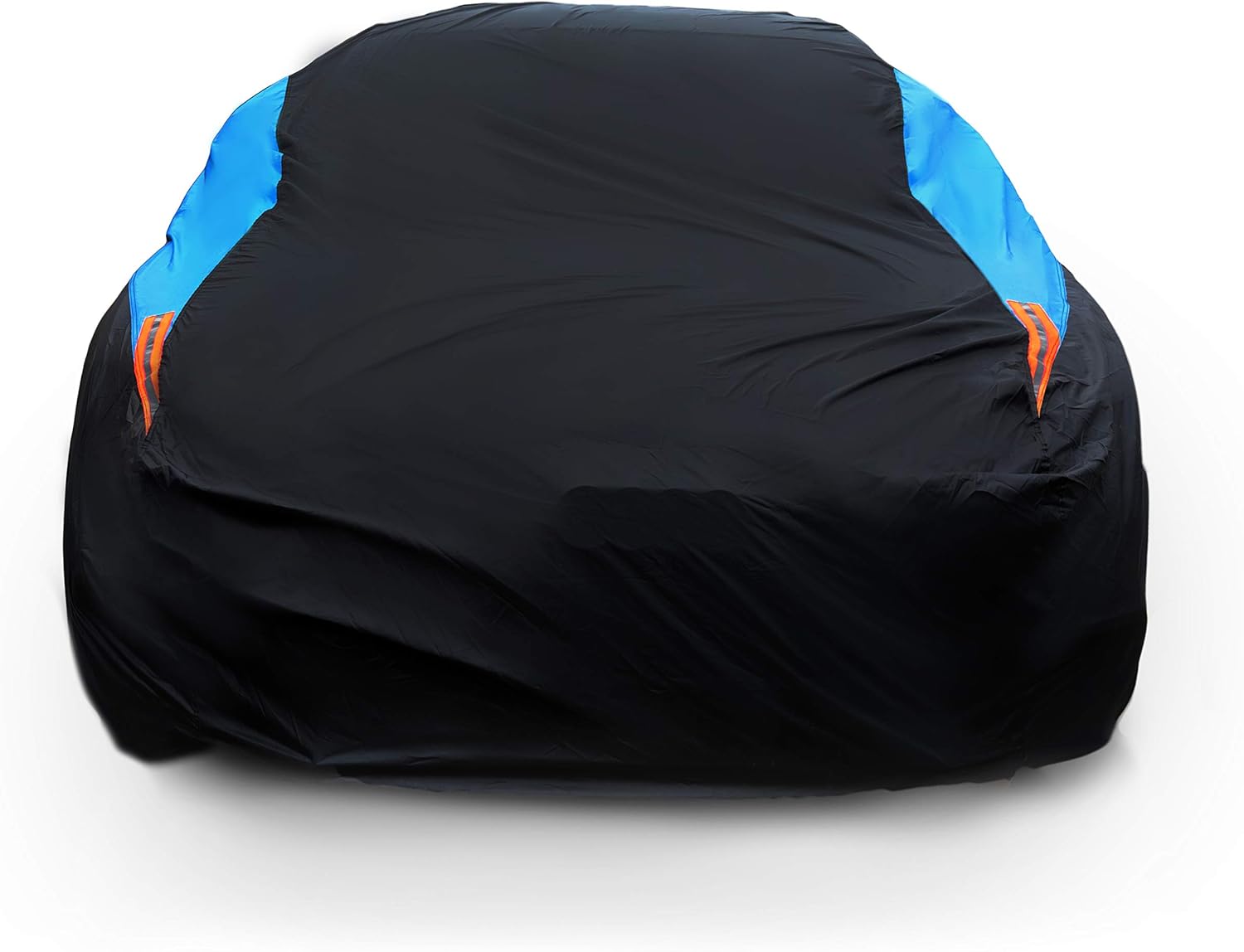
Do Waterproof Car Covers Cause Condensation? (What Michael Found Out the Hard Way)
⚡ Quick Answer
Yes — a fully waterproof car cover can cause condensation to build up underneath it. Because non-breathable waterproof materials block airflow, moisture from the air gets trapped against your paint and can’t escape. The fix is choosing a waterproof cover that is also breathable.
Why Waterproof Covers Trap Condensation:
- No airflow: Sealed fabric blocks air circulation underneath the cover.
- Dew point: Overnight temperature drops turn trapped humid air into water droplets.
- No escape route: Non-breathable fabric keeps moisture locked against your paint.
How to Stop Condensation Under Your Car Cover:
-
✓
Choose a waterproof cover with breathable or micro-pore fabric -
✓
Never cover a wet or damp car — always dry it first -
✓
Lift the cover weekly in winter to release trapped moisture
You pull off your waterproof car cover on a cool morning — and the paint underneath is wet. You checked the sky. It didn’t rain. So where did that water come from? I’m Michael, and after years of testing car covers, I can tell you the answer surprises most car owners.
That moisture is condensation. And yes, the cover itself caused it. The good news? It’s completely avoidable once you understand what’s happening under there — and what to look for in a cover.
📌 Key Takeaways
-
→
Waterproof covers trap moisture when their fabric has no breathability — blocking condensation from escaping. -
→
Trapped condensation causes paint damage, rust formation, and mold or mildew growth over time. -
→
Breathable waterproof covers solve this — they block liquid water but let condensation escape as vapor. -
→
No car cover stops condensation completely — but the right cover lets it evaporate before it causes harm.
Why Do Waterproof Car Covers Cause Condensation?
A 100% waterproof cover acts like a sealed plastic bag around your car. It stops rain from getting in — but it also stops moisture from getting out. That’s where the problem starts.
Here’s what actually happens at night. Warm, humid air gets trapped under the cover when you put it on. As temperatures drop overnight, that air cools to what’s called the dew point — the temperature at which air can no longer hold its water vapor. At that point, moisture turns into liquid droplets directly on your car’s surface.
A breathable cover lets that moisture escape as evaporated gas before it becomes a problem. A non-breathable waterproof cover keeps it locked in place — sometimes for hours or days. So if you’re waking up to a wet car under a waterproof cover, that’s exactly what’s happening.
💡 Key Insight
No car cover can fully prevent condensation — it’s a law of physics. What a good cover does is allow condensation to evaporate quickly, so your car stays dry within hours, not days.
You might think: “But my cover is labeled waterproof AND breathable — so I’m fine, right?” Not always. According to Coverstore’s waterproof cover guide, even covers with vents are not as effective as those made from inherently breathable materials. The material itself matters more than vent holes alone.
What Damage Can Trapped Condensation Do to Your Car?
Moisture sitting against your paint for hours every night isn’t harmless. The damage builds slowly — but it’s real and costly. Here’s what trapped condensation does over weeks and months of covered parking.
📋 Damage Caused by Trapped Moisture Under a Car Cover
-
Clear coat weakening: Prolonged moisture softens and breaks down your car’s protective clear coat layer. -
Rust formation: Metal parts exposed to constant moisture oxidize — especially dangerous on older cars without strong rust protection. -
Mold and mildew: A damp, dark, low-airflow environment under a cover is the exact condition mold needs to grow on paint and rubber seals. -
Paint discoloration: Moisture sitting against paint causes patchy fading, bubbling, and peeling — especially on dark-colored cars. -
Cover fabric damage: Mold spreads into the cover material itself, shortening its lifespan and making it unsafe to reuse.
This damage is worst in humid climates and worst in winter — when temperatures don’t rise enough during the day to let moisture evaporate. If your car parks on grass or gravel (rather than concrete), the risk is even higher. Dampness from the ground rises and adds to the moisture trapped under the cover.
So if you’re thinking “I’ll just use a cheap plastic-style waterproof cover to save money” — understand that one year of trapped condensation could cost far more in paint repairs than a proper cover would have. So what’s the right solution? That’s where the breathable vs waterproof debate matters.
Waterproof vs Breathable Car Cover: Which One Actually Protects Your Car?
Most people assume waterproof is always better. But when it comes to car covers, “waterproof” without “breathable” is a recipe for damage. Here’s exactly how the two types compare.
This table shows the key differences between non-breathable waterproof covers and breathable waterproof covers — the two main types available today.
The right car cover blocks water from getting in — while letting moisture vapor get out. Both properties together are what protects your paint long-term.
You might be thinking: “If a breathable cover lets air through, doesn’t that mean rain can get in too?” Here’s why that’s not the case. Breathable car covers use micro-pore technology — tiny openings that allow water vapor (gas) to pass through, but block liquid water droplets. Think of it like a Gore-Tex jacket. Rain stays out. Sweat vapor escapes. The same principle works for car covers.
Seal Skin Covers explains it well: a breathable cover repels most water yet allows air to circulate — preventing condensation while still protecting against downpours. That’s the combination you want.
How to Prevent Condensation Under a Car Cover
Even the best breathable waterproof cover will produce some condensation in cold, humid conditions. That’s just physics. But you can keep it at safe levels with these steps.
🔢 Step-by-Step: Reducing Condensation Under Your Car Cover
-
1
Always dry the car before covering it
Covering a wet car traps that water immediately. Dry the paint and all surfaces before putting the cover on.
-
2
Choose a breathable waterproof cover — not a sealed one
Look for micro-pore or spun-bond polypropylene fabric. These let vapor escape while blocking rain.
-
3
Lift the cover weekly in winter
In cold months when temperatures stay low all day, briefly lift the cover to release trapped moisture. 5 minutes is enough.
-
4
Park on concrete, not grass or gravel
Ground dampness rises under covers. Concrete dries faster and adds less moisture to the microclimate under the cover.
-
✓
Inspect monthly for moisture issues
Lift the cover and check the paint. Catch any mold spots or rust early — before they spread. Early action saves money.
These steps work together. The biggest one is the cover choice itself. A breathable waterproof cover handles most of the work automatically — the other steps are just good habits that reduce the remaining risk.
⚠️ Warning
Never cover your car right after rain — or while the cover itself is still wet. A wet cover pressed against paint creates ideal conditions for mold, mildew, and rust within days.
What Most People Get Wrong About Waterproof Car Covers
There are 3 beliefs most car owners have about waterproof covers that simply aren’t true. Getting these wrong leads to real paint damage over time.
Myth 1: “Waterproof = Best Protection”
A 100% waterproof cover with no breathability is actually worse for your paint than a water-resistant breathable cover. It blocks rain — but traps the condensation that forms every night. Over weeks, that trapped moisture causes more damage than occasional light rain would have.
The ideal isn’t “maximum waterproofing” — it’s the right balance of water blocking and vapor release.
Myth 2: “Condensation Under the Cover Means the Cover Is Leaking”
This is one of the most common complaints car owners post online. They wake up to a wet car and assume their cover failed. In most cases, it didn’t leak — the moisture is condensation that formed on the inside. Even a perfect waterproof cover will have condensation underneath on cold mornings.
As Classic Additions explains in their condensation guide, breathable covers allow this moisture to evaporate once temperatures rise — which is exactly how the system is designed to work.
Myth 3: “No Cover Is Better Than a Waterproof Cover”
Some car owners give up on covers entirely after bad experiences with cheap waterproof ones. That’s the wrong conclusion. A cheap non-breathable cover causes problems. A quality breathable waterproof cover solves them. The answer isn’t “no cover” — it’s “the right cover.”
Which Type of Car Cover Is Right for You?
🎯 Which Car Cover Is Right For You?
If you park outdoors year-round…
Exposed to rain, dew, humidity, and cold overnight temperatures
→ Breathable Waterproof Cover
If you park indoors in a garage…
Protected from rain but exposed to dust, knocks, and temperature swings
→ Breathable Indoor Soft Cover
If you live in a very wet climate…
Heavy rain, high humidity, frequent storms all year
→ Multi-Layer Breathable Waterproof + Vented Cover
Whatever your situation, the one thing all three scenarios have in common is breathability. It’s not optional — it’s the feature that makes any cover safe for long-term use on your paint.
Recommended Product
Budge Rain Barrier Car Cover, Outdoor, Water-Resistant, Breathable, Car Cover fits Cars up to 200″, Gray
★★★★☆ 4.0 out of 5 stars — Highly rated on Amazon
Uses micro-pore technology to block rain while letting condensation escape as vapor — exactly the balance needed to protect paint without trapping moisture.
As an Amazon Associate, we earn from qualifying purchases.
Conclusion
Yes — waterproof car covers do cause condensation, but only when they’re not breathable. The cover isn’t the enemy. The lack of airflow is. A quality breathable waterproof cover blocks rain from getting in while letting moisture vapor escape, keeping your paint safe long-term.
The biggest mistake car owners make is choosing “waterproof” without checking for breathability. That one detail is the difference between a cover that protects your car and one that slowly damages it.
One thing to do right now: Check the label on your current car cover. If it says “100% waterproof” but doesn’t mention “breathable” or “micro-pore” — flip it over and feel the inside. If it feels like a plastic bag, your car may be sitting in trapped moisture every morning. Swap it for a breathable waterproof cover before the next rainy season.
Frequently Asked Questions
Do waterproof car covers cause rust?
Yes — a non-breathable waterproof cover can cause rust by trapping moisture against metal surfaces. When condensation can’t escape, it sits on the car’s body panels and accelerates oxidation. A breathable waterproof cover eliminates this risk by allowing moisture to evaporate before it causes corrosion.
Is it OK to cover a wet car?
No — you should always dry your car before covering it. Covering a wet car traps the existing moisture under the cover immediately, creating a damp environment that promotes mold, mildew, and rust. If the car gets wet while covered, remove the cover and let both the car and cover dry fully before reapplying.
Does a breathable car cover still protect against rain?
Yes. Breathable car covers use micro-pore technology that blocks liquid water (rain) while allowing water vapor (condensation) to pass through. The pores are small enough to stop raindrops but large enough for vapor molecules. Most quality breathable covers handle moderate to heavy rain without allowing water to reach the paint.
Why is my car wet under the cover even though it didn’t rain?
That’s condensation — not a leak. Overnight temperature drops cause humid air trapped under the cover to reach the dew point, releasing moisture as water droplets on the car’s surface. A non-breathable cover keeps this moisture locked in place. A breathable cover allows it to evaporate once temperatures rise in the morning.
Can a car cover cause mold on paint?
Yes — if the cover traps moisture and lacks airflow. Mold needs 3 things to grow: moisture, warmth, and organic material to feed on (like dust or dirt on paint). A non-breathable cover creates a humid, warm microclimate that gives mold exactly what it needs. A breathable cover that dries quickly removes the moisture element and stops mold from developing.
How often should I remove my car cover to let it breathe?
With a breathable waterproof cover, you don’t need to remove it regularly — it handles airflow on its own. But in winter, when cold temperatures prevent moisture from evaporating naturally, lifting the cover briefly once a week is a smart habit. This releases any trapped condensation and lets you check for moisture-related issues early.
What material is best for a waterproof breathable car cover?
Spun-bond polypropylene with a micro-pore waterproof film layer is the most proven material for outdoor use. Three-layer covers — with an outer weather layer, waterproof middle film, and soft inner lining — offer the best combination of rain protection, breathability, and paint safety. Avoid single-layer vinyl or plastic-style covers, which are fully sealed and trap condensation.

Daniel Brooks is an automotive writer and product researcher focused on car accessories, car tech, maintenance, and practical driving guides. At Plug-in Car World, he helps drivers make smarter automotive decisions through honest reviews and research-driven content.