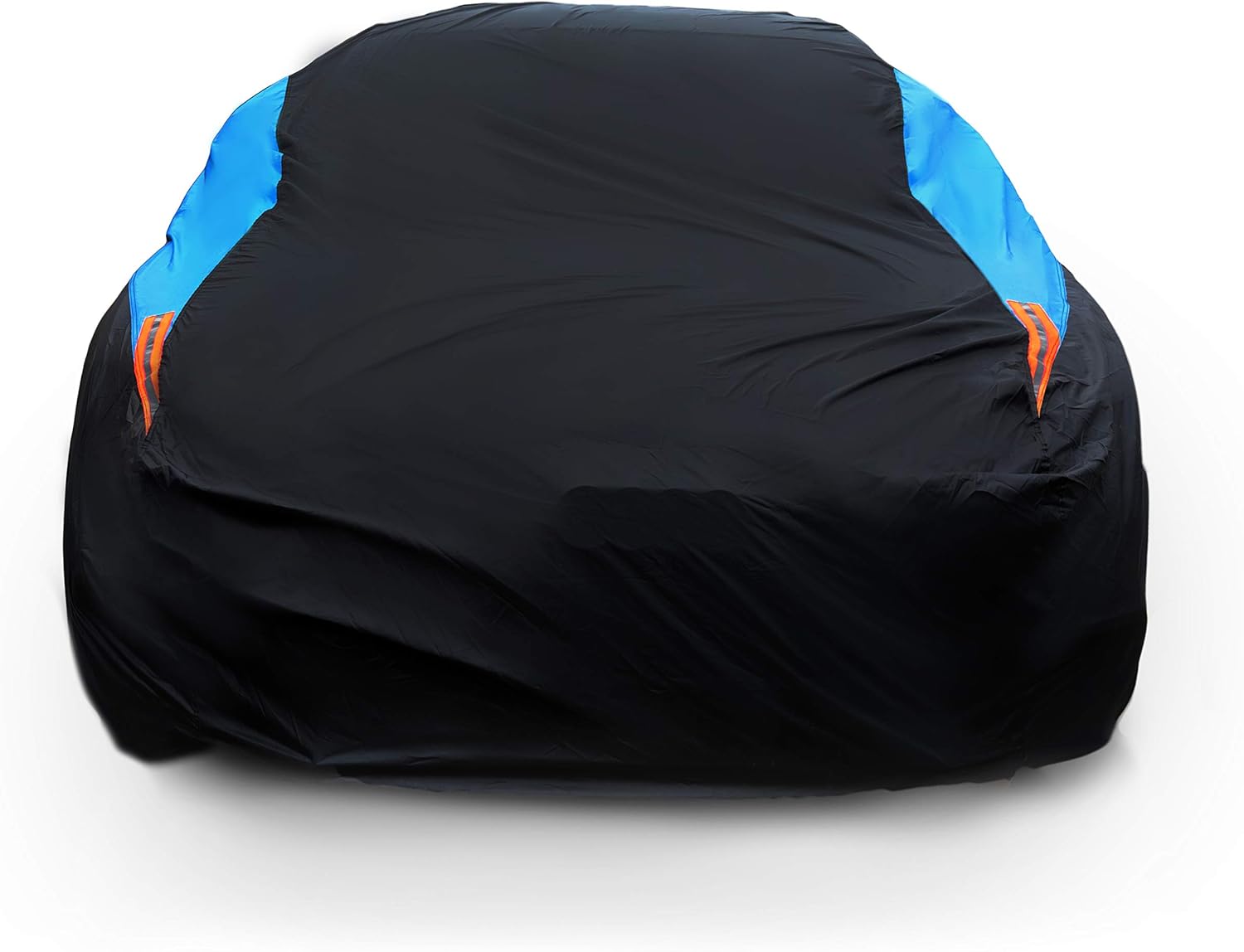
Rain Getting Through Your Car Cover? Here’s Why
⚡ Quick Answer
Rain gets through a car cover because of worn fabric, a poor fit, water pooling in low spots, or because the cover was never truly waterproof to begin with. Most covers are only water-resistant — not waterproof — and heavy or sustained rain will eventually push moisture through.
Top reasons rain leaks through your car cover:
- Wrong material: Indoor or cheap covers have no real water barrier.
- Poor fit: Loose covers pool water instead of shedding it.
- Aged coating: DWR waterproof coating wears off after 12–18 months.
- Tears or holes: Even a small rip lets rain straight through.
Quick fixes to try right now:
-
✓
Re-spray cover with DWR fabric waterproofing spray -
✓
Check the fit — snug covers shed rain, loose ones collect it -
✓
Replace covers over 2 years old — the coating is gone
You pull back the car cover after a storm and find your paint speckled with water. The cover was supposed to protect it. Michael here — and this is one of the most common car cover complaints I hear. The problem isn’t always a defective product. It’s usually a fixable cause you haven’t found yet.
In this guide, you’ll learn exactly why rain is getting through, how to test your cover, and what to do about it — including when it’s time for a replacement.
📌 Key Takeaways
-
→
Water-resistant ≠ waterproof. Most car covers only repel light rain — heavy or sustained rain will eventually seep through. -
→
DWR coating wears out in 12–18 months, making even good covers leak if not retreated. -
→
A loose fit causes pooling. Water that pools on a cover will always find a way through — tight fit is essential. -
→
True waterproof covers use multi-layer PE or PEVA fabric with sealed seams — not just a single sprayed coating.
Why Is Rain Getting Through My Car Cover?
Rain gets through a car cover for one of four reasons: the material isn’t rated for rain, the cover fits loosely and creates water pools, the waterproof coating has worn away, or there’s physical damage in the fabric. Most people assume their cover is broken. Usually, it’s one of these fixable issues.
Understanding which cause applies to your cover is the first step to fixing it — or knowing when to replace it.
1. Your Cover Was Never Truly Waterproof
Here’s what most people don’t know: waterproof and water-resistant describe completely different things. A water-resistant cover uses a DWR (Durable Water Repellent) coating on woven fabric. Water beads and rolls off in light rain. But under heavy or sustained rain, the coating saturates and water pushes through.
A truly waterproof cover is built with a non-porous membrane — materials like PE, PEVA, or marine-grade polyester — bonded between layers. Liquid water cannot physically pass through the membrane. According to experts at Covercraft, even premium outdoor covers are intentionally made water-resistant rather than fully waterproof — because breathability matters too. A fully sealed cover traps condensation underneath, which damages paint just as badly as rain.
So if your cover leaks in a downpour, it may simply be doing exactly what it was designed to do. The question is whether you bought the right type for your climate.
If you live somewhere with frequent heavy rain, a true waterproof multi-layer cover is worth the extra cost.
2. The DWR Waterproof Coating Has Worn Off
Even a high-quality water-resistant cover starts leaking when its DWR coating degrades. This coating is a chemical treatment applied to the fabric surface. It causes water to bead and roll off. But exposure to UV rays, washing, and general wear breaks it down over time — usually within 12 to 18 months of regular outdoor use.
You might be thinking your cover is defective. Here’s why that’s rarely true: the base fabric is fine. The coating is just gone. A simple re-treatment with a fabric waterproofing spray (like Nikwax or Scotchgard) can restore water repellency in minutes.
Test your cover right now. Spray water on it. If droplets bead up and roll off, the coating is still working. If water soaks in and darkens the fabric, the DWR is gone. That’s your answer.
How Does a Poor Fit Let Rain In?
A loose car cover is one of the biggest causes of rain getting through — and it’s the cause most people miss. When a cover sags or droops, rain collects in low-lying pockets instead of running off. That pooled water sits and slowly soaks through the fabric, even if the material itself is rated for rain.
Wind makes this worse. A loose cover flaps and shifts, opening gaps at the edges where wind-driven rain blows straight underneath — bypassing the fabric entirely.
Custom-Fit vs Universal-Fit Covers
Universal-fit covers are designed to fit dozens of vehicle shapes. That compromise means they rarely fit any one car perfectly. They’re prone to sagging around the hood, roof, and trunk — exactly where water pools most.
Custom-fit covers are cut to the exact dimensions of your make and model. They stay taut across every panel, so water sheds off the surface the way it should. The tight fit also closes the edge gaps where wind-driven rain sneaks in. If your cover is universal-fit and you park outdoors regularly, this is likely your problem.
⚠️ Warning
Never leave water pooling on your car cover for hours. Even the best waterproof materials will eventually let water through when it sits in a puddle on the surface rather than running off. A snug fit is as important as the fabric rating.
Can Physical Damage Cause My Car Cover to Leak?
Yes — and it’s easy to miss. Tiny tears, pinholes, or worn-through spots in the fabric create direct pathways for water. These often appear near the mirror pockets, elastic hem edges, or anywhere the cover rubs against a sharp panel edge repeatedly.
Run your hand slowly across the entire inner surface of your cover in daylight. Feel for thin spots, rough patches, or visible holes. Even a 2mm tear in a waterproof cover turns into a drip point during heavy rain. If you find damage, a waterproof repair tape (sold at outdoor or auto supply stores) can seal small holes as a short-term fix. Anything larger means the cover needs replacing.
✅ Tip
Hold the cover up to bright sunlight and look through it. Pinholes and thin spots show up as bright spots. This takes 30 seconds and catches damage you’d never find by touch alone.
How to Stop Rain Getting Through Your Car Cover
Once you’ve identified the cause, the fix is straightforward. Most rain leakage problems fall into one of three categories — each with a clear solution.
🔢 Step-by-Step: Diagnosing and Fixing Car Cover Rain Leaks
-
1
Do the bead test
Spray water on the cover. If it soaks in instead of beading, the DWR coating is gone.
-
2
Inspect for tears and holes
Hold the cover to sunlight. Bright spots = holes. Check mirror pockets and hem edges first.
-
3
Check the fit
Put the cover on and look for sagging areas where water could pool. Loose = problem.
-
4
Apply waterproofing spray if needed
Wash the cover first, then apply DWR spray evenly. Let it dry fully before use.
-
✓
Replace if the cover is over 2 years old or has large tears
At that point, no spray will fix it. A new multi-layer waterproof cover is the right call.
If retreating your cover doesn’t solve the problem, or if it’s already more than 2 years old, a replacement is the smarter investment. Look for a multi-layer cover rated for outdoor use, with PE or PEVA layers and sealed seams — as explained by engineers at Engineer Fix, this construction is the only design that reliably blocks liquid water while still allowing vapor to escape.
Recommended Product
Kayme 10 Layers Car Cover Waterproof All Weather for Automobiles
★★★★½ 4.5 stars — 24,000+ reviews on Amazon
A proven multi-layer PE and PEVA construction that genuinely blocks heavy rain — exactly the type of cover this article describes as the right fix for chronic rain leakage.
As an Amazon Associate, we earn from qualifying purchases.
Does Rain Under the Cover Damage My Car?
Yes — moisture trapped under a car cover can cause more damage than leaving the car uncovered in light rain. When water gets under the cover and stays there, it creates a humid, warm environment that accelerates rust, mold, and paint damage.
Rainwater also isn’t just water. In urban areas, it carries sulfuric and nitric acids from air pollution. These compounds corrode paint and accelerate rust. Rust-related repairs cost U.S. drivers over $3 billion annually — much of it from water exposure that built up slowly over time.
💡 Key Insight
A non-breathable waterproof cover that traps condensation can damage your paint just as badly as rain itself. The best car cover for wet climates is waterproof AND breathable — not one or the other.
If rain has already gotten under your cover, remove the cover right away. Dry both the car and the cover fully before re-applying. Never put a wet cover back on a car — that seals moisture in and makes the problem worse.
What Material Car Cover Is Best for Rain?
For heavy or frequent rain, you need a multi-layer cover that uses PE or PEVA as a core waterproofing layer. These materials are inherently non-porous — liquid water cannot pass through them. The best outdoor covers combine this with a soft breathable inner lining and a UV-resistant outer shell.
Single-layer covers with a sprayed DWR coating work for light rain and moderate climates. But in regions with sustained rainfall or coastal humidity, that coating fails within one season. Multi-layer construction is the standard that holds up.
📋 Car Cover Material Guide for Rain Protection
-
PE / PEVA (multi-layer): True 100% waterproof. Best for heavy rain and wet climates. Needs air vents for breathability. -
Marine-grade polyester: Highly water-resistant with good durability. Handles sustained rain well when treated with DWR. -
Standard polyester with DWR: Fine for light and occasional rain. Needs re-treatment every 12–18 months. -
Cotton or flannel (indoor covers): Zero rain protection. Never use outdoors in wet weather.
What Most People Get Wrong About Car Cover Rain Protection
Most car cover owners make one of three mistakes. Each one is fixable once you know about it.
Myth 1: “Waterproof” on the label means it won’t leak. Many manufacturers label covers “waterproof” in headlines while specifying “water-resistant” in the fine print. Real waterproof construction uses PE, PEVA, or sealed membrane layers — not a spray coating. If the label doesn’t name the waterproof material or construction, assume it’s water-resistant only.
Myth 2: A breathable cover isn’t really waterproof. This is backwards. The best outdoor covers are both breathable and waterproof. Breathability doesn’t mean rain gets through — it means water vapor (condensation) can escape. Microporous fabrics block liquid water droplets while letting vapor pass. A non-breathable cover is actually more likely to damage your car by sealing in moisture.
Myth 3: Leaving the cover on during rain is always fine. It depends entirely on the cover’s condition and fit. A loose or worn cover left on during rain can trap moisture and create more damage than no cover at all. Always inspect your cover before storm season — not after it.
Conclusion
Rain getting through your car cover almost always comes down to one of four things: the wrong material type, a worn DWR coating, a loose fit that pools water, or physical damage in the fabric. Most of these are easy to test and fix in under an hour.
If your cover passes the bead test and still fits snugly, a DWR retreatment spray is all you need. If it’s over 2 years old or leaking heavily, a new multi-layer PE or PEVA cover is the right call — and a worthwhile investment compared to rust or paint repair.
One thing to do right now: Fill a spray bottle with water and test your cover for bead-up. Takes 60 seconds. That single test tells you whether you need a spray can or a new cover.
Frequently Asked Questions
Why does my car cover let water through even though it’s waterproof?
Most covers labeled “waterproof” are actually water-resistant, meaning they repel light rain but allow moisture through in heavy or sustained downpours. The DWR surface coating also wears off in 12–18 months, causing a once-effective cover to start leaking. Reapply waterproofing spray or upgrade to a multi-layer PE/PEVA cover.
Is any car cover truly 100% waterproof?
Yes — covers built with PE, PEVA, or sealed polyester membranes between layers are genuinely 100% waterproof. These use non-porous materials that liquid water cannot penetrate. They must include air vents, though, to prevent condensation buildup underneath the cover.
How do I stop water from pooling on my car cover?
Pooling happens when the cover is too loose and sags between panels. Switch to a snug-fitting or custom-fit cover for your vehicle. Taut fabric sheds rain off the surface. If using a universal cover, make sure the windproof straps are tight under the vehicle to reduce sag.
Can rain damage my car even with a cover on?
Yes. If rain gets under a non-breathable cover, trapped moisture creates conditions for rust, mold, and paint damage. A leaking cover that holds moisture against the paint is often worse than no cover at all. Always use a breathable cover and remove it promptly after rain if it’s not performing well.
How long do car covers last before they start leaking?
Water-resistant covers with DWR coating typically lose effectiveness within 12–18 months of regular outdoor use. High-quality multi-layer waterproof covers last 3–5 years with proper care. Washing your cover too often — especially with harsh detergents — strips the coating faster than weather does.
What is the difference between a waterproof and water-resistant car cover?
Waterproof covers use non-porous membrane materials (PE, PEVA) that physically block liquid water from passing through. Water-resistant covers use tightly woven fabric with a DWR spray coating that repels most rain but saturates under sustained heavy rain. These are fundamentally different — not just points on a scale.
How do I keep my car cover from blowing off in wind and letting rain in?
Use a cover with multiple windproof straps that pass under the vehicle and buckle securely. Elastic hems alone fail in anything beyond a light breeze. A cover with 3 straps (front, middle, and rear) stays in place during storms. A good fit also reduces wind catch — loose covers act like sails and shift constantly in wind.

Daniel Brooks is an automotive writer and product researcher focused on car accessories, car tech, maintenance, and practical driving guides. At Plug-in Car World, he helps drivers make smarter automotive decisions through honest reviews and research-driven content.