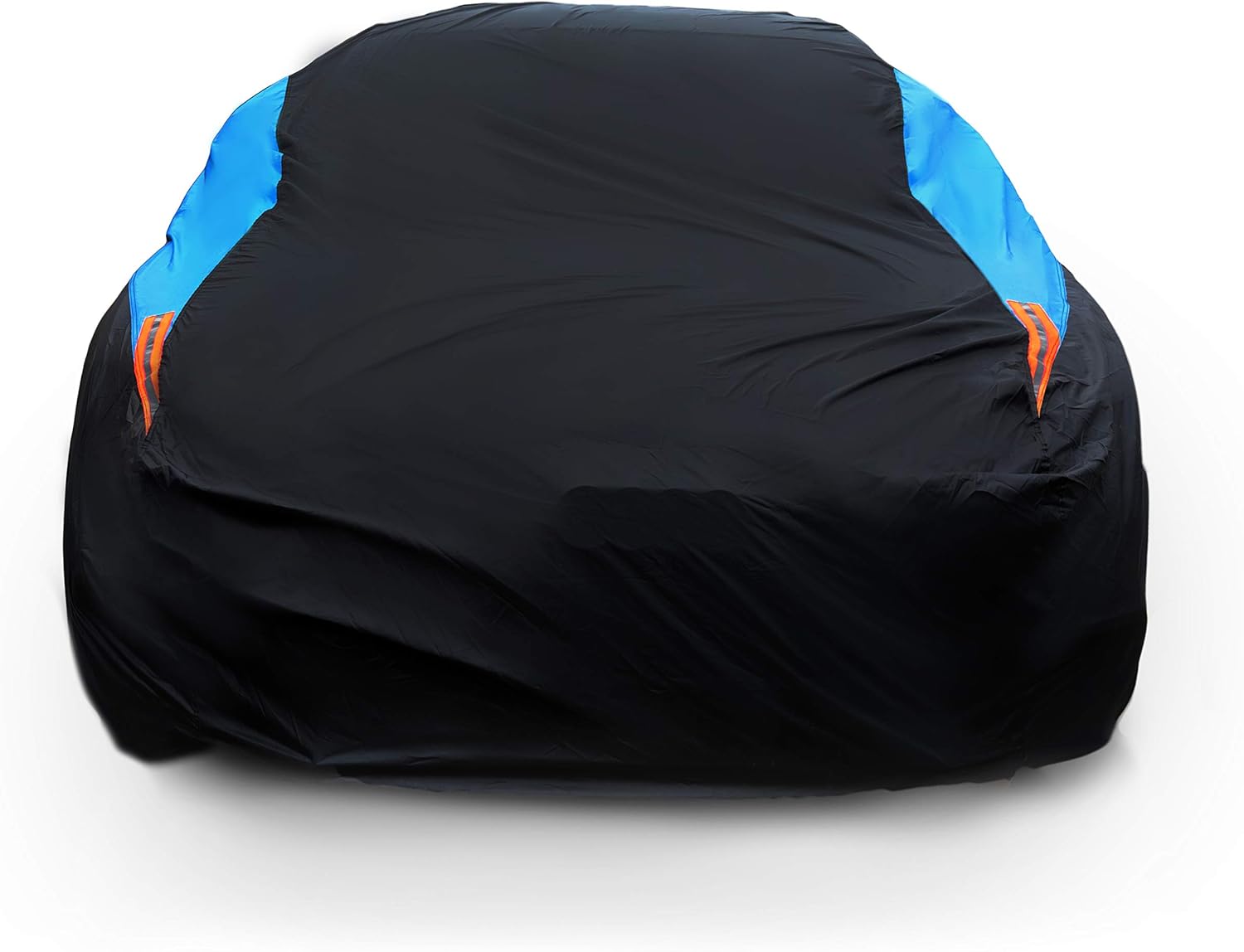
How to Prevent Water Pooling on a Car Cover: 6 Proven Fixes
⚡ Quick Answer
Water pools on a car cover because the fabric sags between the roof and hood, creating low spots that collect rain. Fix it by using a snug-fitting cover, adding a support pole under the center, tightening tie-down straps, and parking on a slight incline to encourage runoff.
Top ways to stop water pooling on a car cover:
-
1
Use a custom-fit or semi-custom cover that hugs your car’s contours tightly -
2
Place an adjustable support pole under the cover at the roof’s center -
3
Tighten all elastic hems and tie-down straps so the cover stays drum-taut -
4
Park on a slight slope or angle so water runs off the cover naturally
Mistakes that make pooling worse:
-
✓
Never use a universal cover on a car it doesn’t snugly fit -
✓
Don’t skip straps — wind shifts loose covers into sagging shapes -
✓
Never leave standing water on the cover — remove it within 24 hours
You walk out to your car and find a bathtub of rainwater sitting right on top of your cover, sagging down toward the roof. Michael here — and I’ve watched that exact problem quietly wreck paint finishes and rot cover fabric over and over. The good news is that water pooling on a car cover is 100% preventable once you know why it happens.
In this guide, you’ll get every fix ranked from fastest to most thorough — so you can stop the problem today.
📌 Key Takeaways
-
→
Sagging fabric is the root cause — any low point on the cover becomes a water trap. -
→
Pooled water acts like a magnifying glass in sunlight, scorching paint through even a “waterproof” cover. -
→
A support pole placed at the roof center creates a ridge that sheds water to the sides automatically. -
→
Custom-fit covers pool far less water than universal covers — the snugger the fit, the less sagging.
Why Does Water Pool on a Car Cover?
Water pools on a car cover because fabric sags between the car’s high points — the roof, hood ridge, and trunk — creating low spots that fill with rain. This isn’t a flaw in one brand. It’s simple physics: any flexible material laid over an uneven surface will dip where support is absent.
Universal-fit covers are the biggest offenders. They’re designed to fit dozens of car shapes, so they never hug any one car perfectly. Wind then shifts the loose fabric, and new sag points form with every storm.
But here’s the thing. Even a well-fitted cover can pool water over time. Elastic hems stretch, straps loosen, and fabric relaxes after repeated wetting and drying. A cover that shed water perfectly in month one may collect gallons by month six.
⚠️ Warning
Pooled water on a car cover acts as a natural lens in sunlight. According to Hagerty’s car cover research, water collected on the cover’s surface can create a steam-cooker effect between the cover and the paint when the sun shines — causing discoloration and permanent paint damage even through “waterproof” fabrics.
So what makes a cover sag in the first place? It comes down to 3 causes, and each one has a direct fix.
📋 The 3 root causes of car cover water pooling
-
Poor cover fit: Too-large universal covers leave gaps and loose fabric that sag under rainfall weight. -
Loose tie-downs: Straps and elastic hems that loosen over time let wind reshape the cover into pooling traps. -
No central support: Without something holding the cover up at the roof, heavy rain simply pushes the fabric down.
Now let’s go through every fix — starting with the one most people skip entirely.
How Do Support Poles Stop Water From Pooling on a Car Cover?
A support pole props the cover up from the inside, creating a peaked ridge that forces rain to run sideways off the cover instead of collecting on top. Think of it like a tent pole — without one, the tent collapses; with one, water rolls off naturally. This is the single most effective fix for chronic pooling.
You place the pole vertically inside the cover, resting its base on your car’s roof and its padded top pushing the cover upward. The result is a small raised peak that acts like a roofline. Water hits the cover at an angle and slides away.
The key is placement. Set the pole at the highest point of your car — usually the center of the roof panel. One pole handles most sedans and SUVs well. Larger vehicles like pickup trucks or vans may need 2 poles: one at the cab center and one at the rear.
Recommended Product
Explore Land Adjustable Boat Cover Support Pole 3 Pieces with Straps for V Hull, Jon and Pontoon Boat
★★★★☆ 4.1 out of 5 stars — 788 ratings on Amazon
Adjusts from 13″ to 39″ with a 7″ stable base and mushroom cap — works under car covers to create a water-shedding ridge with no tools needed.
As an Amazon Associate, we earn from qualifying purchases.
You might be thinking: “Won’t the pole scratch my roof?” A good support pole has a padded or mushroom-shaped cap that distributes pressure. It won’t mark factory paint if you use one with a soft rubber or flexible top.
What Type of Car Cover Doesn’t Hold Water?
A snug custom-fit or semi-custom car cover made from water-shedding fabric holds the least water. The cover must do two things at once: resist water penetrating the fabric AND be shaped tightly enough that it has no loose sections where rain can collect. Most cheap universal covers fail on both counts.
Material matters as much as fit. Here’s how common cover types compare:
This table shows how the most common car cover types handle water pooling and penetration differently.
The worst combination is a plastic tarp: it blocks water from getting in, but any sag becomes a permanent pond that can hold 20+ lbs of water, stressing the fabric and increasing the magnifying-glass heat risk.
Look for covers with a water-resistant outer layer AND a breathable inner layer. The outer repels rain. The inner allows any trapped condensation to escape — so your paint doesn’t sweat under the cover either.
✅ Tip
If you’re buying a new cover, check for mirror pockets. A cover with molded mirror pockets fits the car far tighter at the sides — which directly reduces sag at the roof and hood where pooling starts.
Next, let’s look at how to fix the cover you already own — without buying anything new.
How Do I Keep Water Off My Car Cover? (6-Step Fix)
You can prevent water from pooling on your car cover through 6 specific actions — most take under 5 minutes. The goal is to eliminate every low point in the fabric so rain always has a downhill path to the ground.
🔢 Step-by-Step: How to Stop Water Pooling on Your Car Cover
-
1
Check cover fit before anything else
Run your hands along the roof and hood. Any section that moves more than 2–3 inches is a sag point. Note all of them before proceeding.
-
2
Tighten all tie-down straps and elastic hems
Pull each strap snug under the car and re-buckle. Check the elastic hem around the bottom — it should grip the car’s lower body without hanging loose.
-
3
Insert a support pole at the roof center
Extend the pole to just above roof height, place it under the cover at the center point of the roof panel, and let it push the cover upward into a slight peak.
-
4
Park on a slight incline or angled surface
Even a 2–3 degree slope helps water flow toward the rear or front of the car rather than sitting flat on top. If you park on level ground, try rotating the car 45 degrees.
-
5
Re-check straps after the first rainfall
Rain weight and wind will shift the cover slightly. Tighten any straps that loosened after the first wet test — this is normal and takes under 2 minutes.
-
✓
Remove any pooled water within 24 hours
If water still pools despite these steps, push it off the cover with a soft foam broom from the side — never drag the cover, which can scratch paint underneath.
Does Water Under a Car Cover Damage Paint?
Yes — water trapped between the cover and your car’s paint causes real damage, and it works in 2 ways. First, pooled water on top of the cover focuses sunlight like a lens, creating heat spots that discolor paint beneath. Second, moisture trapped underneath the cover promotes rust, mold, and mildew — especially on cars parked outside for weeks at a time.
This is a common surprise: people buy a waterproof car cover thinking it keeps all water out. But even a 100% waterproof cover traps condensation that forms naturally when temperature shifts overnight. Without breathability, that trapped moisture sits on your paint for hours.
💡 Key Insight
A car cover that traps moisture is often more damaging than no cover at all. The ideal cover is water-resistant on the outside AND breathable on the inside — so rain can’t soak through, but any condensation that forms can escape as vapor.
According to Hagerty’s car cover research, even top-line covers can absorb pooled water and create damaging conditions when the sun returns. Their testing found that pooled water on the cover’s surface directly caused paint discoloration on at least one vehicle — even though the cover itself was rated “waterproof.”
So if you drive your car regularly, let the cover dry before storing it. Folding a wet cover into its bag invites mildew growth that will ruin both the cover and — if it sits damp on your car — the paint underneath.
How Tight Should a Car Cover Be to Prevent Pooling?
A car cover should be tight enough that you can’t easily grab a handful of loose fabric at any point on the roof or hood. The fabric should lie flat against the car’s body, following its contours without gaps. If you can pinch and lift more than 2 inches of fabric off the surface, the cover is too loose and will sag under rain weight.
That said, “tight” doesn’t mean “strangled.” A cover stretched painfully over side mirrors can tear and leave the sides loose. The goal is snug — not stretched. A proper custom-fit cover achieves this naturally because it’s patterned to your car’s exact shape.
For universal covers that are slightly oversized, use every strap the cover came with. Don’t skip the belly strap that runs under the car’s chassis. That strap pulls the sides down and removes the slack at the roof.
✓ Cover tightness checklist before every rain
-
✓
Fabric lies flat against roof — no lifted sections when you press down gently -
✓
All tie-down straps buckled and hand-tightened — not just clipped loosely -
✓
Elastic hem wraps below the door sills — not sitting on top of them -
✓
Support pole (if used) is positioned so the cover has a visible peak at the roof center
Here’s why tightness matters beyond pooling. According to US Car Cover’s guide on rain protection, a tight-fitting cover prevents rain from seeping in at the edges — a common failure point that no waterproof fabric can fix if the hem is loose.
What Most People Get Wrong About Car Cover Water Pooling
“Waterproof” means water can’t pool on it. This is wrong. Waterproof describes whether water passes through the fabric — not whether the cover’s shape sheds water away. A 100% waterproof cover laid loosely over a car will still pool a foot of standing water in a heavy storm. Waterproofing and water-shedding shape are two entirely separate properties.
“A heavier cover holds less water.” Also wrong. Heavier multi-layer covers actually sag more under their own weight in wet conditions, creating deeper pooling pockets. Weight has no effect on a cover’s tendency to sag. Fit does.
“I can leave pooled water there — it’ll evaporate.” This is the most dangerous mistake. In sunlight, pooled water on the cover can scorch the paint below in under 2 hours. And in cool weather, it just sits there — adding weight, stretching the fabric, and eventually soaking through via capillary action even through water-resistant materials.
Conclusion
Water pooling on a car cover comes down to one thing: any flat or sagging section of fabric will collect rain. Fix the fit, add a support pole at the roof center, and tighten your straps before every storm — those 3 actions eliminate the problem for most cars completely.
Don’t rely on “waterproof” labeling alone. The shape and fit of the cover matters more than the fabric’s water resistance rating. Even the best waterproof cover will pool water if it sags.
Do this right now: Go outside and press your palm flat against the roof section of your car cover. If the fabric moves more than 2 inches, tighten your straps today. That one fix prevents 80% of pooling before the next rain even arrives.
Frequently Asked Questions
Why does water pool on my car cover even when it’s strapped down?
Straps alone don’t eliminate sag — they only hold the cover’s edges down. Water still pools at the center of the roof if nothing pushes the fabric upward. Adding a support pole under the roof center is the fix. The pole creates a peak so rain runs sideways off the cover.
Can pooled water on a car cover damage paint?
Yes. Pooled water on the cover’s surface focuses sunlight like a lens, which can discolor or etch the paint underneath — even through a “waterproof” cover. Moisture trapped under the cover also promotes rust and mildew on the car’s finish. Remove pooled water within 24 hours.
How do I prop up a car cover to stop water collecting?
Use an adjustable car cover support pole placed vertically under the cover at the roof’s center point. Extend it just enough to lift the fabric into a gentle peak. Telescoping poles that adjust from 13″ to 54″ work for most sedans and SUVs. Secure the cover’s straps after placing the pole.
What type of car cover is best for heavy rain?
A custom-fit or semi-custom cover made from water-resistant polyester with a breathable inner layer is best for heavy rain. It sheds water from the outside while allowing condensation to escape from the inside. Avoid full-plastic tarps — they block drainage and create extreme pooling even in moderate rain.
Does a tight car cover prevent water pooling?
A tighter cover reduces pooling significantly but doesn’t eliminate it. A snug fit removes loose fabric sections that sag. However, even a tight cover will pool at the flat roof section without a support pole underneath. Tight fit plus a support pole is the most effective combination.
Can pooled water ruin a car cover?
Yes. Constant pooling stretches the fabric at sag points, weakening the material over time. Heavy pools — especially from rain plus snow — can tear seams or split cover panels. A 5-gallon pool of water weighs over 40 lbs, which is more than most car covers are designed to hold at one point.
Should I remove pooled water from my car cover or leave it?
Remove it, and do so within 24 hours. Use a soft foam push broom to slide the water off the cover’s side — never drag the cover across the car’s surface. In sunlight, standing water on the cover can magnify heat and damage paint in under 2 hours. Never leave it overnight if the next day will be sunny.

Daniel Brooks is an automotive writer and product researcher focused on car accessories, car tech, maintenance, and practical driving guides. At Plug-in Car World, he helps drivers make smarter automotive decisions through honest reviews and research-driven content.