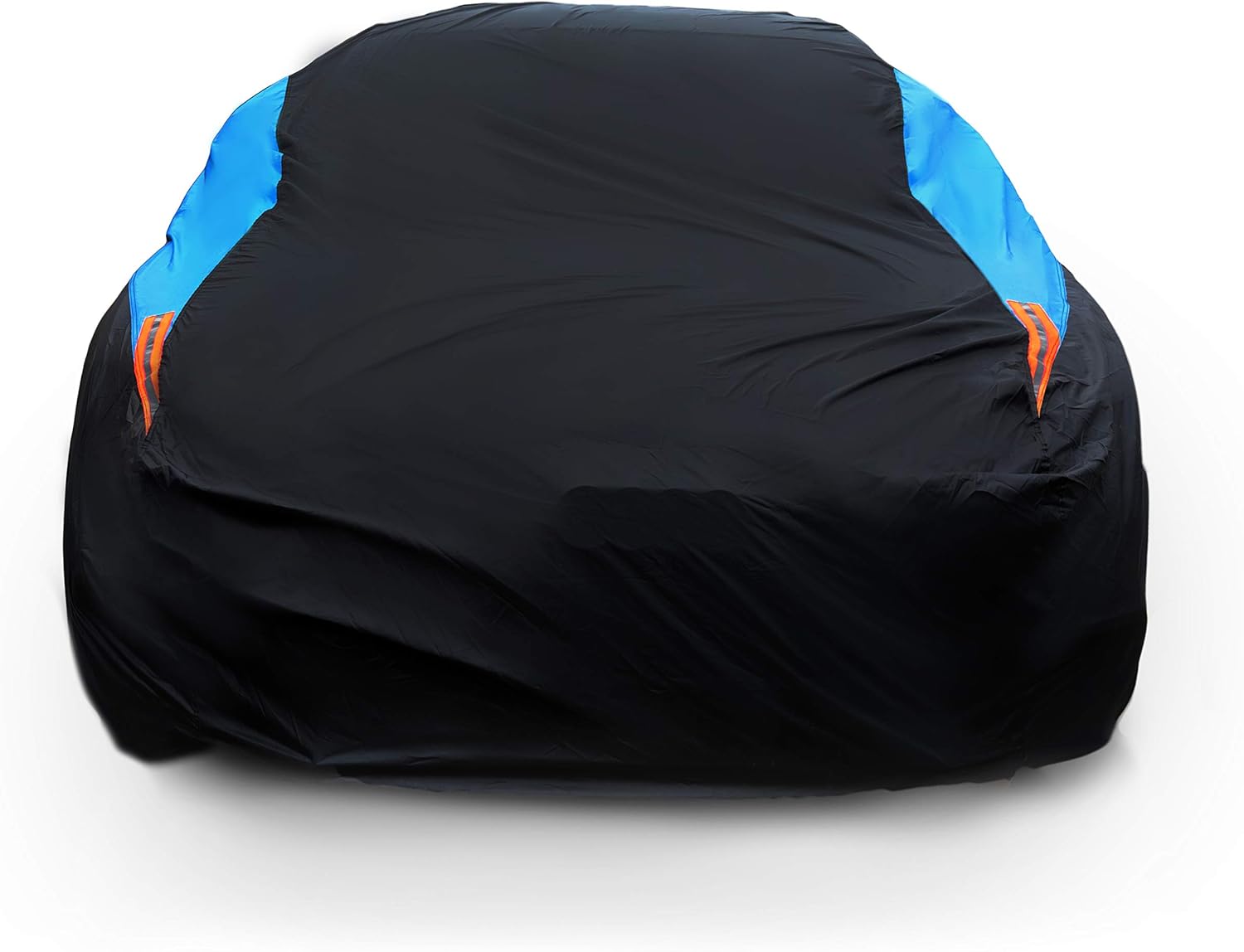
Waterproof Car Cover Care: Full Guide to Keep It Working
A waterproof car cover needs regular cleaning, gentle drying, and periodic re-waterproofing to keep working. Wash it every 4 to 6 weeks, dry it fully before storage, and reapply a water-repellent treatment once water stops beading on the surface.
You spent good money on a waterproof car cover. Now it’s soaking through, and you’re not sure why.
I’m Daniel Brooks, and I’ve spent years testing car covers in real driveway conditions — rain, sun, and everything between. Most “waterproof” covers don’t fail because they were cheap. They fail because nobody told the owner how to care for them.
A waterproof car cover relies on a coating or membrane that wears down with use. Skip the care steps, and that protection disappears fast. Here’s exactly how to keep your cover doing its job.
- Waterproof covers use a coating or membrane that degrades over time — care extends its life.
- Wash your cover every 4 to 6 weeks to protect the water-repellent finish.
- Full waterproof covers can trap condensation if they lack ventilation.
- Re-waterproofing spray restores performance once water stops beading.
- Store your cover bone-dry to prevent mold and mildew growth.
What Makes a Car Cover Truly Waterproof?
A truly waterproof car cover uses a multi-layer fabric with a non-porous membrane bonded between the layers. This membrane blocks liquid water completely, even under sustained rain.
Many covers labeled “waterproof” are actually water-resistant instead. Water-resistant covers use a tightly woven fabric with a durable water repellent (DWR) coating that makes water bead up and roll off.
DWR means a thin surface coating that causes water to bead and roll off fabric instead of soaking in.
The difference matters for care. According to Wikipedia’s entry on durable water repellent, this coating wears off over time and needs periodic re-treatment to keep working. That’s true for rain jackets, and it’s just as true for your car cover.
Why Do Waterproof Car Covers Fail Over Time?
Waterproof car covers fail because their protective layer wears down, not because the fabric itself falls apart. Three things speed up that breakdown: UV exposure, dirt buildup, and rough handling.
Sunlight breaks down the chemical bonds in a DWR coating. Dirt and oils clog the fabric’s surface, so water can’t bead properly anymore. Folding a cover roughly also cracks any coating at the fold lines.
Here’s how the two main cover types compare when it comes to long-term care:
| Feature | Waterproof (Membrane) | Water-Resistant (DWR) |
|---|---|---|
| Rain protection | Blocks nearly all water | Sheds light to moderate rain |
| Breathability | Lower, needs vents | Higher, air-permeable fabric |
| Condensation risk | Higher without ventilation | Lower, vapor escapes |
| Care needed | Seam checks, gentle drying | Regular re-waterproofing |
| Best climate | Heavy, sustained rain | Mild, mixed weather |
Neither type is “better” across the board. The right choice depends on your climate, and the right care routine depends on which type you own.
How Often Should You Clean a Waterproof Car Cover?
You should clean a waterproof car cover every 4 to 6 weeks under normal use. Dirt and oils build up faster than most owners expect, and that buildup is what kills the water-repellent finish early.
Here’s the safe washing process I use on my own covers:
- Shake off loose dirt and debris outdoors first.
- Hand wash with a mild, non-detergent soap in cool water.
- Use a soft-bristle brush to lift ground-in grime gently.
- Rinse thoroughly until no soap residue remains.
- Air-dry fully before folding or storing.
Never run a waterproof cover through a standard washing machine. The agitation and heat break down the coating and can damage the seams. For the full rinse-and-dry method, see our guide on washing your cover without damaging the fabric.
Skip fabric softener and harsh detergents. Both leave a residue that attracts water instead of repelling it.
A clean cover isn’t just about looks. It’s the first step toward keeping the waterproofing itself alive.
How Do You Re-Waterproof an Old Car Cover?
You re-waterproof an old car cover by cleaning it first, then applying a spray-on or wash-in water-repellent treatment. Heat from a low-setting dryer cycle can also reactivate some coatings.
Watch for this warning sign: water that soaks in instead of beading up. That’s the clearest signal the coating has worn out.
- Wash the cover fully to remove dirt and oil buildup.
- Let it dry completely before treatment.
- Spray or wash in a fabric water-repellent product evenly.
- Let the treatment cure per the product’s instructions.
- Test with a few drops of water — they should bead and roll off.
A fabric waterproofing spray made for outdoor gear works well on most car cover materials. Test it on a small hidden patch first.
Research from REI’s expert guide on DWR maintenance confirms that cleaning before reapplying a repellent treatment restores far more water resistance than treatment alone. Skip the wash step, and you’re just spraying over dirt. For a full guide on our site, check out re-waterproofing an older cover.
Now, what about the moisture that gets trapped underneath?
Does a Waterproof Car Cover Cause Condensation?
Yes, a fully sealed waterproof car cover can trap condensation underneath if it lacks ventilation. Blocking rain and blocking water vapor are two different jobs, and a poor cover fails at the second one.
Your car’s metal cools faster than the surrounding air overnight. When warm, humid air meets that cooler surface, moisture forms — even without rain in the forecast. A non-breathable cover holds that moisture right against your paint.
Trapped condensation over weeks can cause water spots, a hazy clear coat, and even paint bubbling in bad cases.
Look for a cover with mesh or grommeted vent panels. These let vapor escape while still keeping rain out. If your current cover feels damp underneath after a dry night, see our breakdown of condensation forming under waterproof covers.
Ventilation solves half the problem. Storage habits solve the other half.
How Should You Store a Waterproof Car Cover Between Uses?
Store a waterproof car cover only after it’s completely dry, folded loosely, and kept in a breathable bag. Storing it damp is the single fastest way to ruin the coating and grow mold.
A tightly packed cover also creases the coating at sharp fold lines. Over months, those creases turn into weak spots where water gets through first.
Roll the cover loosely instead of folding it into tight squares. Rolling reduces stress on the coating at any single point.
Here’s something most articles skip: I’ve found that covers stored in a breathable cotton bag hold their water-repellent finish noticeably longer than covers left in the sealed plastic bag they shipped in. Plastic traps residual humidity even after the fabric feels dry to the touch.
Good storage protects your investment. But even with perfect storage, every cover eventually shows wear.
What Are the Signs Your Waterproof Cover Needs Attention?
The clearest sign your waterproof cover needs attention is water soaking through instead of beading on the surface. Other warning signs include a musty smell, stiff or brittle fabric, and dark water stains on the underside.
A cover that once kept your car bone-dry but now leaves damp patches has lost its water-repellent performance. That doesn’t always mean it’s time to replace it — often, cleaning and re-treatment brings it back.
If treatment doesn’t fix the leaking, the membrane or coating itself may be damaged beyond repair. For a full troubleshooting checklist, see our guide on a waterproof cover that’s no longer repelling water.
How Do You Prevent Mold and Mildew on a Waterproof Car Cover?
You prevent mold and mildew on a car cover by keeping it fully dry before storage and drying it promptly after any wet use. Mold needs moisture to grow, so removing the moisture removes the risk.
The EPA’s guide on mold and moisture control notes that drying a damp item within 24 to 48 hours is usually enough to stop mold from taking hold. That same window applies directly to a wet car cover.
If mildew has already started, a solution of mild soap and water usually lifts light staining. For deeper mildew, a dedicated fabric-safe cleaner works better than bleach, which can damage the coating.
Clean your cover every 4 to 6 weeks, dry it fully before storage, re-treat it once beading stops, and choose a version with ventilation to avoid trapped condensation. Follow those four habits, and most waterproof covers last several seasons longer.
If your current cover keeps letting rain through no matter what you try, a well-reviewed waterproof breathable car cover with vented panels solves both the rain and the condensation problem at once.
Your Next Step
A waterproof car cover only stays waterproof if you treat it right. Clean it every few weeks, dry it fully, and re-treat it the moment water stops beading.
Skip these steps, and even the best cover on the market will let you down within a season. For a broader routine covering every part of cover care, check out our complete car cover maintenance guide.
I’m Daniel Brooks, and I’d rather you get three extra seasons out of a cover you already own than buy a new one every year.
Frequently Asked Questions
How long does a waterproof coating on a car cover last?
Most waterproof coatings last one to three years with regular use. Sunlight, dirt, and rough handling wear it down faster, so a well-cared-for cover lasts longer than one left dirty and folded tight.
Can I put a waterproof car cover in the dryer?
Only on a low or no-heat setting, and only if the manufacturer allows it. Low heat can reactivate some DWR coatings, but high heat damages seams and can melt certain fabric blends.
Why is my waterproof car cover leaking at the seams?
Seams leak because stitching holes create tiny gaps in even the best fabric. Look for a cover with sealed or taped seams, since unsealed stitching is the most common leak point on otherwise waterproof covers.
Is a waterproof car cover bad for my paint?
A waterproof cover isn’t bad for paint by itself, but trapped condensation from poor ventilation can be. Choose a version with vent panels and dry it fully between uses to avoid moisture damage.
How do I know if I need a waterproof or water-resistant cover?
Choose waterproof if you park outdoors in heavy, sustained rain. Choose water-resistant if your climate is mild, since the added breathability lowers your condensation risk.

Daniel Brooks is an automotive writer and product researcher focused on car accessories, car tech, maintenance, and practical driving guides. At Plug-in Car World, he helps drivers make smarter automotive decisions through honest reviews and research-driven content.