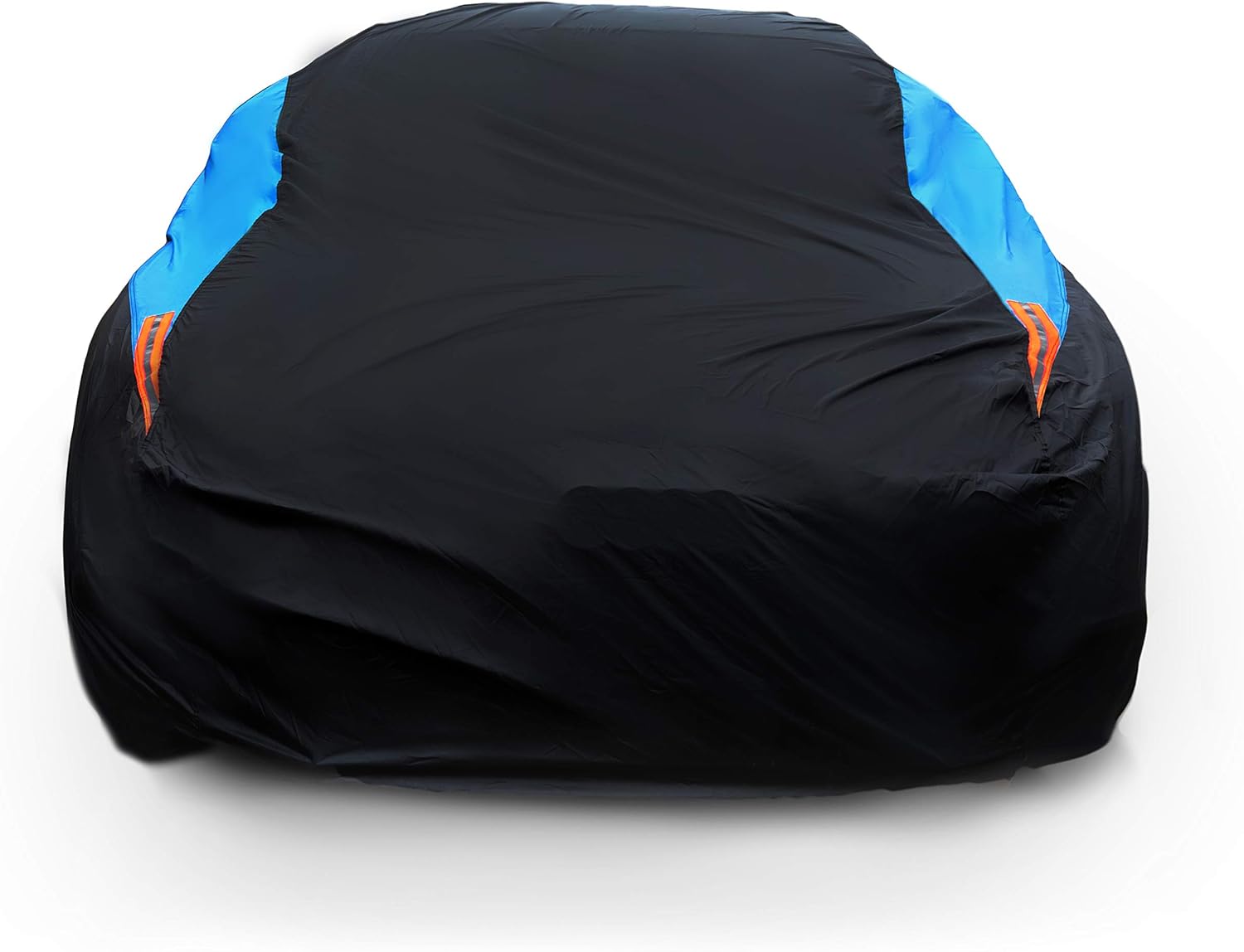
Why Does My Car Cover Fade in the Sun? Causes & Fixes
⚡ Quick Answer
Your car cover fades in the sun because UV radiation breaks down the polymer fibers in the fabric — the same way it fades car paint. Cheap polypropylene covers lose color within one season. UV-treated polyester covers last 3 to 5 years. The material, color, and UV inhibitor treatment determine how fast fading happens.
Why your car cover fades — the main causes:
- UV photodegradation: Sunlight breaks polymer bonds in cover fabric, destroying pigment.
- No UV inhibitors: Budget covers skip UV-resistant treatment, so fabric degrades fast.
- Dark colors absorb heat: Black or dark covers absorb more solar energy, speeding breakdown.
- Surface dye vs. solution dye: Covers with surface-printed dye fade 3x faster than solution-dyed fabric.
How to slow car cover fading:
-
✓
Choose a silver or light gray UV-resistant polyester cover -
✓
Look for “solution-dyed” or “UV inhibitor” on the product label -
✓
Store the cover indoors when not in use — sun degrades it even when removed
You put a car cover on to protect your vehicle — then watch the cover itself turn chalky and pale within a year. It feels like the solution became the problem. I’m Daniel Brooks, and after testing dozens of car covers in direct sun, I can tell you this is one of the most misunderstood issues in car care.
The cover isn’t failing randomly. UV radiation is doing exactly what it does to car paint — breaking down the material at a molecular level. The good news: once you understand why it happens, you can choose a cover that actually holds up.
📌 Key Takeaways
-
→
UV photodegradation is the primary cause — sunlight breaks polymer bonds in car cover fabric, not just the dye. -
→
Solution-dyed polyester resists fading far longer than surface-printed polypropylene covers. -
→
Dark-colored covers absorb more solar heat, which speeds up fabric breakdown by accelerating oxidation. -
→
A faded cover still blocks some UV from reaching your car, but it’s weakened and should be replaced within 1 season.
Why Does a Car Cover Fade in the Sun?
A car cover fades because UV radiation from the sun triggers photodegradation — a process that breaks down the polymer chains inside the cover’s fabric. This isn’t just surface discoloration. The UV energy literally snaps the molecular bonds that hold the fiber structure and pigment together.
Think of it like this. Every time UV light hits the cover, it transfers energy into the material. Over thousands of exposures, those energy hits accumulate and crack the chemical bonds that give the fabric its color and strength. The cover gets lighter, weaker, and more brittle — all at the same time.
This is the same mechanism that fades car paint. According to Maaco’s paint protection research, UV rays break down molecular bonds in automotive paint pigments, leading to oxidation and a chalky surface. Your car cover fabric is no different — it’s just thinner and more exposed.
So if your cover is fading fast, it’s not defective. It’s absorbing the UV damage that would otherwise hit your car. The real question is whether it’s made to handle that abuse for more than one season.
3–5 yrs
UV-treated polyester cover lifespan
1 season
Typical budget polypropylene cover lifespan in direct sun
150°F
Road surface temps that drive UV + heat damage on cover fabric
Every car cover faces UV every day it’s outside. The difference between a cover that lasts 1 year and one that lasts 5 comes down to material science — not price alone.
How Does UV Actually Destroy Car Cover Fabric?
UV light comes in two forms that damage your cover: UVA and UVB radiation. UVA penetrates deeper into the fabric and breaks down the polymer chains themselves. UVB hits the surface and destroys the dye molecules first — which is why fading is usually the first visible sign of damage.
Here’s the science in plain terms. Synthetic fabrics like polyester and polypropylene are made of long, chain-like molecules called polymers. When UV photons strike these chains, they transfer enough energy to break the bonds holding the chain together. This is called chain scission. As chains break, the fabric loses strength, becomes brittle, and the pigment molecules detach — so the color disappears.
💡 Key Insight
Fading is not just cosmetic. When a car cover’s color fades, it means the polymer structure is breaking down too. A visibly faded cover has physically weakened fabric that tears more easily and blocks less UV radiation from reaching your car.
Heat compounds the problem. According to automotive UV protection research, infrared heat from the sun increases temperatures inside and under the cover, accelerating oxidation — the chemical reaction that makes fabric and paint look chalky. A dark cover in Arizona can reach surface temperatures well above 150°F, turning a 5-year cover into a 1-year cover through heat alone.
The retention hook here matters: understanding this dual attack — UV plus heat — is exactly why material choice makes such a dramatic difference. We’ll cover that next.
Which Car Cover Materials Resist Sun Fading Best?
Not all car cover fabrics are equal. The material determines whether your cover fades in one summer or holds its color for years. Here’s how the most common materials compare in real-world sun exposure.
This table shows how common car cover materials perform against UV fading outdoors.
Solution-dyed polyester is the clear winner for outdoor sun exposure — the color is part of the fiber, not a coating that UV can strip away.
The key term to look for is “solution-dyed.” This means color pigments and UV-resistant agents are mixed directly into the polymer before the fiber is formed. It’s not a coating applied afterward. So there’s nothing for UV to strip off the surface — the protection goes all the way through. According to material guides from CarCover.com’s material guide, polyester with UV-resistant treatment is the preferred choice for vehicles parked in hot, sunny climates.
You might be thinking: “But my cover says UV-resistant on the box.” Here’s why that doesn’t always mean much. That label can apply to a thin surface coating that UV degrades within one season. Only “solution-dyed” or “UV inhibitors in fiber” means the protection is permanent.
Recommended Product
Kayme 6 Layers Car Cover Waterproof All Weather for Automobiles, Outdoor Full Cover Rain Sun UV Protection with Zipper Cotton
★★★★☆ Highly rated on Amazon
Features a high-reflective aluminum layer and multi-layer waterproof PE/PEVA construction that actively deflects UV rays — a solid choice for outdoor parking in sunny climates.
As an Amazon Associate, we earn from qualifying purchases.
Does the Color of a Car Cover Affect How Fast It Fades?
Yes — and significantly. Dark colors like black, dark blue, and charcoal absorb more solar radiation than light colors. That extra absorbed energy converts to heat, which accelerates oxidation inside the fabric. A black cover in full sun can reach temperatures 40°F hotter than a silver cover sitting in the same conditions.
This is the same reason darker car paint fades faster than lighter paint. Black and navy vehicles parked in direct sun experience more aggressive UV breakdown than white or silver vehicles. Your cover follows the same physics.
✅ Tip
Choose a silver, light gray, or aluminum-reflective cover for outdoor use. Silver covers reflect sunlight instead of absorbing it — this lowers cover surface temperature, slows oxidation, and helps keep your car cooler underneath.
Light gray and silver covers don’t just last longer. They also do a better job keeping your car’s interior temperature down, since they reflect heat rather than trapping it. So color choice is a double win — the cover fades slower, and your car stays cooler.
That said, color alone won’t save a low-quality cover. A silver surface-printed polypropylene cover will still fade within one season. Color matters, but material quality matters more. The best outcome is both: light color plus solution-dyed polyester construction.
How Do You Stop a Car Cover From Fading in the Sun?
You can’t fully prevent UV exposure if the cover stays outside — but you can dramatically slow the rate of fading with the right habits. These 5 steps make the biggest real-world difference.
🔢 Step-by-Step: How to Slow Car Cover Fading
-
1
Buy a UV-inhibitor cover, not just a “UV-resistant” one
Look for “solution-dyed,” “UV inhibitors in fiber,” or “4+ layer polyester.” These last 3–5 years vs. 1 season for cheap covers.
-
2
Choose silver or light gray over black or dark colors
Reflective colors absorb less heat, lowering surface temps by up to 40°F and cutting oxidation speed.
-
3
Store the cover out of sunlight when not on the car
UV degrades the cover even when it’s folded in your trunk or sitting on your porch. Store it in a bag indoors.
-
4
Hand wash the cover with mild soap — no harsh chemicals
Strong detergents strip any UV coating that was applied to the surface, accelerating fading from the next wash onward.
-
✓
Park in shade whenever possible — even partial shade helps
Even 2–3 hours less direct sun per day adds up to months of extra cover life over a full summer season.
Does a Faded Car Cover Still Protect Your Car?
A faded cover still offers some protection — but noticeably less. When UV has degraded the fabric to the point of visible color loss, the polymer structure itself is compromised. The cover becomes thinner, more porous, and less effective at blocking UV from reaching your car’s paint and interior.
Here’s what changes when a cover fades badly. A structurally sound cover reflects or absorbs UV before it reaches your car’s clear coat. A photodegraded cover allows more UV to pass through the weakened fabric — meaning your paint is now getting hit from above the cover and through it at the same time.
⚠️ Warning
A badly faded cover can trap moisture between itself and the car’s paint. That trapped moisture — combined with reduced UV barrier function — creates conditions for paint oxidation and rust spotting. Replace any cover that looks chalky, brittle, or tears easily when handled.
The rule: if your cover has visible color loss over more than 30% of its surface, or if it feels stiff and crinkles when you fold it, it’s past its useful life. The protection it provides at that point doesn’t justify the risk of moisture trapping.
How Long Should a Car Cover Last Before Fading?
Expected lifespan depends entirely on material quality and your climate. In a mild, partly shaded environment, a good polyester cover can last 5 years before noticeable fading. In Arizona, Florida, or any high-UV sun belt region, the same cover may show significant fading in 2 to 3 years.
Signs It’s Time to Replace Your Car Cover
✓ Car Cover Replacement Checklist
-
✓
Color has faded or turned chalky over a large area of the surface -
✓
Fabric feels brittle, stiff, or crinkles when folded -
✓
Seams are fraying or small tears have started forming -
✓
The cover feels damp on the inside after a rain or heavy dew -
✓
You find dye transfer marks on your car’s paint after removing the cover
Any one of those signs means the cover is no longer doing its job. Continuing to use a degraded cover is worse than using no cover at all, because a damaged cover can trap moisture and scratch paint as the brittle fibers drag across the clear coat.
What Most People Get Wrong About Car Cover Fading
Most car owners assume that any cover labeled “UV-resistant” will last years in direct sun. That label has no industry standard. It can mean a thin UV-blocking coating that wears off after 3 months of outdoor use. The only meaningful specification is the material type and whether UV protection is built into the fiber.
A second common mistake is thinking that a faded cover is still fully protective. Visible fading is a sign of photodegradation — the cover’s molecular structure has broken down. It offers reduced UV protection, not full protection, and it may now trap moisture against your paint.
The third misconception: people think washing the cover regularly will restore UV protection. Washing removes dirt but does nothing to repair degraded polymer chains. Once UV has broken down the fiber, no wash restores it. Only a new cover with intact UV protection fixes the problem.
Conclusion
Your car cover fades because UV radiation breaks down the polymer chains in its fabric — the exact same process that fades paint. Budget covers made with surface-printed polypropylene and no UV inhibitors can fade in a single season. Solution-dyed polyester covers with built-in UV inhibitors last 3 to 5 years in direct sun.
Choose a light-colored, solution-dyed polyester cover and store it indoors when not in use. Those 2 choices alone can double your cover’s useful life.
The one thing to do right now: check your current cover. Run your hand across it. If it leaves chalk-like residue on your palm or feels stiff and crinkly, replace it today — a degraded cover is actively harming your car’s paint more than protecting it.
Frequently Asked Questions
Why does my car cover fade so fast?
Fast fading means your cover lacks UV inhibitors in the fabric itself. Most budget covers use surface-printed dye that UV strips within one season. A solution-dyed polyester cover with UV inhibitors built into the fiber will hold its color 3 to 5 times longer in direct sun.
Does a faded car cover still protect your car?
A faded cover provides reduced protection. Visible color loss signals that UV has degraded the polymer structure, making the fabric thinner and more porous. A heavily faded cover may also trap moisture against the paint. Replace it once fading covers more than 30% of the surface.
What material car cover doesn’t fade in the sun?
Solution-dyed polyester is the most fade-resistant material for outdoor car covers. The pigment and UV-blocking agents are mixed directly into the polymer fiber before spinning, making the color permanent rather than a surface coating that degrades. Look for this specifically on the product label.
How long should a car cover last outdoors?
A quality solution-dyed polyester cover lasts 4 to 6 years in moderate climates. In high-UV regions like the American Southwest or Southeast, expect 2 to 3 years before significant fading. Budget polypropylene covers without UV treatment typically last only 6 to 12 months in direct sun.
Can I restore a faded car cover?
No. Fading caused by UV photodegradation cannot be reversed. The polymer chains inside the fabric have physically broken down — washing, sprays, or dyes cannot repair that. Once a cover is visibly faded and feels brittle, replacing it with a UV-inhibitor model is the only fix.
Does the color of a car cover matter for sun fading?
Yes. Dark covers like black or navy absorb more solar energy, which raises surface temperature and accelerates oxidation in the fabric. Silver and light gray reflective covers run up to 40°F cooler in direct sun, which significantly slows the UV degradation process and extends cover life.
Does washing a car cover remove its UV protection?
Harsh detergents can strip a surface UV coating, yes. If your cover’s UV protection is a topical coating (common in budget covers), aggressive washing accelerates fading. Hand wash with mild soap and cold water. Solution-dyed covers are unaffected by washing since the UV protection is inside the fiber.

Daniel Brooks is an automotive writer and product researcher focused on car accessories, car tech, maintenance, and practical driving guides. At Plug-in Car World, he helps drivers make smarter automotive decisions through honest reviews and research-driven content.