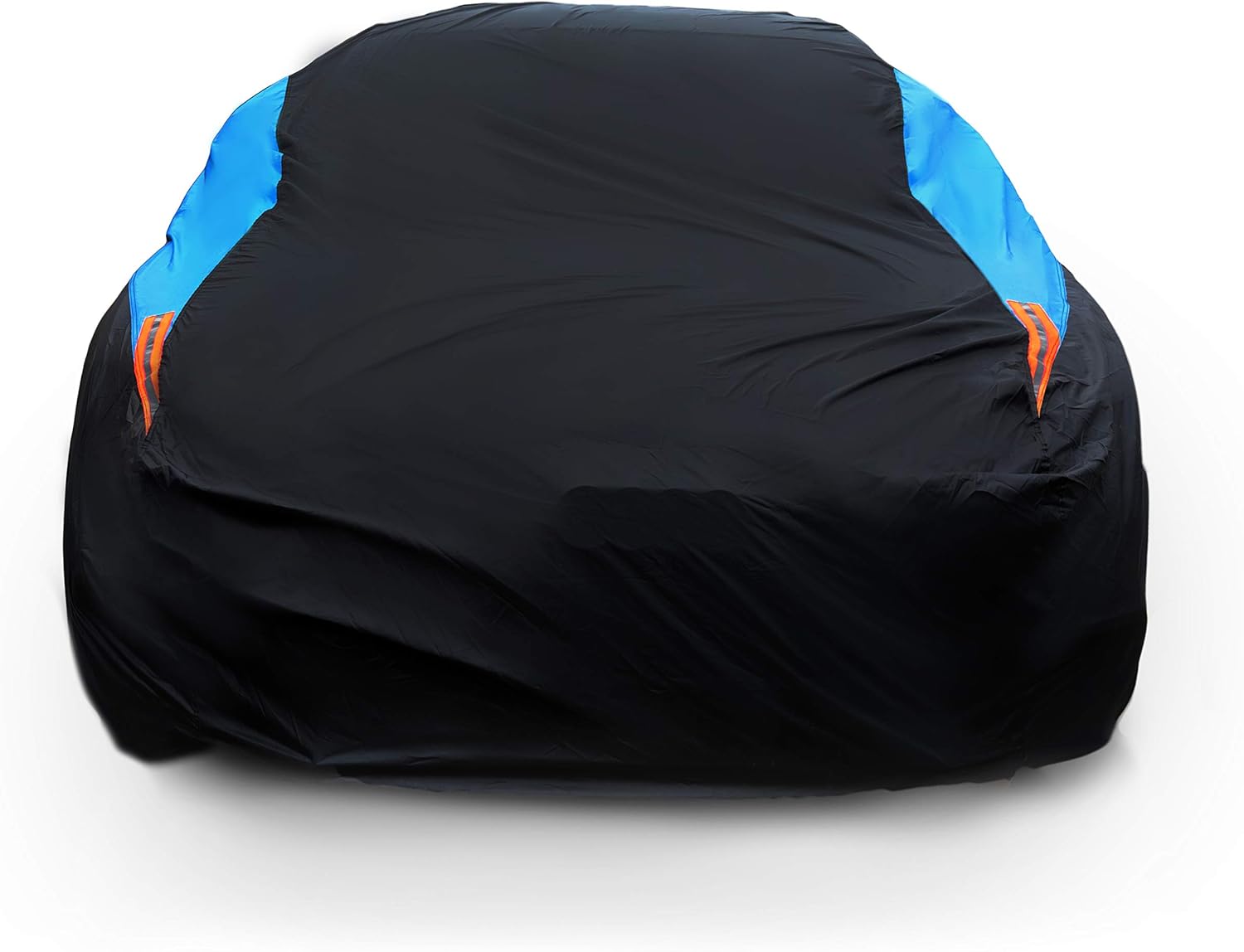
Common Custom Fit Car Cover Problems and Fixes
⚡ Quick Answer
Custom-fit car covers cause problems when installed over a dirty car, made from non-breathable fabric, or left unsecured in wind. The 5 most common issues are paint scratches, moisture buildup, wind blow-off, poor fit, and mold growth — and every one has a direct fix.
Most Common Custom Car Cover Problems + Fixes:
-
1
Paint scratches — always cover a clean, dry car only -
2
Moisture trapped — switch to a breathable, multi-layer fabric -
3
Blowing off in wind — use a cable lock through the chassis grommets -
4
Loose or bunched fit — check for aftermarket accessories not in cover specs -
5
Mold growth — never cover a wet car; let it air dry first
Mistakes that make every problem worse:
-
✓
Never cover a dirty or wet car — debris acts like sandpaper -
✓
Never use a single-layer plastic cover outdoors long-term -
✓
Never fold and store a damp cover — mold starts within 48 hours
You bought a custom-fit car cover to protect your car — then pulled it off one morning to find swirl marks on the hood. That sting is familiar to a lot of car owners, and I’m Daniel Brooks, and I’ve helped diagnose these exact frustrations dozens of times.
The good news: custom-fit car covers work extremely well when used right. The problems almost always trace back to 5 specific causes — every one of which has a clear fix.
This guide covers all 5 problems, why they happen, and exactly what to do about each one.
📌 Key Takeaways
-
→
Dirt is the #1 cause of car cover paint damage — not the cover fabric itself. -
→
Non-breathable covers trap moisture and can cause rust and mold within days. -
→
A cable lock through grommets is the only reliable fix for wind blow-off. -
→
Aftermarket add-ons like roof racks and spoilers cause a custom cover to fit poorly. -
→
Wash your cover every 1–3 months — a dirty cover scratches just like a dirty car.
Why Is My Custom-Fit Car Cover Scratching the Paint?
Your custom car cover isn’t scratching your paint by itself — trapped dirt and debris are. When even a thin layer of dust sits between the cover and your paint, every small movement acts like sandpaper grinding against the clear coat.
Wind makes this 10 times worse. A cover that shifts even slightly in a breeze rubs those dust particles in circular motions, creating the swirl marks and micro-scratches you see under direct sunlight.
The Real Cause: What’s Between the Cover and the Paint
Most people blame the cover material. The real problem is contamination. Dust, sand, and pollen settle on your car within hours of washing it. When you lay a cover on top — even a soft one — those particles get pressed against the finish.
The inner lining material matters too. Non-woven polypropylene linings trap grit inside their fibers. A fleece or microfiber inner lining absorbs particles instead of pressing them against the paint surface.
⚠️ Warning
Never drag your car cover across the paint when putting it on or taking it off. Always lift the cover up and over — dragging even 3 inches can create visible scratches in one motion.
How to Fix a Scratching Car Cover
🔢 Step-by-Step: Stop Your Cover from Scratching Paint
-
1
Wash your car before covering
Even a quick rinse removes the dust and grit that cause swirl marks. Never skip this step.
-
2
Shake out the cover before use
Debris collects inside a folded cover. Shake it out every time before laying it on the car.
-
3
Place cover from the center outward
Start from the roof and drape outward. Never slide it from front to back over the hood.
-
✓
Switch to a fleece-lined cover if scratching persists
A fleece or microfiber inner lining absorbs grit instead of grinding it against the paint.
For a detailed breakdown of cover materials and scratch risk, the car cover scratch guide from Covercraft explains exactly which fabrics are safest for your finish.
The cover itself is almost never the problem. Your habits around using it are. Fix the routine, and the scratches stop.
Why Does Moisture Build Up Under My Car Cover?
Moisture under a custom car cover happens when the fabric can’t breathe — or when you cover a wet car. Water vapor gets sealed in, can’t escape, and builds up as condensation on your paint. Left long enough, that trapped moisture causes rust, weakens the clear coat, and creates the perfect condition for mold.
A fully waterproof, non-breathable cover is the most common cause. Many buyers think “waterproof” means better protection. In reality, a 100% waterproof cover blocks moisture from escaping just as effectively as it blocks rain from entering.
Breathable vs Non-Breathable: What the Difference Looks Like
This table shows exactly how cover material type affects moisture behavior under the cover.
If you notice condensation consistently after removing your cover, switch to a breathable fabric — this is the only real fix.
Should I Cover a Wet Car?
No. Covering a wet car is one of the fastest ways to trap moisture and start rust. Water has nowhere to go under a cover. It sits against the metal and paint for hours — sometimes days in cold weather.
If your car gets rained on, let it air dry for at least 30 minutes before covering it. Or use a chamois to remove surface water first.
✅ Tip
On humid days, check the underside of your cover before putting it back on. If the lining feels damp, hang the cover in the shade for 20 minutes to let it dry out before re-covering.
Moisture problems don’t fix themselves. They get worse. Every day a wet car sits under a non-breathable cover adds another layer of risk to the finish and frame.
How Do I Stop My Car Cover from Blowing Off in the Wind?
A custom-fit cover should hug your car tightly enough to resist most wind — but even the best-fitting covers can lift or shift in strong gusts without a cable lock. The elastic hem alone isn’t enough when wind gets under the cover and creates lift.
The fix is mechanical: thread a plastic-coated steel cable through the grommets on both sides of the cover, run it under the chassis, and lock it. This anchors the cover directly to the car and prevents both lifting and theft.
Why Even a Tight Cover Can Blow Off
Wind doesn’t just push — it creates suction. When air moves fast across the top of a cover, it drops the pressure above the surface. That pressure difference pulls the cover upward, even when the elastic hem is snug underneath.
A cover that partially lifts is often worse than no cover at all. It flaps repeatedly against the paint in the exact spot where it’s lifting, creating friction damage in one concentrated area.
📋 Wind-Proofing Options for Custom Car Covers
-
Cable lock through grommets: Most effective method — runs under the chassis and locks on both sides. Prevents lift and theft. -
Gust guard straps: Nylon straps that buckle under the car — good for moderate wind if grommets aren’t available. -
Reinforced elastic hem: Standard on quality custom covers — check that elastic is intact and not stretched out. -
Mirror pockets: Sewn-in mirror pockets anchor the front of the cover — prevents the front from lifting first.
If your cover keeps blowing off despite a cable lock, the cover may have stretched or the fit may have changed. A cover that’s too loose will never stay put in strong wind, no matter how many straps you add.
Recommended Product
Covercraft Custom Fit Car Cover – Ultra’Tect Series Fabric, Gray
★★★★☆ Highly rated on Amazon
A custom-fit outdoor cover with bottom-edge elastic, grommet cable lock compatibility, and a breathable WeatherMaxSL fabric that resists wind movement and allows moisture to escape — directly addressing the 3 most common car cover problems at once.
As an Amazon Associate, we earn from qualifying purchases.
Why Does My Custom Cover Fit Loose or Bunched?
A custom-fit car cover that fits loose or bunches up in certain spots usually means one of two things: the cover was ordered for the stock vehicle but the car has aftermarket modifications, or the elastic hem has worn out and lost its tension.
Roof racks, large side mirrors, body kits, spoilers, and cargo carriers all change the shape of your car. A cover built to the factory dimensions won’t account for those additions — and the result is excess fabric in some areas and a too-tight stretch in others.
How to Diagnose a Poor-Fitting Custom Cover
Run through this quick checklist to find the source of your fit problem.
✓ Custom Cover Fit Diagnosis Checklist
-
✓
Does your car have any mods not listed when you ordered the cover? (spoiler, rack, extended mirrors) -
✓
Is the bunching only at mirror areas? The cover needs sewn-in mirror pockets for your model. -
✓
Does the bottom elastic feel loose when you stretch it? Worn elastic needs replacement or a new cover. -
✓
Was the cover ordered for this exact make, model, and year — or a similar but different trim?
You might be thinking: “But it said it was custom-fit for my exact car.” Here’s the thing — most manufacturers build to factory spec dimensions only. Any modification shifts the fit off, and no amount of adjusting will fix a cover built for a different shape.
If your car has aftermarket add-ons, contact the cover manufacturer and specify every modification. Many will adjust the pattern or add feature cutouts like antenna slits and extended mirror pockets. The next section covers mold — which often follows a poor fit directly.
Why Is Mold Growing Under My Car Cover?
Mold under a car cover grows when moisture stays trapped in a warm environment with no airflow. It starts on the fabric lining, then spreads to the car’s seals, trim, and eventually the paint surface. Most cases of mold start within 48–72 hours of covering a wet car in humid weather.
The fix requires removing the mold, treating the affected areas, and changing the covering habit that caused it.
How to Remove Mold from a Car Cover
Take the cover off the car immediately. Lay it flat on a clean surface in direct sunlight for at least 2 hours. Sunlight kills surface mold spores without chemicals.
For deeper mold, mix 1 cup of white vinegar per gallon of water. Apply with a soft brush, scrub gently, and rinse thoroughly. Never use bleach — it degrades most car cover fabrics and voids warranties.
After treating the cover, check your car’s paint and trim for mold spots. A mild car shampoo with a microfiber cloth removes surface mold from paint. If mold has reached rubber seals, use a rubber-safe protectant spray after cleaning.
💡 Key Insight
Mold under a car cover is almost always a ventilation problem, not a cleanliness problem. Even a spotless car will grow mold under a non-breathable cover in 3–4 days of humid weather. Switch the fabric, not just the cleaning routine.
After treatment, let both the car and cover dry completely before covering again. In very humid climates, consider using a breathable cotton or polycotton cover indoors and a breathable outdoor fabric for exterior use.
How Should I Clean and Store My Car Cover?
A dirty car cover is just as dangerous as a dirty car. Grime, bird droppings, and road dust build up in the fabric and transfer back onto your paint the next time you use it. Clean your cover every 1–3 months depending on how often you use it and your environment.
For the full picture of how car covers can damage paint through improper use and poor material choices, that resource covers each risk factor in depth.
Washing Your Car Cover: What Works and What Destroys It
Most custom-fit covers can be machine washed in a large-capacity machine. Follow these rules every time.
When storing your cover long-term, keep it in the breathable storage bag it came with — never in an airtight plastic bag or sealed trunk compartment.
What Most People Get Wrong About Custom-Fit Car Covers
Most problems with custom-fit car covers come from 3 widely held beliefs that simply aren’t true. Fixing the belief fixes the problem.
📋 Common Misconceptions About Custom Car Covers
-
Myth: “Custom means it fits perfectly forever.” Elastic hems stretch and wear over time, especially with daily use in heat. A cover more than 3 years old may have lost 30–40% of its hem tension. -
Myth: “Waterproof = better protection.” A 100% waterproof cover traps moisture as effectively as it blocks rain. Breathable water-resistant fabric is safer for most climates and long-term storage. -
Myth: “I don’t need to clean the cover, just the car.” A dirty cover re-deposits grime, pollen, and bird dropping residue onto your clean paint every single use.
All 3 misconceptions lead to real damage. The cover becomes the thing it was meant to protect against — which is the most avoidable outcome of all.
Conclusion
Every common custom-fit car cover problem has a clear, specific fix. The single most important habit: never cover a dirty or wet car. That one rule eliminates scratches, moisture buildup, and mold at the same time.
Right now — before your next use — check your cover’s inner lining. If it feels rough or stiff, it’s time to wash it or replace it. That 5-minute check will save your paint.
Frequently Asked Questions
Can a custom-fit car cover scratch my paint?
Yes — but the cover fabric isn’t the direct cause. Dust and grit trapped between the cover and your paint act like sandpaper when the cover moves. Always wash your car before covering it and shake out the cover to remove debris. A fleece-lined cover reduces this risk significantly.
How tight should a custom car cover fit?
A custom cover should fit snug but not stretched. You should be able to slide your hand under the hem without forcing it. Too tight puts stress on mirrors, antennas, and trim. Too loose allows the cover to flap and cause friction damage. Elastic hem tension should feel consistent all the way around.
Is it OK to cover a wet car?
No. Covering a wet car traps moisture under the cover with nowhere to go. Within 48–72 hours in humid weather, this creates mold on the lining and condensation on the paint. Always let your car dry for at least 30 minutes — or wipe it down with a chamois — before applying the cover.
Why does my custom car cover keep blowing off?
An elastic hem alone won’t hold in strong winds. Thread a plastic-coated steel cable lock through the grommets on both sides of the cover and secure it under the chassis. If your cover lacks grommets, gust guard straps that buckle under the car are the next best option. A worn or stretched hem also reduces wind resistance.
How often should I wash my car cover?
Wash your cover every 1–3 months depending on your environment. In dusty or high-pollen areas, wash monthly. Use mild soap and cold water, and always air dry — never machine dry. A dirty cover deposits grime and pollutants back onto your paint every time you use it.
Why is my custom cover bunching around the mirrors?
Bunching around mirrors means the cover lacks sewn-in mirror pockets designed for your specific model, or your mirrors are an aftermarket size not accounted for in the pattern. Contact your cover manufacturer and specify your mirror size. Many will alter the cover pattern or supply a version with custom mirror pockets.
How do I get mold off my car cover?
Lay the cover flat in direct sunlight for 2 hours — UV light kills surface mold spores. For deeper mold, scrub with 1 cup of white vinegar per gallon of water using a soft brush, then rinse fully. Never use bleach — it degrades fabric fibers and removes the water-resistant coating. Air dry completely before storing or reusing.

Daniel Brooks is an automotive writer and product researcher focused on car accessories, car tech, maintenance, and practical driving guides. At Plug-in Car World, he helps drivers make smarter automotive decisions through honest reviews and research-driven content.