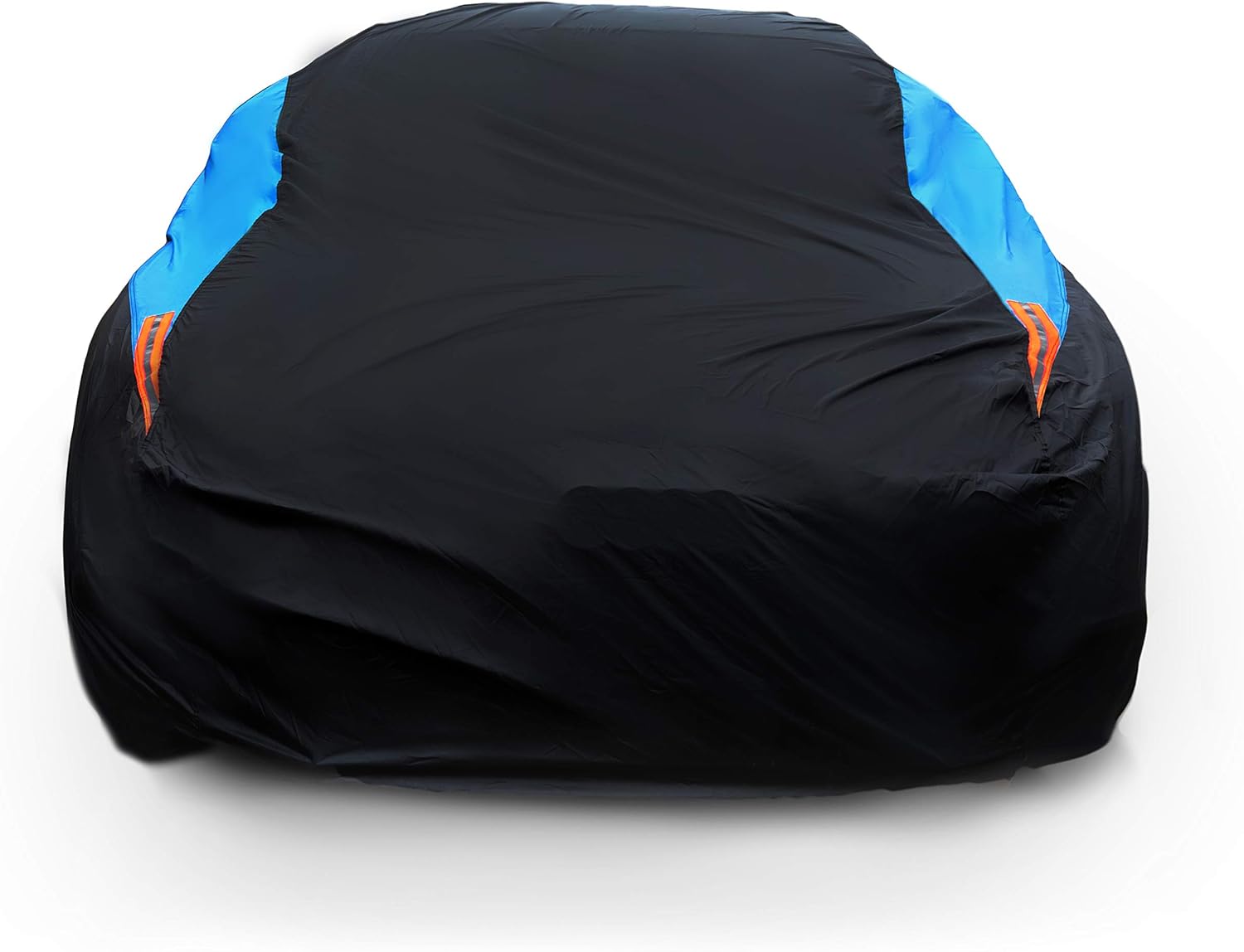
Solving Common Car Cover Fitment Problems (Complete Fix Guide)
⚡ Quick Answer
Car cover fitment problems are almost always caused by the wrong size, incorrect installation, or using a universal cover that doesn’t match your vehicle’s shape. Measure your car’s length, width, and height, then choose a semi-custom or custom-fit cover. Add gust straps to stop slipping, and fold mirrors inward before installation.
Steps to Fix Car Cover Fitment Right Now:
-
1
Measure your car — length bumper to bumper, width mirror to mirror, height roof to ground. -
2
Fold mirrors inward, retract the antenna, and start the cover from the front tag. -
3
Secure the elastic hem evenly under the bumpers front and rear. -
4
Add gust straps under the vehicle to stop the cover shifting in wind.
Most Common Fitment Mistakes to Avoid:
-
✓
Never use a universal cover without verifying your vehicle’s exact length first. -
✓
Don’t install the cover while mirrors are extended — it causes bunching. -
✓
Don't assume tighter always means better — overstretching tears seams fast.
You walk outside and your car cover is bunched on the hood, sagging on the sides, or sitting in the driveway after a gust of wind. I’m Daniel Brooks, and after testing dozens of covers over the years, I can tell you this: fitment problems aren’t a flaw in your cover. They’re almost always a flaw in the process. In this guide, I’ll walk you through every common car cover fitment problem — and how to fix each one fast.
📌 Key Takeaways
-
→
Wrong cover size is the #1 cause of all car cover fitment failures. -
→
Universal covers are deliberately oversized to fit many cars — excess fabric causes wind flap and bunching. -
→
Gust straps cost under $15 and solve 90% of slipping and wind-lift problems immediately. -
→
A too-tight cover damages mirrors, tears seams, and scratches paint — loose fits cause wind damage.
Why Car Covers Don’t Fit Right (And What’s Actually Causing It)
Most car cover fitment problems come down to 3 causes: wrong size, wrong cover type, or incorrect installation. You don’t have a broken cover. You have a mismatch between the cover and your car — and that’s 100% fixable.
Understanding which problem you have tells you exactly which fix to apply. So let’s diagnose it before we solve it.
The Most Common Fitment Failure Points
📋 Car Cover Fitment Problems — Causes at a Glance
-
Cover too loose: Universal covers are oversized by design. Excess fabric flaps in wind and allows dirt and moisture inside. -
Cover too tight: Happens when a cover is undersized. It creates pressure on mirrors, antennas, and spoilers — and scratches paint on removal. -
Bunching and wrinkling: Usually caused by installing over extended mirrors or starting from the wrong end of the vehicle. -
Slipping off overnight: The elastic hem is worn, or no tie-down straps are in use — common with older covers or windy locations. -
Poor mirror or antenna coverage: Universal covers have no dedicated pockets for mirrors, leaving bulges and exposed areas.
⚠️ Warning
A loose car cover that flaps in wind does more damage than no cover at all. The fabric acts like sandpaper against your paint every time wind moves it. Fix the fit before leaving it outdoors.
Now that you know the root cause, let’s fix it from the ground up — starting with measurements.
How to Measure Your Car for a Cover the Right Way
Every fitment fix starts with 3 numbers: your car’s length, width, and height. Get these right and half your problems disappear before you even buy a cover. According to CarCovers.com’s vehicle measuring guide, you should round each measurement up to the next inch to allow for a close fit that’s still easy to install and remove.
🔢 Step-by-Step: How to Measure Your Car for a Cover
-
1
Measure length — bumper to bumper
Pull a tape measure in a straight line along the ground. Include bumpers, spare tires, and any front guards. Don’t trace the body contours.
-
2
Measure width — at the widest point, excluding mirrors
Measure the car body only — not the mirrors. Mirror width is handled separately if you’re ordering a custom cover.
-
3
Measure height — roof to ground
Include roof racks, antennas, or any attachment on top. Park next to a wall and mark the height with chalk for accuracy.
-
4
Add any special features
Note roof racks, front bull bars, large spoilers, or widebody kits. These add bulk that a standard cover size won’t account for.
-
✓
Round each number up to the next inch
This small buffer gives you a close fit that slides on easily without pulling or stretching.
For custom covers, Covercraft — one of the industry’s most trusted manufacturers — provides a detailed measuring process for custom car covers that accounts for vehicle-specific contours. It’s worth reading before you order.
You might be thinking: “My car is a standard sedan — can’t I just pick the right size label?” Here’s why that fails. Two sedans can differ by 18 inches in length. A cover sized for “midsize sedans” can leave 9 inches of excess on each end. That’s enough fabric to flap, bunch, and trap dirt.
Custom vs. Universal Car Cover: Which Fit Type Do You Actually Need?
The cover type you choose determines 80% of your fitment experience before you ever put it on your car. There are 3 types — and they perform very differently. Understanding the difference stops you from expecting a universal cover to behave like a custom one.
This table shows how the 3 cover types compare on the factors that affect fitment most:
Semi-custom covers offer the best balance of fit, price, and protection for most standard vehicles. For a deeper comparison, see this custom-fit vs. universal car cover comparison from CarCovers.com.
🎯 Which Cover Type Is Right For You?
If you are…
On a budget, parking outdoors occasionally, no roof racks or spoilers
→ Universal with gust straps
If you are…
Parking outdoors daily, want proper fit, standard vehicle
→ Semi-custom cover
If you are…
Storing a modified, classic, or luxury vehicle long-term
→ Custom-fit cover
So what does this mean for you? If you already have a universal cover and don’t want to replace it right now — keep reading. There are real fixes that improve its behavior without buying a new one.
How to Fix a Car Cover That Keeps Slipping or Blowing Off
A cover that keeps slipping off has 1 of 2 problems: the elastic hem is no longer snug enough, or there’s no undercar securing system in place. Both are fixable right now — without buying a new cover.
First, check the elastic hem. Run your hand along the bottom edge of the cover. It should feel firm and grab the lower bumper lip on both ends. If it hangs loosely, the elastic is stretched out — and a gust strap system is your best immediate fix.
Using Tie-Down Straps and Gust Straps Correctly
Gust straps are bungee cords with grip clips that thread under the vehicle and hold the cover from moving. They install in under 60 seconds. Clip 1 goes at the front-left wheel, clip 2 at the front-right — one bungee cord connects them under the car. Repeat at the rear. The cover pulls tight and stays put even in strong wind.
Recommended Product
Coverado All Weather SUV Car Cover, Waterproof Sun UV Snow Wind Protection, Breathable Full Exterior Universal Fit for SUV (170″-190″)
★★★★☆ Highly rated on Amazon
This Coverado SUV cover includes 3 built-in windproof straps at the front, center, and rear — solving the wind-lift fitment problem right out of the box, with a snug elastic hem that stays secure in outdoor conditions.
As an Amazon Associate, we earn from qualifying purchases.
✅ Tip
If you park on a slope, position the cover so the front tag aligns with the hood and anchor the front straps first. This keeps the cover from sliding backward under its own weight overnight.
With slipping and wind-lift solved, the next most frustrating problem is bunching — and it has its own separate fix.
How to Fix Bunching, Wrinkling, and Uneven Coverage
Bunching almost always happens during installation — not because the cover is defective. The fix is in the technique, not the product.
Start from the front tag every time. Secure the cover to the front bumper first. Then pull it toward the rear in sections — a little from the driver’s side, then the passenger side — alternating as you go. This stops the cover from loading up fabric on one side and bunching on the other.
If the cover wrinkles heavily at the roof or hood, the cover may be too long for your vehicle. Excess length has to go somewhere — and it usually pools at the top or sags at the sides. A 6-inch size difference causes visible bunching even with proper technique.
✓ Bunching Fix Checklist
-
✓
Fold mirrors in before installing — extended mirrors create extra bulk under the cover. -
✓
Align the front tag to the hood before pulling the cover rearward — orientation is everything. -
✓
Pull the cover driver-side and passenger-side alternately — don’t drag it all from one side. -
✓
Tuck the elastic hem under the bumper lip — not just around it — front and back. -
✓
If heavy bunching persists, re-measure your vehicle and compare to the cover’s listed size range.
But what if the cover fits the body well but still bunches around the mirrors? That’s a completely separate problem — and one that trips up more people than any other.
How to Fit a Cover Over Mirrors, Antennas, and Roof Add-Ons
Side mirrors, antennas, roof racks, and spoilers are the parts that cause the most fitment headaches. They change your vehicle’s profile — and most covers aren’t built around them. Here’s how to handle each one.
📋 Fitment Fixes for Mirrors, Antennas, and Add-Ons
-
Side mirrors (universal covers): Fold mirrors inward before installing. This reduces the bulge area by 70% and lets the cover sit flat. Most manufacturers recommend this as standard practice. -
Side mirrors (custom-fit covers): These include dedicated mirror pockets sized to your exact model. Feed each mirror into its pocket carefully — don’t force it. Misaligned pockets cause pulling at the door seam. -
Retractable antenna: Unscrew or retract the antenna fully before installing the cover. This is the simplest fix and takes 10 seconds. -
Fixed or shark-fin antenna: Use a self-adhesive antenna patch kit. Mark the antenna position on the cover, apply the reinforced patch, then carefully cut a small hole in the center. Most quality covers include this kit for free. -
Roof rack: Semi-custom covers will bridge over standard roof racks without major issues. For large cargo racks, measure height with the rack installed and add 3 inches when sizing your cover. -
Rear spoiler: A cover fitted to a standard model may lift slightly at the rear corners if your spoiler is over 4 inches tall. A custom cover built with the spoiler measurement eliminates this entirely — contact the manufacturer and specify the spoiler height in inches.
💡 Key Insight
Mirror pockets are often the first part of a car cover to tear. If you use a custom cover, avoid forcing the pockets over power-folding mirrors that haven’t been folded. The fabric will split at the seam within weeks.
What Most People Get Wrong About Car Cover Fitment
Myth 1: “A tighter fit means better protection.” This is wrong — and it’s one of the most damaging beliefs. An overly tight cover puts constant pressure on your mirrors, antennas, and trim pieces. Over time, it stretches seams, traps dust against the paint, and causes micro-scratches when removed. The correct fit wraps the vehicle comfortably — snug but not strained.
Myth 2: “Universal means it will fit my car.” Not true. Universal covers are intentionally oversized to span a range of vehicles. That extra fabric is not a sign of quality — it’s a design compromise. A cover made to fit vehicles from 170 to 200 inches will have 30 inches of sizing variance built in. That’s why a universal cover on a 172-inch sedan looks baggy.
Myth 3: “If it covers the car, it’s working.” A loose cover that covers the body but lets in gaps around the bottom allows wind, rain, and debris inside. The protection you think you have is not real. A cover works only when the elastic hem seals the lower perimeter and the fabric sits flush without large air pockets.
Conclusion
Every car cover fitment problem — slipping, bunching, mirror gaps, wind lift — has a specific, fixable cause. The single most important thing you can do is get your vehicle’s 3 measurements right before choosing a cover. Pair the right cover type with gust straps, fold your mirrors inward, and start installation from the front tag every time.
The one thing to do right now: grab a tape measure and record your car’s exact length, width, and height. That 5-minute task solves 80% of fitment problems before they start.
Frequently Asked Questions
Why does my car cover keep slipping off?
The elastic hem has stretched out or the cover is too large for your vehicle. The fix is to add gust straps — bungee cords with grip clips that thread under the car and anchor the cover from below. They install in under 60 seconds and hold the cover secure even in strong wind.
How tight should a car cover fit?
A car cover should feel snug — like a well-fitting jacket — but not stretched. It should sit flush against the body without pulling at mirrors or trim. If you’re straining to pull it over bumpers, the cover is too small. If it sags in the middle or gaps at the bottom, it’s too large.
Can a car cover damage my paint if it doesn’t fit right?
Yes. A loose cover that flaps in wind acts like sandpaper against your clear coat. A too-tight cover traps dust between the fabric and paint, creating micro-scratches on removal. Both scenarios damage paint faster than having no cover at all. Correct fitment is essential, not optional.
Why is my car cover bunching up or wrinkling?
Bunching usually happens because the cover is installed with mirrors extended, or dragged from one side instead of pulled evenly. Fold mirrors inward first, align the front tag to the hood, then pull the cover rearward in alternating passes — driver side, then passenger side — until it’s evenly distributed.
How do I keep a car cover from blowing off in the wind?
Use gust straps. These are elastic bungee cords with grip clips that secure the cover’s underside to the vehicle’s wheel area. One bungee runs across the front, one across the rear. They hold the cover flat and prevent wind from lifting the fabric off the body.
Can I use a universal cover on a car with a spoiler or roof rack?
Universal covers won’t accommodate roof racks or tall spoilers well — they create lifting and uneven coverage. For vehicles with aftermarket add-ons, a semi-custom or custom-fit cover is the right choice. When ordering, always specify the add-on type and its height so the cover is sized correctly.
What do I do if my car cover is too loose at the bottom?
A loose bottom hem means the elastic is stretched or the cover is oversized. First, tuck the hem firmly under the bumper lip front and rear. Then add gust straps to compress the bottom edge against the lower body. If neither works, the cover is the wrong size and needs to be replaced with one matched to your car’s measured length.

Daniel Brooks is an automotive writer and product researcher focused on car accessories, car tech, maintenance, and practical driving guides. At Plug-in Car World, he helps drivers make smarter automotive decisions through honest reviews and research-driven content.