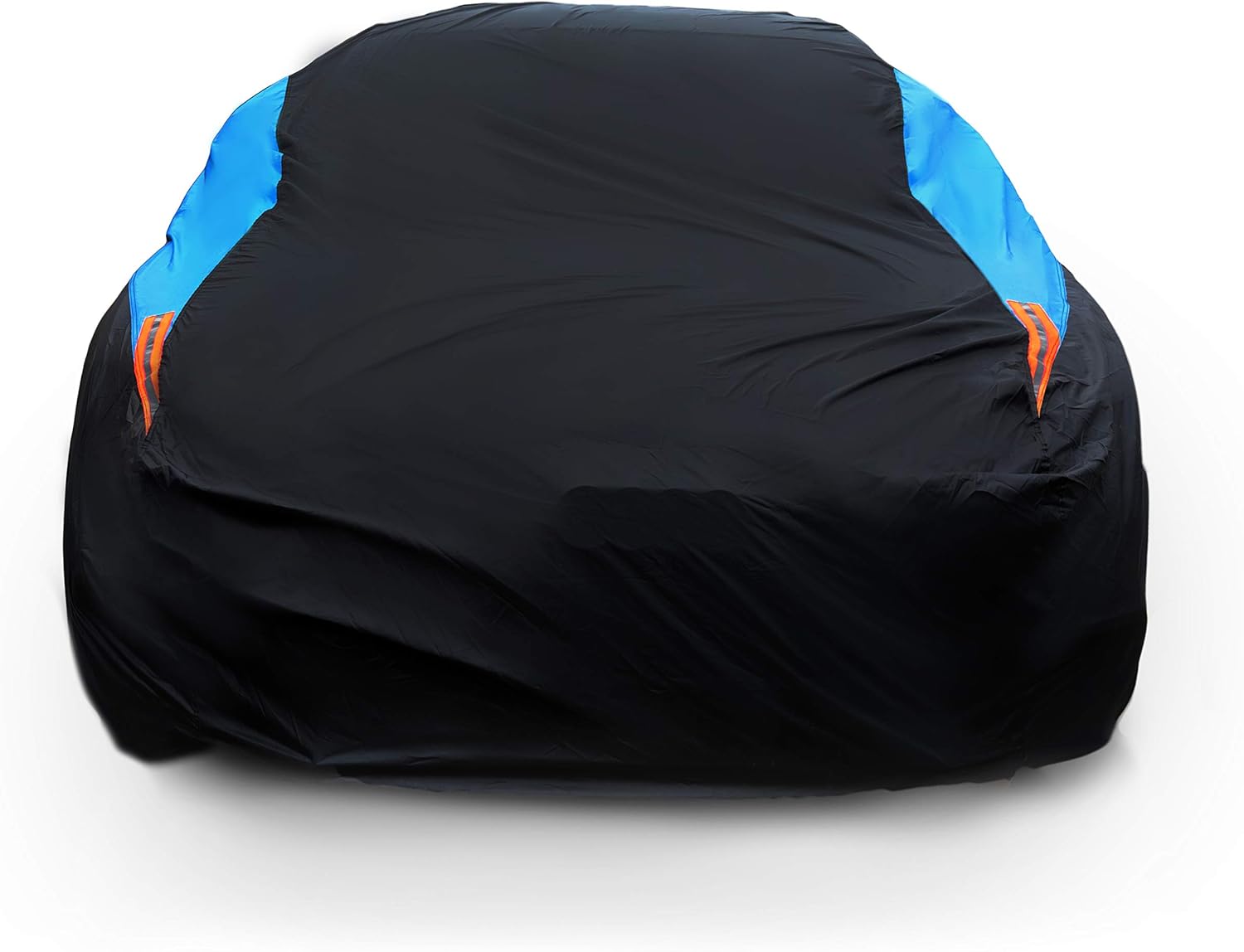
Fix Common Car Cover Fitment Issues Fast
⚡ Quick Answer
Most car cover fitment issues come down to one thing: wrong measurements. A cover that’s too tight strains mirrors and seams. One that’s too loose flaps, traps grit, and scratches your paint. Fix it by measuring your car correctly, checking the elastic hems, and using the tie-down straps the way they were designed to be used.
Fast fixes to try first
-
1
Re-measure length, width, and height in a straight line -
2
Check the elastic hem hasn’t stretched out or lost tension -
3
Use the tie-down straps under the car, not just the hem
Mistakes that make fit worse
-
✓
Buying “universal” size off a rough guess -
✓
Ignoring a spoiler, roof rack, or bull bar in measurements -
✓
Forcing a tight cover over mirrors instead of using pockets
Daniel Brooks has watched it happen dozens of times: a customer unboxes a brand-new car cover, throws it over the hood, and immediately knows something’s wrong. It’s either fighting them at the mirrors or ballooning up like a parachute in the driveway breeze. That gap between “should fit” and “actually fits” is the single biggest complaint car cover owners have.
A car cover only protects what it can properly seal against. When the fit is off, dust gets under the fabric, wind rubs grit into your clear coat, and mirrors take pressure they were never built for. The good news is that almost every fitment problem traces back to one of a handful of fixable causes.
Below, we’ll walk through exactly why car covers end up too tight, too loose, or oddly shaped around mirrors and antennas, and how to fix each one without buying a replacement.
📌 Key Takeaways
-
→
Wrong measurements cause most tight and loose fitment problems, not a defective cover. -
→
Custom-fit covers use exact vehicle patterns, while universal covers rely on rough size ranges. -
→
A loose cover flaps in wind and grinds trapped dirt into your paint over time. -
→
Elastic hems and tie-down straps fix the majority of loose-fit complaints without a new cover.
Why Doesn’t My Car Cover Fit Right?
Poor fit almost always starts with measurement. A cover sized off a guess, an old car’s dimensions, or a generic “sedan” category rarely matches your car’s real length, width, and height.
Accessories are the second most common cause. A spoiler, roof rack, bull bar, or oversized mirror changes your car’s outer dimensions. Skip measuring them, and even a well-made cover comes up short in the wrong places.
⚠️ Warning
Never measure “over the top” of the car, tracing the hood, roof, and trunk curve. Car covers are sized in straight lines, like a box your car would fit inside, not the surface contour.
So what does that mean for you? Before blaming the cover, grab a tape measure. That ten-minute check solves more fitment complaints than any strap adjustment.
How Do I Measure My Car for a Car Cover?
Measure length, width, and height in straight lines, then round each number up to the next inch. That small buffer keeps the cover from snapping tight under tension while it still hugs your car’s shape.
🔢 Step-by-Step: Measuring Your Car
-
1
Measure length bumper to bumper
Run the tape in a straight line, including bumpers, spare tires, and hitch-mounted racks.
-
2
Measure width at the widest point
Include the tires, but leave mirrors out of this measurement.
-
3
Measure height ground to roofline
Include roof racks, light bars, or anything else mounted up top.
-
✓
Match numbers to the size chart
Round every measurement up. When between two sizes, pick the larger one.
Here’s why that matters: a cover sized even two inches short will strain at the seams every time you put it on, while a size that’s generous but not excessive still holds tight in wind thanks to the elastic hem.
How Do I Fix a Car Cover That’s Too Tight?
A too-tight cover usually means the wrong size was ordered, or a universal cover is being forced onto a car near the top of its range. The fix is rarely to force it on harder.
📋 Signs Your Cover Is Too Tight
-
Mirror stress: Fabric pulls hard against mirrors, antennas, or spoilers. -
Hard to remove: You need to yank and stretch the fabric to pull it off. -
Seam wear: Stitching looks stretched or is starting to fray at stress points.
You might be thinking a snug cover offers better protection. Here’s why that’s not quite right: constant pressure on mirrors and trim can crack housings or loosen antenna bases over time, and forced removal risks scratching paint if dust is trapped underneath.
✅ Tip
Fold the cover back off the mirror instead of stretching fabric over it. Most custom-fit covers include mirror pockets made for exactly this.
If the cover is genuinely one size too small after re-measuring, exchange it rather than living with the strain. It’s cheaper than a cracked mirror housing.
How Do I Stop a Loose Car Cover From Flapping in the Wind?
A loose cover moves because nothing is holding the hem down against the body. Wind gets underneath, and that flapping motion drags trapped grit across your paint like sandpaper.
That’s not all it does. A loose cover can also collect rainwater in low spots, adding weight that makes it harder to remove and, over time, seeping through the fabric.
3
common causes of a loose fit
2
built-in fixes on most covers
10
minutes to re-measure and fix it
✓ Fix a Loose Cover in This Order
-
✓
Check the elastic hem for stretch or damage; replace if it no longer springs back -
✓
Use the tie-down straps or grommets under the car, not just around the hem -
✓
Re-measure your car; a universal cover may simply be a size too big
What About Mirror Pockets, Antenna Holes, and Awkward Spots?
These small areas cause big frustration because they’re where a cover’s pattern has to match your car exactly. A pocket sewn for one mirror shape won’t stretch to fit another.
This table lines up the most common awkward-fit complaints with their fastest fix.
If more than two of these apply to your cover, a semi-custom or custom-fit replacement will likely save more time than continuing to patch a universal one.
Should I Get a Custom-Fit or Universal Car Cover?
A custom-fit cover is cut from your exact make and model’s pattern, with mirror pockets and feature allowances built in. A universal cover is sized for an “average” car in a size range, so it can land too tight or too loose depending on where your car falls in that range.
| Feature | Universal Cover | Custom-Fit Cover ✓ Best |
|---|---|---|
| Mirror pockets | Rarely included | ✓ Positioned to match your car |
| Fit accuracy | Approximate size range | ✓ Cut to exact dimensions |
| Price | Lower | Higher, but fewer fit problems |
Choose if you’re deciding between the two:
🎯 Which Cover Type Fits Your Situation?
If you are…
Parking outdoors daily, long-term
→ Choose custom-fit
If you are…
Storing indoors, occasional dust cover
→ Universal is fine
If you are…
Adding accessories like a spoiler or rack
→ Re-measure and size up
Recommended Product
XtremeCoverPro All Weather Car Cover, Semi-Custom Fit with Mirror Pockets and Elastic Hem
★★★★☆ Well-rated on Amazon
A solid middle ground for owners who don’t want a full custom pattern: it’s sized in ranges, includes mirror pockets, and uses elastic hems to solve the loose-fit problem this article covers.
As an Amazon Associate, we earn from qualifying purchases.
What Most People Get Wrong About Car Cover Fit
Most owners assume a tighter cover always protects better. In reality, a snug-but-not-stretched fit protects best; excess tension stresses mirrors, antennas, and seams instead of the paint underneath.
Many also assume “universal” means one-size-fits-most. It doesn’t. Universal covers are built around size ranges, so a car near the edge of a range can end up either strained or flapping loose.
Finally, plenty of owners blame the cover material for a fit problem that’s actually a measurement problem. Swapping brands rarely helps if the original numbers were wrong to begin with.
Why Does Fit Actually Matter for Protection?
A properly fitted cover blocks dust, rain, bird droppings, and sun exposure. Fit failures undo that protection fast, letting the exact hazards a cover exists to stop get right back in.
Sun exposure is a real, measurable threat to painted surfaces. According to the EPA’s UV Index guidance, UV radiation intensity is strongest at midday and varies by season and location, which is exactly when an exposed or poorly covered car takes the most cumulative damage.
So if you park outdoors most days, getting the fit right isn’t cosmetic. It’s the difference between a cover that does its job and one that just adds another layer of trapped grit against your paint.
Getting Your Car Cover to Fit Right, for Good
Most fitment complaints trace back to a measurement that skipped an accessory or rounded down instead of up. Fix that first, before assuming the cover itself is the problem.
From there, lean on the hardware you already have: elastic hems, tie-down straps, and mirror pockets exist specifically to solve tight and loose fit issues. Use them fully before buying a replacement.
One thing to do right now: grab a tape measure, re-check your car’s length, width, and height in straight lines, and compare those numbers against your cover’s size chart.
Frequently Asked Questions
How tight should a car cover fit?
A car cover should sit snugly against your car’s body without needing to be stretched or forced. It should slide on and off smoothly, with elastic hems holding it in place instead of raw tension pulling at mirrors or seams.
Why does my car cover keep blowing off in the wind?
A cover blows off when the elastic hem has lost tension or the tie-down straps aren’t in use. Secure the straps under the car and check that the hem still springs back; if it doesn’t, it likely needs replacing.
Can a car cover scratch my paint if it doesn’t fit right?
Yes. A loose cover flaps in wind and grinds trapped dust into your clear coat, while a too-tight cover can scratch paint during forceful removal if grit is caught underneath it.
What’s the difference between custom-fit and universal car covers?
Custom-fit covers are cut from your exact make and model’s pattern, including mirror pockets. Universal covers use broad size ranges, so fit accuracy depends on where your car falls within that range.
How do I measure my car for the right cover size?
Measure length bumper to bumper, width at the widest point excluding mirrors, and height from the ground to the roofline, all in straight lines. Round each measurement up to the next inch before checking the size chart.
Why doesn’t my car cover have a hole for my antenna?
Most manufacturers skip antenna holes by default since many antennas retract or remove. If yours doesn’t, use the included antenna patch kit to create a reinforced opening instead of cutting the fabric yourself.
Should I size up if my car has a spoiler or roof rack?
Yes. Include the spoiler, roof rack, or any other protruding accessory in your measurements. Leaving them out is one of the most common reasons a cover tents, gaps, or comes up short in those spots.

Daniel Brooks is an automotive writer and product researcher focused on car accessories, car tech, maintenance, and practical driving guides. At Plug-in Car World, he helps drivers make smarter automotive decisions through honest reviews and research-driven content.