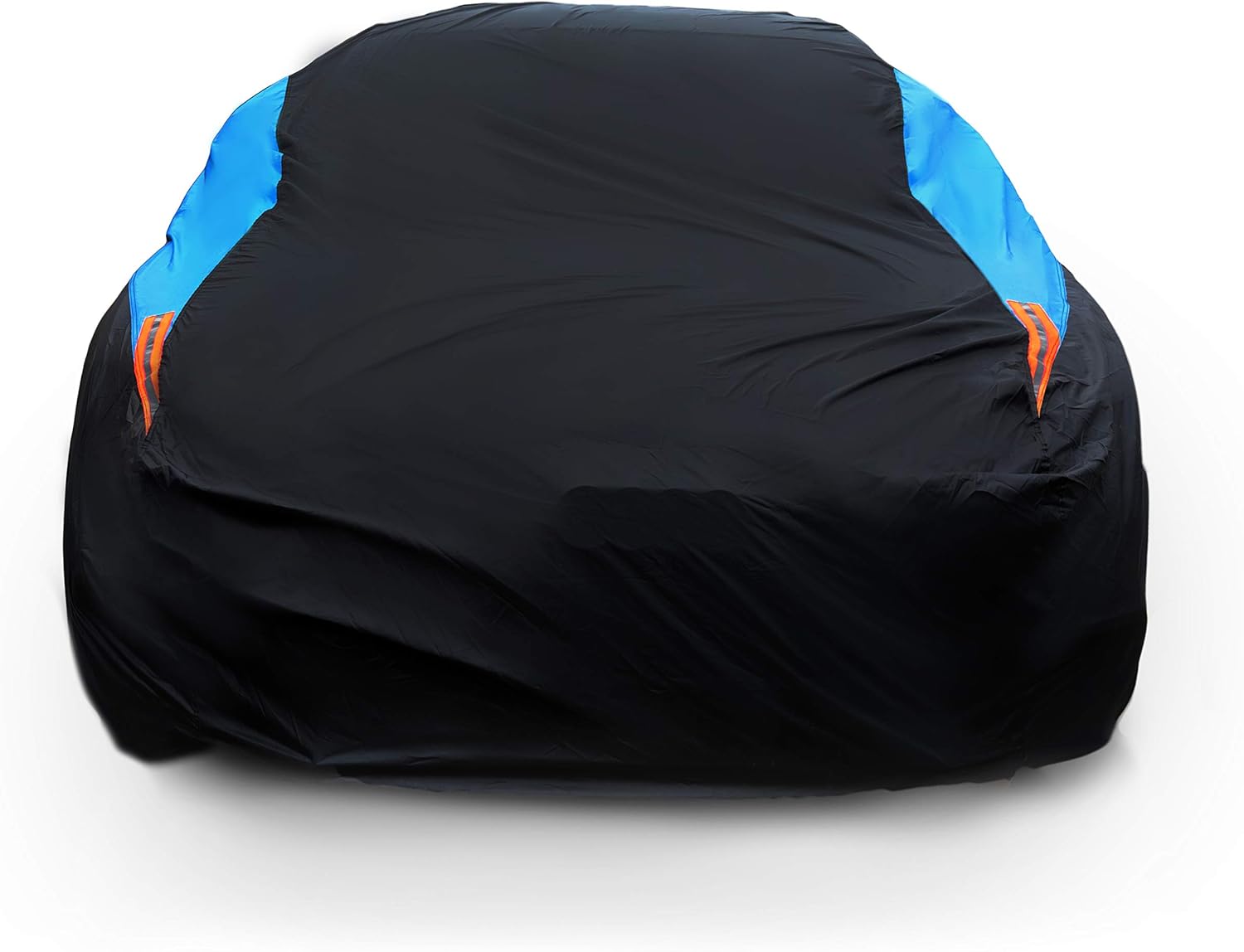
Car Cover Straps Not Working? Try These Solutions
⚡ Quick Answer
Car cover straps stop working due to 4 main causes: worn elastic, broken buckles, wrong strap routing, or a cover that’s too loose to hold. Most fixes take under 5 minutes. You can repair or replace straps yourself without tools — or switch to heavy-duty gust clips for a stronger hold in high winds.
Why Car Cover Straps Fail:
- Worn elastic: UV and weather degrade rubber over 12–18 months of outdoor use.
- Broken buckle: Plastic buckles crack under tension or after impact.
- Wrong fit: Universal covers slip because straps can’t compensate for poor sizing.
Quick Fixes to Try First:
-
✓
Re-route the underbody strap through the correct anchor loops -
✓
Replace stretched elastic with polypropylene webbing straps -
✓
Add gust clips at front and rear bumper corners for wind
You pull back the tarp on a windy morning and your car cover is halfway down the driveway — again. It’s frustrating, especially when you followed the instructions. I’m Michael, and after years of covering and uncovering cars in all kinds of weather, I’ve seen every strap failure there is. The good news? Almost every car cover strap problem has a fast, cheap fix. This guide walks you through every cause and every solution — no tools required for most of them.
📌 Key Takeaways
-
→
Elastic straps wear out after 12–18 months of outdoor UV exposure and need replacing. -
→
Wrong routing is the #1 cause of straps that feel secure but fail in wind. -
→
Gust clips with bungee cords outperform stock straps in winds above 30 mph. -
→
A poor-fitting cover makes any strap system fail — fit is more important than strap quality.
Why Are My Car Cover Straps Not Working?
Car cover straps fail for 4 specific reasons. Knowing which one you have tells you exactly what to fix.
The most common cause is **elastic fatigue**. Rubber and elastic webbing degrade in UV light. After 12–18 months outdoors, the strap loses its tension and can no longer grip the cover against the car’s body. You might not see any visible damage — the strap just stops snapping back.
The second cause is a **cracked or slipped buckle**. Cheap plastic buckles crack under tension, especially in cold weather. Metal buckles can bend or the locking tab can break. When the buckle fails, the strap releases under any load — including light wind.
Third is **wrong routing**. The underbody strap runs from one side of the car to the other, passing under the chassis. If it’s routed over the wrong loop or simply passed through the wrong slot, it creates slack that lets the cover lift in wind. Many people tighten the strap without realizing it was never anchored correctly.
The fourth cause is **cover fit**. Universal car covers use one size for many vehicles. If the cover is too large, the excess fabric billows and acts like a sail. No strap can hold a cover that’s creating lift — the cover itself is the problem.
⚠️ Warning
Never over-tighten underbody straps. The goal is to stop the cover lifting — not clamp it to the car. Over-tightening can tear the strap attachment point right out of the cover fabric, which is a much harder repair.
How to Fix Car Cover Straps That Won’t Stay Tight
Start with the simplest fixes before buying anything new.
Step 1 — Check the Routing First
Before assuming a strap is broken, check that it’s routed correctly. The underbody strap should thread through the loops sewn into the cover’s hem, then pass under the car’s chassis from one side to the other. It should not simply wrap around the outside of the cover.
A properly routed strap pulls the bottom hem of the cover downward and inward. If you pull the strap and the cover fabric doesn’t move, the strap is in the wrong place.
Step 2 — Test the Buckle
Clip and unclip the buckle 5 times. A good buckle clicks firmly and doesn’t release without pressing the release tab. If it releases with light sideways pressure, the locking tab is worn. Replace the buckle only — you don’t need a whole new strap. Buckles cost under $3 at any hardware store.
Step 3 — Replace Worn Elastic
Grab the strap and stretch it by hand. It should spring back with strong resistance. If it feels limp or stays stretched, the elastic is dead. Replace it with 1-inch polypropylene webbing and a quick-release buckle. This is stronger than the original elastic and won’t degrade as fast.
Step 4 — Get the Strap Under a Low Car
Getting the strap under a car that sits close to the ground is the hardest part. Use one of these 2 proven methods. Attach the strap end to a bamboo cane with a rubber band and slide it under. Or tie the strap to an old tennis ball and roll it under the car. Both work reliably.
🔢 Step-by-Step: Re-Routing Your Car Cover Strap
-
1
Remove the strap completely
Unclip both ends and pull the strap free from the cover loops.
-
2
Find the hem loops on both sides
Look for sewn fabric loops on the lower edge of the cover — one on each side, near the middle of the car.
-
3
Pass the strap under the chassis
Use a bamboo cane or tennis ball to guide the strap end under the car to the other side.
-
✓
Clip and snug — not tight
Clip both ends into the loops and adjust tension until the cover hem pulls slightly inward. The cover should not bulge outward at the sides.
How Do I Keep My Car Cover from Blowing Off in Wind?
Wind is the main enemy of car cover straps. Standard underbody straps help — but they’re often not enough above 30 mph.
The best upgrade is a **gust strap kit with heavy-duty clips**. These use toothed alligator-style clamps that grip the hem of the cover at the front and rear bumper corners. A bungee cord runs between the 2 clips under the car, creating tension across the whole bottom. This system works even when stock straps have failed completely.
The clips attach in under 60 seconds. You squeeze the clamp onto the cover hem, thread the cord, and pull the tension collar until snug. No routing under the car is needed for the front and rear clips — they attach directly to the bumper zone of the cover.
✅ Tip
Use binder clips as an emergency fix. Large heavy-duty binder clips from any office store attach to the front and rear bumper zones of the cover and grip the underside of the chassis. They’re not as strong as gust clips but work well in moderate wind.
For very high winds — above 60 mph — the best solution is a **car cover net**. This netting goes over the entire cover and is held down by a bungee cord running around the full bottom circumference of the car. It prevents the cover from lifting even in storm conditions.
When Should You Replace Car Cover Straps vs. Repair Them?
This comes down to where the failure is. Some strap problems are worth fixing. Others aren’t.
The table below shows when to repair versus when to replace your car cover straps.
If more than 2 straps have failed, it’s a sign the entire cover is aging — check the fabric and elastic hem too before spending money on repairs.
What Are the Best Alternatives When Straps Keep Failing?
If your original straps have failed more than once, it’s time to stop repairing and upgrade.
**Option 1: Gust strap kits with bungee cords.** These are the most effective strap upgrade. A set of 4 heavy-duty alligator clips connects to the cover hem, and a bungee cord runs under the car between them. The bungee keeps constant tension even as wind tries to lift the cover. They cost $10–$20 and last for years.
**Option 2: Extra-large binder clips.** This is the cheapest workaround. Large metal binder clips from any stationery store grip the cover hem against the underside of the bumper. They’re not rated for storms, but they hold well in winds under 25 mph and cost about $5 for a pack.
**Option 3: Car cover nets.** A cover net goes over the top of the whole car cover. The bungee cord running around the bottom edge of the net locks everything in place. This is the most secure option for areas with regular high winds or storms.
**Option 4: A custom-fit cover.** Universal covers fail most often because excess fabric creates lift. A custom cover hugs the car’s body lines and leaves almost no fabric for wind to catch. Custom covers also come with better strap systems designed for that specific car shape.
💡 Key Insight
Fit matters more than strap quality. A perfectly strapped universal cover will still blow off because the cover itself acts like a sail. The right-sized cover stays put even with minimal strapping.
Recommended Product: Car Cover Gust Straps with Heavy-Duty Clips
Recommended Product
LuckyStraps Car Cover Gust Straps with Heavy Duty Clips, UV-Resistant Cover Wind Protector
★★★★★ Highly rated on Amazon
These spiral-screw alligator clips grip the cover hem tightly and work with any car from 4.2 to 8.8 feet wide — a genuine upgrade when stock straps keep failing in wind.
As an Amazon Associate, we earn from qualifying purchases.
What Most People Get Wrong About Car Cover Straps
Most people make the same 3 mistakes. Fixing these alone solves most strap problems without buying anything.
**Mistake 1: They tighten straps too much.** The underbody strap isn’t a clamp. It’s a stop-lift device. Over-tightening doesn’t make the cover more secure — it tears the fabric attachment point away from the cover hem. Snug is correct. Tight is wrong.
**Mistake 2: They assume straps can fix a bad fit.** If the cover is 2 sizes too big, the straps are fighting against too much fabric. No strap system can hold a cover that’s billowing. The fix is a better-fitting cover, not stronger straps.
**Mistake 3: They forget to check the elastic hem.** Most car covers have an elastic cord sewn into the bottom hem that pulls the cover snug around the car body. When this cord stretches out, even perfect strapping won’t hold. Check the hem: if it doesn’t pull the fabric taut around the bottom of the car, the hem cord has failed and needs replacing separately from the straps.
How to Install a Car Cover So the Straps Actually Work
The way you put the cover on changes how well the straps hold. Most strap failures start with a bad installation.
Start at the front of the car. Every cover has a labeled front and back — fit the front tag to the front bumper first. Then pull the cover back over the vehicle, working from side to side instead of dragging it straight back. This stops the cover from bunching or snagging on mirrors.
Make sure the elastic hem seats below the door sills on all 4 sides before touching the straps. If the hem is sitting on top of the door sill rather than below it, the cover will slip regardless of how tight the straps are.
Then fit the underbody strap. Route it through the hem loops — one on each side of the car — and pass it under the chassis. Adjust tension until the hem pulls inward slightly at the sides. Check that the front and rear of the cover hang evenly and aren’t lifted on one side.
For windy conditions, add gust clips to the front and rear corners after the main strap is in place. Squeeze the clip onto the hem fabric just above the bumper, thread the cord, and pull the tension collar until you feel 2–3 clicks of resistance.
Correct installation prevents 80% of strap failures before they happen. Front tag first, side-to-side pull, hem seated below door sills, strap snug not tight. Do this every time and your straps last years longer.
Conclusion
Car cover straps fail for 4 reasons: worn elastic, broken buckles, wrong routing, and poor cover fit. Most fixes take under 5 minutes and cost almost nothing. Start with the routing check — it solves the problem more often than people expect.
If straps keep failing despite correct installation, upgrade to gust clips with bungee cords. They cost under $20 and outperform every stock strap system in wind.
The one thing to do right now: grab your car cover strap and stretch it by hand. If it doesn’t spring back firmly, the elastic is dead — replace it today before your cover blows off in the next storm.
Frequently Asked Questions
Why does my car cover keep blowing off even with straps?
The most likely cause is a universal cover that’s too big for your vehicle. Excess fabric catches wind and creates lift that no strap can counter. Check that the cover’s elastic hem is seated below the door sills and that straps are routed through the correct hem loops — not simply wrapped around the outside of the cover.
How do I get the car cover strap under a low car?
Tie the strap end to a bamboo cane with a rubber band and slide it through. Or attach the strap to a tennis ball and roll it under the car to the other side. Both methods work on cars with as little as 4 inches of ground clearance without lying on the ground.
Can I replace just the buckle on a car cover strap?
Yes. Buckles are sold separately at hardware stores for under $3. Thread the webbing through the new buckle the same way it was threaded through the old one. There’s no need to replace the whole strap if the webbing itself is still in good condition — check for fraying before deciding.
Are binder clips a good alternative to car cover straps?
Binder clips work as a budget alternative in winds under 25 mph. Use the largest, heaviest clips you can find and attach them to the front and rear bumper zones of the cover, clipping onto the underside of the chassis edge. They’re not rated for storms, but they cost about $5 for a full pack and are a reliable temporary fix.
How tight should car cover underbody straps be?
Straps should be snug — pulling the cover hem slightly inward — but not clamped tight. Over-tightening tears the fabric attachment point away from the cover hem. The strap’s job is to stop the cover lifting upward, not to compress the cover against the car body.
How long do car cover straps last?
Elastic straps typically last 12–18 months with regular outdoor use before UV and weather degrade the rubber. Polypropylene webbing straps last 3–5 years. Metal buckles outlast both — they usually survive the life of the cover. If straps feel limp or won’t spring back under tension, replace them.
What’s the difference between a gust strap and a regular car cover strap?
A regular underbody strap runs side to side under the car and prevents the cover from lifting in the center. A gust strap kit uses alligator-style clips on the hem at the front and rear corners, connected by a bungee cord that wraps under the car end to end. Gust straps are more effective in wind because they anchor all 4 corners of the cover, not just the middle.

Daniel Brooks is an automotive writer and product researcher focused on car accessories, car tech, maintenance, and practical driving guides. At Plug-in Car World, he helps drivers make smarter automotive decisions through honest reviews and research-driven content.