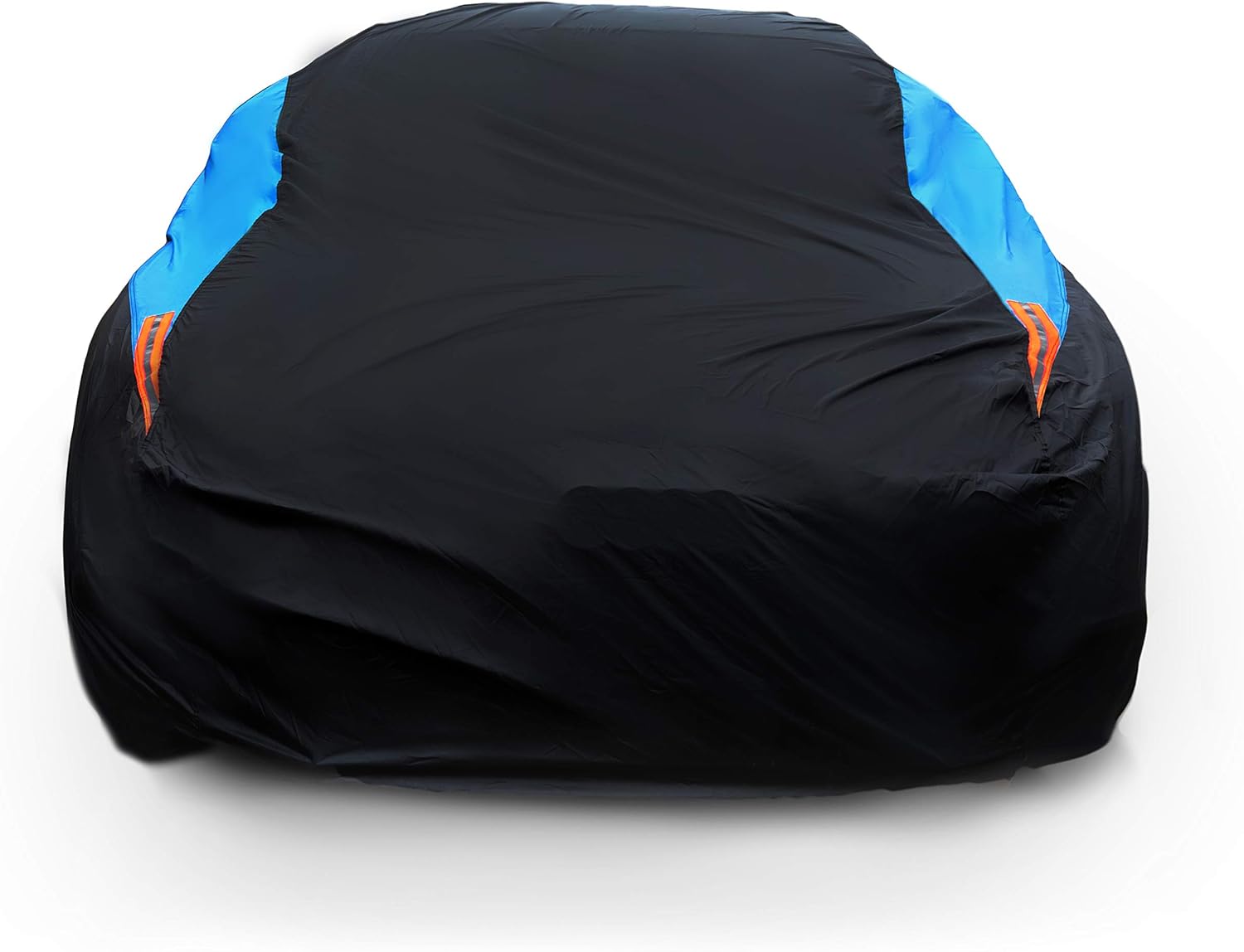
How to Stop a Car Cover From Blowing Off (6 Easy Methods)
⚡ Quick Answer
To stop a car cover from blowing off, use gust straps or bungee cords clipped under the front and rear bumpers. You can also thread rope through grommets, tuck the hem under the tires, or use binder clips for a budget fix. A snug-fitting cover is your first line of defense.
Top Methods to Secure Your Car Cover in Wind:
-
1
Clip gust straps under front and rear bumpers -
2
Thread bungee cords through grommets and tie under the car -
3
Tuck the hem edges under front and rear tires -
4
Use a custom-fit cover to eliminate wind-catching gaps
Mistakes That Let Wind Win:
-
✓
Never use a cover that’s too large — gaps act like a sail -
✓
Don’t skip the straps — even a fitted cover shifts in gusts -
✓
Remove the cover entirely in storm-level or sustained high winds
You step outside and your car cover is halfway down the driveway — again. I’m Michael, and after years of testing outdoor car covers in everything from dusty summer gusts to autumn storms, I’ve figured out exactly what works. Here’s how to keep your car cover locked in place, no matter what the wind throws at it.
📌 Key Takeaways
-
→
Gust straps are the fastest and most reliable fix — they clip onto the hem and run under the bumper in under 1 minute. -
→
Poor fit is the root cause — an oversized cover creates air gaps that act like a sail and lift in any breeze. -
→
Grommets and bungee cords work well as a DIY anchor system costing under $10 in most cases. -
→
In storm-level winds, even the best strap system can fail — removing the cover entirely is the safest choice.
Why Does Your Car Cover Keep Blowing Off?
A car cover blows off when wind gets underneath the fabric and builds pressure — turning the cover into a parachute. The 3 main causes are a loose fit, lightweight material, and no anchoring system.
Understanding the root cause tells you which fix to apply first. A cover that’s too big for your car is the most common problem. It bunches and gaps at the bumpers, giving wind an easy entry point. Once air gets under the hem, the whole cover lifts fast.
📋 The 4 Reasons Car Covers Blow Off
-
Poor fit: An oversized cover has gaps at the bumpers where wind gets underneath and balloons the fabric upward. -
Lightweight material: Thin, single-layer covers offer little resistance to gusts and shift at even low wind speeds. -
No anchoring: Without straps or tie-downs, even a well-fitting cover will shift and lift in strong gusts. -
Holes or tears: Even a small hole lets wind build pressure inside, causing the cover to lift from underneath.
So if you’re using a generic universal cover with no straps, you’re facing 2 or 3 of these problems at once. You can read more about outdoor cover design in this outdoor car cover guide from CarCovers.com for deeper context on materials and fit.
The good news: every one of these causes has a direct fix. Let’s start with the foundation — correct installation.
How to Install a Car Cover Correctly So It Doesn’t Shift
Correct installation is the first layer of wind protection — before any strap or clip. A cover that’s fitted wrong will blow off even with straps attached. The key is to align, pull evenly, and tuck the hem tight at both bumpers.
Most people drape the cover loosely and walk away. That leaves the hem floating above the bumpers — a perfect wind trap. Taking 2 extra minutes to fit it snugly makes every other method work better.
🔢 Step-by-Step: How to Fit a Car Cover Properly
-
1
Find the front tag
Every cover has a labeled front — start there. Matching front to front avoids bunching at the wrong end.
-
2
Pull from both sides evenly
Alternate pulling from left and right as you work toward the rear. This stops the cover from snagging or bunching on one side.
-
3
Tuck the hem behind both bumpers
Press the bottom edge of the cover snugly behind the front and rear bumpers. This blocks the main wind entry points.
-
✓
Now add your securing method
With the cover properly fitted, any strap or anchor you add will be far more effective against wind.
With the cover correctly fitted, you’re ready to add a securing method. The next section covers all 6 options — from the cheapest DIY fix to the most reliable setup for storm conditions.
6 Methods to Stop Your Car Cover From Blowing Off
Each method below works on its own. Combine 2 or more for high-wind or storm conditions. Start with Method 1 — it solves the problem for 90% of situations in under a minute.
Method 1: Gust Straps (Fastest, Most Effective)
A gust strap kit is the #1 recommended fix by cover manufacturers. It includes 2 bungee cords and 4 reinforced nylon clips. You clip each end to the cover’s hem, then pass the cords under the bumper to the other side. The tension holds the cover down from both ends.
Installation takes under 1 minute. These kits fit most cars, SUVs, trucks, and vans. They handle strong gusts without loosening or damaging the cover’s fabric.
Recommended Product
Tecoom Gust Straps Car Cover Wind Protector 2PCS
★★★★☆ Highly rated on Amazon
Reinforced nylon clips and bungee cords secure any car cover front and rear in under a minute — no tools needed.
As an Amazon Associate, we earn from qualifying purchases.
Method 2: Bungee Cords Through Grommets
Many car covers have reinforced metal grommets stitched into the hem. Thread bungee cords, rope, or an anchor kit through these loops and tie them securely under the vehicle’s frame. This creates a low-profile tie-down that pulls the cover down at multiple anchor points.
This method costs under $10 if you already have bungee cords. It works best when the grommets are placed at both bumpers and along the sides.
Method 3: Tuck the Edges Under the Tires
This is the quickest zero-cost fix. Pull the bottom hem of the cover tight under the front and rear tires before you drive away or park for the night. The weight of the car holds the cover down at those points.
It doesn’t secure the sides, so combine it with gust straps for full coverage in gusty conditions.
Method 4: Binder Clips
Large binder clips clamp onto the hem and create extra tension around the bumper edges. This is a budget option — pack of 12 clips costs about $3 at any office store. Use plastic clips rather than metal ones to avoid scratching the bumper paint.
Binder clips work well in light wind. In strong gusts, they can pop off. Use them as a backup alongside gust straps for better results.
Method 5: Cable Lock and Anti-Theft Strap
A cable lock runs through the grommets and locks under the chassis with a padlock. This prevents both wind lift and theft at the same time. It’s worth using if you park in unsheltered public areas for long periods.
The cable adds real tension at the base of the cover. It’s not as fast as gust straps, but it doubles as security.
Method 6: Add Weight to the Hem Edges
Place small sandbags or purpose-made cover weights along the hem edge at each corner. This anchors the bottom of the cover against lifting. Use soft, non-abrasive weights only — sharp or heavy objects can damage the paint or tear the cover fabric.
Weights work best on flat surfaces. On uneven driveways, they can shift and lose contact with the hem.
✅ Tip
For maximum wind resistance, combine Method 1 (gust straps) with Method 3 (tire tuck). Together they anchor all 4 contact points and eliminate every major wind entry point.
What Type of Car Cover Stays On Best in Wind?
The cover material and fit affect how much wind resistance you get before straps are even needed. A heavy multi-layer cover on a proper-fitting custom cut will hold in winds that blow a universal cover straight off.
Here’s how the main options compare for windy conditions. You can also find detailed guidance on this topic in Covercraft’s wind cover guidance for manufacturer-specific recommendations.
This table compares the 3 main car cover types on the factors that matter most in windy conditions.
A custom-fit cover won’t solve the problem alone — always pair it with gust straps in high-wind conditions.
Should You Remove Your Car Cover in Very High Winds?
Yes — in sustained high winds or storm conditions, the safest choice is to remove the car cover entirely. Even the best gust strap system has limits. If the wind is strong enough, it will stress the seams, stretch the straps, and potentially drag the cover across the paint — causing damage the cover was meant to prevent.
Covercraft, one of the major cover manufacturers, officially recommends removing covers during severe or sustained high winds to prevent stress on seams and straps.
⚠️ Warning
A car cover dragged by high wind can scratch and scuff your paint finish. If a storm warning is issued for your area, remove the cover and store it. Paint repair costs far more than the hassle of reinstalling the cover later.
For everyday wind and gusts, the methods above are more than enough. Save the removal decision for named storms, sustained gale-force winds, or conditions where debris is flying through the air.
What Most People Get Wrong About Car Cover Security
Most car cover problems come down to 3 myths that lead people to use the wrong fix — or no fix at all.
Myth 1: “A heavier cover won’t blow off.” Weight helps, but it’s not enough on its own. A heavy cover with a loose fit still catches wind and lifts. Fit matters more than weight. You need both a snug hem and an anchor system.
Myth 2: “Gust straps will scratch my paint.” Quality gust strap kits use iron hooks coated in silicone rubber that contact only the hem of the cover — never the paint. The clips attach to fabric, not metal. When used correctly, they don’t touch the vehicle’s surface at all.
Myth 3: “Binder clips are just as good as gust straps.” Binder clips help in light wind but aren’t designed for gusty conditions. They pop off easily in strong gusts. Gust straps use bungee tension — they flex with the wind instead of releasing under pressure. Use clips only as a supplement, not a replacement.
The cover’s fit eliminates the wind entry point. The strap system holds it down against lift. You need both working together — one without the other fails in real outdoor conditions.
Conclusion
Stopping a car cover from blowing off comes down to 2 things: proper installation and the right anchor system. Most people skip one of them — and that’s why the cover ends up in the neighbor’s yard.
Gust straps are the fastest and most reliable fix for most situations. Pair them with a correctly tucked hem and you’ll have a cover that holds through everyday gusts without any extra effort.
One thing to do right now: Go out and tuck the bottom hem of your car cover snugly behind both bumpers. It takes 60 seconds and immediately reduces wind lift at the 2 most vulnerable points.
Frequently Asked Questions
Do car cover gust straps actually work?
Yes — gust straps work well for most everyday wind conditions. They use bungee cords and clips to pull the cover hem tight against the front and rear bumpers. They’re the most commonly recommended fix by cover manufacturers and install in under 1 minute.
Can bungee cords hold down a car cover?
Yes — bungee cords threaded through cover grommets and tied under the car frame work well. They flex with wind gusts instead of snapping under pressure. Use heavy-duty cords rated for outdoor use so they don’t weaken from UV exposure over time.
Why does my car cover blow off even with straps?
If straps still fail, the cover is likely too large. An oversized cover has gaps at the hem where wind gets under the fabric before the strap can hold it. Correct installation — tucking the hem tight at both bumpers — solves this before straps are applied.
How do I anchor a car cover without grommets?
Use gust strap clips — they grip the hem of the cover directly without needing grommets. Alternatively, tuck the hem under the front and rear tires, or use large binder clips at the bumper edges to add tension without any special hardware.
What is the best car cover for windy areas?
A custom-fit, multi-layer outdoor cover is the best choice for windy locations. It leaves no gaps at the bumpers, has a snug elastic hem, and includes integrated grommets for tie-downs. Pair it with a gust strap kit for complete wind protection.
Will gust straps scratch my car’s paint?
No — quality gust strap kits attach only to the fabric hem of the cover. The clips never contact the vehicle’s paint. Many kits use silicone-coated iron hooks that pass under the bumper without touching any painted surface.
Should I remove my car cover before a storm?
Yes — in storm-level or sustained high winds, remove the cover entirely. Even heavy-duty straps can fail in severe gusts, and a dragged cover can scratch your paint. Remove, fold, and store the cover until conditions calm down.

Daniel Brooks is an automotive writer and product researcher focused on car accessories, car tech, maintenance, and practical driving guides. At Plug-in Car World, he helps drivers make smarter automotive decisions through honest reviews and research-driven content.