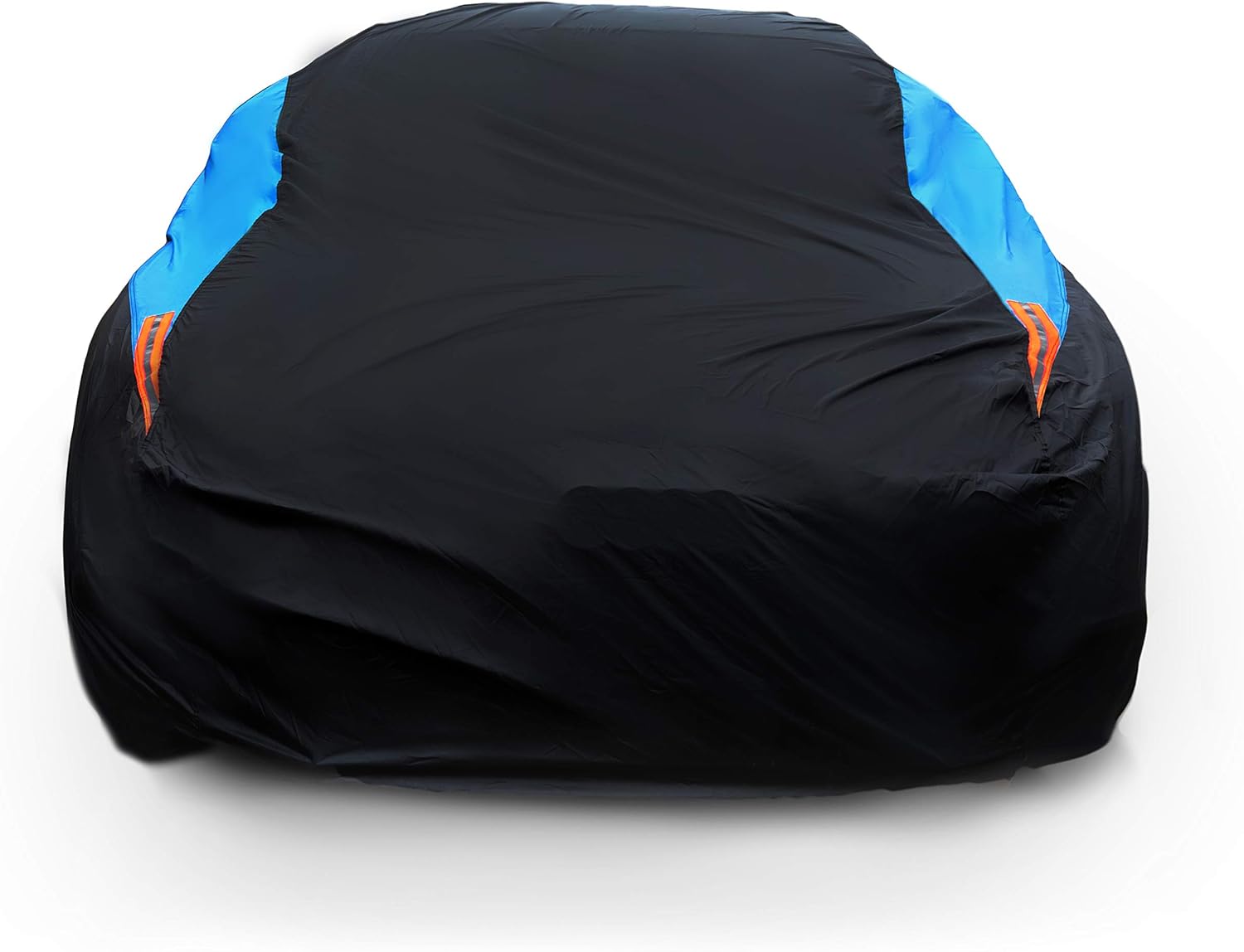
Ice Under a Car Cover: Causes and How to Prevent It
⚡ Quick Answer
Ice forms under a car cover when moisture trapped between the cover and your car’s surface drops below 32°F (0°C). Non-breathable covers, a wet car, freezing rain, and parking on grass are the 4 main causes. The fix is a breathable cover, a dry car, and a waxed paint surface.
Top causes of ice forming under a car cover:
- Non-breathable cover: Traps moisture against the paint and freezes it solid.
- Wet car at cover time: Any moisture on the paint freezes and bonds the cover.
- Freezing rain penetration: Water-absorbing fabric soaks up rain and freezes overnight.
- Ground moisture rising: Grass or gravel parking lets dampness climb under the cover.
3 prevention tips that work immediately:
-
✓
Always dry the car before putting the cover on -
✓
Use a breathable, multi-layer cover rated for winter -
✓
Wax the paint before winter to repel moisture at the surface
You walk out on a freezing morning and the car cover is stuck solid — frozen flat against your paint, impossible to peel off without a fight. It’s one of the most frustrating winter car problems, and most people have no idea they caused it themselves. I’m Daniel Brooks, and after years of testing winter car protection methods, I can tell you that ice forming under a car cover is almost always preventable.
The cover was supposed to protect the car. Instead, it became the problem. Here’s exactly why this happens — and how to stop it for good.
📌 Key Takeaways
-
→
Trapped condensation is the root cause — air under any cover carries moisture that freezes when temps drop below 32°F. -
→
Non-breathable cover fabrics (cheap PVC or single-layer vinyl) cause the most severe under-cover icing. -
→
Covering a wet car is the single biggest mistake — any moisture on the paint bonds the cover solid overnight. -
→
A quality wax or paint sealant applied before winter creates a hydrophobic barrier that stops ice from sticking to the surface.
Why Does Ice Form Under a Car Cover?
Ice forms under a car cover because of a basic physics process called condensation. When air temperature drops below the dew point at night, water vapor in the air becomes liquid — then freezes. Your cover traps that air against the car’s surface, and there’s nowhere for the moisture to go.
Think of it like this: even a breathable cover has air underneath it. That air holds moisture. When temperatures hit 32°F or below, that moisture freezes wherever it sits — on your paint, on the cover fabric, and at the contact points between the two. The result is a cover that’s bonded to the car like a sheet of ice glue.
💡 Key Insight
The cover itself doesn’t create ice. The moisture that was already present — on your paint, in the air gap, or soaked into the fabric — is what freezes. Remove the moisture, and you remove the problem.
You might be thinking: “But the cover is supposed to keep moisture out.” That’s partly true. A good cover keeps rain and snow off the exterior. But condensation forms from the inside, not the outside. No cover fully eliminates moisture from the trapped air space beneath it.
That said, the type of cover you use makes a massive difference. A non-breathable cover makes this 10 times worse — which brings us to the main causes.
What Are the Main Causes of Ice Under a Car Cover?
There are 4 specific causes that account for nearly every case of under-cover icing. Understanding each one lets you fix the exact problem you’re dealing with — not just guess.
These 4 causes differ by source, how severe the icing gets, and how easy they are to fix.
The first two causes — wrong cover type and covering a wet car — are the most common and the easiest to fix starting tonight.
Cause 1: The Cover Doesn’t Breathe
A non-breathable cover — cheap PVC, single-layer vinyl, or generic tarps — seals moisture in like a greenhouse. The air under the cover stays humid. When temperatures fall overnight, that humidity condenses on the cold paint surface and freezes.
Covers with micro-porous or multi-layer breathable fabrics let water vapor escape through the material. That’s the key difference. A breathable cover doesn’t eliminate condensation entirely, but it keeps it low enough that freezing doesn’t bond the cover to the car.
Cause 2: You Covered the Car While It Was Wet
This is the most common mistake. You come home in the rain, park the car, and throw the cover on fast. There’s standing water on the hood, roof, and trunk. The temperature drops to 28°F overnight. By morning, you’ve got a cover frozen flat to every wet surface.
Water needs just one thing to freeze: temperature below 32°F. When you trap it between the cover and the paint, it has nowhere to run. So it bonds both surfaces together. Always dry the car first — even a quick wipe with a microfiber towel makes a real difference.
Cause 3: Freezing Rain Soaks Through the Cover
Some covers are water-resistant but not truly waterproof. Freezing rain — which hits as liquid and freezes on contact — soaks into the fabric’s fibers. The waterlogged cover then freezes to the car’s surface, forming one solid mass that can be very hard to separate safely.
This is why regions with freezing rain (sleet) cause more damage than regions with dry snow. Dry snow sits on top of the cover. Freezing rain works its way in.
Cause 4: Ground Moisture Rising from Below
If you park on grass, gravel, or bare soil, moisture rises from the ground. It enters the air gap under the cover and settles on the car’s lower panels, rocker panels, and door sills. In freezing conditions, this moisture forms ice low on the car — and it can stick the bottom edge of the cover tight to the body.
Cars parked on concrete driveways have much less of this problem. Concrete is drier and less porous than organic ground surfaces.
Does a Car Cover Actually Make Ice Worse?
In the right conditions, yes — a wrong car cover makes icing worse, not better. A non-breathable cover turns your car into a sealed humidity trap. The paint never dries. Moisture concentrates instead of dispersing. When temperatures fall, you get more ice than you would have with no cover at all.
But this is specifically a problem with the wrong cover. A quality breathable cover does the opposite. It keeps exterior snow and ice off the car, reduces the total moisture load on the surface, and lets trapped vapor escape before it can freeze solid. The cover itself isn’t the problem — the choice of cover is.
⚠️ Warning
Never pour warm water on a frozen cover to loosen it. The warm water refreezes fast and adds a new ice layer on top. It can also crack your windshield if the glass is cold enough. Use room-temperature water or wait for the temperature to rise.
So should you use a cover in winter? Absolutely — but only a breathable, multi-layer cover rated for outdoor winter use. People in cold countries who skip car covers often do so because they’ve dealt with cheap covers that made things worse. A premium cover is a completely different tool.
How Do You Prevent Ice from Forming Under a Car Cover?
Preventing under-cover ice comes down to 3 things: the right cover, a dry car at cover time, and a protected paint surface. Get all 3 right and you’ll never deal with a frozen-stuck cover again.
🔢 Step-by-Step: How to Prevent Ice Under Your Car Cover
-
1
Choose a breathable multi-layer winter cover
Look for covers with 4–6 layers and a waterproof membrane that still allows vapor to escape. Single-layer vinyl or PVC covers are the wrong choice.
-
2
Dry the car before covering
Use a microfiber towel to wipe down the hood, roof, and trunk if the car is wet. Dirt also anchors ice crystals — a clean car freezes less aggressively.
-
3
Apply a quality car wax or paint sealant before winter
Wax creates a hydrophobic surface. Water beads off instead of sitting flat. Ice can’t grip a well-waxed surface as easily — and when it does form, it’s easier to remove.
-
4
Park on concrete when possible
Grass and gravel release ground moisture that rises under the cover. Concrete is drier and reduces the vapor load entering the air gap under the cover.
-
✓
Lift the cover once a month in prolonged cold spells
If temperatures stay below freezing for weeks, lift the cover briefly to let any trapped moisture escape. Then re-cover the car. This simple habit prevents long-term moisture buildup.
What Type of Car Cover Prevents Ice Best?
The best car covers for preventing under-cover ice share 3 traits: a breathable structure, a waterproof outer membrane, and a soft non-abrasive inner lining. Multi-layer covers (4–6 layers) consistently outperform single-layer options in cold and wet conditions.
According to the NHTSA’s winter vehicle care guidance, moisture management is one of the most overlooked aspects of cold-weather car protection. The right protective layer between your car and the elements makes a measurable difference in how winter affects your vehicle’s surface.
📋 What to look for in a winter car cover
-
Breathable multi-layer fabric: Allows water vapor to escape while keeping rain and snow out. Look for 4+ layers with a micro-porous membrane. -
Soft fleece inner lining: Protects paint from scratches when you apply or remove the cover in cold conditions. -
Full elastic hem: Wraps tightly under the bumpers so wind can’t force rain or sleet up under the bottom edge. -
Strap and buckle system: Keeps the cover from lifting in wind — a loose cover flaps and drives freezing air and moisture under the edges.
Recommended Product
Budge Protector V Car Cover, 5-Layer Premium All-Weather Protection
★★★★☆ Highly rated on Amazon
Five layers including a HyperDry waterproof membrane and breathable structure make this cover ideal for preventing under-cover ice while protecting your paint all winter.
As an Amazon Associate, we earn from qualifying purchases.
How Do You Remove a Car Cover That’s Frozen to the Car?
A frozen car cover needs patience, not force. Yanking on a frozen cover can tear the cover fabric, scratch your paint, or rip off a mirror cover or antenna. The goal is to break the ice seal gently — not pull the cover free by brute strength.
The safest approach is to wait for temperatures to rise slightly above freezing. Even 34°F will begin loosening the ice seal on its own. If you can’t wait, here’s how to do it without causing damage.
✅ Tip
Place 2–3 foam balls or soft pads on the car’s roof and hood before putting the cover on each night. This creates a small air gap between the cover and the paint — so even if ice forms on the contact points, you have far less surface area stuck down. It’s a trick used by car owners in New England and northern Canada.
Here’s a safe sequence for removing a frozen car cover without damage:
Room temperature water is the only “active” method that’s safe — it breaks the ice seal without thermal shock to the glass or risk to the paint.
What Most People Get Wrong About Car Covers in Winter
Most people believe that any car cover protects against ice. That’s wrong — and it’s the belief that leads to the most frustrating mornings. Here are the 3 biggest misconceptions about car covers and winter ice.
Misconception 1: “A waterproof cover is the best choice in winter.” Fully waterproof but non-breathable covers keep rain out but lock moisture in. The trapped humidity has nowhere to go. It condenses and freezes on your paint. A breathable cover that still resists water is almost always better for winter use than a 100% sealed waterproof cover.
Misconception 2: “If the cover is on, the car is protected.” The cover only helps if the car was dry and clean before you put it on. A cover placed on a wet car seals in moisture and makes icing significantly worse. The cover is a tool — it only works right with the right preparation.
Misconception 3: “Ice can’t form under a cover because the cover blocks the cold.” Car covers have very little insulating value. They don’t meaningfully slow the temperature drop of the car’s surface overnight. Cold passes through the fabric quickly. What matters isn’t insulation — it’s moisture management.
Is It Better to Use a Car Cover or No Cover in Freezing Weather?
The right answer depends on which cover you have. A quality breathable winter cover is better than no cover — it keeps snow and freezing rain off the exterior, reduces how often you need to scrape, and protects the paint from road salt spray and debris. The Classic Additions guide on condensation confirms that breathable covers used correctly are safe for winter, even though some condensation can still occur under any cover.
A cheap, non-breathable cover is often worse than no cover at all. It creates a sealed moisture environment and can actively increase icing. If the only cover you own is a thin vinyl tarp or single-layer generic cover, you’re better off not using it until you can replace it.
🎯 Which option is right for you?
If you have…
A quality 4–6 layer breathable winter cover
→ Use it every night. Dry the car first.
If you have…
A cheap single-layer or vinyl cover
→ Skip it in winter. Upgrade first.
If you have…
No cover but facing heavy snow and road salt
→ Buy a breathable cover now. It’s worth it.
How to Protect Your Car From Ice Damage Beyond the Cover
A good car cover handles exterior ice. But winter ice affects more than just the surface you can see. Rubber door seals, wiper blades, windshields, and lock cylinders all take damage from repeated freezing. Protecting them adds about 10 minutes before winter starts — and saves expensive repairs later.
According to NHTSA’s winter vehicle preparation guidelines, checking wiper blades, defrosters, and coolant levels before winter hits are all critical steps that most car owners skip until something goes wrong.
✓ Full winter ice protection checklist
-
✓
Apply a quality car wax or ceramic sealant before the first freeze of the season -
✓
Apply silicone spray to door and trunk rubber seals to stop them from freezing shut -
✓
Lift wiper blades off the windshield overnight to stop them bonding to the glass -
✓
Switch to winter-rated windshield wiper fluid with de-icing additives -
✓
Apply a 3:1 vinegar-water spray to the windshield before parking to slow ice formation overnight
Conclusion
Ice forms under a car cover because of trapped moisture — not because the cover is broken or useless. The right cover, a dry car, and a waxed paint surface eliminate the problem almost completely. A breathable 4–6 layer winter cover does its job exactly as designed when you prepare the car correctly before covering it.
Don’t let one bad experience with a cheap cover put you off using a cover in winter. The difference between the wrong cover and the right one is bigger than most people realize. One protects your car. The other makes things worse.
One thing to do right now: Before tonight, wipe down your car’s surface with a microfiber towel and make sure it’s completely dry before putting the cover on. That single step prevents more under-cover ice than any other change you can make.
Frequently Asked Questions
Why is my car cover frozen to the car?
Your cover froze to the car because moisture was trapped between the cover and the paint surface when temperatures dropped below 32°F. This happens most often when you cover a wet car, use a non-breathable cover, or experience freezing rain overnight. The moisture freezes at the contact points and bonds the fabric to the paint.
Does a car cover stop ice from forming on the windshield?
A full car cover helps reduce ice on the windshield by blocking direct contact between the glass and freezing air. However, condensation can still form underneath if the air gap is humid. Windshield-specific covers provide the most reliable overnight protection against frost and ice on the glass.
Should I use a car cover in winter or is it pointless?
A quality breathable winter cover is far from pointless — it reduces snow and ice accumulation, protects against road salt spray, and saves significant time on winter mornings. A cheap non-breathable cover, however, can make icing worse. The cover type matters as much as whether you use one at all.
Can I cover my car in the rain with a car cover?
You can put a cover on a car in the rain if the cover is waterproof and breathable. The cover will protect the car from further rain accumulation. The problem comes if temperatures then drop below freezing — any moisture already on the paint or soaked into the cover fabric will freeze overnight. Dry the car first whenever possible.
Why do people in cold countries often skip car covers in winter?
Many drivers in very cold regions skip car covers because they’ve experienced cheap covers freezing solid to their cars, making removal harder than just scraping ice normally. Premium breathable covers don’t have this problem — but awareness of quality differences is lower, so many drivers default to skipping covers altogether rather than upgrading.
How do I stop my car cover from getting ice on it?
Ice on the outside of your cover is normal and not a problem — it means the cover is doing its job by taking the ice instead of your paint. The issue to prevent is ice forming underneath. To stop that, use a breathable cover, always cover a dry car, and apply wax to the paint before winter so moisture can’t grip the surface.
What is the best way to protect a car parked outside in winter?
The best combination is a quality breathable multi-layer cover, a pre-winter wax application, and weekly checks for moisture buildup under the cover. Park on concrete where possible, dry the car before covering each time, and lift the cover briefly once a month to let trapped moisture escape. This approach protects against ice, road salt, UV, and paint damage simultaneously.

Daniel Brooks is an automotive writer and product researcher focused on car accessories, car tech, maintenance, and practical driving guides. At Plug-in Car World, he helps drivers make smarter automotive decisions through honest reviews and research-driven content.