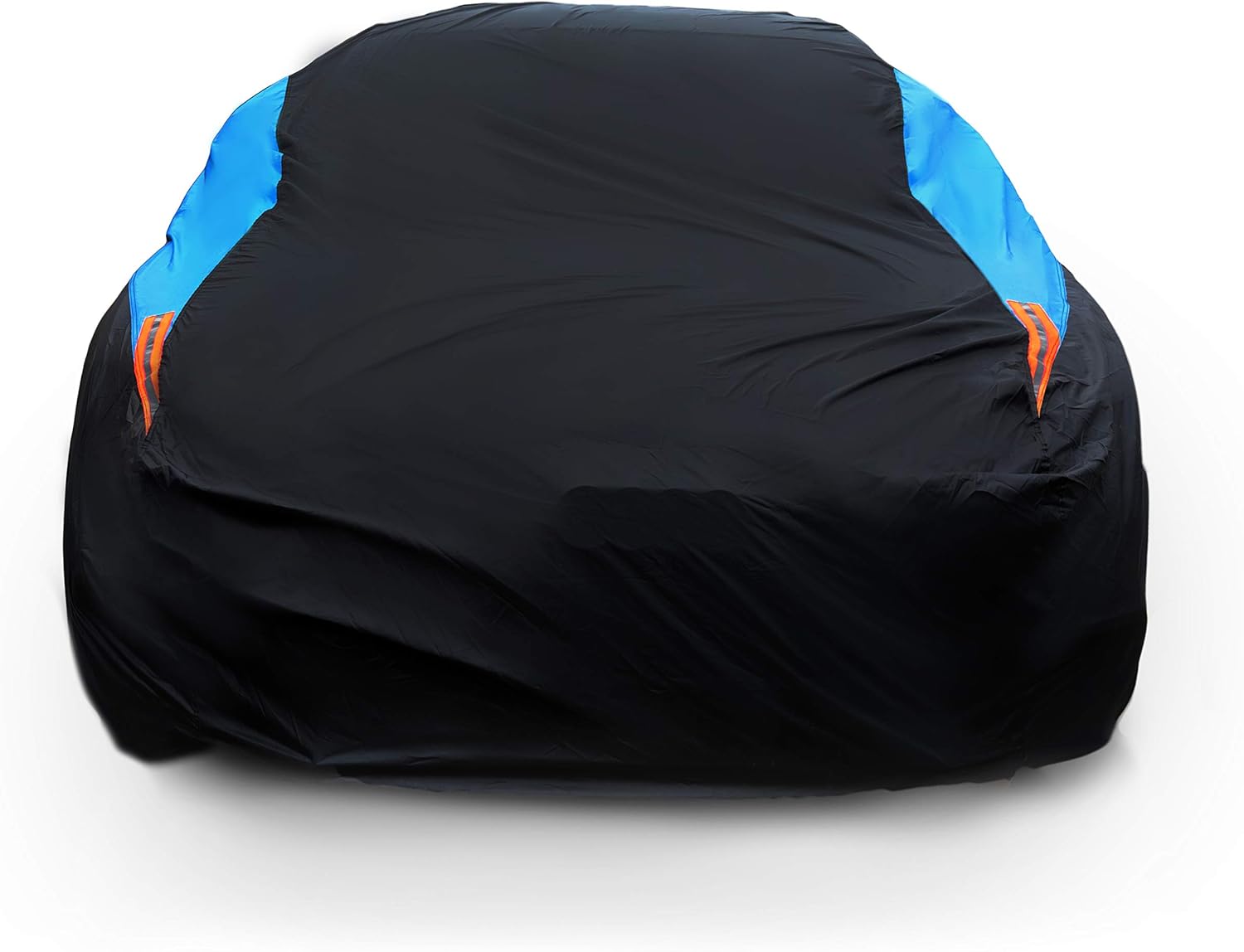
What to Do When a Car Cover Freezes (Safe Removal Guide)
⚡ Quick Answer
Never pull a frozen car cover off. Forcing it tears the cover fabric and drags ice across your clear coat — scratching or lifting paint in one move. Thaw the ice bond first using lukewarm water or a de-icer spray at the edges, then lift the cover gently section by section.
Steps to remove a frozen car cover safely:
-
1
Do NOT pull — check if ice has formed under the cover first -
2
Pour lukewarm (not hot) water along the edges to melt the ice bond -
3
Or start the car and run the defroster on high for 10–15 minutes -
4
Lift section by section as each area thaws — never pull all at once
Mistakes that cause paint damage:
-
✓
Never pour boiling or hot water — it can crack glass and warp paint -
✓
Never yank the cover — ice crystals will act like sandpaper on the finish -
✓
Never use a heat gun at close range — cover fabric can melt
You step outside on a January morning and grab the edge of your car cover. It doesn’t move. It crackles. It’s frozen solid to the car. That sinking feeling is familiar to anyone who’s left a cover on through freezing rain or overnight sleet — and Daniel Brooks has seen the paint damage that follows when people panic and pull anyway.
The good news: a frozen car cover is fixable without damage. You just need to thaw it first — never force it. Here’s exactly how to do it right.
📌 Key Takeaways
-
→
Never remove a frozen cover until the ice layer between cover and paint has fully melted. -
→
Lukewarm water works fastest — pour it at the edges and wait 2–3 minutes before attempting to lift. -
→
Forcing a frozen cover off drags ice crystals across the clear coat — causing scratches, chips, or lifted paint. -
→
A breathable, custom-fit cover reduces freeze bonding by preventing moisture from becoming trapped underneath.
Why Does a Car Cover Freeze to the Car?
A car cover freezes when moisture gets trapped between the cover fabric and the vehicle’s surface. When temperatures drop below 32°F overnight, that trapped moisture turns to ice — bonding the cover to the paint, glass, or trim beneath it.
This happens in 3 specific ways. First, you cover a car that wasn’t fully dry. Second, rain or sleet soaks through a low-quality non-breathable cover and pools underneath. Third, daily freeze-thaw cycles — warm daytime temperatures melt surface snow, then overnight cold refreezes the meltwater right under the cover.
📋 Common Reasons a Car Cover Bonds to Paint in Winter
-
Wet car at time of covering: Moisture under the cover freezes to the paint surface directly overnight. -
Non-breathable cover material: Cheap or non-vented covers trap humidity and condensation with nowhere to escape. -
Freezing rain or sleet: Precipitation soaks through the cover and refreezes as a solid ice sheet underneath. -
Freeze-thaw cycling: Snow melts during the day, seeps under the cover’s edges, then refreezes tightly overnight.
So if you’re thinking “I just covered it last night, how did this happen?” — the answer is usually freezing rain or an already-damp car. Either way, the cause doesn’t change what you do next. The ice bond exists, and it needs to go before the cover comes off.
What Happens If You Force a Frozen Car Cover Off?
Pulling a frozen car cover off causes paint damage — it’s not a risk, it’s a near-certainty. The ice layer between the cover and the surface acts like coarse sandpaper. Every inch you drag it drags those ice crystals across your clear coat.
The damage ranges from fine surface scratches (fixable with polish) to deeper clear coat gouges and even paint chips if the ice bond was thick. Coverking, one of the leading car cover manufacturers, is explicit: do not remove a frozen car cover under any circumstances until it has thawed. The cover itself can also tear along seams when stretched against frozen resistance.
⚠️ Warning
If you can hear a cracking or snapping sound when you try to lift the cover — stop immediately. That sound is ice breaking, which means the cover is still bonded. Continuing will drag frozen debris across your paint and cause clear coat damage that requires professional correction to fix.
You might be thinking “it’s just a light frost, it’ll slide right off.” Here’s why that’s wrong: even a thin 1mm ice layer creates enough adhesion to cause micro-scratches across the full surface as the cover drags. Those scratches may not be visible in low light — but direct sunlight reveals them immediately.
How to Safely Remove a Frozen Car Cover: Step by Step
The only safe way to remove a frozen car cover is to dissolve the ice bond first, then lift the cover in sections as each area thaws. This process takes between 10 and 30 minutes depending on temperature and ice thickness — but it protects your paint completely.
🔢 Step-by-Step: Thawing and Removing a Frozen Car Cover
-
1
Check the bond before touching the cover
Gently press — do not pull — on one corner. If it doesn’t move freely, an ice bond exists. Do not attempt removal yet.
-
2
Start the car and run the defroster on high
Heat from inside the cabin radiates outward through the hood, roof, and glass. Run it for 10–15 minutes. This softens the ice from the inside out without any water risk.
-
3
Apply lukewarm water along the edges
Use tap-warm water — not hot. Pour it slowly at the bottom edges and seams where ice bonds are thickest. Wait 2–3 minutes. Never use boiling water — thermal shock can crack glass.
-
4
Spray de-icer at stubborn frozen edges
An automotive de-icer spray (isopropyl alcohol base) works in seconds on spots the water can’t reach — door seams, mirror edges, and the cover’s lower hem.
-
5
Lift section by section — never pull all at once
Work from one corner, peeling the cover back slowly as each section thaws. If resistance increases at any point — stop and apply more water or de-icer to that area before continuing.
-
✓
Dry the cover before storing it
Shake off any remaining ice, let the cover air dry fully before folding and storing it. A wet cover folded away will mildew and lose water resistance.
Recommended Product
Prestone AS244 De-Icer for Windshield, Windows, and Wipers, 17 oz. Aerosol
★★★★½ Highly rated on Amazon
This fast-acting aerosol is ideal for spraying along the frozen edges of a car cover — it dissolves the ice bond in seconds without needing hot water or a heat gun, and it’s safe on paint, glass, and cover fabric.
As an Amazon Associate, we earn from qualifying purchases.
What to Do If the Cover Is Still Stuck After Thawing
If the cover still won’t lift after 20 minutes of warm water and de-icer — the ice is thicker than usual or the temperature is still below -10°F. In that case, the safest option is to wait. Natural thawing as the day warms up will loosen even the most stubborn ice bond without risk to your paint.
If you genuinely need the car right now, move it into a garage if possible. Warmth radiating from the floor and walls will thaw the cover within 30–60 minutes without any water or spray needed.
✅ Tip
An electric blanket laid on top of the frozen cover (with a dry tarp between the blanket and the wet cover fabric) generates enough gentle heat to melt most ice bonds within 15–20 minutes. Keep the blanket off the ground and away from standing water.
One thing to check afterward: inspect the paint surface once the cover is off. Run your hand lightly over the hood and roof. If it feels rough or gritty, rinse the car with clean water immediately and consider a light polish to address any micro-scratches before they become visible.
How to Stop Your Car Cover from Freezing in Winter
Preventing a frozen car cover comes down to 2 things: keeping moisture out from underneath, and choosing a cover that allows what little moisture does get in to escape as vapor. Both matter equally.
According to AAA’s winter car guidance, preventing moisture from becoming trapped is the foundation of all winter car protection. That same principle applies directly to car covers — a cover that traps humidity underneath will freeze to the paint every time temperatures drop below freezing.
✓ Winter Car Cover Freeze Prevention Checklist
-
✓
Always cover a dry car. Even residual surface moisture becomes ice overnight. Wipe down the hood and roof before covering in freezing weather. -
✓
Use a breathable, multi-layer cover. Breathable fabrics let vapor escape outward instead of condensing and refreezing beneath the cover. -
✓
Apply a water-repellent spray to the cover. Re-treating the cover fabric with a DWR (durable water repellent) spray prevents moisture from soaking through in the first place. -
✓
Secure the cover tightly with straps. A loose cover flaps in wind, scooping snow and water underneath the hem — the most common entry point for freeze bonding. -
✓
Brush snow off before it melts and refreezes. Fresh snow is easy to brush away. Melted-and-refrozen snow becomes an ice sheet that bonds the cover overnight.
For long-term winter storage, expert winter storage guidance consistently recommends a breathable car cover in a sheltered (not necessarily heated) location as the best combination. The cover handles dust and surface moisture — the shelter handles precipitation. Together, freeze bonding becomes rare. Consumer Reports’ winter car care guidance also notes that starting with a clean, waxed paint surface before winter gives the clear coat a protective layer that makes ice adhesion less likely even if moisture does get underneath.
What Most People Get Wrong About Frozen Car Covers
The biggest mistake isn’t pulling the cover off — it’s thinking hot water will speed things up safely. Pouring boiling or very hot water on a frozen car cover can crack windshield glass (thermal shock) and may warp rubber trim seals on door frames. Lukewarm tap water is just as effective at dissolving ice bonds and completely safe.
The second mistake is thinking a waterproof cover prevents freezing. A fully waterproof (non-breathable) cover is actually more likely to cause freeze bonding than a breathable one. It traps humidity underneath with no escape route, creating a damp microclimate that freezes solid every cold night.
💡 Key Insight
The word “waterproof” on a car cover isn’t a winter benefit — it can be a liability. For outdoor winter use, you want water-resistant AND breathable. Water-resistant keeps precipitation out from the top. Breathable lets condensation escape from the bottom. You need both.
The third misconception: letting the car idle will thaw a frozen cover quickly. Engine heat takes 20–30 minutes to warm the outer body panels enough to melt the ice underneath — the defroster is faster because it pushes heated air directly against the glass and roof liner. Running the defroster on maximum heat is the most effective engine-based thaw method.
Conclusion
A frozen car cover is frustrating — but it’s not an emergency. The fix is simple: thaw before you remove, never force it off. Lukewarm water or a de-icer spray at the edges, combined with the car’s defroster running on high, will dissolve the ice bond in 10–20 minutes without touching the paint.
The one thing to do right now: check your car cover’s fit and material. If it’s loose at the edges or made of non-breathable fabric, this freeze-bond problem will repeat every winter. A snug, breathable cover applied to a dry car is the single biggest fix — and it takes 5 minutes to sort out before the next cold snap hits.
Frequently Asked Questions
Can I remove my car cover if it has frozen?
No — do not remove a frozen car cover until the ice bond is fully thawed. Pulling it off while ice is still present drags frozen material across the paint, causing scratches and clear coat damage. Thaw with lukewarm water or let the car’s defroster run for 10–15 minutes first.
Will a frozen car cover damage the paint?
A frozen cover on its own does not damage paint — the cover sitting on the car overnight while frozen is not harmful. The damage happens during removal. If you force the cover off while ice is bonded between the fabric and the paint, the ice crystals drag across and scratch the clear coat.
Can I pour hot water on a frozen car cover?
No — hot or boiling water creates thermal shock, which can crack glass and weaken the windshield over time. Use lukewarm water only — roughly tap-warm temperature. It melts ice bonds just as effectively at about 0°C (32°F) without any risk of glass cracking or paint sealer damage.
How long does it take a frozen car cover to thaw naturally?
Natural thawing depends on temperature and sun exposure. At temperatures just above freezing with direct sunlight, most covers thaw within 30–60 minutes on their own. In deep winter conditions below 20°F and with no sun, it can take 2–3 hours. Using lukewarm water or a defroster reduces this to 10–20 minutes.
Should I use a de-icer spray on a frozen car cover?
Yes — automotive de-icer spray works well on the frozen edges and seams of a car cover. Spray it along the bottom hem and any visibly bonded areas. The isopropyl alcohol formula dissolves ice bonds in seconds and is safe on fabric, paint, and glass. Use it alongside lukewarm water for the fastest thaw.
Is a breathable car cover better for winter use?
Yes — a breathable cover is better for winter than a fully waterproof one. Breathable fabrics let trapped moisture and condensation escape outward as vapor instead of pooling and refreezing underneath the cover. Look for covers labeled both water-resistant (to block precipitation) and breathable (to allow vapor out).
Can I reuse a car cover after it has frozen?
Yes — a car cover that was frozen can be reused if it was removed without force and no seams tore during thawing. Let it dry completely before storing or reapplying it. If the cover was stretched or pulled while frozen, inspect the seams and hem for tears — a compromised cover offers reduced protection and can cause surface scratches as fabric edges fray.

Daniel Brooks is an automotive writer and product researcher focused on car accessories, car tech, maintenance, and practical driving guides. At Plug-in Car World, he helps drivers make smarter automotive decisions through honest reviews and research-driven content.