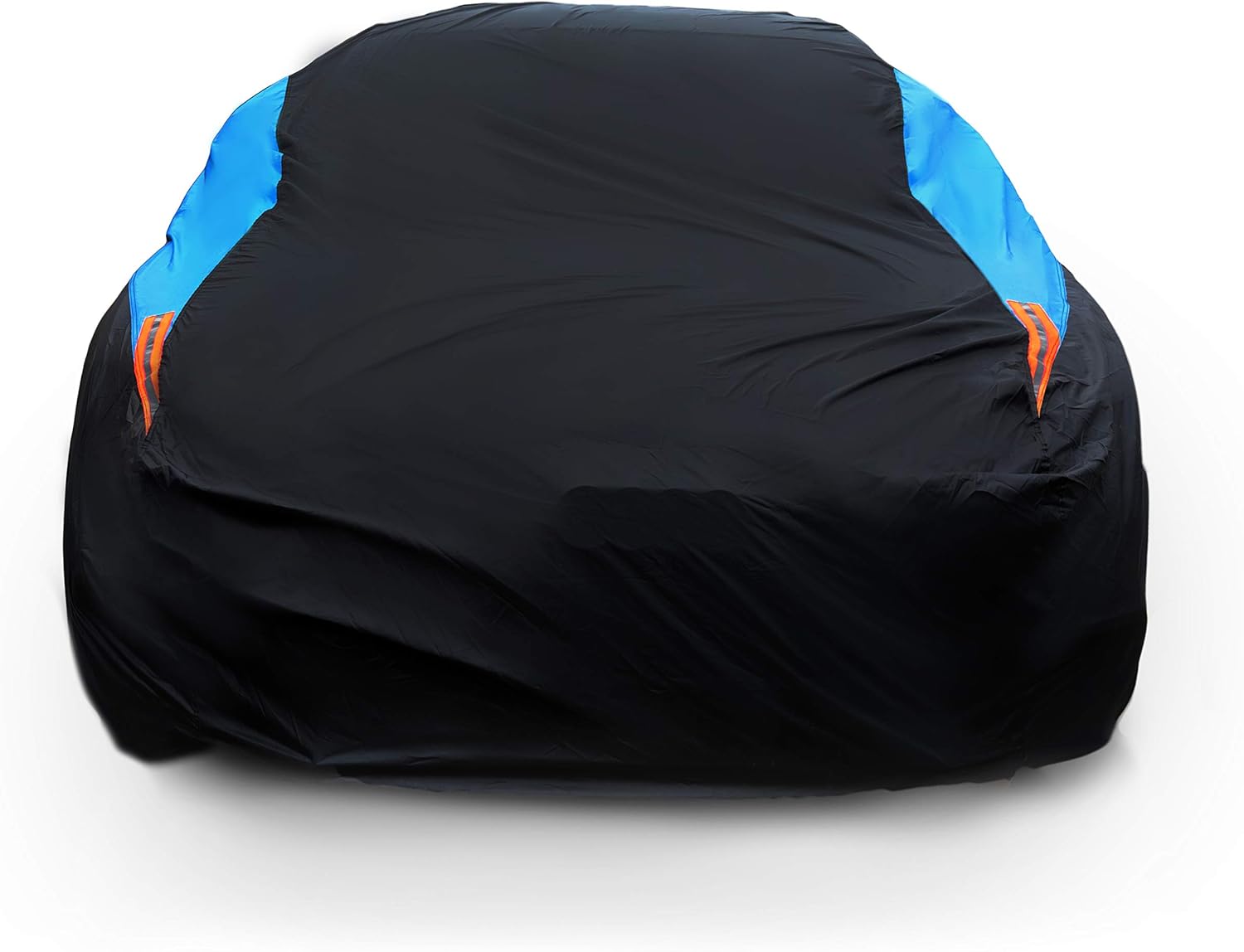
How to Stop a Car Cover From Blowing Off in Wind: 7 Proven Methods
⚡ Quick Answer
To stop a car cover from blowing off, use a gust strap kit threaded under the vehicle, tuck the hem edges under the bumpers and tires, and choose a snug-fitting cover. These 3 steps together can hold a cover in place even in strong gusts above 40 mph.
Top methods to secure your car cover in wind:
-
1
Thread a gust strap under the car and clip it to the cover hem -
2
Tuck the bottom edges under bumpers and tire bases -
3
Add magnetic weights along the hood and trunk edges
Mistakes that let wind sneak under:
-
✓
Never use a cover two sizes too large — gaps act like sails -
✓
Don’t skip straps just because the elastic hem feels tight -
✓
Avoid parking on the windward side of open lots without extra anchoring
You walk out to your driveway and your car cover is halfway down the street — again. It’s one of the most frustrating things a car owner can experience, especially after spending good money on protection. I’m Daniel Brooks, and after years of dealing with blustery parking spots and testing cover-securing solutions, I’ve nailed down exactly what works and what wastes your time.
A car cover that keeps blowing off isn’t just annoying. A flapping cover scratches your paint just like sandpaper would. Here’s everything you need to keep it locked down, even in serious wind.
📌 Key Takeaways
-
→
Gust straps are the single most effective tool — they thread under the car and pull the cover tight from below. -
→
Loose-fitting covers create air pockets that act like a kite — the cover lifts regardless of straps. -
→
Breathable fabrics release wind pressure through the weave — reducing lift compared to solid covers. -
→
Layering 3 methods together — straps, tuck, and weight — can hold a cover in sustained winds up to 50 mph.
Why Does a Car Cover Keep Blowing Off?
Wind gets under a car cover the same way it gets under a kite — through gaps. Any opening at the hem, sides, or bottom creates a pressure pocket. Once wind pushes in, it lifts the entire cover like a sail.
But here’s the thing: the cover’s fit is the real root cause. Most owners buy a universal-fit cover that’s one or two sizes too large for their vehicle. That extra fabric hangs loose, and loose fabric catches wind immediately.
There are 3 main reasons a car cover blows off:
📋 Root Causes: Why Car Covers Blow Away
-
Poor fit: A cover too wide or too long has excess fabric that catches gusts and lifts off the car body. -
No anchor system: Relying only on an elastic hem is not enough in sustained wind above 20 mph — elastics stretch and fail. -
Solid (non-breathable) fabric: Air builds up under a non-porous cover with nowhere to escape, creating lift pressure from below.
So if you walk out to find your cover down the street, one of these 3 factors is the reason. Now let’s fix all of them.
How to Stop a Car Cover From Blowing Off: 7 Methods That Work
The most reliable approach is to layer at least 3 of these methods together. A gust strap alone handles most conditions. Add a tuck and some weight and you’re protected in near-storm conditions.
🔢 Step-by-Step: Securing Your Car Cover Against Wind
-
1
Fit the cover front-to-back before anything else
Anchor the front edge to the bumper first, then pull back evenly from both sides to avoid bunching.
-
2
Tuck edges under bumpers and tires
Push the hem under your front and rear bumpers. Place the tire over the edge where possible to pin it down.
-
3
Attach a gust strap under the vehicle
Clip gator clips to the front and rear hem, then feed the bungee cord under the chassis to the other side and repeat.
-
4
Thread bungee cords through grommets (if present)
Many covers have reinforced grommets in the hem. Thread cords through and tie them under the car frame.
-
5
Place magnetic weights on flat panel surfaces
Use 20-30 lb pull magnets on the hood and trunk. These hold the cover down during installation and in gusty conditions.
-
6
Use binder clips along the lower hem as a budget fix
Clip them evenly spaced around the lower edge of the cover to close gaps wind can enter. Avoid bare metal clips near the paint.
-
✓
Double-check tension on all anchor points
Walk around the car and tug each strap. Your cover should have zero lift at any edge. If it moves — tighten further.
You might be thinking “do I really need all of this?” Here’s why: each method targets a different failure point. The tuck blocks low-level wind entry. The gust strap removes slack. The magnets suppress flapping on top. Together, they leave wind with nowhere to work.
Best Accessories for Securing a Car Cover in High Winds
The right gear makes all the difference. A gust strap kit installs in under 2 minutes and adds serious hold compared to a bare elastic hem. Here’s how the main options compare so you can pick the right one for your situation.
This table shows the most effective car cover wind-securing accessories, ranked by reliability in sustained winds.
For serious wind exposure, use a gust strap kit as your primary anchor and add magnets on the hood for double protection.
Recommended Product
LuckyStraps Car Cover Gust Straps with Heavy Duty Clips, UV-Resistant Cover Wind Protector
★★★★☆ Highly rated on Amazon
These UV-resistant bungee cords with reinforced gator clips fit all vehicles from compact cars to full-size trucks — the 6mm cords handle 66 lbs of pull and install in under 2 minutes.
As an Amazon Associate, we earn from qualifying purchases.
⚠️ Warning
Never use bare metal binder clips directly touching painted surfaces. The metal edges will scratch your paint as the cover moves in the wind, causing the exact damage you’re trying to prevent.
Does Cover Fit Really Matter That Much for Wind Resistance?
Yes — and it’s the most overlooked factor. A custom-fit cover hugs every contour of your vehicle, including the mirrors, spoilers, and antennas. This leaves almost no loose fabric for wind to grip.
A universal-fit cover might save you $40 upfront. But it typically fits 12–18 inches too large all around. That’s 4 to 6 feet of extra fabric flapping in the wind on each pass.
| Feature | Universal Fit | Custom Fit ✓ Best |
|---|---|---|
| Wind resistance | Low — loose hem catches wind | ✓ High — snug fit eliminates gaps |
| Mirror and spoiler fit | Generic pockets — often ill-fitting | ✓ Tailored pockets for your exact model |
| Hem tension | Stretches and fails in sustained wind | ✓ Reinforced hem designed for weather |
| Price range | $30–$80 | ✓ $80–$300+ (worth the investment) |
That said, a custom cover doesn’t remove the need for a gust strap in high-wind areas. It just means less work to keep it secure. Think of fit as the foundation and the strap system as the insurance policy on top.
So if you’re still using a universal cover and it keeps blowing off — the next section shows you how to pick a smarter parking spot while you upgrade.
Smart Parking Tips to Reduce Wind Pressure on Your Car Cover
Where you park changes everything. Parking with your car’s nose into the wind is the worst position. The front of a car is a wide, flat surface — it catches maximum gust force and creates lift under the front hem first.
Here are 4 positioning strategies that reduce wind force on your cover:
✅ Tip
Park with your car’s side facing the prevailing wind rather than the front. A side profile has less surface area and fewer entry points for wind to get under the cover hem.
- Use windbreaks: A fence, wall, hedge, or parked truck all reduce wind speed on your vehicle by 30–60%.
- Park side-on to the wind: Reduces the front-lift effect that pulls the cover off from the hood.
- Avoid open lots: Exposed parking lots with no surrounding structures amplify wind speed across the car’s surface.
- Use a carport if possible: Even an open-sided carport cuts wind speed by 40–50% compared to fully open parking.
The Car Care Council’s vehicle protection guide notes that outdoor exposure management is one of the most cost-effective ways to extend your car’s finish life — and smart parking is the first step.
What Most People Get Wrong About Car Cover Wind Protection
Most car owners get 2 things wrong. They fix the symptom instead of the cause — and they trust tools that aren’t designed for serious wind conditions.
Myth 1: A Tight Elastic Hem Is Enough
Elastic hems work well in calm conditions. But standard elastic degrades with temperature cycling — it loses stretch strength after 6–12 months of outdoor exposure. In gusts above 25 mph, a worn elastic hem offers almost no resistance. Gust straps are a separate system that work independently of the hem.
Myth 2: A Heavier Cover Stays Down Better
Weight alone doesn’t keep a cover down. The lift force from wind under a cover can exceed 40 lbs on a standard sedan. A cover that weighs 8 lbs more won’t overcome that. What matters is how well the cover seals at the base — that’s what stops air from getting in at all.
Myth 3: Any Bungee Cord Works As a Gust Strap
Standard bungee cords aren’t rated for sustained directional pull. They stretch beyond their limit and snap — or they abrade the cover fabric over time. Purpose-built gust strap kits use reinforced nylon cords and coated clips that won’t scratch the cover or fail under tension.
💡 Key Insight
A loose cover that flaps in wind is more damaging to your paint than no cover at all. The fabric acts like sandpaper on the finish with every gust. Securing the cover is not optional — it’s the whole point of having one.
Conclusion
Stopping a car cover from blowing off comes down to 3 things: a proper fit, a gust strap under the chassis, and tucking the edges so wind can’t find a gap. Layer all 3 and you’ll have a cover that holds through storms, not just breezes.
A flapping unsecured cover causes more paint damage than it prevents — so securing it isn’t just convenient, it’s the whole point. The Car Care Council also recommends that vehicle owners protect exterior finishes as a core part of regular vehicle maintenance best practices.
One thing to do right now: Check the lower hem of your cover. If you can lift any edge more than 2 inches with light pressure — your cover needs a gust strap today. Grab a kit from Amazon for under $20 and have it installed in 2 minutes flat.
Frequently Asked Questions
Why does my car cover keep blowing off even with the elastic hem?
Elastic hems stretch and weaken with temperature cycles over 6–12 months. In sustained wind above 20 mph they can’t hold the cover alone. You need a separate gust strap threaded under the chassis — this creates downward tension the hem can’t provide.
Do car cover gust straps actually work in high winds?
Yes — gust straps are the most effective single accessory for wind resistance. Quality kits use reinforced nylon bungee cords rated to 44–66 lbs of pull. Paired with a proper tuck at the bumpers, they can hold a cover through sustained 50 mph gusts.
Can bungee cords hold a car cover down in a storm?
Standard hardware store bungee cords are not reliable in storms — they stretch beyond rating and can snap. Use cords from a purpose-built gust strap kit that are specifically rated for sustained directional pull. Add a cable lock through the hem grommets for storm-level winds.
Will a loose car cover scratch my paint?
Yes — a flapping cover is one of the most common causes of fine swirl marks and micro-scratches. Any cover without a soft inner lining will abrade the paint with every gust. A cover that moves in the wind causes more damage than having no cover at all.
Is a custom car cover better at staying on in wind than a universal cover?
Yes — significantly. Custom covers are tailored to your exact vehicle and leave almost no excess fabric for wind to grip. They include shaped mirror pockets, reinforced hems, and tighter base fits. Universal covers can be 12–18 inches too large, creating large sail-like gaps.
How do I use magnets to keep my car cover in place?
Use magnets with a 20–30 lb pull rating. Place them on top of the cover over flat metal panels like the hood and trunk. The fabric insulates the magnet from the paint, preventing scratches. Avoid 100 lb pull magnets — they’re nearly impossible to remove without dragging the cover.
What wind speed will blow off a car cover?
An unsecured universal cover can start to lift in winds as low as 15 mph. With only an elastic hem, most covers become unreliable above 25 mph. A properly fitted cover with gust straps and a bumper tuck can hold reliably through sustained winds of 45–55 mph.

Daniel Brooks is an automotive writer and product researcher focused on car accessories, car tech, maintenance, and practical driving guides. At Plug-in Car World, he helps drivers make smarter automotive decisions through honest reviews and research-driven content.