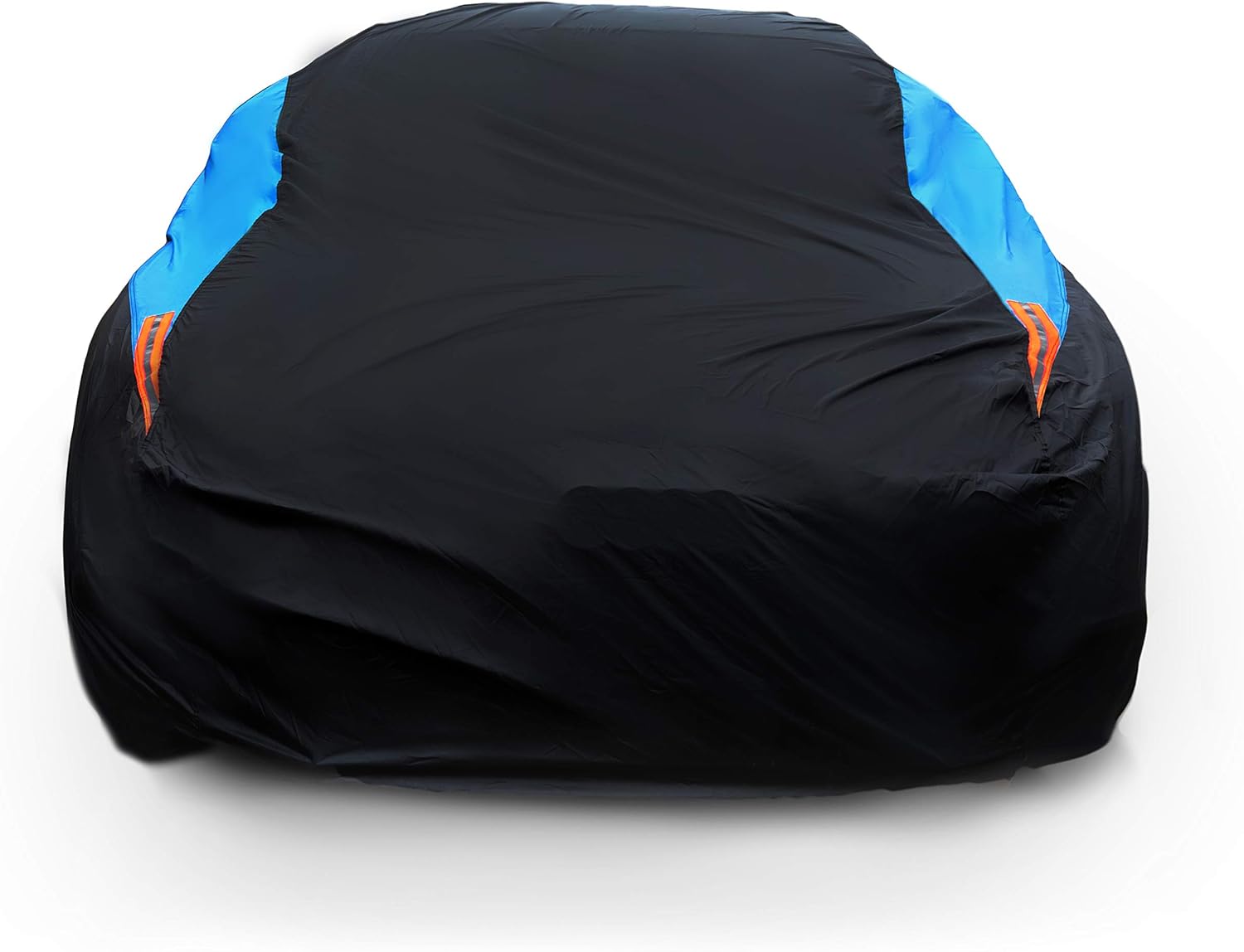
7 Ways to Secure a Car Cover in High Winds (That Actually Work)
⚡ Quick Answer
To secure a car cover in high winds, use gust straps under the front and rear bumpers, thread a cable lock through the grommets, tuck the elastic hem under the tires, and park facing into the wind. Combining 2 or 3 of these methods gives the best protection.
7 Ways to Keep Your Car Cover Secure in Wind:
-
1
Install gust straps under the front and rear bumpers -
2
Thread a vinyl-coated cable lock through the grommets -
3
Tuck the elastic hem under the bumpers and tires -
4
Loop bungee cords under the car at front and rear wheels -
5
Use cross-body diagonal straps to create an X-pattern hold -
6
Add fabric snap grommets at both bumpers for anchor points -
7
Park facing into the wind to reduce lift and billowing
Top Mistakes to Avoid:
-
✓
Never use a loose universal cover in sustained high winds -
✓
Don’t rely on the elastic hem alone in winds above 30 mph -
✓
Avoid bare metal clips — they scratch paint if they come loose
You walk out in the morning and your car cover is halfway down the street. It’s sitting on your neighbor’s lawn, covered in road grit — and your paint just took the hit. I’m Daniel Brooks, and after years of testing car protection gear, I know this frustration better than most.
A car cover that blows off isn’t just annoying. It can scratch your paint as it flaps and drags. Here are 7 proven methods to keep yours locked down — even when the gusts hit hard.
📌 Key Takeaways
-
→
Gust straps are the single fastest fix — they install under bumpers in under 60 seconds. -
→
Air ingress is the real enemy — once wind gets under the hem, the cover acts like a sail and lifts instantly. -
→
Custom-fit covers resist wind far better than universal covers because they leave no loose fabric to catch a gust. -
→
Combining 2 or 3 methods (straps + cable lock + proper tuck) gives near-total wind resistance in most conditions.
Why Does a Car Cover Blow Off in the First Place?
A car cover blows off because wind finds a gap along the hem and gets underneath the fabric. Once air is trapped below the cover, it creates upward lift — exactly like a sail or a kite. The cover then billows upward and either shifts, flaps against the paint, or flies off completely.
Universal-fit covers are the biggest offenders here. They’re built to fit dozens of car shapes, so they’re always slightly too big. That extra fabric creates folds and gaps that catch wind like open pockets. A 2-inch gap at the front bumper is all it takes.
The force isn’t gradual, either. A single 40 mph gust can generate enough lift to pull a loosely fitted cover completely off a sedan in under 3 seconds. So if you’ve ever come out to find your cover missing — now you know why. The fix isn’t luck. It’s sealing the hem and adding tension.
7 Ways to Secure a Car Cover in High Winds
Each method below targets a specific weakness in how wind attacks a car cover. Use at least 2 together for best results — especially if you park outdoors overnight or in exposed areas.
For a complete walkthrough of correct cover installation technique, CarCovers.com’s installation guide covers the front-to-rear layering method in detail.
🔢 Step-by-Step: All 7 Wind-Securing Methods
-
1
Install Gust Straps Under the Bumpers
Clip 4 gust strap clips to the hem of your cover — 2 near the front wheels, 2 near the rear wheels. Feed the bungee cords under the bumpers and hook them to the opposite clips. Pull until snug. This prevents the front and rear of the cover from lifting in strong gusts. It takes under 60 seconds to install.
-
2
Thread a Cable Lock Through the Grommets
Most quality car covers have reinforced grommets along the lower hem. Thread a vinyl-coated steel cable through both grommets and run it under the chassis. Lock it with a padlock on one side. The vinyl coating is critical — bare steel cable will scratch the cover fabric and undercarriage as the car moves.
-
3
Tuck the Elastic Hem Under Bumpers and Tires
Pull the cover’s elastic hem fully under the front and rear bumpers until no fabric is exposed at ground level. Then tuck the side hems just inside the wheel wells, so the tires hold the cover down. This seals the entry point that wind exploits most — the gap at the bottom edge near the ground.
-
4
Loop Bungee Cords Under the Car at Each Axle
Hook heavy-duty bungee cords to the hem of the cover on one side, run them under the car, and hook to the hem on the opposite side. Do this at the front axle and rear axle. Two bungee cords at front and 3 at rear works best for longer vehicles. Use rubber-coated or padded hooks only — bare metal hooks will chip paint if they shift.
-
5
Use Cross-Body Diagonal Straps for Maximum Hold
Run a long strap diagonally from the front-left corner of the cover, under the vehicle, to the rear-right corner. Repeat in the opposite direction. This creates an X-pattern underneath that distributes tension across the widest possible area. It resists the shear forces that straight front-to-rear straps can’t handle in sideways gusts.
-
6
Add Fabric Snap Grommets at Both Bumpers
If your cover lacks built-in grommets, snap-on fabric grommets press directly onto the cover hem without tools. Place 2 to 3 at the front bumper and 2 to 3 at the rear bumper. These create instant anchor points for bungee cords, ropes, or straps. Non-metallic grommets — rubber or plastic — are best because they won’t scratch the vehicle’s finish.
-
7
Park Facing Into the Wind
The direction your car faces makes a real difference. Parking nose-first into the wind puts the narrow front end into the gusts instead of the wide, flat side panels. This reduces the surface area the wind can push against, cutting lift significantly. Combine this with any strap method above for noticeably better results.
Recommended Product
AllGuard Gust Strap Wind Protector Kit – Heavy-Duty Car Cover Straps with Bungee Cords and Hooks & Strong Locking Clips
★★★★☆ Highly rated on Amazon
Clips to the cover hem in under 60 seconds and is trusted by body shops and car collectors to hold covers through heavy gusts, hurricanes, and hail storms.
As an Amazon Associate, we earn from qualifying purchases.
Now you know how to lock the cover down. But here’s the thing — the method only works as well as the cover itself. If the fabric is too big for your car, even perfect strapping can’t fix loose fit.
Which Type of Car Cover Holds Best in Wind?
A snug-fitting car cover is your first line of defense against high winds. The securing methods above add tension — but if the cover has 4 inches of excess fabric at the sides, no strap will compensate for that. Less loose fabric means less sail effect, which means less lift.
The table below shows how the 3 main cover types perform in windy conditions.
Custom-fit covers include mirror pockets and antenna patches — they wrap the car’s exact shape and leave almost no loose hem for wind to catch.
You might think a tighter cover traps moisture. Here’s why that isn’t a problem with quality covers: breathable multi-layer fabrics let moisture evaporate through the weave. They’re not waterproof — they’re water-resistant and breathable. That means no mold or mildew buildup underneath.
For heavy-duty outdoor material guidance, Covercraft’s wind cover guide breaks down which fabric weights perform best in sustained high winds.
✅ Tip
If a full custom cover is out of your budget right now, use a semi-custom cover with gust straps and a cable lock. That combination covers about 90% of what a custom cover does in terms of wind hold.
So a better-fitting cover makes every securing method work harder. Next, let’s look at the one parking habit that almost nobody thinks about — but that changes everything.
Does Parking Direction Actually Matter for Wind Protection?
Yes — parking nose-first into the wind cuts the amount of force your cover absorbs. The front end of a car is narrow and angled. When it faces the wind directly, gusts split around the hood instead of hitting the wide, flat side panels. The result is less billowing and less lift on the cover.
Parking broadside to the wind is the worst position. It exposes the maximum surface area — the full length of the car — to direct wind pressure. In that position, even well-strapped covers will flex and shift.
Parking near a wall, fence, or large bushes adds another layer of protection. These structures act as windbreaks and cut wind speed before it even reaches your car. Parking between two other vehicles works the same way. None of these replace securing methods — but they reduce the load your straps need to handle.
What Most People Get Wrong About Securing a Car Cover in Wind
Most car cover problems aren’t about the wind — they’re about setup mistakes that make wind damage far worse. Here are the 3 most common ones.
📋 Common Car Cover Wind Mistakes
-
Relying on the elastic hem alone: The elastic hem is a starting point, not a complete solution. It holds well in calm conditions but offers almost no resistance above 20 to 25 mph. Always add at least one securing method on top of it. -
Using bare metal clips or hooks: Metal clips can work — but if they come loose in a gust, they whip around and scratch your paint or bodywork. Always use clips with rubber padding, or plastic binder clips, which are light and won’t damage the car. -
Leaving the cover on during extreme sustained wind: In winds above 60 mph — think storms or severe weather — the right call is to remove the cover completely. At that level, even well-secured covers generate enough force on their anchors to stress seams and grommets. Protect the cover; let the car take temporary exposure instead.
⚠️ Warning
A car cover that flaps in wind is actively damaging your paint. The fabric rubs back and forth against the finish and traps grit particles underneath — acting like sandpaper. If you can’t secure it properly in current conditions, it’s better to remove it than to leave it flapping.
Conclusion
Securing a car cover in high winds comes down to one core principle: seal the hem and add tension. Gust straps handle the front and rear. A cable lock handles the sides. Proper tucking handles the ground seal. Together, they eliminate the gaps wind needs to get underneath.
Start with gust straps if you own nothing else right now. They cost under $20, install in under a minute, and solve 80% of the problem immediately.
One thing to do right now: Check your cover’s hem at the front bumper. If you can slide your hand underneath the cover fabric without lifting it — that gap is where wind enters. Tuck it under the bumper fully, then order gust straps for next time.
Frequently Asked Questions
How do I keep my car cover from blowing off?
Use gust straps clipped to the hem under the front and rear bumpers, tuck the elastic hem fully beneath the bumpers, and loop bungee cords under the car at each axle. Combining these 3 methods stops the cover from blowing off in most wind conditions up to 50 mph.
Do gust straps actually work on car covers?
Yes. Gust straps work by clipping to the cover hem and creating a tensioned loop under the bumper that prevents the front and rear edges from lifting. They install in under 60 seconds and are used by body shops and car collectors in high-wind climates. They’re one of the most reliable single-product fixes available.
What is a car cover cable lock and how does it help in wind?
A cable lock is a vinyl-coated steel cable that threads through the cover’s grommets and runs under the chassis. It locks with a padlock on one side. It prevents both theft and wind lift by anchoring the cover’s sides firmly to the undercarriage, making it impossible for the cover to slide up or blow sideways.
Is a custom car cover better in wind than a universal cover?
Yes, significantly. Custom covers are tailored to your car’s exact make, model, and year. They include mirror pockets and antenna patches, leaving almost no loose fabric at the hem. Less loose fabric means less wind can get underneath. Universal covers have excess material at the sides that balloons in gusts and is very hard to fully secure.
Can I use bungee cords to secure a car cover in high winds?
Yes, but use rubber-coated or padded hooks only. Bare metal bungee hooks scratch paint and bodywork if they come loose. Loop bungee cords from the hem on one side, under the car, and hook to the hem on the opposite side near each axle. 2 cords at the front and 3 at the rear works well for most vehicles.
Should I remove my car cover during a storm?
Yes, in sustained winds above 60 mph, remove the cover. At that level, even secured covers generate enough force on their anchor points to rip grommets or tear seams. A flapping cover also causes abrasive paint damage as the fabric rubs against the finish with grit trapped underneath. Temporary exposure to rain is less harmful than a shredded cover.
How tight should a car cover be fitted?
The cover should be snug but not stretched. The elastic hem should sit under the front and rear bumpers with no visible gap at ground level. Mirror pockets should fit without pulling. If the cover creates wrinkles or folds along the sides, it’s too large for the vehicle — and those folds become wind pockets that will lift the cover off in gusts.

Daniel Brooks is an automotive writer and product researcher focused on car accessories, car tech, maintenance, and practical driving guides. At Plug-in Car World, he helps drivers make smarter automotive decisions through honest reviews and research-driven content.