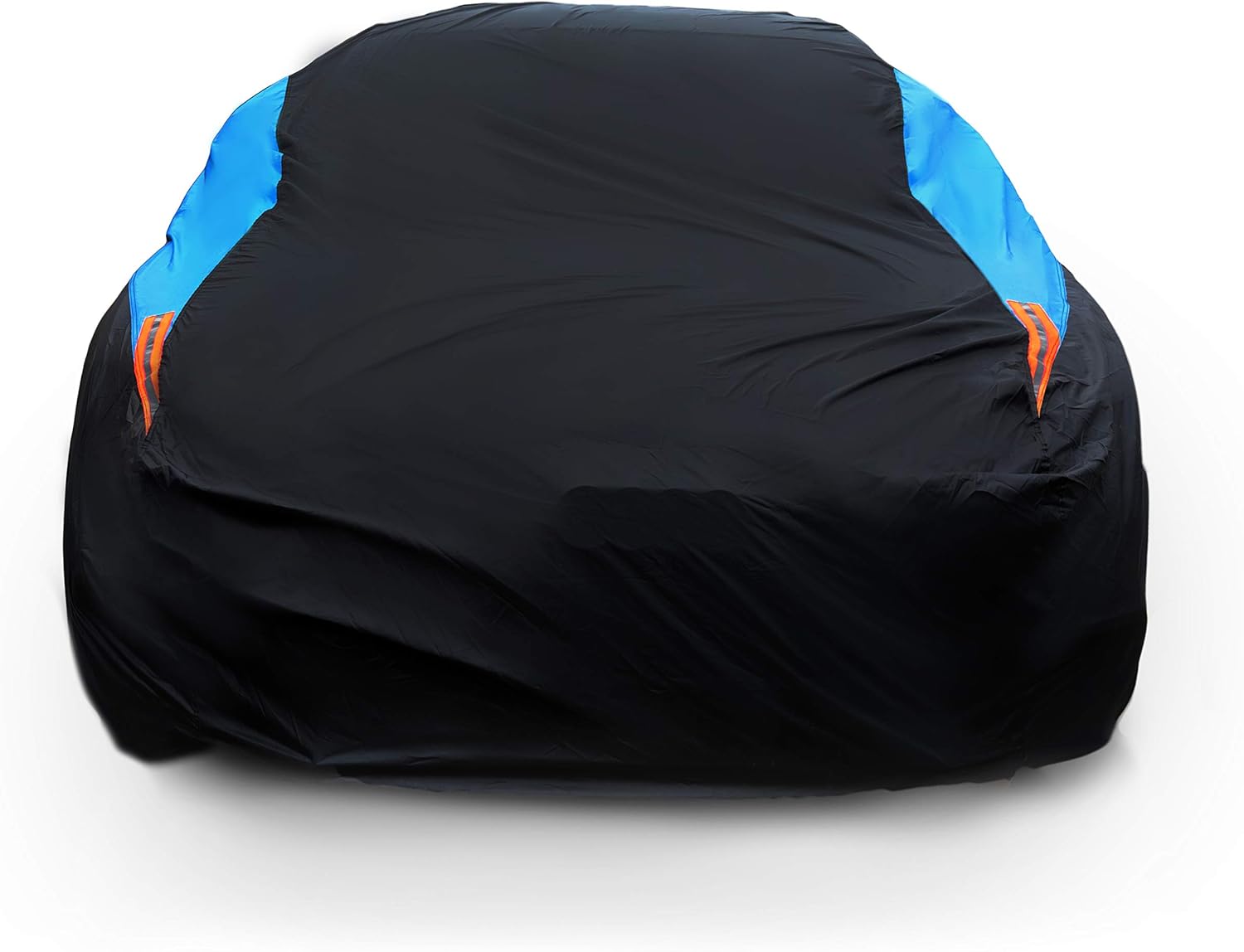
Best Ways to Keep a Car Cover Secure in Wind
⚡ Quick Answer
The best way to keep a car cover secure is to combine a snug tuck-and-clip fit with a gust strap kit under the bumpers. This stops wind from getting underneath the cover, which is the main reason covers blow off. Add a cable lock if theft is a risk in your area.
Steps to lock down your car cover
-
1
Tuck the hem under both bumpers and tires -
2
Clip a gust strap to the front and rear hems -
3
Add a cable lock through the grommets for theft protection
Mistakes that let wind win
-
✓
Don’t rely on a loose, oversized cover -
✓
Don’t skip the front and rear tuck points -
✓
Don’t use flimsy binder clips as your only anchor
Daniel Brooks has watched more than one car cover flap loose in a driveway storm, paint scratched from a night of wind whipping fabric against the hood. That’s the scene most drivers picture when a cover fails at the worst time. A car cover only protects your paint if it stays put, and a loose one can do more damage than no cover at all.
The good news: keeping a cover secure doesn’t take expensive gear. It takes the right fit, the right clips, and a few minutes of setup. Below are the methods that actually hold up when the wind picks up.
📌 Key Takeaways
-
→
Loose fabric is the #1 cause of covers blowing off, not weak wind. -
→
Gust straps install in about a minute and work on any cover with a hem. -
→
The NWS classifies sustained winds over 40 mph as high, a level where loose covers fail fast. -
→
Cable locks through the grommets deter theft without adding real setup time.
Why Do Car Covers Blow Off in the First Place?
A car cover blows off when wind gets underneath it and turns the fabric into a sail. Once air pushes up from below, even a heavy cover can lift at the corners. So if your cover keeps sliding or flapping, the fit is the problem, not the fabric.
Poor fit is the biggest cause. A cover that’s too big for your vehicle leaves gaps at the bumpers and rocker panels. Those gaps are exactly where wind sneaks in and starts working the cover loose.
Here’s the thing: even a well-fitted cover needs backup in strong gusts. That’s why straps, clips, and tuck points matter as much as the cover itself.
40 mph
Where NWS marks winds “high” risk
1 min
Typical gust strap install time
4
Clip points most kits use
The Best Ways to Keep a Car Cover Secure
Three methods handle almost every wind and theft scenario: tucking the cover tight, clipping on a gust strap, and locking the hem with a cable. Use them together for the strongest hold. Each one takes just a few minutes.
🔢 Step-by-Step: Securing Your Car Cover
-
1
Tuck the hem under the bumpers
Pull the front and rear edges under the bumper line so wind can’t grab underneath.
-
2
Clip a gust strap to both ends
Attach clips to the front and rear hem, then run the bungee cord underneath the car.
-
3
Tighten until the cover sits flat
Pull the tension collar or buckle until the fabric stops flapping when you tug it.
-
✓
Add a cable lock if theft is a concern
Thread a cable through the center grommets and under the car, then lock it.
You might be thinking binder clips are cheaper and should do the same job. Here’s why they usually fall short: they’re not built for tension, so strong gusts can pop them off and send metal clips flying against your paint.
⚠️ Warning
Metal binder clips can whip loose in high wind and scratch your hood or windshield. Use rubber-lined or plastic clips designed for car covers instead.
Recommended Product
Hlogree 2PCS Car Cover Gust Straps Wind Protector, Bungee Cords Hook Clips Kit
★★★★☆ Well-reviewed, universal fit
A budget-friendly gust strap kit that clips to any cover’s hem and installs in about a minute — a solid first upgrade if your cover keeps slipping.
As an Amazon Associate, we earn from qualifying purchases.
How Windy Is Too Windy for a Car Cover?
Most covers hold up fine in light to moderate wind, but risk climbs fast once gusts pass 30 to 40 mph. So if your area is under a wind advisory, add extra straps before the storm hits, not after.
This table shows how wind speed affects your cover, based on National Weather Service wind threat categories.
A standard cover, even secured, isn’t built to survive severe wind. Bring the vehicle under cover if a high wind warning is issued.
The NOAA Severe Weather 101 guide on damaging winds notes that thunderstorm winds cause about half of all severe weather reports in the lower 48 states, more often than tornadoes do. The National Weather Service wind threat scale classifies sustained winds of 40 to 57 mph as “high,” which is well past the point where an unsecured cover starts to fail.
How Do You Secure a Car Cover From Theft?
A cable lock through the cover’s center grommets is the simplest theft deterrent. It won’t stop a determined thief, but it stops the quick grab-and-go that most cover theft looks like.
📋 Theft-Deterrent Add-Ons
-
Cable lock: Threads through the center grommet and locks under the car. -
Lockable grommets: Some covers come with reinforced eyelets built for a padlock. -
Routine checks: Inspect the lock and cable weekly for wear or tampering.
So what does this mean for you? If you park outside every night, a $15 cable lock costs less than one replacement cover.
What Most People Get Wrong About Car Cover Security
📋 Quick Summary
Most drivers assume a snug cover alone is enough, then blame the fabric when it blows off. The real fix is almost always the anchor points, not the cover material.
Myth one: “A heavier cover won’t blow away.” Weight helps, but a heavy cover with no anchor points will still lift once wind gets underneath it.
Myth two: “Binder clips work as well as a real gust strap.” They don’t hold tension the way purpose-built clips do, and they can damage paint when they snap loose.
Myth three: “If it fits when I put it on, it’s secure.” A cover can look snug at installation and still loosen after a few hours of wind pressure. Check it again after the first gust.
Conclusion
A secure car cover comes down to three things: a snug tuck, a gust strap at both ends, and a cable lock if theft is a risk. Skip any one of these and wind or opportunists will find the gap. Do all three and your cover, and your paint, will outlast the next storm.
One thing to do right now: Go check your cover’s front and rear tuck points. If you can slide your hand underneath easily, tighten it before the next windy day.
Frequently Asked Questions
How do you keep a car cover from blowing off?
Tuck the hem under the front and rear bumpers, then clip on a gust strap that runs a bungee cord underneath the car. This blocks wind from getting under the fabric, which is what causes lifting.
Do car cover straps really work?
Yes, when installed correctly. Gust straps hold the cover’s hem tight against the vehicle, keeping wind from creating a gap. Most kits install in under a minute and handle moderate wind well.
How tight should a car cover be?
Tight enough that you can’t easily slide a hand between the fabric and the car at the bumpers. Too loose invites wind underneath; too tight can stretch and wear the seams faster.
What causes a car cover to blow off?
Wind getting underneath a loose or poorly tucked cover is the top cause. Once air pushes up from below, the cover acts like a sail and lifts at the weakest anchor point.
Can I use bungee cords instead of a gust strap kit?
Yes, plain bungee cords threaded through the grommets and tied under the car work in a pinch. A dedicated gust strap kit is faster to install and grips the hem more reliably.
Do I need a custom-fit cover to keep it secure?
No, a universal cover can stay secure with the right straps and tuck technique. A custom-fit cover reduces excess fabric, which lowers wind resistance, but it isn’t required for basic security.
How often should I check my car cover straps?
Check straps and clips weekly if the cover stays on full-time, and always after a windstorm. Look for frayed hems, stretched bungees, or clips that no longer bite tightly.

Daniel Brooks is an automotive writer and product researcher focused on car accessories, car tech, maintenance, and practical driving guides. At Plug-in Car World, he helps drivers make smarter automotive decisions through honest reviews and research-driven content.