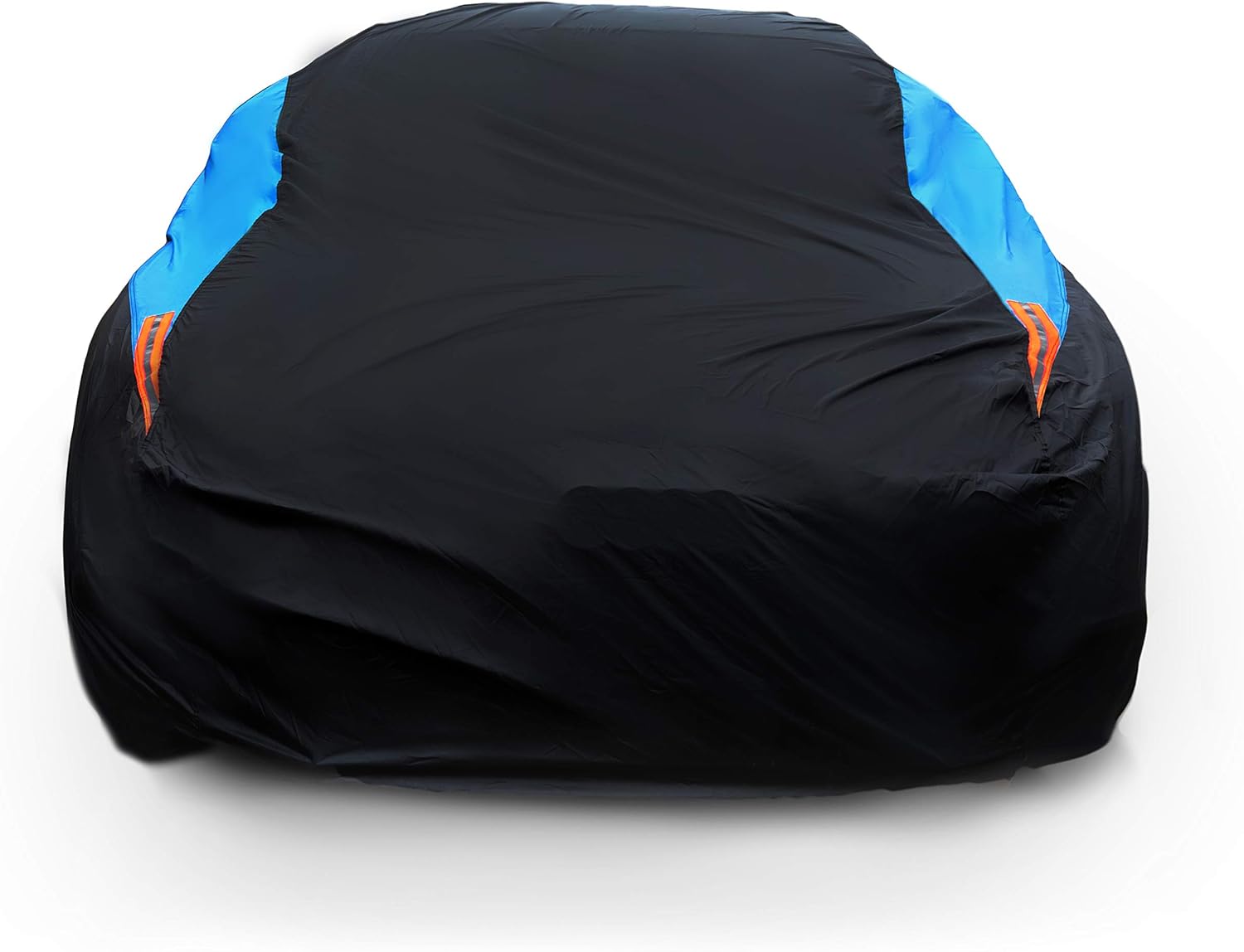
How to Tighten a Car Cover Properly (Step-by-Step Guide)
⚡ Quick Answer
To tighten a car cover properly, secure the front end over the bumper first, pull it evenly over both sides, tuck the elastic hem snugly under the rear bumper, then run underbody straps through the grommets and fasten them. Always distribute tension evenly — never over-tighten one spot.
Steps to tighten your car cover:
-
1
Locate the front tag and secure cover over the front bumper -
2
Pull evenly over both sides and tuck elastic hem under rear bumper -
3
Thread underbody straps through grommets and clip them snug -
4
Add gust straps in windy areas for extra hold at all 4 wheel corners
Common car cover tightening mistakes to avoid:
-
✓
Never put a cover on a dirty car — grit scratches paint -
✓
Don’t over-tighten underbody straps — snug is enough -
✓
Avoid letting the cover touch the ground during fitting
You walk outside and your car cover is bunched up on one side, flapping in the breeze. The paint underneath is exposed — and all the protection you paid for is gone. I’m Daniel Brooks, and after years testing car covers in all weather conditions, I know that a loose cover is almost worse than no cover at all. A tightly secured car cover blocks UV rays, dust, bird droppings, and rain damage — but only if it’s fitted right.
In this guide, I’ll walk you through exactly how to tighten a car cover so it stays put — no matter the wind, weather, or vehicle shape.
📌 Key Takeaways
-
→
Always start at the front — locate the labeled front tag and secure it over the bumper first. -
→
Underbody straps prevent the cover from lifting — don’t skip them, even on calm days. -
→
Gust straps add 4-corner tension for windy areas — they install in under 1 minute. -
→
Custom-fit covers hold tighter than universal ones — the right fit is your best defense.
Why Proper Tightening Matters More Than Most People Realize
A car cover that’s even slightly loose acts like a sail in wind. It balloons up, rubs against your paint, and eventually flies off entirely. That rubbing motion between a loose cover and dusty paint creates micro-scratches — the same result as not using a cover at all.
But here’s what most guides skip: fit and tightening are two different things. A well-fitted cover that isn’t secured still fails. A correctly tightened cover on the wrong size can tear at the grommets. Both problems matter.
The goal is a cover that’s snug — no loose fabric, no ballooning sections, no exposed panels. It should feel firm but not stretched. Think of it like wrapping a gift: tight at the edges, smooth across the surface.
What Do You Need Before Fitting a Car Cover?
Before you put the cover on at all, wash the car. This step isn’t optional. Any grit or dust trapped under a car cover gets rubbed into the clear coat every time the fabric moves — and fabric always moves, even a little. A clean car takes 10 minutes. Repainting a scratched panel does not.
Also check that the engine, exhaust, and tailpipe are fully cool. A hot exhaust under a cover can damage the fabric. Keep all windows fully closed before you start — moisture can build up inside if gaps exist.
✓ Before-you-cover checklist
-
✓
Car is clean and dry — no grit, dust, or moisture on the surface -
✓
Engine and exhaust are fully cooled down -
✓
All windows and sunroof are fully closed -
✓
You have your underbody straps and gust strap kit ready
How Do You Tighten a Car Cover Step by Step?
Tightening a car cover correctly takes about 5 minutes once you know the sequence. The key is to work front to back, alternating sides — never pulling all the way down one side before the other.
🔢 Step-by-Step: How to Tighten a Car Cover
-
1
Find the front label tag
Look inside the cover for a white tag marked “FRONT.” This is your orientation point — fitting it backward is a very common mistake.
-
2
Place the cover at the center of the roof
Lay it on top and roll it toward the front first, then toward the rear. Keep the cover off the ground the entire time to avoid picking up grit.
-
3
Secure the front section over the front bumper
Hook the front edge under the front bumper and confirm the elastic hem sits flush. This is the anchor point — everything else gets pulled from here.
-
4
Pull down both sides evenly, alternating left and right
Switch from one side of the car to the other as you work back. This keeps the cover centered and prevents bunching or pulling to one side.
-
5
Tuck the elastic hem under the rear bumper
Secure the rear section under the rear bumper and press the elastic hem snugly against the car. Check that it sits flat with no gaps or lifted corners.
-
6
Thread underbody straps through the grommets
Toss the buckle strap under the vehicle to the opposite side. Clasp the buckle and fasten it snugly — not tight enough to stretch the grommet, just firm enough to stop lifting.
-
✓
Walk around and inspect all four sides
Check for bunching, lifted corners, or exposed panels. The cover should look smooth and taut across all surfaces with no sagging fabric.
The underbody strap step is where most people cut corners. Those straps stop the whole cover from shifting sideways in wind. Without them, even a well-fitted cover will migrate.
So if you’ve done the steps above and the cover still lifts in gusts — the next section is exactly what you need.
How Do You Use a Gust Strap to Tighten a Car Cover in Wind?
A gust strap kit adds 4-corner tension across the base of the cover. It’s the single most effective upgrade for keeping a car cover tight in windy conditions. Installation takes under 1 minute and costs between $10 and $20 on Amazon.
The system is simple. 4 clips grip the hem of the cover at each wheel corner. 2 bungee cords run under the car connecting the front pair of clips and the rear pair. When wind tries to lift the cover, the cords pull down from all 4 corners at once.
How to Install Gust Straps Correctly
Place 1 clip on each side of the cover hem, just in front of each front wheel. Do the same for the rear wheels. Attach the bungee cord hooks to the clips on one side, run the cord slowly under the bumper, then attach to the clip on the other side. Pull the tension collar until you hear 2-3 clicks — that’s the confirmation it’s locked.
⚠️ Warning
Never pull a bungee cord under the car quickly. The cord is under tension and can snap back and cause injury. Always pull it slowly and carefully from front to rear.
One tip that saves a lot of frustration: attach an old tennis ball to the end of the strap before throwing it under the car. This lets you aim it to the other side without crawling underneath.
Recommended Product
Gust Strap Car Cover Wind Protector – Universal Fit for Cars, SUVs, and Trucks
★★★★☆ Highly rated on Amazon
Includes 4 heavy-duty locking clips and 2 bungee cords that create front-and-rear tension to stop your cover ballooning or blowing off in strong wind — installs in under a minute.
As an Amazon Associate, we earn from qualifying purchases.
What’s the Best Way to Keep a Car Cover from Lifting at the Sides?
Side lifting happens when the elastic hem doesn’t sit flush against the car’s lower body panels. It lets wind get underneath and creates a billowing effect that pulls the whole cover off. The fix is specific to why the gap exists.
Here’s a breakdown of the 4 most effective methods for stopping side lift, from simplest to most heavy-duty:
This table shows each method, when to use it, and what it costs — so you can pick the right fix for your situation.
Start with the elastic hem check first — it’s free and fixes the issue 40% of the time. Add a gust strap kit if wind is a recurring problem.
How to Use a Cable Lock to Secure Your Car Cover
A cable lock threads through the grommets on both sides of the cover at the midpoint, then runs under the vehicle and locks in place. It does 2 jobs at once: it anchors the cover down and prevents theft.
Loop the cable through itself, feed it through the grommet, create another loop, then attach the lock. This system is included with premium covers like the Gold Shield 5L. If yours didn’t come with one, you can buy a universal cable lock set separately.
Does the Type of Car Cover Affect How Well It Tightens?
Yes — significantly. This is the most overlooked variable in car cover tightening. A universal cover that’s the wrong size will never tighten properly, no matter how many straps you add. The fit is the foundation.
Custom-fit covers are shaped to your exact vehicle make, model, and year. They include mirror pockets and a contoured elastic hem that naturally hugs the body panels. There’s no excess fabric to balloon or shift.
Universal vs. Custom-Fit: Which Tightens Better?
| Feature | Universal Cover | Custom-Fit Cover ✓ Best |
|---|---|---|
| Fabric excess | Often too much | ✓ Minimal — tailored shape |
| Mirror pockets | Rarely included | ✓ Built-in mirror and antenna pockets |
| Wind resistance | Lower — loose fabric lifts | ✓ Higher — contoured hem resists lift |
| Price range | $30–$80 | ✓ $80–$250+ |
A semi-custom cover is the best compromise for most drivers. It’s shaped by vehicle class (sedan, SUV, truck) rather than exact model — so it fits much better than a universal cover at a fraction of custom pricing.
💡 Key Insight
The best car cover tightening system in the world can’t fix a cover that’s the wrong size. Before buying straps or locks, make sure your cover’s size matches your vehicle class. One size too large means constant re-fitting.
What Most People Get Wrong About Tightening a Car Cover
Most people think “tighter is always better.” It isn’t. Over-tightening the underbody straps is one of the most common mistakes — and it’s more damaging than you’d expect.
When straps are cinched too hard, they pull the grommet eyelets away from the fabric. That stress point tears over time, leaving a hole in the cover. The straps are designed to stop the cover lifting — not to clamp it to the car frame. Snug is correct. Strained is wrong.
The second misconception is that gust straps go in the middle of the car. They don’t. They go in front of the front wheels and behind the rear wheels — at all 4 corners. Placing them in the center does almost nothing for side lifting.
Third: many people assume the cover is on correctly because it looks smooth from one side. Always walk the full perimeter. One lifted rear corner is enough for wind to get underneath and rip the whole cover off in a strong gust.
How Do You Tighten a Car Cover That Keeps Blowing Off?
If your cover blows off repeatedly, one of 3 things is happening: the cover is too large, the straps aren’t fitted correctly, or you’re in a high-wind area without gust straps. Each problem has a different fix.
🎯 Which Fix Is Right For You?
If the cover is too large…
Excess fabric balloons and catches wind even with straps
→ Upgrade to a semi-custom or custom-fit cover
If straps aren’t holding…
Clips lose grip or the bungee cord has lost elasticity
→ Replace bungee cords and recheck clip placement
If wind is extreme…
Gusts over 60 mph can move any car cover
→ Add a cable lock system + park facing into the wind
One more tip that works surprisingly well: park facing into the wind. The aerodynamic front end of a car cuts through the air better than the flat rear. Positioning the car this way reduces the lifting force the wind exerts on the cover.
✅ Tip
Parking near a fence, wall, or between two other vehicles reduces direct wind exposure significantly. A natural windbreak reduces the load on your cover straps and extends their lifespan.
How Often Should You Check a Car Cover’s Tightness?
Check the cover every time you use the car and immediately after any heavy wind or storm. Vibration from nearby vehicles, thermal expansion of the car’s body, and rain all cause covers to shift — even when they were fitted correctly the day before.
Inspect the grommets, straps, and elastic hem monthly. Look for frayed stitching or cracked eyelets. A damaged grommet will tear under tension, and repairing it early with a fabric patch kit costs a few dollars. Ignoring it costs the price of a new cover.
Replace bungee cord elements of gust strap kits every 1 to 2 seasons. Rubber degrades in UV light and loses elasticity. A cord that no longer snaps back is no longer doing its job.
Conclusion
Tightening a car cover correctly takes 5 minutes — but the difference between a properly secured cover and a loose one is the difference between real protection and none at all. Start at the front, alternate sides as you pull down, check the elastic hem is flush, and always use underbody straps.
If you park outdoors or in a windy area, add gust straps at all 4 wheel corners. They cost $15 and install in under a minute. That’s the fastest upgrade you can make to your car protection setup.
One thing to do right now: Go check your car cover’s front elastic hem. Press it flat against the body panel with one hand and see if any gap exists. If it lifts more than an inch — your cover needs repositioning today, before the next wind event.
Frequently Asked Questions
How do you strap down a car cover?
Start by tucking the front edge under the front bumper, then pull the cover back evenly and tuck the rear under the rear bumper. Thread underbody straps through the grommets, toss each strap under the vehicle to the opposite side, then clasp and fasten. Snug tension is the goal — not maximum tightness.
Should you leave a car cover on in the rain?
Yes, if the cover is rated for outdoor use. Most outdoor car covers are water-resistant or water-repellent. They won’t stop every drop from reaching the surface, but they reduce moisture accumulation significantly. Avoid putting a cover on a wet car — trapped moisture encourages mold and mildew under the fabric.
How tight should car cover straps be?
Straps should be snug enough to prevent the cover from lifting but not so tight they pull the grommet eyelets away from the fabric. If you see the grommet area pulling or puckering, you’ve gone too far. The strap’s job is to stop lifting — not to compress the cover against the car’s body.
Can you use bungee cords to secure a car cover?
Yes — bungee cords are one of the most effective ways to stop a cover blowing off. Run them from front to rear through the cover grommets and under the vehicle. For even more hold, combine them with gust strap clips at the 4 wheel corners. Replace the cords every 1 to 2 seasons as rubber degrades in UV light.
What is a gust strap and how does it work?
A gust strap kit includes 4 clips and 2 bungee cords. The clips attach to the hem of the cover at all 4 wheel corners. The cords run from one side of the car under the bumper to the other side, creating downward tension. When wind pushes up under the cover, the cords resist the lift at all 4 anchor points simultaneously.
Why does my car cover keep blowing off?
The 3 most common causes are: the cover is too large for your vehicle, the underbody straps aren’t fastened or are positioned incorrectly, or you’re parking in a high-wind area without gust straps. Start by rechecking strap placement. If the cover is the wrong size, no amount of strapping will hold it reliably.
Can a car cover scratch the paint?
Yes — but only if the car is dirty when you put the cover on, or if the cover is loose and rubbing against grit. A tightly fitted cover on a clean car will not scratch the paint. Always wash the car before covering, and always tighten the cover so it sits flush rather than shifting with the wind.

Daniel Brooks is an automotive writer and product researcher focused on car accessories, car tech, maintenance, and practical driving guides. At Plug-in Car World, he helps drivers make smarter automotive decisions through honest reviews and research-driven content.