
Does Heating a Steering Wheel Cover Help Install It?
Quick Answer
Yes. Gently warming a steering wheel cover can make installation easier by making the material more flexible and easier to stretch over the rim. Use a warm room, mild sunlight, or a hair dryer only if the cover manufacturer permits it. Avoid excessive heat, and never force a cover that appears to be the wrong size.
Installing a snug steering wheel cover can require considerable hand strength, especially when the material is cold or stiff. Warming the cover before fitting it can reduce the effort needed to stretch it around the steering wheel.
The key is to warm the cover gradually rather than trying to soften it as quickly as possible. The appropriate method depends on the cover’s material, construction, and installation instructions.
Why Does Heating a Steering Wheel Cover Make Installation Easier?
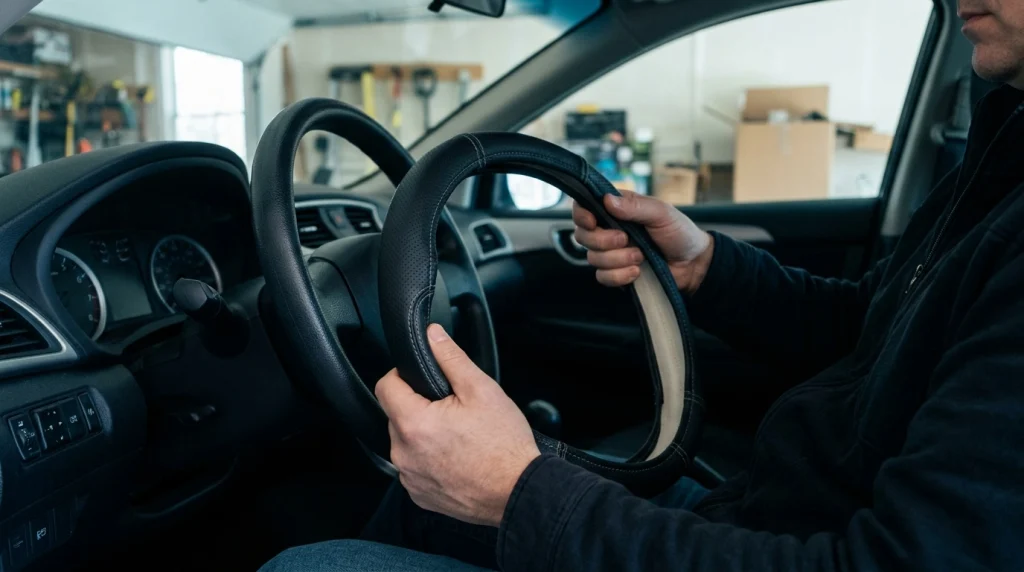
Warming a steering wheel cover can make some materials more pliable, allowing them to stretch more readily around the wheel’s rim. This is particularly helpful with snug-fitting slip-on covers made from flexible synthetic materials or rubber-like compounds.
When a cover is cold, its material may resist stretching and feel less flexible. Applying gentle warmth can make the material easier to manipulate while you work it around the steering wheel.
The difference is most noticeable when the cover is correctly sized but difficult to pull over the rim. Warming does not change the cover into a different size; it simply makes installation easier when stiffness is part of the problem.
Which materials benefit from warming?
- Synthetic leather: Some synthetic leather covers become more flexible when gently warmed, although the backing and adhesive construction also affect how they respond.
- Rubber and elastomer materials: Flexible materials may stretch more readily at a suitable temperature.
- Thick or heavily padded covers: These can be difficult to maneuver because of their thickness, so warming may help if the manufacturer recommends it.
- Genuine leather: Do not assume direct heat is appropriate. Follow the manufacturer’s instructions because excessive heat can dry, distort, or damage leather and its finish.
Not every cover needs heating. A thin, flexible cover may fit easily at room temperature, while a thick cover with a tight opening may require more careful preparation.
What Is the Safest Way to Warm a Steering Wheel Cover?
The safest approach is to start with gentle, indirect warmth. Allow the cover to reach a comfortable room temperature or use mild sunlight if the product instructions permit it.
Some manufacturers explicitly recommend warming a cover before installation. For example, Plasticolor’s steering wheel cover instructions recommend prewarming the cover in sunlight and fitting it from the top downward. Always follow the instructions for your particular product rather than assuming every cover can tolerate the same treatment.
Method 1: Let the cover warm in a room
Leaving the cover in a comfortably warm indoor environment is a simple first choice. It avoids concentrated heat and gives the material time to become more flexible naturally.
- Remove the cover from its packaging and check it for damage, stretched seams, or manufacturing defects.
- Place it in a clean room at a comfortable temperature.
- Allow the material to warm naturally, checking whether it feels more flexible.
- Try fitting it according to the manufacturer’s instructions.
This method is useful when the cover feels stiff after being stored in a cold garage, delivered during cold weather, or left in a chilly vehicle.
Method 2: Use mild sunlight
Sunlight can warm a cover evenly when conditions are suitable. Some manufacturers recommend this method specifically to make installation easier.
- Check whether the cover’s instructions permit sunlight warming.
- Place the cover in mild sunlight for a short period while monitoring its temperature.
- Bring it into a comfortable working area once it feels more pliable.
- Install it before it cools significantly, without rushing or forcing the material.
Avoid leaving the cover in intense sunlight for extended periods. A cover can become excessively hot, and some finishes, adhesives, and materials may be damaged by prolonged heat exposure.
Method 3: Use a hair dryer only when permitted
A hair dryer can provide more controlled warmth, but it also creates a greater risk of overheating a small area. Use it only when the product manufacturer allows this method.
- Remove the cover from the steering wheel before warming it, unless the manufacturer’s instructions explicitly specify otherwise.
- Use a low or gentle heat setting and keep the dryer moving rather than concentrating on one spot.
- Warm the material gradually and check its flexibility frequently.
- Stop as soon as the cover becomes easier to handle.
- Allow the cover to cool if it becomes hot, sticky, unusually soft, discolored, or distorted.
Do not use a heat gun, open flame, boiling water, or another intense heat source to force the material to stretch. These methods can damage the cover or its backing and may create a burn risk.
Warning
Never use heat to compensate for a cover that is too small or incompatible with your steering wheel. Stop if the material begins to deform, seams start separating, or the cover requires excessive force.
How Do You Install a Steering Wheel Cover After Warming It?
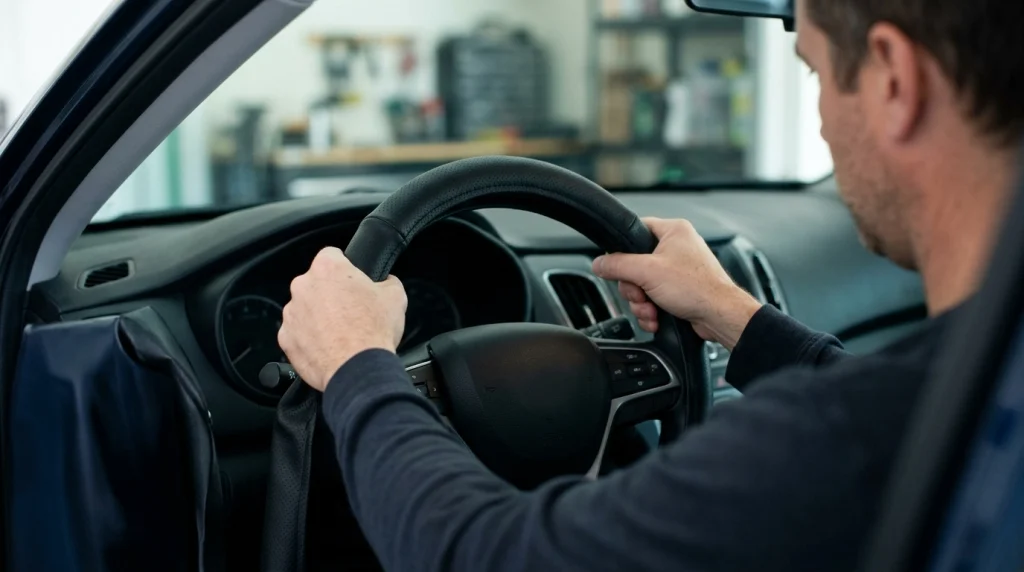
Once the cover is sufficiently flexible, correct positioning and even stretching are more important than applying additional heat. Work with the vehicle safely parked and switched off.
- Check the fit first. Compare the cover’s stated size with the steering wheel’s outside diameter and confirm that the cover is designed for your wheel shape.
- Prepare the wheel. Park on a level surface, select Park if the vehicle has an automatic transmission, engage the parking brake, and switch off the vehicle. Clean and dry the rim if needed.
- Align the cover. Position any seam, logo, or decorative detail according to the product instructions.
- Start at the top. Place the upper section of the cover over the top of the steering wheel.
- Work down both sides. Use your hands to pull and ease the cover around the rim in small, even movements. Avoid twisting one section excessively.
- Fit the bottom section. Carefully work the remaining material over the lower rim without using tools that could puncture or tear it.
- Inspect the result. Check that the cover sits evenly around the wheel, with no rolled edges, exposed sections, damaged seams, or loose areas.
For an example of this top-to-bottom approach, consult the carXS steering wheel cover installation instructions. That guide also describes gentle stretching before installation and recommends checking the cover’s size if fitting remains difficult.
A correctly fitted cover should feel secure rather than excessively loose. With the vehicle still parked, check gently whether it moves independently of the steering wheel. If it slips, rotates, or bunches, remove it before driving.
What If the Steering Wheel Cover Still Will Not Fit?
If warming the cover does not make installation noticeably easier, do not keep adding heat or pulling harder. The problem may be the size, wheel shape, or cover construction rather than the temperature.
- The cover is too small: Recheck the stated diameter range and measure the steering wheel across its outside edges. A cover outside its intended fit range may never install correctly.
- The steering wheel has an unusual shape: Flat-bottom wheels, prominent thumb rests, and unusually thick rims can require a specifically compatible design.
- The material is stiff by design: Some covers have thick padding, reinforced edges, or rigid inner layers that limit how much they stretch.
- The cover has become damaged: Cracked material, separated seams, or distorted edges are reasons to stop rather than continue stretching.
- The installation technique is uneven: Pulling one side completely into place before working the other can make the remaining section unnecessarily difficult.
Return the cover to room temperature and check the product instructions before trying again. If the size is correct but the cover still requires excessive force, contact the manufacturer or exchange it for a compatible design.
Can Heating Damage a Steering Wheel Cover?
Yes. Excessive heat can damage certain materials, finishes, adhesives, and seams. The precise risk depends on the cover’s construction, so there is no single temperature or heating duration that is safe for every product.
Possible warning signs include:
- A sticky or tacky surface that was not present before warming.
- Discoloration, unusual odors, or visible surface changes.
- Warped edges or material that no longer returns to its original shape.
- Loose stitching, separated layers, or weakened adhesive.
If you notice these changes, stop heating the cover and let it cool naturally in a safe location. Do not install it if its structure or grip has been compromised.
Never direct a hair dryer at the vehicle’s steering wheel controls, airbag cover, or exposed electrical components. Heating the removable cover separately is preferable when the manufacturer permits it.
Is It Safe to Heat or Cover a Heated Steering Wheel?
A removable cover and a factory heated steering wheel require extra caution because the wheel contains an integrated heating system. Do not assume that a cover that physically fits is compatible with that system.
Check both the vehicle owner’s manual and the cover manufacturer’s instructions before installing anything over a heated steering wheel. Some vehicle manufacturers prohibit steering wheel covers when the heating function is present because the additional material can interfere with heat transfer or cause overheating.
Do not turn on the factory heater to warm a cover for installation. If the manual prohibits covers, do not install one, regardless of how gently it has been warmed. If compatibility is unclear, obtain guidance for the exact vehicle and cover combination before proceeding.
Also keep the center airbag cover, horn pad, spokes, and controls unobstructed. A cover must not interfere with steering, button operation, or any driver-assistance system that relies on sensing contact with the wheel.
Frequently Asked Questions
1. How long should you heat a steering wheel cover before installation?
There is no universal heating time because materials and construction vary. Follow the manufacturer’s instructions and warm the cover only until it becomes easier to handle, checking frequently rather than relying on a fixed number of minutes.
2. Is a hair dryer better than sunlight for installing a steering wheel cover?
Neither method is best for every cover. Mild sunlight provides gradual warmth, while a hair dryer allows more targeted heating but can overheat small areas. Choose the method permitted by the manufacturer, using the gentlest effective option.
3. Should you heat the steering wheel itself?
Usually, there is no need to heat the steering wheel itself. Warming the removable cover is generally the more controlled approach when permitted by its instructions. Avoid heating vehicle controls, trim, or airbag components.
4. Can you stretch a steering wheel cover before installing it?
Some manufacturers recommend gentle stretching before installation to improve flexibility. Follow the supplied directions and avoid pulling hard enough to distort the cover, weaken seams, or permanently change its shape.
5. Why is my steering wheel cover still tight after warming?
The cover may be the wrong size, unsuitable for the wheel’s shape, or constructed from a material that stretches very little. Recheck the measurements and compatibility rather than applying more heat or using tools to force it into place.
6. Can you use a warmed cover on a heated steering wheel?
Only if the vehicle manufacturer permits a cover and the cover manufacturer confirms compatibility. Some vehicles prohibit covers on heated steering wheels, so the vehicle’s instructions must be checked before installation.
Conclusion
Heating a steering wheel cover can make installation easier by improving the flexibility of materials that become stiff in cold conditions. Start with room-temperature warming or mild sunlight when allowed, and use a hair dryer only if the product instructions permit it.
Correct sizing, even stretching, and careful positioning matter more than applying extra heat. If the cover still will not fit, check its compatibility instead of forcing it onto the wheel. Before driving, confirm that the cover stays securely in place and that your vehicle’s steering wheel, controls, and safety systems are not compromised.

Daniel Brooks is an automotive writer and product researcher focused on car accessories, car tech, maintenance, and practical driving guides. At Plug-in Car World, he helps drivers make smarter automotive decisions through honest reviews and research-driven content.
