
Are Stitch-On Steering Wheel Covers Better? (Pros & Cons)
Quick Answer
Yes, stitch-on steering wheel covers are generally considered better than traditional slip-on covers because they offer a tight, custom-molded fit, eliminate dangerous slippage during steering maneuvers, and provide a seamless factory-like feel. However, they require significantly more time and patience to install compared to a quick slip-on wrap.
Understanding the Options: Stitch-On vs. Slip-On Covers
When your steering wheel begins to show signs of wear, peeling, or stickiness, adding a cover is a practical solution. Drivers usually choose between two primary styles: pre-formed rubber-backed slip-on covers and hand-stitched leather or synthetic wraps.
A slip-on cover relies on an inner rubber or plastic core that stretches over the steering wheel rim. While installation takes seconds, this design often results in a bulky grip, loose movement over time, and a less-than-polished appearance.
In contrast, a stitch-on cover arrives as a flat band of material—typically genuine leather, microfiber, or Alcantara—that you lace tightly around the wheel using an included needle and thread. This method mimics OEM steering wheel wrapping techniques, creating a snug profile that feels integrated into the vehicle.
Key Advantages of Stitch-On Steering Wheel Covers

Stitch-on covers outperform slip-on alternatives in several structural and ergonomic categories. Evaluating these benefits helps clarify why many vehicle owners prefer the labor-intensive route.
Zero Slippage and Enhanced Safety
The most critical safety drawback of a cheap slip-on cover is the risk of rotation. Under heavy steering loads or emergency maneuvers, a slip-on cover can twist independently of the steering wheel rim, delaying your response time. A stitch-on cover is anchored securely at every single stitch point, ensuring it cannot rotate or slide.
Flush, OEM-Like Profile
Slip-on covers add noticeable thickness and diameter to the wheel, which can feel awkward for drivers with smaller hands. Stitch-on covers use thin, high-tensile materials that wrap closely around the existing rim. Once laced tightly, they add minimal bulk, preserving the ergonomic contour designed by the auto manufacturer.
Premium Materials and Longevity
Stitch-on kits are frequently manufactured from durable grades of Nappa leather, synthetic microfiber, or textured Alcantara. These materials resist sweat absorption, oil buildup, and thermal degradation better than the generic vinyl or rubber found on standard budget slip-on wraps.
Drawbacks and Practical Challenges
Despite their performance advantages, stitch-on steering wheel covers are not ideal for every driver. Understanding the downsides prevents frustration during the upgrade process.
- Time-Intensive Installation: Lacing a full steering wheel requires patience, steady hands, and anywhere from 45 minutes to two hours of uninterrupted work.
- Learning Curve: Achieving clean, evenly spaced stitches requires practicing proper tension techniques so the material does not bunch or gap near the spokes.
- Permanent Removal Commitment: Because adhesives or double-sided tape are often used to anchor the cover before stitching, removing it later may leave residue on the original factory wheel.
Direct Comparison: Stitch-On vs. Slip-On
| Performance Metric | Stitch-On Cover | Slip-On Cover |
|---|---|---|
| Fit Security | Completely locked in; zero rotation | Prone to slipping or twisting over time |
| Installation Time | 45 to 120 minutes | Under 1 minute |
| Thickness & Feel | Slim, factory-like profile | Bulky, wider grip diameter |
| Aesthetic Finish | Custom tailored, wrinkle-free | Visible seams and loose folds |
Reviewing this breakdown shows that slip-on covers win on convenience, while stitch-on options win on safety, tactile feedback, and visual integration.
How to Decide Which Style Fits Your Needs
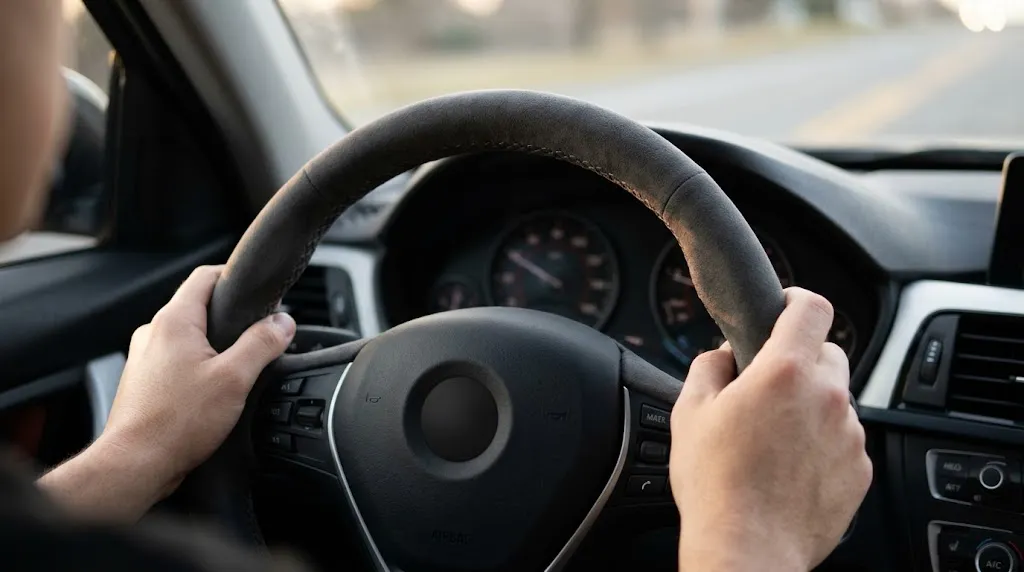
Choosing the right steering wheel cover depends on your priorities regarding time, vehicle preservation, and driving comfort.
If your steering wheel is severely deteriorated, sticky, or peeling, a stitch-on cover acts as a durable restoration layer that stops further damage and upgrades your cabin aesthetic. It is also the preferred choice for drivers who prioritize handling precision and dislike the loose shifting common with generic wraps.
Conversely, if you need an immediate fix to protect your hands from an excessively hot steering wheel during summer, or if you prefer a temporary solution you can remove easily, a high-friction slip-on cover may be more appropriate.
Tip
When installing a stitch-on cover, warm the leather material using a hairdryer or sunlight for 10 minutes prior to lacing. This increases pliability, making it significantly easier to pull tight around the steering wheel spokes.
Related Product
Leather Steering Wheel Stitch-On Wrap Kits
A durable hand-sewn leather wrap kit provides a secure, custom-fit upgrade to restore worn steering wheels.
As an Amazon Associate, we earn from qualifying purchases.
Frequently Asked Questions
Are stitch-on steering wheel covers difficult to install?
They require patience and steady hand-lacing work, usually taking between 1 to 2 hours. However, no specialized mechanical skills are required, as most kits include clear instructions, needles, and strong nylon thread.
Do stitch-on covers work over heated steering wheels?
Yes, though they can slightly insulate the heat, slowing down how quickly warmth transfers to your hands. Thin microfiber or specialized breathable leather stitch-on covers minimize this reduction in heating efficiency.
Can a stitch-on cover be removed if I sell the car?
Yes, you can cut the thread and peel the cover off. Keep in mind that if adhesive tape was used to secure alignment during installation, you may need to clean minor residue off the original wheel rim.
Do stitch-on covers fit all steering wheel sizes?
No. Stitch-on covers are model-specific or sold by precise outer diameter and grip circumference measurements. You must measure your steering wheel accurately before purchasing to ensure the ends meet properly.
How do you clean and maintain a stitched leather cover?
Wipe down the surface periodically with a damp microfiber cloth and mild soap. Apply an automotive leather conditioner every few months to keep the material supple and prevent cracking from UV exposure.
Will a stitch-on cover interfere with airbag deployment?
No. Steering wheel covers only wrap around the outer rim and spokes where your hands rest. They do not cover or obstruct the central horn pad or airbag module housing.
Conclusion
Stitch-on steering wheel covers provide superior safety, a flush custom fit, and long-lasting durability compared to quick slip-on alternatives. While they require an investment of time and patience to install properly, the reward is a clean, secure grip that enhances your everyday driving experience without slipping or bunching. If you want a factory-quality finish that protects your steering wheel for years, choosing a stitch-on wrap is well worth the effort.

Daniel Brooks is an automotive writer and product researcher focused on car accessories, car tech, maintenance, and practical driving guides. At Plug-in Car World, he helps drivers make smarter automotive decisions through honest reviews and research-driven content.
