
What to Know About Installing a Car Seat in a Pickup Truck
Quick Answer
Installing a car seat in a pickup truck can be safe when the truck has an approved seating position, the child restraint fits correctly, and both manufacturers’ instructions are followed. Use a forward-facing vehicle seat in the rear cabin whenever possible, check the top tether anchors, and follow the NHTSA car seat installation guidelines before driving.
Five Essential Safety Checks
- Approved seating position: Confirm your truck permits child restraints in the chosen rear seat.
- Secure installation: The car seat must move no more than 1 inch at its belt path.
- Correct tether routing: Attach a forward-facing harnessed seat’s top tether to the designated anchor.
- Proper seat support: Check that the truck’s seat cushion supports the child restraint as its manufacturer requires.
- Airbag protection: Never place a rear-facing child restraint in front of an active frontal airbag.
Important: A regular-cab pickup without a rear seat needs special attention. Never assume the front passenger seat is suitable without checking the vehicle manual, child restraint instructions, airbag requirements, and applicable law.
Installing a car seat in a pickup truck isn’t always as straightforward as installing one in a family sedan. Short rear benches, unusual tether anchors, and limited cabin space can complicate an otherwise familiar job.
My approach starts with three questions: Is the seating position approved, does the car seat fit, and can I secure it correctly? This guide walks through those checks and the mistakes pickup owners should avoid.
In This Guide
- Can You Install a Car Seat in a Pickup Truck?
- Where Is the Safest Place for a Car Seat?
- How Do You Install a Car Seat in a Pickup Truck?
- How Do Pickup Truck Tether Anchors and LATCH Work?
- Which Car Seat Works Best in a Pickup Truck?
- What Mistakes Should Pickup Owners Avoid?
- Frequently Asked Questions
Can You Install a Car Seat in a Pickup Truck?
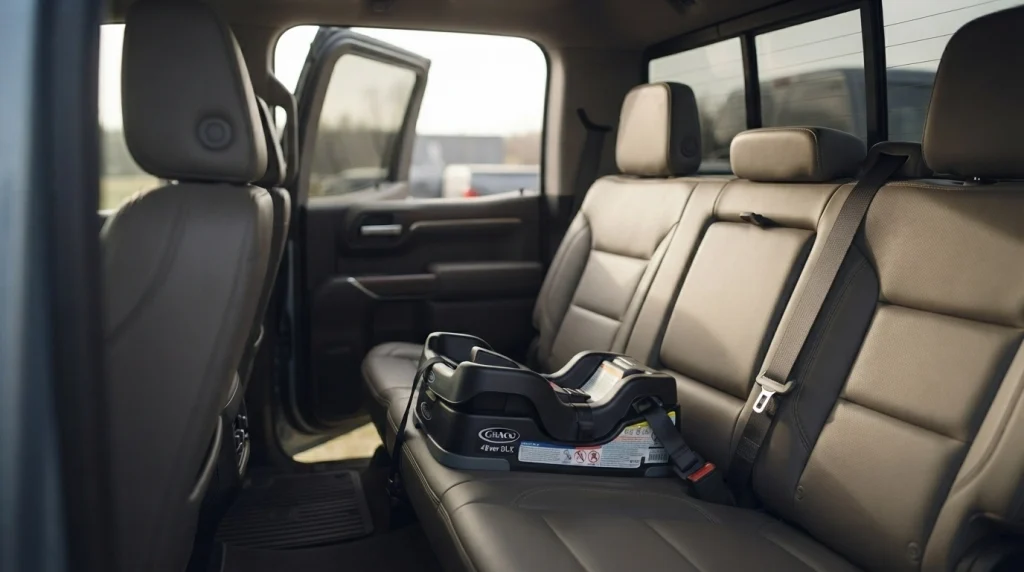
Yes, many pickup trucks can accommodate child safety seats, especially crew-cab models with full rear benches. However, the truck’s cab design alone doesn’t establish whether a specific installation is safe.
A child car seat is a restraint designed to protect a passenger who is too small for an adult seat belt. It must match the child’s size and fit an approved vehicle seating position.
How Does Pickup Cab Design Affect Car Seat Installation?
Pickup trucks usually come in regular-cab, extended-cab, and crew-cab configurations. Their rear-seat dimensions and approved child restraint positions can differ substantially.
| Truck Configuration | Car Seat Considerations | Main Concern |
|---|---|---|
| Regular cab | Typically lacks a rear passenger row. | Front airbags and seating-position restrictions. |
| Extended cab | May have small rear seats or limited legroom. | Seat depth, restraint support, and anchor access. |
| Crew cab | Usually offers more rear-seat space. | Correct LATCH positions and tether routing. |
| Older pickup | May lack modern child restraint anchors. | Seat belt locking, approved positions, and tether availability. |
A large crew cab may accommodate several child restraints, but that doesn’t guarantee every position supports every model. Always check the specific vehicle’s seating-position instructions.
Are Small Rear Seats Safe for Child Restraints?
A compact rear seat can work if the child restraint manufacturer permits the installation and the base has sufficient support. The restraint must also install tightly without interfering with required seat or vehicle functions.
Some manufacturers permit a limited amount of base overhang, while others require complete support. There’s no universal percentage that applies to every car seat.
The SafetyBeltSafe U.S.A. car seat FAQ discusses pickup installations, seat cushion support, and restrictions involving side-facing seats.
Can You Install a Car Seat on a Side-Facing Jump Seat?
No. Conventional child safety seats are not approved for installation on side-facing jump seats.
A child restraint needs a compatible vehicle seating position that faces the direction of travel. This is different from the direction the child faces inside a rear-facing car seat.
If your pickup only has sideways-facing rear jump seats, don’t improvise an installation. Use another suitable vehicle or seek professional guidance about approved transportation options.
Section Takeaway: A pickup can be compatible with child restraints, but cab size doesn’t determine safety by itself. Approved seating positions, adequate support, and proper installation matter more.
Where Is the Safest Place for a Car Seat in a Pickup Truck?
The safest practical location is an approved rear seating position where the child restraint installs correctly. A center rear position can be a good option, but only when the vehicle and car seat manuals permit it.
Rear Center Seat vs. Rear Outboard Seat
Parents often prefer the center rear seat because it is farther from the vehicle doors. However, a poorly installed center seat isn’t preferable to a secure installation in an approved outboard position.
Before choosing the middle seat, check these details:
- Whether the truck manufacturer approves child restraint installation in the center position.
- Whether the center seat belt can secure the restraint correctly.
- Whether the child restraint base has the required support.
- Whether a top tether anchor is available when using a forward-facing harnessed seat.
- Whether adjacent passengers or child restraints affect the installation.
Many pickups provide lower anchors only at designated outboard positions. Never borrow an inner anchor from each side for a center installation unless both manufacturers explicitly allow that arrangement.
Can a Car Seat Go in the Front Seat of a Pickup Truck?
The front seat should not be your first choice for a child. NHTSA recommends that children younger than 13 ride in the rear seat.
A rear-facing car seat must never be placed in front of an active frontal airbag. Deployment can cause fatal or severe injuries.
For a regular-cab truck without rear seats, examine all of the following before considering front-seat child transportation:
- The vehicle owner’s manual and approved child restraint positions.
- The passenger frontal airbag system and any manufacturer-approved deactivation requirements.
- The car seat manufacturer’s restrictions on front-seat installation.
- Applicable state or local child passenger safety laws.
- Advice from a certified Child Passenger Safety Technician (CPST).
Do not assume an automatic passenger-detection sensor makes front-seat installation acceptable. An airbag-off indicator also doesn’t override a manufacturer’s prohibition against that seating position.
Learn more from the NHTSA airbag safety guidance, particularly its discussion of rear-facing restraints and the limited circumstances involving authorized airbag switches.
Pro tip: If a pickup lacks a usable rear passenger seat, consult the manufacturer and a CPST before transporting a young child. A larger vehicle with an approved rear seat may be the safer practical choice.
What About the Truck Bed?
Never transport a child in a car seat placed in the pickup bed. A cargo bed has no approved passenger restraint installation point for a conventional child car seat.
Straps, cargo tie-downs, or homemade mounting brackets cannot replace a certified vehicle seating position. Transport children inside a passenger cabin with appropriate restraints.
Section Takeaway: Choose a properly approved rear position whenever possible. Front-seat airbags, unsupported jump seats, and pickup beds create hazards that a tight-looking car seat cannot solve.
How Do You Install a Car Seat in a Pickup Truck Step by Step?
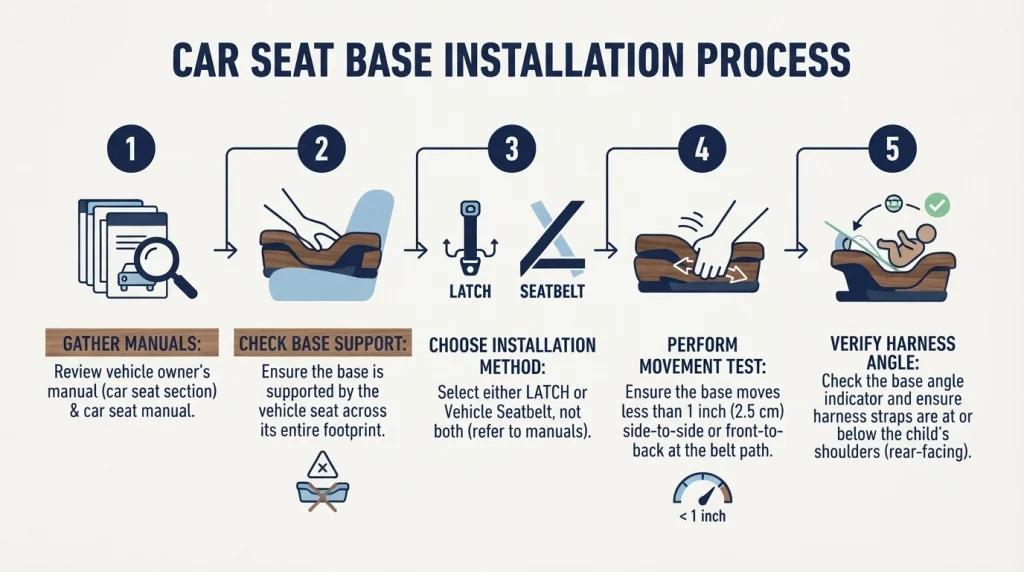
Start by reading both manuals, selecting an approved position, and choosing either the seat belt or lower-anchor installation method. Then check restraint movement, the child’s harness fit, and any required top tether.
Step 1: Gather the Manuals and Inspect the Truck
Give yourself enough time to inspect the rear bench and understand its anchor layout. Rushing makes it easier to miss an unusual tether routing requirement.
Have the following available:
- The child restraint instruction manual.
- The pickup truck owner’s manual.
- The car seat’s lower-anchor connectors or approved seat belt installation equipment.
- Access to the truck’s designated top tether anchors.
- The restraint’s recline indicator or leveling system.
Verify that the vehicle seatback is locked in its proper driving position. Check removable head restraints and seat adjustments against both manufacturers’ instructions.
Step 2: Check the Car Seat’s Base Support
Place the empty child restraint in the selected vehicle position. Check whether it sits as the manufacturer intends without excessive overhang or interference.
A shallow bench can leave part of a large convertible car seat hanging beyond the cushion. If support fails the manufacturer’s requirement, try another approved position or a different compatible restraint.
Don’t add wooden blocks, towels, cushions, or foam to extend the vehicle seat. Only use positioning aids specifically allowed by the car seat manufacturer.
Step 3: Choose the Correct Installation Method
Most conventional child restraints can be installed with either a properly locked vehicle seat belt or approved lower anchors. Using both simultaneously is generally prohibited unless the car seat manufacturer explicitly permits it.
Seat belt installation:
- Route the vehicle belt through the car seat’s correct belt path.
- Buckle the belt without twisting the webbing.
- Engage the vehicle belt’s locking mechanism or the car seat’s permitted lock-off system.
- Press the restraint into the vehicle seat while removing belt slack.
- Check for movement at the belt path.
Lower-anchor installation:
- Find the approved lower anchors for the selected seating position.
- Connect the child restraint’s lower-anchor attachments.
- Confirm each connector is attached correctly.
- Tighten the lower-anchor strap according to the restraint manual.
- Check the restraint’s movement at its belt path.
Lower anchors have weight restrictions based on the vehicle and car seat instructions. When the lower-anchor limit is reached, switch to an approved seat belt installation while continuing to use the required forward-facing top tether.
The Safe Kids Worldwide installation guide explains both methods and the importance of the one-inch test.
Step 4: Perform the One-Inch Movement Test
Grip the child restraint at the belt path where the seat belt or lower-anchor strap passes through it. Pull firmly side to side and front to back.
The restraint should move no more than 1 inch in either direction at that location. Movement at the top of a rear-facing seat isn’t measured the same way.
If the seat shifts too far, check the belt lock, attachment routing, and installation instructions. Never compensate with an improvised strap or attachment.
Step 5: Check the Recline Angle and Harness
Rear-facing seats must use the recline angle specified by the manufacturer. A truck’s steep seatback or sloped cushion may affect this angle.
Use the child restraint’s built-in angle indicator. Don’t estimate the angle by sight alone.
Once the seat is installed, secure the child correctly:
- Rear-facing: Set harness straps at or below shoulder height.
- Forward-facing: Set harness straps at or above shoulder height.
- Harness snugness: Tighten until excess shoulder webbing cannot be pinched.
- Chest clip: Position it at armpit level.
- Clothing: Avoid bulky coats underneath the harness.
For infant carriers, also verify that the carrier locks fully into its installed base. Confirm its handle position follows the manufacturer’s travel instructions.
Section Takeaway: Installation quality depends on approved routing, correct belt locking, sufficient base support, and proper restraint fit. A seat that looks secure still needs a belt-path movement check.
How Do Pickup Truck Tether Anchors and LATCH Systems Work?
Pickup trucks can use the same child restraint systems as other passenger vehicles, but their anchor locations may be unusual. The top tether may connect behind the seatback, through routing loops, or to another designated anchor location.
What Is LATCH?
LATCH stands for Lower Anchors and Tethers for Children. It provides designated vehicle attachment points for compatible child restraints.
The system includes two different components:
- Lower anchors: Metal anchor bars commonly found near the junction of the vehicle seat cushion and seatback.
- Top tether anchors: Approved attachment points for the tether strap, used with forward-facing harnessed car seats.
Lower anchors and top tether anchors don’t perform identical jobs. A forward-facing harnessed restraint should use its top tether even when the vehicle seat belt secures the seat, unless the restraint or vehicle instructions prohibit that installation.
Where Are Top Tether Anchors Located in a Pickup?
Depending on the truck model, anchors can sit behind rear seatbacks, near the rear wall of the cab, or in designated seatback hardware. Some pickups use fabric loops that require special routing.
Common configurations include:
- Metal tether anchor points behind rear seating positions.
- Webbing loops attached near the upper rear seatback.
- Routing loops that guide a tether toward a separate designated anchor.
- Vehicle-specific tether systems accessed by folding or adjusting the rear seatback.
A routing loop isn’t automatically the final attachment point. Some truck manuals require passing the tether through one loop and attaching it at another specified location.
Never guess based on the loop’s shape or location. Follow the diagram for your truck’s exact model year and seating position.
How Do You Attach the Top Tether Correctly?
For a forward-facing child restraint, the tether reduces forward movement of the restraint during a crash. Its route and attachment point must match the vehicle instructions.
- Locate the designated top tether anchorage system in the truck manual.
- Confirm the approved routing for the chosen rear position.
- Install the car seat securely using its permitted seat belt or lower-anchor method.
- Route the tether over or around the head restraint as directed.
- Connect the tether hook to the correct designated anchor.
- Remove slack according to the car seat instructions.
Never hook the tether to cargo hardware, a seat adjustment mechanism, or an unidentified metal bracket. These parts may not be designed to withstand child restraint crash loads.
Some truck configurations have specific rules when multiple child seats are installed. Don’t assume two tether straps can share one anchor.
Do Rear-Facing Car Seats Need a Top Tether?
Most rear-facing seats don’t use a conventional top tether, although certain models have specific rear-facing tether systems. Only use one when both the car seat and vehicle manufacturers permit that installation.
For detailed guidance on proper positioning and recline angles, see the NHTSA rear-facing installation instructions.
Pro tip: If you cannot identify the pickup’s correct tether anchor, stop the installation and consult the truck manufacturer or a CPST. An incorrect connection can leave a forward-facing restraint inadequately secured.
Section Takeaway: Pickup tether systems sometimes require more than attaching a hook to the nearest loop. Use the truck’s specific routing diagram and never substitute unapproved hardware.
Which Car Seat Works Best in a Pickup Truck?
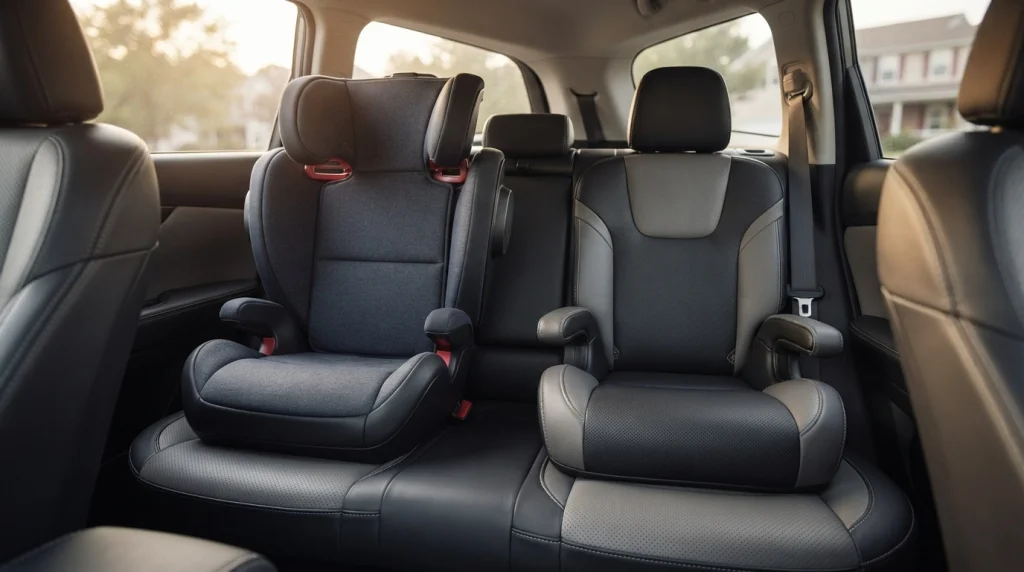
The best car seat is one that fits your child, your pickup’s approved seating position, and both manufacturers’ installation requirements. Compact dimensions can help in smaller cabs, but size alone doesn’t establish compatibility.
Rear-Facing Infant Seats
Rear-facing infant seats often use a detachable carrier and a separate base. A model with manageable front-to-back dimensions may be easier to position in a compact pickup cabin.
Before purchasing, check:
- The rear-facing height and weight limits.
- The installation base’s length and support requirements.
- The recline range needed for your child.
- Whether the front passenger can remain seated safely.
- The seat belt and lower-anchor installation options.
A shorter base isn’t automatically safer. Correct recline, adequate support, and a secure installation remain essential.
Convertible Car Seats
Convertible car seats allow rear-facing use first and forward-facing use later. Some models occupy considerable front-to-back space when reclined for younger children.
Check the manufacturer’s dimensions and recline instructions rather than relying on a showroom measurement. Also consider how the seat will fit after conversion to forward-facing mode.
For long-term use, prioritize appropriate height and weight limits. Keep children rear-facing until they reach the manufacturer’s rear-facing limits.
Forward-Facing Harnessed Seats
Forward-facing harnessed seats can fit well in many truck rear benches when appropriate tether anchors are available. They require particular attention to the truck’s seatback, buckle geometry, and tether routing.
A narrow shell may help with adjacent passenger space. However, the seat must still have the required vehicle cushion support and install correctly.
Don’t turn a child forward-facing simply because the current rear-facing seat takes too much room. Consider a different compatible rear-facing restraint or another vehicle first.
High-Back vs. Backless Booster Seats
A booster seat positions the vehicle’s lap-and-shoulder belt over a child’s hips and chest. It is not installed or tested for movement in the same way as a harnessed restraint.
| Booster Type | Advantages | Pickup Fit Considerations |
|---|---|---|
| High-back booster | Provides belt guidance and head support. | Check headrest clearance, seatback fit, and shoulder belt routing. |
| Backless booster | Compact and easier to move between vehicles. | Requires appropriate vehicle head support and a proper lap-and-shoulder belt. |
Never use a conventional belt-positioning booster with a lap-only belt. The booster requires an approved lap-and-shoulder belt system.
The NHTSA booster seat guide explains belt positioning and head support requirements.
What Should You Measure Before Buying?
Before choosing a restraint, compare the truck’s available space with the seat manufacturer’s published dimensions. A fit trial can reveal problems that measurements alone miss.
- Usable rear seat cushion depth.
- Available front-to-back space.
- Seat belt buckle and anchor locations.
- Head restraint positioning and clearance.
- Approved lower-anchor and top tether positions.
- Space for other passengers or child restraints.
As of 2026, there is still no universal car seat model that fits every pickup truck. Fit depends on the specific child restraint, vehicle configuration, and approved installation method.
Section Takeaway: Choose a restraint for compatibility, not marketing claims about compact size. A correctly fitted car seat is more important than a model that merely looks convenient.
What Mistakes Should Pickup Truck Owners Avoid?
The most serious installation problems usually involve unapproved seating positions, incorrect tether attachment, inadequate base support, or misuse of the vehicle seat belt. Pickup-specific cabin layouts make these mistakes easier to overlook.
1. Using the Wrong Tether Loop
A pickup’s rear tether system may use multiple loops with different functions. Attaching directly to the wrong loop can violate the truck manufacturer’s installation instructions.
Find the exact diagram in the owner’s manual before securing a forward-facing restraint. Don’t copy tether routing from a different model year without confirmation.
2. Installing Over Thick Seat Covers or Cushions
Decorative seat covers and thick protective mats can affect the child restraint’s contact with the vehicle cushion. They may also interfere with belt routing or create unwanted movement.
Only use a seat protector or cover beneath a child restraint when both the vehicle and child restraint manufacturers allow that specific arrangement. Never use extra padding to compensate for poor fit.
3. Failing to Lock the Seat Belt
A belt can feel tight initially yet loosen when it isn’t locked correctly. This may allow excessive movement during a crash.
Read the truck manual to identify its seat belt locking method. Some child restraints have approved integrated lock-offs that change the required installation procedure.
4. Ignoring Seat Belt and LATCH Limits
Lower anchors have limits, and the combined weight of the child and restraint matters. Check the car seat’s labeling and instructions rather than assuming LATCH remains suitable indefinitely.
Switch to the permitted vehicle seat belt method when required. Continue using the top tether for a forward-facing harnessed restraint as directed.
5. Moving a Child Forward-Facing Too Early
Cabin space shouldn’t determine when a child changes restraint direction. Keep children rear-facing until they reach the rear-facing height or weight limit of their car seat.
If a rear-facing seat doesn’t fit, investigate another compatible model or seating arrangement. Don’t solve a space problem by compromising child restraint guidance.
6. Ignoring Vehicle Recalls or Damaged Equipment
A used pickup may have damaged seat belts, missing tether hardware, or unresolved safety recalls. Child restraints can also be recalled, expired, or unsuitable after a crash.
Check the restraint’s manufacturer instructions and recall status before use. Contact the vehicle manufacturer about damaged or missing child restraint anchorage components.
Final Safety Checklist Before Driving
- The seating position is approved for the restraint.
- The vehicle seatback is properly locked.
- The restraint has the required cushion support.
- The seat belt or lower anchors are connected correctly.
- The car seat moves no more than 1 inch at the belt path.
- The top tether is attached correctly when required.
- The recline angle matches manufacturer instructions.
- The harness fits snugly, without twisted straps.
- The chest clip is positioned at armpit height.
- Nearby objects and seat adjustments don’t interfere with the restraint.
When Should You Ask for Professional Help?
Contact a certified Child Passenger Safety Technician when the manuals are unclear, the installation won’t tighten, or the truck has unusual tether routing. Professional assistance is especially valuable with regular-cab trucks and older vehicles.
A technician can help determine whether the seat fits properly and whether another approved installation method works better. An inspection doesn’t replace the manufacturer’s instructions, but it can reveal overlooked problems.
Pro tip: For U.S. vehicle safety concerns, use the owner’s manual, manufacturer support, and official NHTSA resources. Child passenger safety laws vary by jurisdiction, so verify local requirements separately.
Section Takeaway: Never force an incompatible restraint to fit. If the installation cannot meet both manuals, change the seating position, restraint, or vehicle rather than improvising.
Frequently Asked Questions About Car Seats in Pickup Trucks
Can You Put a Rear-Facing Car Seat in a Pickup Truck?
Yes, if the pickup has an approved seating position and the rear-facing restraint fits securely. The seat must have sufficient base support and the proper recline angle. Never install a rear-facing restraint in front of an active frontal airbag, and prioritize an approved rear passenger seat.
Can a Car Seat Go in the Middle of a Pickup Truck?
It can if the vehicle manufacturer approves the middle seating position and the child restraint installs correctly. Check the center seat belt, base support, and tether availability. Don’t borrow lower anchors from adjacent seats unless both manufacturers explicitly permit that configuration.
Can You Install a Car Seat in a Two-Door Pickup?
The number of doors doesn’t determine compatibility. Some two-door extended-cab trucks have approved rear seats, while regular-cab trucks may have only front seating. Check the vehicle’s child restraint instructions, airbag restrictions, and local laws before deciding whether the truck can safely transport a child.
Do All Pickup Trucks Have Car Seat Tether Anchors?
No. Availability depends on the pickup’s model year, configuration, and approved seating positions. Newer trucks commonly have designated tether systems, but some older models may not. Consult the owner’s manual or manufacturer before attempting an installation that requires a top tether.
Can You Use LATCH and a Seat Belt Together?
Generally, no. Conventional child car seats are normally secured with either the vehicle seat belt or the lower anchors. Use both only when the child restraint manufacturer explicitly permits that combination. A forward-facing top tether remains important with either approved installation method.
Can You Fit Three Car Seats Across a Pickup’s Rear Bench?
Some crew-cab pickups can accommodate three child restraints, but compatibility depends on seat width, belt locations, and each restraint’s dimensions. Every seat must install independently and correctly. Don’t assume three narrow seats will fit just because their published widths add up to less than the bench width.
Is a Pickup Truck Safer for a Child Than a Car?
Vehicle size alone cannot determine child passenger safety. Appropriate restraints, approved rear seating positions, crash protection, and installation quality all matter. A pickup with an unsuitable child restraint position isn’t automatically a better choice than a smaller vehicle with a correctly installed rear-seat restraint.
Final Takeaway: Installing a car seat in a pickup truck starts with compatibility, not force. Confirm the approved position, follow both manuals, secure the seat correctly, and verify the tether and harness before every trip.
If you’re shopping for a restraint, bring your truck’s model year and cab configuration when discussing options with a retailer or certified technician. A proper fit check today can prevent a dangerous installation mistake later.

Daniel Brooks is an automotive writer and product researcher focused on car accessories, car tech, maintenance, and practical driving guides. At Plug-in Car World, he helps drivers make smarter automotive decisions through honest reviews and research-driven content.
