
Car Seat Safety Tips for Rideshare and Taxi Trips: A Complete Parent’s Guide
Quick Answer
The most important car seat safety tips for rideshare and taxi trips are to use an age- and size-appropriate child restraint, install it correctly, and check the harness before every journey. Bring your own car seat unless you have confirmed that the transportation provider supplies a suitable one. Follow the NHTSA car seat safety recommendations, even where local taxi exemptions exist.
Essential Safety Rules
- Bring the right seat: Choose a restraint that fits your child’s height, weight, and developmental stage.
- Use the back seat: Children younger than 13 should ride in the rear seating area.
- Secure the installation: A harnessed car seat should move less than one inch at its belt path.
- Check every buckle: Tighten the harness or position the vehicle seat belt correctly before departure.
- Confirm provider rules: Available child restraints and legal requirements vary between cities and services.
- Never improvise: Holding a child on your lap cannot replace an appropriate child restraint.
Before Your Driver Leaves
- Final check: Confirm the seat is secure, the child is properly buckled, and everyone has their own seat belt.
Traveling with a young child can turn a simple taxi pickup into a complicated safety decision. I believe the best approach is to prepare before the driver arrives rather than rush through installation at the curb.
This guide explains how to select a suitable car seat, use vehicle seat belts, understand rideshare policies, and handle unexpected transportation problems.
Whether you’re booking an airport transfer or taking a short trip across town, the same fundamental safety principles apply.
In This Guide
- Are Car Seats Required in Rideshares and Taxis?
- Which Car Seat Is Best for Taxi and Rideshare Travel?
- How Should Parents Prepare Before Booking?
- How Do You Install a Car Seat in a Taxi or Rideshare?
- What If Your Taxi or Rideshare Has No Car Seat?
- How Can Families Make Airport and Long-Distance Trips Safer?
- Frequently Asked Questions
Are Car Seats Required in Rideshares and Taxis?

Car seat requirements depend on the location, the child’s age and size, and the type of transportation service. Some jurisdictions exempt certain licensed taxis from specific child-restraint requirements, while rideshare vehicles may follow different rules.
However, a legal exemption doesn’t mean traveling without a child restraint is safe. The forces involved in a crash don’t change because the vehicle is a taxi.
Taxi Car Seat Laws vs. Rideshare Rules
Traditional taxis and app-based rideshare vehicles can operate under different legal classifications. That distinction matters when you’re checking local child passenger safety regulations.
- Licensed taxis: Some jurisdictions provide limited exemptions from child-restraint requirements.
- Rideshare vehicles: Services such as Uber and Lyft generally expect riders to follow applicable local laws.
- Private car services: Child-restraint requirements may depend on the vehicle’s licensing category.
- Airport shuttles: Rules can differ based on vehicle design, service type, and location.
- International travel: Requirements may differ substantially from U.S. regulations.
Before traveling, check the current rules published by the relevant transportation authority. Avoid assuming that a taxi exemption applies to every commercial vehicle.
Does Uber Require a Child Car Seat?
Uber’s general policies expect riders to provide and correctly fit an appropriate car seat where required by law, unless a specific service provides one. Drivers may decline trips when a child cannot travel safely.
Uber also offers a dedicated Car Seat ride option in selected U.S. cities. Availability, seat models, child eligibility, and additional fees vary by location.
As of November 2026, Uber advertises Car Seat service in several cities, including New York and Los Angeles. Its listed service generally provides one child restraint per vehicle.
Does Lyft Provide Car Seats?
Lyft also expects families to bring appropriate car seats for children who need them. Its specialized Car Seat option is more geographically limited.
As of November 2026, Lyft lists its Car Seat service in New York City, using a forward-facing child restraint. This option is not suitable for newborns or children outside the published size requirements.
Always check the current app options rather than assuming a car seat will arrive with a standard ride.
Why Safety Matters Even on Short Trips
A short journey doesn’t guarantee a low-risk drive. Sudden braking, intersections, unexpected obstacles, and collisions can occur close to home.
Young children cannot use adult seat belts safely until those belts fit their bodies correctly. A properly chosen child restraint helps position crash forces across the appropriate parts of the body.
Never share your seat belt with a child or place a child on your lap. Both practices leave the child without the protection of a correctly fitted restraint.
Pro tip: Check your local transportation authority’s current child-restraint requirements before traveling. Use official child passenger safety recommendations even when an exemption exists.
Section Takeaway: The legal rules may change between taxis and rideshare services, but your child’s need for an appropriate restraint remains the same.
Which Car Seat Is Best for Taxi and Rideshare Travel?
The best car seat for taxi travel is one that fits your child, works with the vehicle’s approved installation system, and can be installed correctly. Portability matters, but it should never override safety or fit.
A car seat is a crash-tested child restraint designed to protect a passenger within its specified size limits. A booster seat works differently by positioning the vehicle’s lap-and-shoulder belt correctly on an older child.
Car Seat Options by Child’s Stage
Different restraint types solve different travel problems. The following comparison highlights their main uses and limitations.
| Seat Type | Typical Use | Travel Advantage | Critical Safety Check |
|---|---|---|---|
| Rear-facing infant seat | Newborns and infants within the seat limits | Some support installation without a base | Correct rear-facing belt routing and recline |
| Convertible car seat | Infants and young children within approved limits | Supports multiple developmental stages | Correct mode, belt path, and harness fit |
| Forward-facing harness seat | Children who have outgrown rear-facing limits | Dedicated harness protection | Proper installation and top tether |
| High-back booster | Booster-ready older children | Provides belt positioning and head support | Correct lap-and-shoulder belt fit |
| Backless booster | Appropriately sized and mature booster riders | Often lightweight and portable | Adequate vehicle head support and shoulder belt |
These categories describe restraint functions rather than fixed ages. Always follow the particular seat’s minimum and maximum height, weight, and usage requirements.
Rear-Facing Seats for Babies and Toddlers
Babies should travel rear-facing, and children should remain rear-facing until they reach the maximum rear-facing height or weight limit of their seat. A rear-facing restraint supports the child’s head, neck, and spine during a frontal collision.
Some infant carriers permit installation using the vehicle seat belt without their detachable base. This can simplify occasional taxi rides.
However, not every infant seat allows baseless installation. Check the specific manufacturer’s instructions before relying on that feature.
Never place a rear-facing car seat in front of an active frontal airbag.
Convertible Seats for Growing Children
Convertible seats support rear-facing and forward-facing use, depending on the child’s size and the seat’s approved modes. They often provide longer-term value than an infant-only restraint.
The tradeoff is portability. Some convertible models are heavy or awkward to carry through airports and busy pickup areas.
Look for features that make repeat installation easier:
- Clearly marked rear-facing and forward-facing belt paths.
- Accessible belt-locking mechanisms, when included.
- Readable recline indicators.
- Manageable weight for carrying.
- Harness adjusters that remain accessible after installation.
- Instructions that explain seat belt installation clearly.
Booster Seats for Older Children
Booster seats help a vehicle’s adult seat belt fit children who have outgrown forward-facing harness seats. They are not appropriate substitutes for infant seats or harnesses.
A booster requires a suitable lap-and-shoulder belt. A lap-only belt cannot provide the correct restraint for a conventional belt-positioning booster.
Backless boosters can be convenient when traveling light. However, the vehicle must provide the head support required by the booster manufacturer.
Should You Buy a Special Travel Car Seat?
A dedicated travel seat may be useful if your family frequently changes vehicles. Compare its safety certification, installation instructions, weight, and suitability for your child.
A lightweight seat isn’t automatically easier to install correctly. I’d prioritize a straightforward seat belt installation over a small weight reduction.
Be cautious with folding restraints, wearable harness products, and unfamiliar accessories. Verify their applicable safety certification and intended vehicle use before considering them.
Likewise, avoid unapproved aftermarket padding, harness covers, and seat liners. They may interfere with harness fit or seat performance.
Section Takeaway: Choose the restraint based on your child’s size and the vehicle’s compatibility first. Portability is a secondary convenience.
How Should Parents Prepare Before Booking a Taxi or Rideshare?
Safe rideshare travel begins before you request the vehicle. Checking the seat, booking option, and pickup location can prevent hurried decisions.
Step 1: Confirm Your Child’s Current Seat Requirements
Know your child’s current height and weight, not just their age. Compare those measurements with the restraint manufacturer’s instructions.
If you’re unsure which type is suitable, use the NHTSA Right Seat finder as a starting point.
Step 2: Decide Whether to Bring Your Own Seat
Bringing a familiar car seat gives you control over its condition, instructions, and fit for your child. It also reduces dependence on limited specialty vehicle availability.
Check these items before leaving:
- The seat is within its manufacturer-specified useful life.
- There are no unresolved recalls affecting safe use.
- Its crash history meets the manufacturer’s reuse requirements.
- All required harness, tether, and installation components are present.
- Labels and installation instructions are available.
- The seat supports an installation method suitable for the expected vehicle.
Practice the intended installation method in a compatible vehicle before your trip. A calm rehearsal is easier than learning beside a busy road.
Step 3: Check Uber and Lyft Car Seat Availability
Specialized rides may provide a child restraint, but that doesn’t guarantee compatibility with every child. Check the exact seat type and eligibility requirements.
Uber’s Car Seat service information lists participating locations, availability, and child-size requirements. As of November 2026, its published U.S. offering includes a $10 car seat surcharge.
Lyft’s Car Seat mode guidance currently lists New York City availability. Its published forward-facing seat criteria include a minimum age of two years and specific height and weight limits.
These details can change. Verify the current service options and charges before booking.
Step 4: Select a Suitable Pickup Location
Choose a pickup area where the driver can stop legally and safely. Installing a seat on the traffic side of a busy road creates avoidable hazards.
When practical, select a sheltered loading zone or a quieter side street. Allow enough time to install and inspect the restraint before departure.
Step 5: Confirm the Vehicle Can Accommodate Your Family
A vehicle must have a suitable seating position and separate seat belt for every passenger. That becomes especially important when traveling with multiple children.
Consider these practical questions:
- How many children need restraints?
- Can the available seating positions accommodate those restraints safely?
- Are appropriate seat belts and top tether anchors available?
- Will luggage fit without obstructing passengers or safety equipment?
- Can everyone enter and exit safely?
Do not assume a larger rideshare vehicle automatically offers more usable child-restraint positions. Vehicle layout and approved anchor locations matter.
Section Takeaway: Preparation reduces pressure at pickup. Confirm the child, restraint, vehicle, and service are compatible before beginning the trip.
How Do You Install a Car Seat in a Taxi or Rideshare?
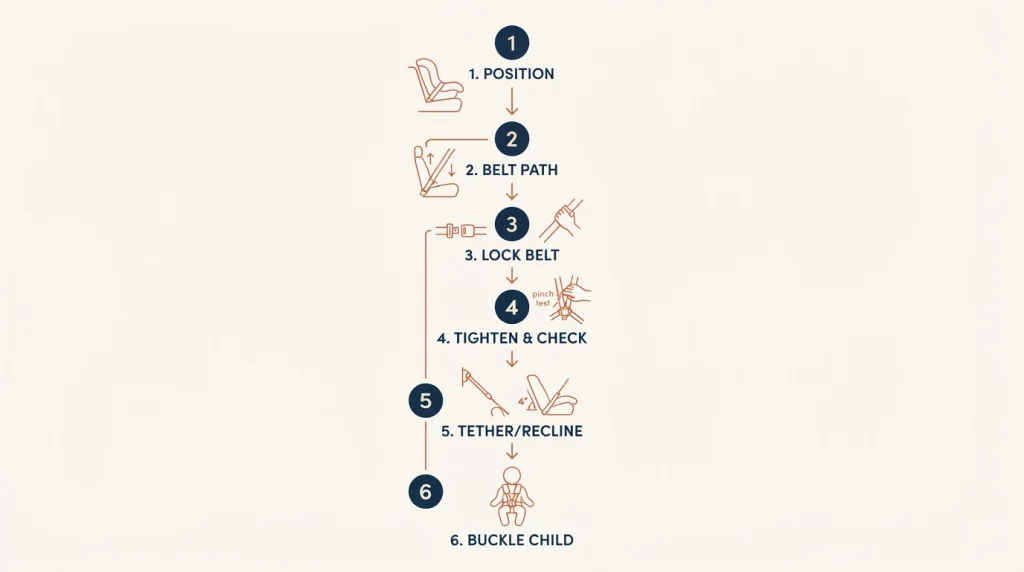
Most child restraints can be installed with an appropriate vehicle seat belt when their instructions permit it. This is useful because taxis and rideshare vehicles may not have suitable lower anchors in every seating position.
Always follow both the car seat manual and the vehicle’s instructions. These steps provide a general safety framework, not a replacement for model-specific directions.
Step 1: Position the Car Seat Correctly
Install the restraint in an approved rear seating position. Make sure the vehicle seat and child restraint meet each manufacturer’s installation requirements.
The center rear seat may be a useful option when a secure, permitted installation is possible. A correctly installed restraint in another approved rear seating position is preferable to an insecure center installation.
Step 2: Identify the Correct Belt Path
Harnessed car seats commonly have separate rear-facing and forward-facing belt paths. Using the wrong one can prevent the restraint from working as intended.
Check the markings on the restraint before threading the belt. Ensure the webbing lies flat without twisting.
Step 3: Secure and Lock the Vehicle Belt
Buckle the vehicle seat belt through the correct path. Then lock the belt using the approved vehicle mechanism or the car seat’s permitted lock-off system.
Not every seat belt locks in the same way. Some require fully extending the shoulder belt, while other installations use a different approved method.
Do not rely on a loose belt or assume the belt is locked merely because it clicks into the buckle.
Step 4: Tighten and Check Movement
Apply pressure as the car seat manufacturer directs while removing slack from the belt. Then test movement at the belt path.
The installed harnessed restraint should not move more than one inch side-to-side or front-to-back at that location.
A little movement near the top of a rear-facing seat can be normal, depending on the design. Do not use movement at the top as your primary installation test.
Step 5: Check Recline or Top Tether Requirements
Rear-facing seats must sit at the recline angle specified by the manufacturer. Incorrect recline can create problems, particularly for young babies.
Forward-facing harnessed seats generally use a top tether to reduce forward head movement. Locate the approved tether anchor and follow the car seat and vehicle instructions.
Never attach a tether to a random cargo hook, headrest post, or other unapproved location. If the required installation cannot be achieved, choose another compatible vehicle.
Step 6: Buckle the Child Correctly
A secure car seat still requires a properly adjusted harness. Place the child in the restraint with their back and bottom positioned correctly.
- Rear-facing harness: Position harness straps at or below the shoulders.
- Forward-facing harness: Position harness straps at or above the shoulders.
- Harness tension: Tighten until you cannot pinch excess webbing at the shoulder.
- Chest clip: Position it at armpit level when the seat includes one.
- Clothing: Remove bulky coats that prevent the harness from fitting snugly.
- Accessories: Use only approved inserts and positioning products.
Seat Belt Installation vs. Lower Anchors
Lower Anchors and Tethers for Children, often called LATCH, provide an alternative installation method for compatible restraints and vehicles. Seat belt installation is also an approved method when performed according to the instructions.
Most car seats should not use both the lower anchors and vehicle seat belt simultaneously. Only do so when the relevant manufacturers explicitly permit that arrangement.
Lower anchor systems also have weight limits. The vehicle seat belt may become necessary as a child grows.
Consult the NHTSA car seat installation guide for additional instructions and inspection recommendations.
What About Booster Seat Installation?
A belt-positioning booster functions differently from a harnessed restraint. Its primary purpose is to guide the vehicle’s lap-and-shoulder belt into the correct position on the child.
Check that the lap belt rests low across the upper thighs and the shoulder belt crosses the middle of the shoulder and chest. The child must remain properly seated throughout the journey.
Follow the booster manufacturer’s instructions for any lower-anchor attachments. Secure an unoccupied booster according to its manual so it cannot become a projectile.
Pro tip: Before traveling, consider having a certified Child Passenger Safety Technician check your installation technique. For airbag, anchor, and seat belt questions, rely on the vehicle and car seat manufacturers’ instructions.
Section Takeaway: Correct belt routing, proper belt locking, a secure installation, and a snug harness are more important than completing the installation quickly.
What If Your Taxi or Rideshare Has No Car Seat?
If your child needs a car seat and no suitable restraint is available, don’t start the journey. Find a safe alternative rather than improvising a restraint.
This can be frustrating when you’re late, but an unsafe arrangement isn’t a reasonable solution.
Can You Hold a Baby on Your Lap in a Taxi?
No. Holding a baby cannot provide the same crash protection as a properly installed, age-appropriate child restraint.
In sudden braking or a collision, an adult may be unable to keep hold of the child. Sharing a vehicle seat belt with a child also creates serious injury risks.
What Are Safer Alternatives?
When a suitable child restraint is unavailable, consider these options:
- Bring your own restraint: Use your child’s familiar, compatible car seat.
- Book an eligible car-seat-equipped ride: Verify seat type, child-size limits, and availability.
- Reserve a family transportation service: Confirm the exact restraint and vehicle arrangements before payment.
- Arrange a trusted pickup: Use a properly equipped vehicle with an appropriate seating position.
- Delay travel: Wait until suitable transportation can be arranged when the trip is not urgent.
If a driver cannot safely accommodate the car seat, stay outside the vehicle while arranging another option. Follow the platform’s cancellation and support procedures.
What If the Provided Car Seat Looks Damaged?
Do not use a seat with missing required components, damaged harness webbing, or an installation you cannot verify. Visible cleanliness alone does not establish that a restraint is safe.
Ask about any uncertain crash history, applicable recalls, and manufacturer instructions. When important safety details cannot be confirmed, use another suitable restraint.
Can a Seat Belt Alone Protect a Toddler?
An adult seat belt usually does not fit a toddler correctly. A young child generally needs a properly sized harnessed restraint.
Even older children may need boosters after outgrowing their harnessed seats. Readiness for an adult belt depends on fit and maturity, not age alone.
What About Portable Alternatives?
Some portable child restraints are designed for specific ages, weights, and vehicle systems. However, many products marketed for travel are not suitable substitutes for approved car seats.
Check applicable certification, the manufacturer’s instructions, and compatibility before use. Avoid improvised straps, travel pillows, or aftermarket restraints advertised without clear safety documentation.
Section Takeaway: If a suitable child restraint isn’t available or cannot be installed correctly, choose another travel arrangement rather than compromising on safety.
How Can Families Make Airport and Long-Distance Trips Safer?
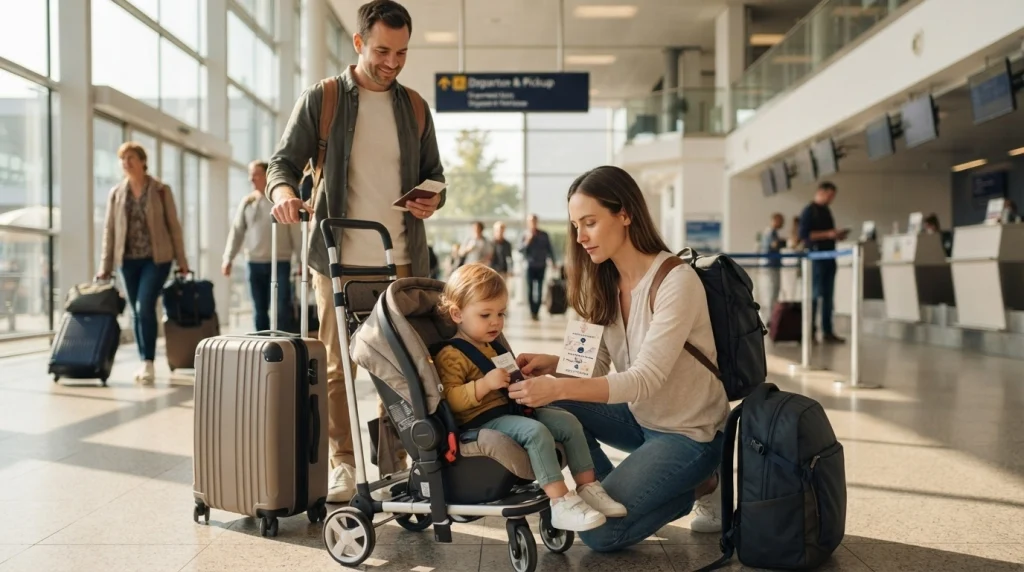
Airport pickups introduce extra challenges because families often travel with luggage, tired children, and limited time. A simple transportation plan makes safe installation easier.
Plan Your Airport Pickup Before Landing
Arrange your ground transportation before arriving when possible. Confirm that the booked vehicle can accommodate both the child restraint and your luggage.
For car-seat-equipped services, verify the number and type of restraints provided. Don’t assume a booking for multiple passengers includes multiple child seats.
Protect Your Car Seat During Air Travel
If you bring your own car seat, inspect it after transportation. Look for visible damage, missing accessories, and changes that could affect installation.
Follow airline rules when transporting or using the restraint on an aircraft. An airline-approved seat must still be installed according to its separate motor-vehicle instructions when used in a taxi.
Manage Luggage Without Compromising Safety
A loose suitcase can become hazardous during sudden braking. Secure luggage in the vehicle’s designated cargo area whenever possible.
Avoid placing heavy bags next to an infant seat or blocking access to buckles. Keep child restraints and passengers free from unnecessary obstructions.
Use a Repeatable Pickup Routine
I recommend treating every pickup as a fresh installation, even if you installed the same restraint correctly earlier that day. Different vehicles can have different seat belt systems and seating geometry.
My preferred routine is straightforward:
- Confirm the driver and vehicle match the booking.
- Move to a safe loading area.
- Inspect the intended seating position and seat belt.
- Install the restraint using its approved method.
- Check movement, recline, and tether requirements.
- Secure the child and check harness or belt fit.
- Confirm every passenger is buckled before departure.
Prepare for Hotel Transfers and Multiple Stops
For hotel pickups, request a suitable loading area and allow enough time for installation. If you’re using a provided restraint, confirm that it will be available for the return journey.
Never leave a child unattended inside a taxi, even during a brief stop. Take the child with you whenever leaving the vehicle.
How Should You Handle Two or Three Children?
Traveling with multiple children requires more than simply choosing a larger vehicle. Every restraint must fit correctly without interfering with another seat or buckle.
Three-across installations can be especially challenging because vehicle seat widths, belt buckle locations, and restraint shapes vary. Do not force seats together or block access to their required attachment points.
For frequent group travel, consider arranging a vehicle with confirmed compatible seating positions in advance.
Extra Safety Checks for Hot Weather
Parked vehicles can become dangerously hot, and exposed buckle components may be uncomfortable against a child’s skin. Check surfaces before placing your child into the seat.
Use climate control as appropriate, and follow the seat manufacturer’s guidance for cleaning and accessories. Never leave a baby or child alone inside a parked vehicle.
Section Takeaway: Airport and long-distance travel become easier when you plan for the entire journey, including luggage, transfers, vehicle changes, and repeat installations.
Frequently Asked Questions
1. Do I need to bring my own car seat for Uber or Lyft?
Usually, yes. Unless you’ve confirmed a suitable car-seat-equipped ride, plan to bring the appropriate restraint yourself. Both the transportation service’s policies and local laws matter, and standard rides generally should not be assumed to include child seats.
2. Can I install an infant car seat in a taxi without its base?
Yes, but only if the specific infant car seat manufacturer permits baseless vehicle installation. Follow the approved seat belt routing and recline instructions. Some infant carriers support this method, while others require the base or a different installation arrangement.
3. Is a booster seat necessary for a short taxi trip?
If your child still needs a booster for correct seat belt fit, use it on short journeys too. The distance does not change the child’s size or how an adult belt contacts their body. Check that a suitable lap-and-shoulder belt is available.
4. Are taxis exempt from child car seat laws?
Some jurisdictions exempt certain licensed taxis from specific child-restraint rules. Others require appropriate restraints or impose conditions on exemptions. Rules differ by location, so check the transportation authority’s current guidance. An exemption does not make an unrestrained journey safer.
5. What if a rideshare driver refuses to let me install a car seat?
Do not begin the trip without a suitable, securely installed restraint. Ask whether the vehicle can safely accommodate the seat and follow the platform’s cancellation procedures if necessary. Arrange another suitable vehicle rather than attempting a rushed or improvised installation.
6. Can I use a portable travel car seat for everyday rideshare trips?
A portable restraint may be appropriate when it meets the applicable safety requirements, fits your child, and supports installation in the vehicle. Portability alone does not establish safety. Check the manufacturer’s usage limits, instructions, and certification before relying on it.
7. When can my child stop using a booster seat in taxis?
Your child can transition to an adult seat belt when it fits correctly without the booster and local legal requirements are met. The lap belt must stay low across the upper thighs, while the shoulder belt crosses the chest and shoulder. Proper seated posture must be maintained throughout the trip.
8. Can I use a car seat cover or extra padding during taxi trips?
Use only covers, liners, and padding approved for your specific restraint. Thick aftermarket accessories may affect harness fit or alter the seat’s intended performance. For cold weather, buckle the child securely before placing a blanket over the harness.
9. Is it safer to install a car seat in the middle of the back seat?
The center rear position can be a good location when the vehicle and child restraint permit a secure installation. However, a correctly installed car seat in an approved outboard rear position is better than an incorrectly installed one in the center.
10. What should I check before the driver starts moving?
Check the restraint’s installation, recline or tether where applicable, harness tension, and chest clip position. For boosters, verify the lap-and-shoulder belt fit. Confirm that every passenger has their own appropriate restraint and that luggage is secured before departure.
Final Takeaway: Make Every Ride a Safe Ride
Reliable car seat safety tips for rideshare and taxi trips come down to preparation, correct restraint selection, and careful installation. No transportation schedule is worth skipping essential child passenger safety checks.
Before your next journey, confirm your child’s current car seat requirements, review the manufacturer’s installation instructions, and plan a suitable transportation option.
Whenever possible, practice your installation with guidance from a certified child passenger safety professional. It can make unfamiliar vehicles and busy pickup situations much easier to manage.
Your next step: Check your child’s current height and weight, inspect their restraint, and confirm the vehicle’s child-seat arrangements before booking the next taxi or rideshare trip.

Daniel Brooks is an automotive writer and product researcher focused on car accessories, car tech, maintenance, and practical driving guides. At Plug-in Car World, he helps drivers make smarter automotive decisions through honest reviews and research-driven content.
