How to Remove Mold From a Car Seat: Safe DIY Steps That Actually Work
Quick Answer
To remove mold from a car seat, work outside with gloves and an N95 mask, vacuum the dry mold first, then clean cloth with a 1:1 white vinegar and water spray or an enzyme cleaner. Leather needs a pH-neutral leather cleaner instead, and a baby car seat needs mild soap and water only, exactly as its manual says. Dry the seat fully in sun and airflow for 24 to 48 hours, because damp foam is what lets mold return. Start with how to clean a car seat safely if you are unsure which cleaner your seat can handle.
Fastest safe method by seat type
- Cloth vehicle seat: Vacuum, spray vinegar solution, scrub, blot, and extract until damp, not soaked.
- Leather or vinyl: Wipe with leather cleaner, scrub seams gently, wipe clean, then condition once dry.
- Baby car seat: Remove the cover if the manual allows it, wash with mild soap, and never use bleach on straps.
- Deep or wide mold: Stop DIY work if mold covers a large area, smells strong after cleaning, or sits deep in foam.
- Final step always: Dry completely before you close the doors or put a cover back on.
Do not do this
- Never mix bleach with vinegar or ammonia, and never scrub dry mold inside a closed car.
- Never soak a seat, steam a baby car seat harness, or use a harsh cleaner on leather without a spot test.
I’ve opened a car after a wet week and found black spots blooming across the passenger seat.
It smelled damp, looked worse than it was, and I wanted it gone before my next drive. That job taught me one thing fast: mold removal is half cleaning and half drying.
This guide covers both. You’ll learn how to spot mold, choose the right cleaner for cloth, leather, and a child car seat, and stop it from coming back.
In This Guide
- What Mold on a Car Seat Looks Like — and Why It Grows So Fast
- Is Mold on a Car Seat Dangerous? When to Stop and Call a Pro
- What You Need Before You Start: Supplies and Safety Gear
- How Do You Remove Mold From a Cloth Car Seat?
- How to Remove Mold From Leather and Vinyl Car Seats
- How to Remove Mold From a Baby or Child Car Seat Safely
- Mold vs Mildew vs Stains: How to Tell What You’re Dealing With
- How to Remove Mold Smell and Dry the Seat So It Doesn’t Come Back
- How to Prevent Mold From Coming Back in 2026
- Frequently Asked Questions
What Mold on a Car Seat Looks Like — and Why It Grows So Fast
Mold is a type of fungus that grows in damp, warm, still air.
It feeds on dust, food crumbs, skin cells, and fabric fibers. A car gives it all three, plus trapped moisture.
On a car seat, mold often shows up as black, dark green, gray, or white spots.
Some spots look fuzzy or powdery. Others look like flat stains with a faint ring around the edge.
Check seams, stitching, seat-back pockets, and the gap where the seat meets the backrest.
Mold loves those folds. It also hides under a child car seat base, under a seat cover, and in the foam below the fabric.
Why does mold grow in a car so quickly?
A parked car traps heat and humidity. A small leak, a spilled drink, wet shoes, or a window left cracked in rain can soak the foam.
Once foam stays damp for 24 to 48 hours, mold can start. Closed doors then stop airflow, so the seat never dries.
I once left a gym towel on a back seat after a rainy drive. Three days later, the towel smelled sour and the seat under it had faint gray patches.
The towel was the clue. The damp foam underneath was the real problem.
Where does the moisture usually come from?
- Leaks: Worn door seals, a clogged sunroof drain, or a cracked windshield seal can drip water into the footwell and seat base.
- Spills and sweat: Coffee, juice, milk, and sweat soak into cloth fast and dry slowly.
- Wet gear: Rain-soaked jackets, umbrellas, beach towels, and gym bags keep a seat damp for hours.
- Condensation: Big temperature swings can leave moisture on windows and seats, especially in humid weather.
- Stored cars: A car parked for weeks with closed windows can turn musty even without a clear leak.
Find the water source before you clean. Cleaning without fixing a leak just resets the clock.
Section takeaway: Mold needs moisture, warmth, and still air, so check seams and foam, find the leak or spill that fed it, and treat drying as part of the clean.
Is Mold on a Car Seat Dangerous? When to Stop and Call a Pro
Can mold on a car seat make you sick? For most healthy adults, a small patch is mainly an allergy and air-quality problem.
It can still trigger sneezing, itchy eyes, coughing, and a stuffy nose. People with asthma, allergies, or a weak immune system face a higher risk.
Children and babies face a higher risk too. Their lungs are smaller, and they sit close to the seat for a long ride.
That is why a child car seat needs a gentler, stricter method than a front cloth seat. The EPA mold guidance stresses moisture control and safe cleanup, not just covering the smell.
When should you not DIY this job?
- Large growth: Mold covers more than a dinner-plate-sized area, or it covers several seats at once.
- Deep foam mold: The seat feels damp inside, smells musty after two cleans, or the foam looks stained through.
- Health symptoms: You cough, wheeze, or feel ill in the car, or a child shows breathing trouble.
- Unknown water: The car sat in floodwater, or you suspect sewage or a long-term leak.
- Hidden mold: You smell mold but cannot see it, or it keeps returning in the same spot.
In those cases, get a professional detailer or mold remediation pro to inspect it. A pro can check under the carpet, in the foam, and in the ventilation system.
Do not drive a child in a moldy child seat while you wait. Use a clean spare seat if you have one, or delay the trip.
Safety note: Wear gloves, eye protection, and an N95 mask, work outside with the doors open, and keep children and pets out of the car while you clean.
Section takeaway: A small surface patch is usually a safe DIY job, but large, deep, flood-related, or symptom-causing mold needs a professional inspection.
What You Need Before You Start: Supplies and Safety Gear
What do you need to remove mold from a car seat? You need protection first, then a vacuum, a gentle cleaner, and a way to dry the seat.
Gather everything before you open the doors. You do not want to hunt for gloves with moldy hands.
Protection and tools
- N95 mask, gloves, and eye protection: Mold spores spread when you brush or vacuum them.
- Vacuum with a hose and brush: A HEPA-filter vacuum is best, and an empty bag or canister helps.
- Soft-bristle brush: Use it to lift mold from fabric without tearing the fibers.
- Microfiber towels: Use clean towels for blotting, wiping, and drying.
- Spray bottle: Use it for a vinegar solution or a ready-made cleaner.
- Wet/dry vacuum or extractor: Use it if you have one, since it pulls dirty water out of foam.
- Fan and sunlight: Airflow and sun help a seat dry fully after cleaning.
Which cleaner should you choose?
Your seat material decides the cleaner. Cloth, leather, and a child seat do not share the same rules.
| Cleaner | Best for | Avoid on | Notes |
|---|---|---|---|
| White vinegar, 1:1 with water | Cloth vehicle seats | Child seat straps, some leather | Let it sit 10 to 15 minutes, then blot and rinse lightly. |
| Enzyme or upholstery cleaner | Cloth, light stains, odors | Child seat straps unless the manual allows it | Follow the label, and test a hidden spot first. |
| pH-neutral leather cleaner | Leather and vinyl | Suede, nubuck, unsealed leather | Condition the leather after it dries. |
| Mild soap and water | Baby and child car seats | Nothing harsh on this list | Use only what the manual allows, and air-dry. |
| Diluted bleach | Hard plastic trim only, if the manual allows it | Fabric, leather, child seats, straps | Never mix it, and use it only as a last step on hard parts. |
Baking soda helps with odor after cleaning. It does not kill mold on its own, so do not rely on it as the main cleaner.
Check your owner’s manual and the seat manual before you pick a product. The manual wins over any blog tip, including this one.
Section takeaway: Gear up first, match the cleaner to the material, and test any new product on a hidden spot before you clean the whole seat.
How Do You Remove Mold From a Cloth Car Seat?
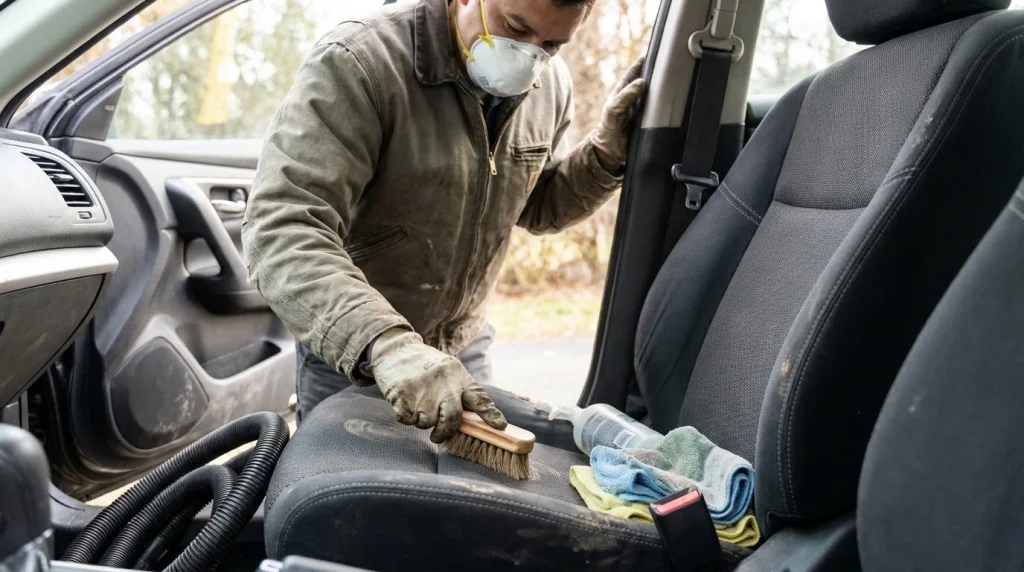
How do you remove mold from a cloth car seat? Vacuum the dry mold outside, spray a vinegar solution, scrub gently, blot, rinse lightly, and dry the seat fully.
Work in daylight with all doors open. Park outside, not in a closed garage.
Step 1: Vacuum the dry mold first
Do not wet the mold yet. Wet mold smears and sinks deeper into foam.
Vacuum the seat slowly with a brush attachment. Cover the top, sides, seams, and the crease at the back.
Empty the vacuum outside right after. Wipe the hose and brush so spores do not stay in the tool.
Step 2: Spray and let it sit
Mix equal parts white vinegar and water in a spray bottle. Spray the moldy area until it feels damp, not soaked.
Let it sit for 10 to 15 minutes. Vinegar needs contact time to work on surface mold.
If you prefer a store cleaner, use an enzyme or upholstery cleaner made for car fabric. Follow its label for dwell time.
Step 3: Scrub, blot, and rinse lightly
- Scrub gently: Use a soft brush in small circles, and work from the edge of the spot inward.
- Blot, don’t rub: Press a clean microfiber towel on the area, lift, and repeat with a fresh side.
- Rinse lightly: Spray clean water sparingly, then blot again until the towel picks up little color.
- Repeat once: Run a second light pass if you still see spots or smell mustiness.
If you have a wet/dry vacuum, extract the water after each pass. That step pulls mold and cleaner out of the foam instead of leaving it there.
Step 4: Dry it like the job depends on it
It does. A cloth seat can feel dry on top while the foam stays wet for a day.
Leave the doors open in sun and wind for several hours. Point a fan at the seat if you have one.
Do not put a seat cover back on until the seat feels dry to the touch and smells clean. A cover traps moisture and restarts the cycle.
For a removable cover, follow how to remove a car seat cover for cleaning before you wash it separately.
Safety note: Never use a jack, lift, or power tool for this job, and keep the car in park with the engine off while you clean inside.
Section takeaway: Vacuum dry, clean damp, extract water, and dry fully, because a cloth seat that stays wet will grow mold again in the same spot.
How to Remove Mold From Leather and Vinyl Car Seats
How do you remove mold from a leather car seat? Vacuum gently, wipe with a pH-neutral leather cleaner, scrub seams with a soft brush, wipe clean, and condition the leather once it dries.
Leather is less absorbent than cloth, which helps. Its seams, stitching, and perforations still trap mold, so do not rush those areas.
Start with a gentle vacuum and wipe
Vacuum the seat with a soft brush. Use low suction on perforated leather so you do not pull at the holes.
Wipe the surface with a damp microfiber towel. That step removes loose spores before you add cleaner.
Clean in small sections
- Spray cleaner on the towel: Spraying the seat directly can flood seams and perforations.
- Wipe in straight lines: Work one panel at a time, and flip the towel often.
- Brush the seams: Use a soft toothbrush on stitching and folds, where mold hides.
- Wipe again: Remove cleaner residue with a clean, damp towel.
Vinyl follows the same steps. It tolerates a mild all-purpose interior cleaner better than leather does, but still needs a spot test first.
What should you never use on leather?
Skip bleach, vinegar, ammonia, and harsh household cleaners on leather. They can dry, crack, and discolor the surface.
Skip stiff brushes and abrasive pads too. They leave fine scratches that later trap dirt and moisture.
After the seat dries, apply a leather conditioner. It restores moisture and helps protect the surface from future dampness.
If you use a seat cover for protection, clean it separately and let it dry fully. A damp cover on clean leather defeats the work you just did.
Section takeaway: Leather needs a gentle cleaner, a soft touch on seams, and conditioner after drying, never bleach or vinegar as a first choice.
How to Remove Mold From a Baby or Child Car Seat Safely
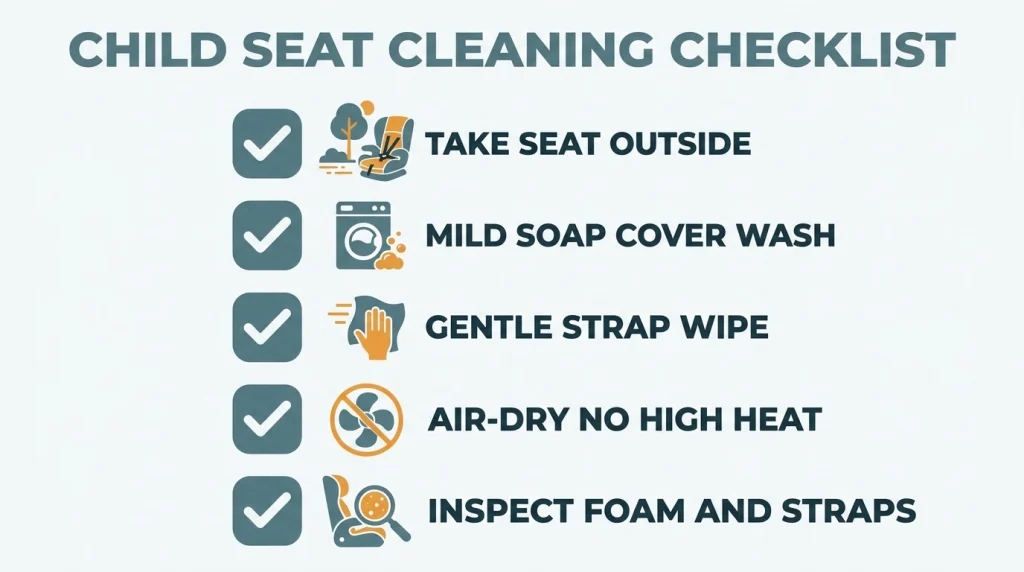
How do you remove mold from a baby car seat? Remove the seat from the car, check the manual, vacuum loose mold outside, wash the cover with mild soap and water, wipe the shell, and air-dry everything fully.
This is the strictest section in the guide for a reason. A child breathes close to this seat, and harsh chemicals can weaken straps or irritate skin.
Read the manual before you touch a cleaner
Every brand sets its own cleaning limits. Graco, Britax, Nuna, and other makers often allow mild soap and water only on the cover and shell.
Many manuals forbid bleach, vinegar, solvents, and machine washing on straps. Some forbid submerging the buckle or harness.
If your manual is missing, look it up by model name and date of manufacture. The NHTSA site is a good starting point for car seat safety information and recall checks.
When in doubt, call the maker. A five-minute call beats a ruined harness.
Safe steps for a child car seat
- Take it outside: Remove the seat from the car, and work in fresh air with gloves and a mask.
- Vacuum loose mold: Brush and vacuum the cover and shell while they are still dry.
- Remove the cover: Take it off only if the manual allows it, and note how the straps thread through it.
- Wash the cover: Hand-wash or machine-wash only as the manual allows, using mild soap and cool water.
- Wipe the shell: Use mild soap and water on plastic, then wipe with clean water.
- Clean straps gently: Wipe harness straps with a damp cloth and mild soap, and never soak or bleach them.
- Air-dry fully: Dry the cover, shell, and straps in airflow, out of direct high heat, until no dampness remains.
For cleaner choices, see what cleaner is safe for a baby car seat before you buy anything new.
When should you replace the seat instead?
Replace the seat if mold soaked deep into the foam, the cover cannot be removed for cleaning, or the manual says the part cannot be cleaned safely.
Replace it also if the straps feel stiff, frayed, or faded after cleaning. A harness that lost strength is not worth the risk.
Check the foam question too. Can car seat foam or Styrofoam get wet explains why wet foam needs full drying and when it needs a closer look.
Safety note: Never use bleach, vinegar, or a steam cleaner on harness straps or buckles, and never reinstall a child seat until every part is fully dry.
Section takeaway: A child car seat follows the manual, mild soap only, no bleach on straps, and full air-drying, and deep foam mold may mean replacement, not cleaning.
Mold vs Mildew vs Stains: How to Tell What You’re Dealing With
Is it mold or mildew on a car seat? Mold often looks black, green, or gray and feels fuzzy or slimy, while mildew often looks white or light gray and feels powdery.
Both grow in damp air. Mold tends to grow deeper and smell stronger, while mildew often stays on the surface.
You do not need to name the exact species to clean it safely. You do need to know whether you face surface growth or a deep stain.
Quick check you can do at home
- Color and texture: Fuzzy black or green patches point to mold, while powdery white patches point to mildew.
- Smell: A strong musty or earthy smell points to deeper growth, not just surface dust.
- Spread: Spots that return in the same place after cleaning point to damp foam or a leak.
- Stain after cleaning: A faint shadow left after the smell and texture are gone is often a stain, not live growth.
Clean mold and mildew with the same gentle method for your seat type. Treat a leftover stain as a separate step after the mold is gone.
If a dark mark stays after two cleans, read how to remove stains from a car seat for stain-specific steps that will not damage the fabric.
Section takeaway: Mold is often darker, fuzzier, and smellier than mildew, but both need the same clean-and-dry approach, and a leftover shadow is usually a stain.
How to Remove Mold Smell and Dry the Seat So It Doesn’t Come Back
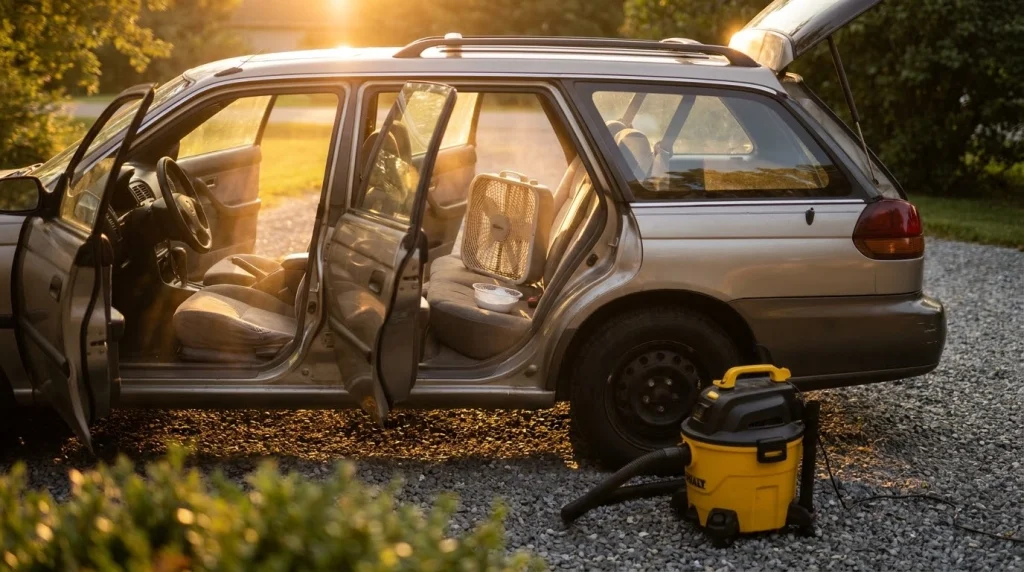
How do you get mold smell out of a car seat? Clean the source first, extract as much water as you can, dry the seat for 24 to 48 hours, then use baking soda or an enzyme odor treatment only after the seat is dry.
Air freshener alone will not fix it. It masks the smell while mold keeps growing in damp foam.
Dry the seat in layers
Blot with towels, extract with a wet/dry vacuum, then use airflow. Each step removes water the last one missed.
Open all doors on a dry, sunny day. Aim a fan at the seat for several hours, and move it to hit the backrest and the seat base.
At night, leave a window cracked slightly if it is safe and dry outside. That small gap lets humid air escape instead of settling back into the foam.
Use baking soda the right way
- Wait until dry: Sprinkle baking soda only on a dry seat, not a wet one.
- Let it sit: Leave it for several hours, or overnight if you can.
- Vacuum it up: Vacuum slowly, then check the smell with the doors closed for 10 minutes.
Repeat once if the smell lingers. If it still smells musty after two rounds, the foam may still be damp inside.
Check the rest of the car too
Mold smell can come from the carpet, the headliner, or the air vents. Clean the floor mats and vacuum the carpet around the seat.
Run the heater and air conditioning with fresh air for 10 minutes. That step helps dry the vents and moves stale air out.
Replace a musty cabin air filter if your car has one. A dirty filter can hold odor even after the seat is clean. Check your owner’s manual for the filter location and replacement interval.
Section takeaway: Remove the water, dry for a full day or two, then treat odor on a dry seat, and check the carpet, vents, and cabin filter if the smell stays.
How to Prevent Mold From Coming Back in 2026
How do you prevent mold in a car seat? Keep the seat dry, fix leaks fast, air the car out, and clean spills the same day they happen.
Prevention is cheaper than a second deep clean. It also protects the foam, the fabric, and the air you breathe on every drive.
Make drying a habit
- Air it out: Open the doors for a few minutes after a rainy drive or a wet passenger ride.
- Remove wet items: Take wet towels, jackets, and gym bags out of the car, even for one night.
- Use floor mats: Rubber mats catch water before it soaks into carpet and seat bases.
- Park smart: Park in sun when you can, and avoid parking under a dripping tree or in a damp garage for weeks.
Fix small problems before they grow
Check door seals for cracks or gaps. Clear leaves from sunroof drains and cowl vents so water flows away from the cabin.
Clean spills right away with a towel, then blot with clean water. Milk and juice feed mold fast if they sit in fabric.
Vacuum the seats once a month. Dust and crumbs give mold food, even in a dry car.
The Car Care Council offers basic maintenance checklists that help you catch leaks and interior wear early.
Use covers the right way
A clean, dry seat cover can protect cloth from spills. A damp cover does the opposite.
Wash covers regularly and dry them fully before you put them back. Learn the right method in how to clean car seat covers.
If you store a car for weeks, crack a window slightly if it is safe, use a moisture absorber, and check the interior every week or two.
Section takeaway: Dry seats, fast spill cleanup, fixed leaks, and regular vacuuming stop mold better than any cleaner used after the fact.
Frequently Asked Questions
Can you use bleach to remove mold from a car seat?
No, not on fabric, leather, or a child car seat. Bleach can discolor fabric, damage leather, and weaken harness straps.
Use it only on hard plastic trim if the manual allows it, and never mix it with vinegar or ammonia.
Does white vinegar kill mold on a car seat?
White vinegar can help clean surface mold on cloth vehicle seats. Mix it 1:1 with water, let it sit for 10 to 15 minutes, scrub gently, blot, and dry fully.
Do not use it on a child seat harness or on leather unless the maker allows it.
Can you use a steam cleaner on a moldy car seat?
Steam can help on a cloth vehicle seat, but it also adds moisture. You must extract and dry the seat fully after steaming, or mold can return.
Do not steam a baby car seat harness, buckle, or foam unless the manual clearly allows it.
How long does it take for a car seat to dry after mold cleaning?
Allow 24 to 48 hours for full drying in most cases. The surface may feel dry in a few hours, while foam can stay damp much longer.
Use sun, open doors, and a fan to speed drying, and do not reinstall a cover until the seat smells clean.
Why does mold keep coming back on the same car seat?
It usually returns because the foam stayed damp, a leak was not fixed, or a damp cover trapped moisture. Clean again, fix the water source, and dry the seat longer.
If it returns a third time, have a pro check for hidden mold under the carpet or in the foam.
Is mold on a car seat safe to sit on?
A small surface patch is often a short-term allergy risk, not an emergency. It can still cause sneezing, coughing, and itchy eyes, especially for children and people with asthma.
Clean it before long drives, and avoid using a moldy child seat until it is clean and dry.
What removes mold smell from a car seat fastest?
Cleaning the mold source and drying the seat removes smell fastest. Baking soda on a dry seat and an enzyme odor treatment can help after cleaning.
Air freshener alone will not fix the cause, so use it only as a final touch after the seat is clean.
That last point matters. I learned it the hard way with a car that smelled fresh for a day, then turned musty again by the weekend.
The fix was not a stronger spray. It was a longer dry, a fixed door seal, and a second vacuum of the foam.
Start with the small patch today, dry it fully, and check it again in a week. If it stays clean and smells fresh, you found the real cause.
If it returns, you now know where to look next: the leak, the foam, or the cover that never fully dried.

Daniel Brooks is an automotive writer and product researcher focused on car accessories, car tech, maintenance, and practical driving guides. At Plug-in Car World, he helps drivers make smarter automotive decisions through honest reviews and research-driven content.